
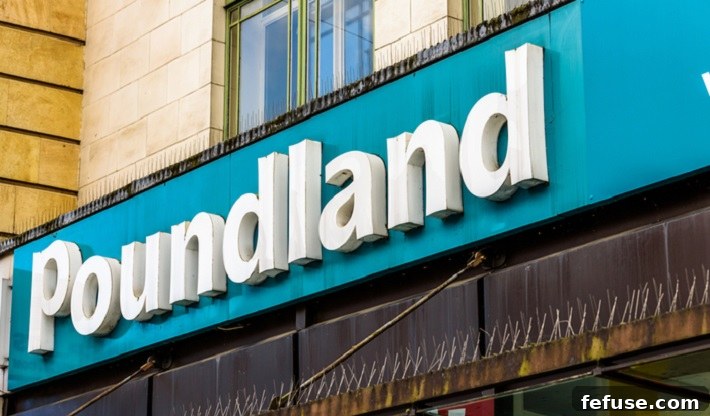
Poundland’s £1 ‘Bling Ring’ Revolutionizes Proposals: A Deep Dive into a Surprising Phenomenon
The world of romance and proposals witnessed an unexpected shake-up when British discount retailer Poundland announced an astonishing sales figure that left many traditionalists scratching their heads. In a revelation that quickly spread across social media and news outlets, Poundland confirmed it had sold an incredible 20,000 engagement rings within a mere week of their launch. This wasn’t just any piece of jewellery; this was the now-famous £1 ‘Bling Ring’, specifically marketed as a “placeholder” for a more traditional, and often much costlier, engagement ring. This remarkable success story isn’t just about budget jewellery; it speaks volumes about evolving consumer attitudes, modern romance, and the sheer power of a disruptive marketing strategy.
The Genesis of the Bling Ring: Challenging Convention
Timed perfectly for Valentine’s Day, a period synonymous with declarations of love and proposals, Poundland introduced its unique offering to the high street. The ‘Bling Ring’ wasn’t designed to compete with high-end diamond rings but rather to serve a distinct purpose: to facilitate the act of proposing. Its marketing was clear and concise – this was a ring to get down on one knee with, a symbolic gesture, after which the couple could then together choose a ‘real’ engagement ring that suited their tastes and budget. Priced at an accessible £1, the ring quickly captured the imagination, and sometimes the ire, of the public. While initial online discussions were sharply divided, with some championing the practicality and others decrying it as cheapening the sacred act of proposal, the raw sales data painted a clear picture: a significant segment of the UK consumer base had embraced this innovative concept.
According to Poundland’s internal figures, the 20,000 unit sales milestone was reached swiftly after its debut. The demand was particularly robust in key regions across the UK, with Yorkshire and the Midlands emerging as hotspots for ‘Bling Ring’ purchases. This regional success hints at a broader demographic appeal, suggesting that the concept resonated deeply with individuals looking for practical and less financially burdensome ways to express commitment. Frances O’Sullivan, Poundland’s discerning jewellery and Valentine’s buyer, articulated the sentiment perfectly, remarking, “Thousands of Brits are already quids in thanks to the £1 proposal. It’s clearly a gem of an idea and the nation agrees.” Her statement underscores the retailer’s confidence in its product and its understanding of the evolving market for sentimental purchases.
Beyond the Bling: The Psychology of the Placeholder Proposal
The resounding success of the Poundland ‘Bling Ring’ prompts a deeper exploration into the psychology driving modern engagement trends. Why would such a seemingly simple, inexpensive item achieve such widespread popularity in a market historically dominated by significant financial investment? Several factors likely contribute to this shift. Firstly, financial practicality plays a crucial role. For many couples, especially younger generations grappling with rising living costs and student debts, the traditional expectation of a ring costing “three months’ salary” can be an overwhelming burden. A £1 placeholder ring removes this immediate financial pressure, allowing couples to focus on the emotional significance of the proposal without the added stress of a large, immediate outlay.
Secondly, the ‘Bling Ring’ champions shared decision-making. The placeholder concept empowers both partners to be involved in the selection of the “forever” ring. This aligns with modern relationship dynamics where equality and collaboration are highly valued. Instead of a unilateral decision, the proposal becomes an intimate step towards a joint choice, ensuring the final engagement ring truly reflects the tastes and preferences of the person who will wear it for a lifetime. This collaborative approach can foster a deeper sense of partnership and mutual respect right from the start of the engagement period.
Moreover, the concept addresses the pressure associated with grand, public proposals and the expectation of a ‘perfect’ ring. It allows for a heartfelt, spontaneous moment without the need for prior, covert selection of an expensive item. This pragmatic approach resonates with individuals who prioritize sincerity and the emotional bond over extravagant displays, making the ‘Bling Ring’ a symbol of genuine intent rather than monetary value. It offers a solution for those who want to propose without the fear of choosing the “wrong” ring, turning a potential pitfall into an opportunity for a shared experience.
Poundland’s Marketing Prowess: A Case Study in Viral Retail
Poundland’s ‘Bling Ring’ campaign is a masterclass in disruptive marketing and public relations. By tapping into a cultural moment like Valentine’s Day and offering a product that directly challenges deeply ingrained societal norms surrounding engagement rings, the retailer generated an enormous amount of organic buzz. The stark contrast between the traditional perception of an engagement ring as a significant investment and Poundland’s £1 alternative created instant controversy and discussion across all media platforms, from social media debates to national news headlines. This extensive, largely free, publicity was invaluable, thrusting Poundland into conversations far beyond its usual retail demographic.
The campaign also cleverly leveraged the human desire for a good story. The idea of someone proposing with a £1 ring, followed by the shared experience of choosing the ‘real deal’, is inherently charming and relatable to many. It painted Poundland not just as a discount retailer, but as an enabler of romance, albeit an unconventional one. This strategic move undeniably enhanced Poundland’s brand image, showcasing it as innovative, responsive to consumer needs, and perhaps even a little cheeky. It demonstrated that value doesn’t always equate to cheapness, but rather to intelligent problem-solving and meeting unmet demands in the market.
Ethical Debates and Secondary Markets: The Bling Ring’s Broader Impact
While sales figures were impressive, Poundland openly admitted it had no concrete data to confirm whether its rings were indeed being used for their intended proposal purposes. This brings up an interesting point about consumer behaviour and the interpretation of product intent. Could some purchases have been novelty items, gag gifts, or even a precursor to other creative uses? Regardless, the primary marketing message stuck, permeating public consciousness and fostering widespread discussion about the true meaning and value of an engagement ring. The debate sparked by the ‘Bling Ring’ forced a re-evaluation of what constitutes an authentic proposal and whether monetary value should be the primary measure of commitment.
Intriguingly, the ‘Bling Ring’ also spawned an unexpected secondary market. Reports quickly emerged of these £1 rings being sold on online auction platforms like eBay for significantly more than their original retail price. This phenomenon further underscores the product’s cultural impact and desirability. Whether driven by scarcity, novelty, or collectors’ interest, the elevated prices on eBay demonstrate that the ‘Bling Ring’ transcended its humble origins to become a minor cultural artefact. This secondary market activity not only highlights the surprising virality of the product but also suggests a unique blend of consumer fascination and entrepreneurial opportunism.
Future of Proposals: A Shift Towards Personalization and Practicality
The success of Poundland’s placeholder engagement ring points towards a broader trend in how couples approach proposals and commitment in the 21st century. The era of rigid traditions and exorbitant expectations might be slowly giving way to more personalized, practical, and meaningful gestures. This shift is not about devaluing the act of proposal or the symbolism of a ring, but rather redefining what those symbols represent in a modern context. It encourages creativity, open communication, and shared values over ostentatious displays of wealth. We may see an increase in alternatives to traditional diamond rings, such as ethical or lab-grown diamonds, bespoke designs, or even entirely different tokens of commitment that hold personal significance to the couple.
The ‘Bling Ring’ has opened a door for retailers to think outside the traditional jewellery box, inspiring new product lines and marketing strategies that cater to an increasingly diverse and financially aware consumer base. It has proven that a proposal can be equally romantic and heartfelt, regardless of the price tag attached to the initial gesture. This trend signifies a move towards authenticity, where the story behind the proposal and the shared journey of choosing a ring together might hold more weight than the initial cost of a piece of jewellery. As Poundland so brilliantly demonstrated, sometimes, the most revolutionary ideas come from the most unexpected places, challenging us to reconsider long-held beliefs and embrace new forms of expression.
In conclusion, Poundland’s £1 ‘Bling Ring’ isn’t just a quirky sales story; it’s a testament to evolving social norms, intelligent marketing, and the enduring power of love in its many forms. By offering an affordable, practical solution to the age-old tradition of proposing, Poundland tapped into a latent desire for accessibility and shared experience, ultimately redefining what a modern engagement can look like. This tiny, inexpensive ring sparked a significant conversation, reminding everyone that while the gesture of commitment is priceless, the vehicle for that gesture doesn’t necessarily have to be.