
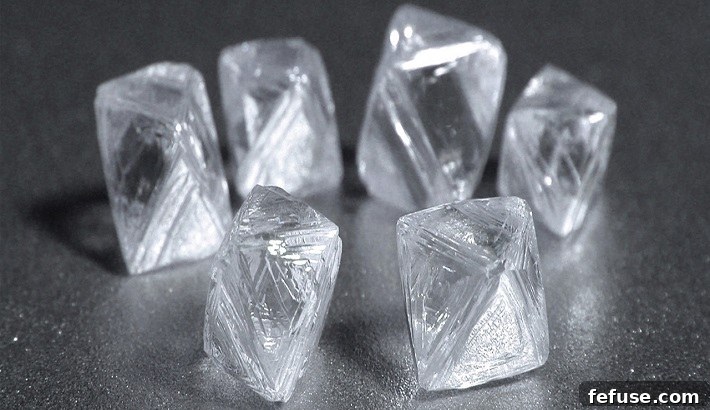
Navigating Turbulence: De Beers Rough Diamond Sales Witness Significant Decline in Mid-2019
The global diamond industry, a fascinating realm of luxury, investment, and intricate supply chains, faced notable challenges in 2019. Amidst a complex macroeconomic landscape and evolving market dynamics, one of the most significant indicators of market health emerged from the operational reports of industry giants. De Beers, a name synonymous with diamonds and a cornerstone of the rough diamond market, reported a sharp downturn in its rough diamond sales during its sixth sales cycle of 2019. This period saw sales drastically decline to US$ 250 million, a figure that underscored the prevailing pressures on the entire diamond value chain. The unprecedented flexibility offered to Sightholders to defer their rough diamond allocations marked a strategic response to alleviate the burden of higher-than-normal midstream inventories, signaling a period of adjustment and caution within the sector.
This substantial reduction in sales was not merely a minor fluctuation but a clear reflection of deeper market shifts. The US$ 250 million total, encompassing both Global Sightholder Sales and Auction Sales, stood starkly against the US$ 391 million recorded in the preceding cycle. More strikingly, it represented less than half of the robust US$ 533 million in goods sold during the equivalent sixth cycle of 2018. Such a precipitous drop highlights the accelerating deceleration of demand and the accumulating challenges faced by manufacturers and polishers, who constitute the vital “midstream” segment of the diamond industry. The decision by De Beers to grant Sightholders this deferral option was a crucial concession, acknowledging the financial strain and inventory build-up experienced by their key clients.
A Closer Look at De Beers’ Sixth Sales Cycle of 2019 Performance
The figures from De Beers’ sixth sales cycle of 2019 painted a vivid picture of a market under considerable stress. The US$ 250 million in sales represented a significant contraction, not only against immediate prior performance but also when viewed in a year-on-year context. The more than 50% drop compared to the sixth cycle of 2018 underscores a fundamental shift in market conditions rather than a seasonal dip. This period is typically a crucial time for restocking ahead of major holiday seasons in various consumer markets, making the observed decline particularly concerning. The reduced purchasing activity by Sightholders – De Beers’ authorized bulk purchasers of rough diamonds – directly stemmed from the company’s decision to offer them unprecedented flexibility.
This flexibility allowed Sightholders to postpone receiving portions of their allocated rough diamond parcels until later in the year. The primary catalyst for this concession was the accumulating inventory levels within the midstream sector. The “midstream” refers to the businesses involved in cutting, polishing, and manufacturing rough diamonds into polished gems, which are then set into jewelry. When these players face a slowdown in demand for polished diamonds from retailers, their inventories of both rough and polished stones begin to swell. This ties up significant capital, increases holding costs, and reduces their liquidity, making them hesitant to acquire new rough diamond parcels, even at customary allocations. De Beers’ move was, therefore, an adaptive measure to prevent further market saturation and support the financial health of its direct customers, thereby indirectly shoring up the stability of the broader diamond pipeline.
The Midstream Bottleneck: A Key Factor in Diamond Market Dynamics
The concept of “midstream inventories” is central to understanding the challenges that afflicted the diamond market in 2019. The midstream acts as the crucial link between mining companies, like De Beers, and the retail sector. It is where rough diamonds transform into the sparkling gems coveted by consumers. However, this segment is also highly capital-intensive, requiring substantial investment in machinery, skilled labor, and, critically, the rough diamonds themselves. When the demand for polished diamonds slows down, manufacturers find themselves with a surplus of both rough and finished goods. This inventory build-up is financially taxing and directly impacts their ability and willingness to purchase new rough diamonds, creating a bottleneck that reverberates throughout the entire supply chain.
- Causes of High Midstream Inventory: A confluence of factors typically contributes to elevated midstream inventories. These include a slowdown in consumer demand for luxury goods, oversupply of rough diamonds in preceding cycles, aggressive purchasing by manufacturers anticipating stronger demand, and economic uncertainties that dampen retail confidence.
- Consequences for Midstream Players: For cutting and polishing centers, high inventory levels mean capital is tied up, reducing liquidity and increasing interest payments on loans used to finance these stocks. This financial pressure can lead to reduced profitability, job cuts, and even business closures if prolonged.
- Impact on Rough Diamond Purchasing: Faced with existing inventory and financial constraints, midstream players inevitably reduce their rough diamond purchases. This direct decline in demand for rough stones forces mining companies, like De Beers, to either lower prices, reduce supply, or offer more flexible terms, as seen in the sixth cycle of 2019.
Global Economic Uncertainties Cast a Shadow on Luxury Spending
Beyond the immediate issue of midstream inventories, the broader macroeconomic climate of 2019 played a significant role in dampening demand across the luxury sector, including diamonds. Global economic growth showed signs of deceleration, influenced by a multitude of factors such as escalating trade tensions between the United States and China, the ongoing uncertainties surrounding Brexit, and a general cooling of consumer confidence in key markets. These geopolitical and economic headwinds created a climate of caution among consumers and businesses alike, leading to a noticeable pullback in discretionary spending on luxury items like diamond jewelry.
Retailers, acutely aware of shifting consumer sentiment and potential economic downturns, responded by managing their inventory levels with increased prudence. Rather than stocking up heavily, they adopted a more conservative approach, placing smaller and more cautious orders for polished diamonds. This cautious stance by retailers directly impacted the midstream, as fewer orders translated into slower sales of polished diamonds, consequently exacerbating the inventory problem. The interconnectedness of the diamond supply chain means that a dip in consumer confidence at the retail end swiftly translates into reduced demand for polished diamonds, which then ripples back to diminish the appetite for rough diamonds from the primary suppliers.
De Beers’ Proactive Approach: Fostering Stability in Challenging Times
Bruce Cleaver, CEO of De Beers Group, articulated the situation succinctly: “With ongoing macroeconomic uncertainty, retailers managing inventory levels, and polished diamond inventories in the midstream continuing to be higher than normal, De Beers Group provided customers with additional flexibility to defer some of their rough diamond allocations to later in the year. As a result, we saw a reduction in sales during the sixth cycle of 2019.” His statement not only confirmed the underlying issues but also highlighted De Beers’ proactive and responsible approach to market management during a difficult period. As a dominant player in the rough diamond market, De Beers holds significant sway over market stability, and its decisions carry substantial weight.
The decision to offer “additional flexibility” was more than just a customer service gesture; it was a strategic move aimed at sustaining the health of its Sightholder network and, by extension, the entire natural diamond ecosystem. By allowing Sightholders to defer their purchases, De Beers directly addressed the financial strain faced by its clients, preventing them from accumulating further inventory they couldn’t immediately process or sell. While this action directly resulted in lower immediate sales figures for De Beers, it underscored a commitment to fostering long-term relationships and supporting the financial viability of its partners. Such flexibility can prevent market dumping, where overstocked midstream players might be forced to sell polished diamonds at distress prices, which could undermine the perceived value of diamonds across the board.
This adaptive strategy demonstrated De Beers’ understanding of the delicate balance required to navigate volatile market conditions. Rather than rigidly adhering to sales targets that might further destabilize the midstream, the company opted for a flexible stance, prioritizing the health of the supply pipeline over short-term sales performance. This approach, while impacting immediate revenue, is critical for maintaining market confidence, protecting the value proposition of natural diamonds, and ensuring the long-term sustainability of the industry for all participants, from miners to retailers.
From Mine to Market: The Interconnectedness of the Diamond Industry
The diamond industry operates as a highly interconnected ecosystem, where actions or challenges in one segment invariably ripple through the entire value chain. This chain typically begins with mining, followed by the sorting and sale of rough diamonds (primarily by companies like De Beers), then moves to the midstream for cutting and polishing, progresses to jewelry manufacturing, and finally reaches the consumer through retail channels. The sharp decline in De Beers’ rough diamond sales perfectly illustrates this profound interconnectedness, demonstrating how pressures at one stage can rapidly affect all others.
A slowdown in rough diamond sales at the mining and primary sales end has several downstream effects. Firstly, it signals a reduced demand for the services of cutters and polishers in the midstream. With less rough being purchased, there’s less material available to be processed, potentially leading to reduced operating hours, layoffs, or slower expansion plans in manufacturing hubs. Secondly, this reduced activity and demand for rough can put pressure on polished diamond prices, as the entire market anticipates a period of lower consumption. Thirdly, retailers, observing the cautious mood upstream and facing their own inventory management challenges, become even more conservative in their ordering, completing a feedback loop that reinforces the initial slowdown. Ultimately, every segment of the diamond value chain, from the remote mining operations to the luxurious retail boutiques, is intricately linked, making market stability a collective responsibility and challenge.
Analyzing the Broader Natural Diamond Market Landscape in 2019
The difficulties experienced by De Beers in its sixth sales cycle were not isolated incidents but rather symptomatic of broader challenges permeating the natural diamond market in 2019. The year was characterized by a general sentiment of uncertainty and caution. While natural diamonds continued to hold significant cultural and emotional value, the economic environment made it harder for this intrinsic value to translate directly into robust sales. Other major diamond producers likely faced similar headwinds, even if their sales figures weren’t as publicly scrutinized as De Beers’. The industry as a whole grappled with an oversupply of rough diamonds in earlier periods, combined with a tightening credit environment for midstream players and increased competition from alternative luxury goods and lab-grown diamonds.
Promoting natural diamonds effectively became even more critical in this challenging landscape. Campaigns focusing on the rarity, heritage, and unique journey of natural diamonds were essential to maintain consumer desirability. However, economic slowdowns make consumers more price-sensitive and hesitant about large discretionary purchases, irrespective of strong marketing. The need for innovation in marketing, supply chain efficiency, and transparent sourcing practices became paramount for the natural diamond industry to navigate these turbulent waters and reinforce its unique value proposition against all forms of competition and economic pressures.
Navigating the Future: Adaptations and Resilience in the Diamond Sector
From the perspective of 2019, the significant sales decline experienced by De Beers and the underlying market conditions pointed towards an imperative for adaptation and resilience within the diamond sector. Industry players, from miners to retailers, needed to refine their strategies to cope with evolving consumer behavior, economic uncertainties, and internal supply chain dynamics. Key areas for adaptation included more agile inventory management, fostering stronger relationships across the value chain, and enhancing marketing efforts to resonate with modern consumers. Diversifying market focus beyond traditional regions and exploring new digital sales channels also emerged as critical considerations for future growth and stability.
The long-term implications of such a substantial sales drop for De Beers and the broader industry highlighted the need for continuous strategic planning. While De Beers’ flexibility helped mitigate immediate market stress, the underlying causes – high inventories and macroeconomic uncertainty – required sustained attention. The industry understood that it must prioritize efficiency, transparency, and a consumer-centric approach to thrive. The events of 2019 served as a crucial reminder that even an industry built on enduring value must constantly evolve and adapt to external forces, ensuring its appeal and relevance in a changing world.
Key Takeaways from a Challenging Period
De Beers’ rough diamond sales decline in its sixth cycle of 2019 to US$ 250 million was a stark indicator of the prevailing difficulties within the global diamond industry. This sharp reduction, driven primarily by elevated midstream inventories and persistent macroeconomic uncertainty, necessitated a flexible and supportive response from industry leaders. De Beers’ decision to allow Sightholders to defer allocations underscored a commitment to the stability and health of its customer base and the broader market, even if it meant a temporary hit to immediate revenue.
This period served as a powerful illustration of the diamond industry’s interconnected nature, where challenges at any single point quickly propagate through the entire value chain. It emphasized the critical importance of prudent inventory management, the influence of global economic trends on luxury spending, and the strategic foresight required from major players to maintain market confidence and value. The events of mid-2019 highlighted the continuous need for adaptability, collaboration, and a deep understanding of market dynamics for the natural diamond sector to navigate its complexities and ensure its enduring sparkle.
News Source: gjepc