
Kering, the eminent French luxury group synonymous with high fashion and exquisite jewelry, faced a complex and challenging fiscal year in 2023. The conglomerate reported a 4 percent decline in revenue, totaling $21.1 billion, with the final quarter experiencing a more pronounced 6 percent drop. These figures underscore the evolving dynamics and pressures within the global luxury market. While its flagship fashion brands grappled with significant headwinds, a closer examination of Kering’s diverse portfolio reveals remarkable resilience and growth within its high jewelry division. This comprehensive analysis delves into Kering’s 2023 financial performance, exploring the contributing factors, strategic responses, and the forward-looking vision articulated by its leadership.
Kering’s 2023 Financials: Navigating Luxury Market Shifts Amidst Core Brand Challenges and High Jewelry Success
The global luxury goods sector, often perceived as an impenetrable bastion against economic fluctuations, encountered a more intricate landscape in 2023. Kering, a pivotal player with an expansive empire encompassing iconic brands such as Gucci, Yves Saint Laurent, and Bottega Veneta, experienced the effects of softening consumer demand in key markets and a notable shift in spending patterns. The reported 4% decrease in annual revenue, which concluded the year at $21.1 billion, signals a departure from the robust growth trajectories observed in previous years. This deceleration was particularly evident in the fourth quarter, where a 6% decline in revenue suggested an intensification of challenges as the year drew to a close. These financial outcomes reflect broader macroeconomic uncertainties, including persistent inflation, rising interest rates, and geopolitical tensions, which collectively exerted downward pressure on discretionary spending even among affluent consumers. Kering’s performance therefore serves as a crucial indicator for the overall health of the high-end retail segment, highlighting both vulnerabilities and areas of unexpected strength within its multifaceted brand family.
Strategic Resilience: The Shining Performance of Kering’s High Jewelry Maisons
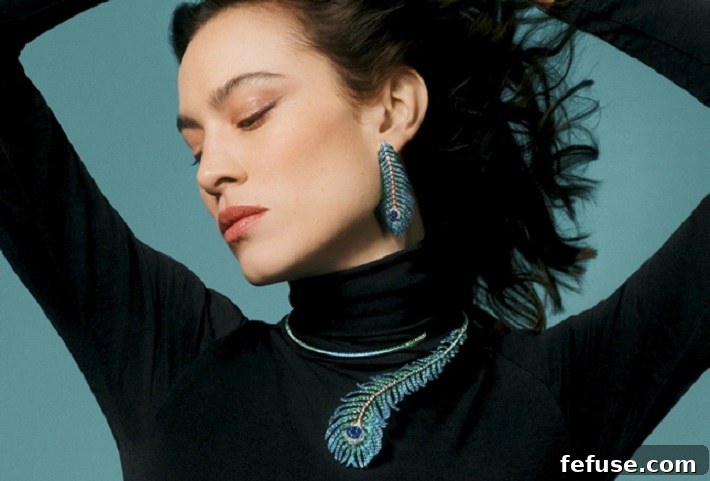
In a year marked by an overarching revenue decline, one particular segment of Kering’s esteemed portfolio shone brightly: its high jewelry houses. Though they are categorized under the broader “other houses” division, which collectively experienced a 19 percent drop in revenue for the year, brands such as Boucheron, Pomellato, DoDo, and Qeelin demonstrated exceptional momentum. Kering specifically highlighted that these luxury jewelry brands not only maintained but significantly enhanced their “excellent momentum, with double-digit growth in the fourth quarter, driven by the success of all collections.” This remarkable performance stands as a testament to strategic brilliance amidst a challenging global economic climate.
The outstanding success of Kering’s high jewelry division is attributable to several strategic factors. Firstly, the ultra-luxury segment, which includes high jewelry and prestigious watches, frequently exhibits greater stability and even growth during periods of economic uncertainty. Affluent consumers often regard such acquisitions not merely as purchases but as enduring investments, appreciating the inherent value, meticulous craftsmanship, and timeless allure of exquisite pieces. Brands like Boucheron, with its profound heritage dating back to 1858, continue to captivate a discerning clientele through innovative designs and unparalleled artistry, catering to those seeking unique and lasting luxury. Pomellato, celebrated for its distinctive and colorful approach to fine jewelry, and DoDo, renowned for its charming, collectible pieces, have successfully carved out unique market niches that resonate with contemporary aesthetic preferences while upholding the highest standards of quality. Qeelin, with its elegant fusion of rich Chinese cultural symbolism and modern design, continues to strategically expand its presence, particularly within the lucrative Asian markets, showcasing Kering’s successful diversification strategy.
The consistent double-digit growth observed in the fourth quarter for these premier jewelry houses suggests astute brand management, precisely targeted marketing initiatives, and an profound understanding of their specific customer bases. Significant investments in creative innovation, excellence in supply chain management, and the provision of exclusive retail experiences undoubtedly played crucial roles in this success. This compelling narrative of growth for Kering’s jewelry brands represents a vital pillar of stability and a significant source of future growth potential, illustrating the conglomerate’s strategic advantage in cultivating a diversified portfolio capable of mitigating risks associated with an over-reliance on a single product category or brand.
Challenges within Core Fashion Brands: Gucci, Yves Saint Laurent, and Bottega Veneta
While Kering’s high jewelry arm sparkled, its foundational fashion maisons encountered substantial headwinds. Gucci, which stands as the group’s largest and historically most profitable brand, along with Yves Saint Laurent and Bottega Veneta, all reported declines in revenue. Gucci’s performance, in particular, has been under intense scrutiny from analysts and stakeholders. Following years of exponential growth propelled by prior creative directions, the brand has entered a period of significant transition, contending with evolving aesthetic preferences and fierce competition within the luxury fashion landscape. The strategic appointments of Sabato De Sarno as the new Creative Director and Jean-François Palus as its CEO signify a critical strategic pivot aimed at reinvigorating the brand’s appeal and market share. This transitional phase inherently presents challenges, as new collections require time to permeate the market and fully resonate with global consumers. Factors such as market saturation, especially in regions like North America, and a more cautious approach to spending among aspirational luxury buyers have further complicated Gucci’s path to recovery.
Yves Saint Laurent, despite generally maintaining a strong brand image and high desirability, also experienced a decline in revenue, indicating that the broader challenging market conditions impacted even its robust performance. Similarly, Bottega Veneta, celebrated for its distinctive intrecciato leather goods and minimalist aesthetic, was not immune to the pressures exerted by a tightening luxury market. These widespread declines underscore a crucial insight: even well-established and highly coveted luxury fashion brands are susceptible to overarching macroeconomic shifts and the cyclical nature of fashion trends. Kering’s management is proactively engaged in strengthening the distinct identities and exclusivity of these renowned houses, placing a renewed emphasis on elevating craftsmanship, enriching client experiences, and refining their product offerings to reignite sustainable growth.
Kering Eyewear: A Standout Success Story and Growth Driver
In a striking contrast to the performance of most of its fashion divisions, Kering Eyewear emerged as an outstanding success story, achieving a remarkable 35 percent increase in revenue. This specialized division is responsible for the comprehensive design, development, manufacturing, and global distribution of eyewear for Kering’s own prestigious brands (including Gucci, Saint Laurent, and Bottega Veneta) as well as an expanding portfolio of external luxury and lifestyle brands through strategic licensing agreements. Its performance clearly positions it as a powerful and consistent growth engine for the entire group.
The sustained success of Kering Eyewear can be attributed to several synergistic factors: its innovative business model, which grants greater control over brand image and supply chain efficiency compared to traditional licensing arrangements; strategic acquisitions and partnerships that have significantly expanded its market reach and diversified its brand portfolio; and the intrinsic strength of the luxury eyewear market itself. Eyewear, particularly in the luxury segment, frequently serves as an accessible entry point into high-end brands for a broader consumer base. It typically offers a more approachable price point compared to ready-to-wear apparel or handbags, making it an attractive option even during periods of cautious consumer spending. Furthermore, Kering Eyewear has demonstrated exceptional aptitude in identifying and leveraging emerging trends, investing in advanced manufacturing technologies, and ensuring consistently high-quality production, thereby solidifying its position as a global leader in the luxury eyewear segment and a significant contributor to Kering’s overall profitability and strategic resilience.
Leadership’s Strategic Outlook and Future Initiatives for Kering
Acknowledging the complexities of the past year, Chairman and CEO Francois-Henri Pinault articulated a clear and comprehensive strategic vision for Kering’s future. He stated, “In a trying year for the group, we strengthened our organization and took significant steps to further enhance the visibility and exclusivity of our houses.” This potent statement encapsulates Kering’s proactive and decisive approach to navigating the current intricate landscape. The notion of “strengthening the organization” implies a multifaceted internal transformation, encompassing strategic restructuring, the optimization of operational efficiencies, and potentially pivotal personnel changes aimed at streamlining decision-making processes and accelerating brand turnarounds. The emphasized focus on “enhancing the visibility and exclusivity” of its various houses indicates a sophisticated dual strategy designed to reinforce Kering’s position at the pinnacle of luxury:
- Brand Elevation through Unique Experiences: This involves substantial investment in high-impact marketing campaigns, exclusive collaborations with influential artists and designers, and the creation of unique, immersive retail experiences that reinforce the aspirational appeal and rich heritage of each individual brand. For its fashion houses, this includes a renewed emphasis on haute couture and bespoke, made-to-measure services, mirroring the personalized and unique nature characteristic of high jewelry.
- Strategic Direct-to-Consumer (DTC) Focus: Kering is committed to expanding and optimizing its proprietary retail network and advanced e-commerce platforms. This strategy aims to gain greater control over each brand’s narrative, leverage valuable customer data for personalized engagement, and enhance profit margins, all while ensuring a seamless and elevated luxury experience for discerning clients globally.
- Unrelenting Product Innovation and Design Excellence: There is a continuous and vigorous push for groundbreaking creativity and innovation across all product categories. This ensures enduring product relevance and desirability in a rapidly evolving market. For fashion brands, this specifically means harmonizing cutting-edge design with contemporary aesthetics while meticulously respecting and upholding each brand’s distinctive DNA.
- Strategic Market Diversification and Expansion: While established luxury markets remain critically important, Kering is also strategically exploring new frontiers for growth, particularly in emerging economies with burgeoning affluent populations. Simultaneously, the group is intensifying its focus on regions where specific brands demonstrate robust growth potential and strong consumer resonance.
Kering’s long-term strategy is also profoundly anchored in sustainability and ethical sourcing, recognizing these as increasingly critical drivers for fostering deep consumer loyalty and enhancing brand reputation in the contemporary luxury landscape. Significant investment in responsible manufacturing practices, pioneering circular economy initiatives, and ensuring comprehensive transparency across its intricate supply chain are not merely compliance requirements but rather integral components of its overarching brand value proposition. The group acutely understands that today’s luxury consumers are increasingly conscious of the social and environmental impact of their purchases, making these unwavering commitments absolutely essential for sustained success and leadership.
Broader Luxury Market Context and Kering’s Strategic Positioning for the Future
Kering’s 2023 financial results serve as a direct reflection of a broader deceleration observed across the global luxury market following a period of unprecedented post-pandemic boom. While certain specialized segments, particularly ultra-luxury goods and experiential luxury services, continue to demonstrate remarkable robustness, the broader categories of ready-to-wear fashion and mainstream luxury accessories are facing intensified competition and a more discerning consumer base. The significant slowdown in the crucially important Chinese market, coupled with a more cautious approach to consumer spending in North America, has necessitated strategic adjustments across the entire luxury industry.
Despite these prevailing challenges, Kering unequivocally maintains its status as an influential powerhouse within the luxury sector. Its intelligently diversified portfolio, spanning from high fashion and exquisite jewelry to a high-performing eyewear division, strategically positions the conglomerate to adapt effectively to shifting market dynamics. The notable success of its high jewelry brands and the Kering Eyewear division provides an invaluable counterbalance to the transitional phase currently being experienced by its larger fashion houses. With astute strategic leadership, a renewed and vigorous focus on enhancing brand desirability, and an unwavering commitment to innovation and sustainability, Kering is exceptionally well-positioned to navigate the inherent complexities of the luxury landscape in the years ahead. The overarching objective is not merely to recover lost ground but to redefine luxury leadership through enhanced exclusivity, unparalleled craftsmanship, and a profound, lasting connection with discerning global consumers.
The path forward for Kering involves a delicate yet crucial balance of nurturing its established iconic brands while simultaneously fostering the vigorous growth of its rising stars. The exemplary performance of its high jewelry maisons and Kering Eyewear serves as compelling blueprints for success, vividly demonstrating how strategic and sustained investments in craftsmanship, a deep understanding of market nuances, and a clear articulation of brand identity can yield truly exceptional results, even amidst a volatile global economic climate. As Kering confidently embarks on its next transformative chapter, the entire industry will intently observe how its reinvigorated strategies unfold and whether its comprehensive efforts to strengthen its organizational foundation and elevate brand exclusivity successfully translate into sustainable growth and a powerful reassertion of its dominant position within the dynamic world of luxury.