
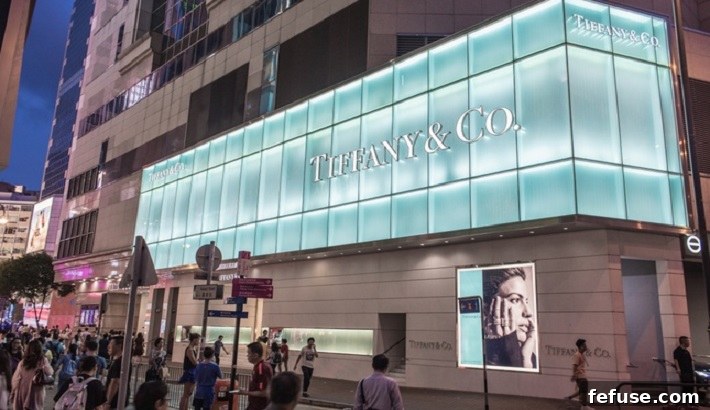
LVMH Elevates Bid for Tiffany & Co. Amidst High-Stakes Luxury Dealmaking
In a significant move poised to reshape the global luxury market, French conglomerate LVMH Moët Hennessy Louis Vuitton has reportedly increased its acquisition offer for the iconic American jewelry retailer, Tiffany & Co. According to sources cited by Reuters, LVMH has raised its initial bid to nearly $16 billion, reflecting its determined pursuit of the venerable brand. This updated proposition comes after Tiffany’s board rejected LVMH’s previous $120-per-share offer earlier this month, asserting that the proposed valuation did not adequately reflect the company’s true worth and long-term potential.
The negotiation process, characteristic of high-value corporate acquisitions, has seen Tiffany & Co. grant LVMH access to its confidential financial records, commonly referred to as “its books.” This critical step allows LVMH to conduct thorough due diligence, examining Tiffany’s financial health, operational performance, and market position in greater detail. Despite this progression, Reuters’ sources indicate that Tiffany & Co. remains committed to negotiating for an even more favorable offer, highlighting the strategic importance and perceived intrinsic value of the brand. However, it is crucial to note that while discussions are ongoing, there remains no definitive guarantee that a final deal will be successfully reached, underscoring the complexities inherent in such monumental transactions.
LVMH’s Strategic Vision: The Pursuit of a Diamond Icon
LVMH, a powerhouse with an unparalleled portfolio of over 75 distinguished brands spanning fashion, leather goods, watches, jewelry, wine, and spirits, has long been a master of strategic acquisitions. Its interest in Tiffany & Co. is not merely about expanding its brand count; it represents a calculated move to solidify its dominance in the burgeoning hard luxury segment, particularly high-end jewelry. The luxury conglomerate, led by Chairman and CEO Bernard Arnault, has consistently demonstrated an astute ability to identify, acquire, and rejuvenate iconic brands, integrating them into its ecosystem while preserving their unique identities. This latest bid for Tiffany aligns perfectly with LVMH’s overarching strategy of vertical integration and market leadership.
Tiffany & Co. presents a particularly attractive target due to its enduring global brand recognition, rich heritage, and significant presence in the crucial North American market. With its distinctive robin’s-egg blue boxes and association with timeless elegance and romance, Tiffany commands a unique position in the hearts of consumers worldwide. For LVMH, acquiring Tiffany would provide an immediate and substantial boost to its jewelry division, complementing existing brands like Bulgari and Chaumet. It would grant LVMH access to Tiffany’s extensive retail network, its diamond sourcing and manufacturing capabilities, and its loyal customer base, potentially unlocking new avenues for growth and cross-brand synergies across its diverse luxury empire.
The valuation of Tiffany & Co. is undoubtedly a central point of contention in these negotiations. Publicly traded companies are often valued based on a multitude of factors, including current revenues, profit margins, growth potential, brand equity, market share, and future earnings projections. Tiffany’s board, representing its shareholders, likely believes the company’s intrinsic value, particularly given its global luxury brand status and potential for future expansion, far exceeds the initial offers. They are likely seeking a premium that reflects not just current performance but also the strategic advantages LVMH would gain, along with the future revenue streams and market influence that Tiffany could contribute to the LVMH group.
Tiffany’s Resilience and Reinvention in a Dynamic Market
Despite its storied legacy, Tiffany & Co. has faced its share of challenges in recent years, including adapting to evolving consumer preferences, particularly among younger demographics, and navigating a highly competitive luxury landscape. The company has been actively working to revitalize its brand image, broaden its appeal, and enhance its digital presence. These efforts are crucial for a heritage brand seeking to remain relevant and vibrant in a rapidly changing retail environment where e-commerce and experiential retail are increasingly paramount. The brand’s ability to maintain its aspirational quality while embracing modern trends is key to its continued success.
Strengthening Leadership: The Arrival of Daniella Vitale as Chief Brand Officer
In related news, and indicative of Tiffany’s proactive approach to brand management and strategic positioning, the company recently announced the appointment of Daniella Vitale as its new executive vice president and chief brand officer. This significant hire underscores Tiffany’s commitment to reinforcing its brand identity and market presence. The chief brand officer role is a newly created position within Tiffany & Co., signaling a renewed focus on holistic brand strategy, a unified global message, and a coherent customer experience across all touchpoints. Vitale’s appointment is a pivotal move, especially in the context of ongoing acquisition talks, as strong internal leadership and a clear brand vision can significantly influence a company’s perceived value and strategic direction.
Daniella Vitale brings a wealth of experience and a formidable track record to Tiffany & Co. Her distinguished career includes serving as the former chief executive of the prominent luxury department store Barneys New York, where she was instrumental in its merchandising strategies and brand partnerships. Prior to her tenure at Barneys, Vitale held the prestigious positions of president and chief executive of Gucci in the Americas, a period marked by remarkable growth and brand resurgence for the Kering-owned luxury house. Her expertise in driving brand relevance, overseeing luxury retail operations, and connecting with a diverse consumer base makes her an ideal candidate to steer Tiffany’s brand narrative during this critical juncture. In her new role, Vitale will be directly responsible for overseeing Tiffany’s global merchandising and marketing efforts, reporting directly to CEO Alessandro Bogliolo, ensuring a streamlined and impactful brand strategy.
The Broader Landscape of Luxury Mergers and Acquisitions
The potential acquisition of Tiffany by LVMH is not an isolated incident but rather reflective of a broader trend of consolidation within the luxury goods sector. The past decade has seen major luxury conglomerates actively acquiring smaller, independent brands or competitors to gain market share, diversify their portfolios, and leverage economies of scale. This strategic inorganic growth allows dominant players to mitigate risks, penetrate new markets, and strengthen their global distribution networks. For brands like Tiffany, being part of a larger group like LVMH can offer access to greater financial resources, robust marketing capabilities, and enhanced global reach, which can be particularly beneficial in navigating the challenges of a fragmented yet highly competitive luxury landscape.
However, such acquisitions also come with inherent challenges. Integrating different corporate cultures, preserving the unique identity and heritage of an acquired brand, and retaining key talent are complex undertakings. LVMH has a proven track record of successful integration, often allowing its acquired brands a degree of autonomy while providing strategic oversight and financial backing. For Tiffany, a successful integration would mean maintaining its distinct allure and craftsmanship while benefiting from LVMH’s vast operational expertise and global infrastructure, ultimately enhancing its long-term profitability and market position. The goal is to achieve significant synergies without diluting the essence of what makes Tiffany iconic.
Looking Ahead: The Future of a Luxury Icon
As LVMH and Tiffany & Co. continue their delicate dance of negotiation, the luxury world watches with keen interest. The outcome of these discussions holds significant implications for both companies and the broader luxury market. A successful acquisition would represent one of the largest luxury deals in history, further solidifying LVMH’s unparalleled position and potentially reshaping the competitive dynamics of the high-end jewelry segment. Conversely, if a deal fails to materialize, Tiffany will need to continue its independent strategic initiatives with renewed vigor, proving its standalone value to shareholders amidst ongoing market pressures.
The hiring of Daniella Vitale, irrespective of the acquisition outcome, signals Tiffany’s proactive intent to invest in its brand and future growth. Her leadership is expected to invigorate Tiffany’s merchandising strategies, refine its marketing campaigns, and ultimately enhance its desirability among new and existing clientele. The synergy between strong internal leadership and external strategic maneuvers, such as engaging in acquisition talks, demonstrates Tiffany’s commitment to maximizing shareholder value and ensuring its legacy continues to shine brightly in the luxury constellation.
News Source: idexonline