
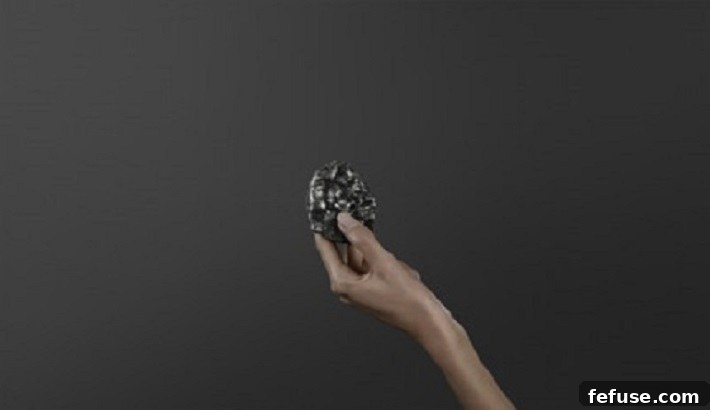
The Sewelo Diamond: A Game-Changer in Luxury, Acquired by Louis Vuitton
In a move that sent reverberations throughout the global luxury and diamond industries, French fashion powerhouse Louis Vuitton announced its acquisition of the Sewelo diamond. Discovered in April 2019 at the Karowe mine in Botswana, the Sewelo is a colossal 1,758-carat rough diamond, making it the second-largest of its kind ever found and the largest unearthed in over a century since the legendary Cullinan diamond in 1905. This unprecedented acquisition by a luxury fashion house marks a significant strategic pivot, signaling Louis Vuitton’s bold intent to ascend to the very pinnacle of high jewelry and exert greater control over its supply chain for exceptional gemstones.
The news was met with widespread surprise and intrigue. Industry insiders and competitors watched closely as Louis Vuitton, traditionally known for its iconic leather goods, apparel, and accessories, ventured into the rarefied world of sourcing and preparing such an extraordinary raw gem. Michael Burke, the chief executive of Louis Vuitton, openly acknowledged the shockwaves created by this decision, noting in interviews that the move would undoubtedly “spice things up a bit” and “wake up the industry.” His comments underscore the transformative potential of this acquisition, not just for Louis Vuitton but for the broader luxury market.
Unveiling the Sewelo: A Gemstone of Historic Proportions
The Sewelo diamond, whose name translates to “rare find” in Setswana, the national language of Botswana, truly lives up to its designation. Weighing in at 1,758 carats, roughly the size of a tennis ball, its discovery was a monumental achievement for Lucara Diamond Corp., the Canadian mining company that operates the highly productive Karowe mine. This mine has gained a reputation for yielding exceptionally large and high-quality diamonds, including the 1,109-carat Lesedi La Rona in 2015 and the 813-carat Constellation diamond in 2016. The Sewelo, however, surpasses even these magnificent finds in sheer size, solidifying Karowe’s status as a premier source of world-class diamonds.
What makes the Sewelo particularly intriguing is not just its immense size but also its unique characteristics. Preliminary observations indicate that the diamond is largely gem-quality, although it possesses a somewhat challenging dark coating of carbon, which adds an element of mystery to its internal composition. This coating will need to be carefully removed during the cutting and polishing process to reveal the true brilliance and clarity of the stone within. The anticipation surrounding what magnificent polished diamonds will emerge from the Sewelo is palpable, making it one of the most exciting projects in the diamond world today.
Louis Vuitton’s Strategic Masterstroke: Beyond Fashion to Fine Jewelry Prowess
Louis Vuitton’s decision to acquire the Sewelo is far more than a simple transaction; it’s a strategic declaration. For decades, traditional diamond houses and jewelers have dominated the acquisition and transformation of large, rare diamonds. Louis Vuitton’s entry into this domain signifies a deliberate vertical integration, allowing the brand to control the journey of an extraordinary gem from its raw state to its eventual manifestation as a bespoke, high-jewelry masterpiece. This move positions Louis Vuitton not merely as a buyer of finished stones but as a direct participant in the creation of unparalleled luxury. The brand collaborated with HB Company of Antwerp, a renowned diamond manufacturer, to facilitate the purchase and subsequent processing of the Sewelo, ensuring access to world-leading expertise in cutting and polishing such an exceptional stone.
This bold step is intrinsically linked to Louis Vuitton’s broader ambition to significantly expand its presence and reputation in the ultra-high-end jewelry market. While Louis Vuitton has offered fine jewelry collections for many years, acquiring a diamond of Sewelo’s caliber allows the brand to craft bespoke pieces that are truly unique and command the highest echelons of luxury. It’s about offering an exclusivity that few other brands can match, directly appealing to the most discerning clientele who seek not just beautiful jewelry but pieces with a remarkable origin story and unparalleled craftsmanship. By directly engaging with the raw material, Louis Vuitton is building a narrative of authenticity, transparency, and ultimate luxury control.
The Transformation Journey: From Rough to Refined Brilliance
The journey of the Sewelo diamond from a rough, baseball-sized stone to potentially multiple exquisite polished gems is an intricate process that demands extraordinary skill, precision, and patience. The first crucial step involves meticulous planning, often utilizing advanced 3D scanning and computer modeling to determine the optimal way to cut the diamond to maximize its yield, clarity, and brilliance. This initial phase is critical, as a single miscalculation can diminish the stone’s value and beauty. Given the Sewelo’s unique carbon coating and immense size, this planning stage will be exceptionally complex, involving months of detailed analysis by master cutters and gemologists.
Once the cutting plan is finalized, the diamond will undergo a series of precise cleaving, sawing, and faceting procedures. This is where art meets science, as artisans use specialized tools and techniques to carefully shape the rough stone into its desired forms. The goal will likely be to yield several large, high-quality diamonds, perhaps even a few exceptionally rare stones, along with numerous smaller gems. Each cut must be executed with flawless accuracy to unlock the stone’s inherent fire, scintillation, and brightness. The process will undoubtedly take many months, possibly even years, culminating in a collection of finished diamonds that will bear the hallmark of both the Sewelo’s natural majesty and Louis Vuitton’s commitment to unparalleled craftsmanship.
A Glimpse into Diamond History: The Legacy of Colossal Gems
The Sewelo diamond inevitably draws comparisons to the most famous and largest diamond ever discovered: the 3,106.75-carat Cullinan diamond, found in South Africa in 1905. The Cullinan was famously cut into nine major polished diamonds and 96 smaller brilliant-cut stones. Its two largest progeny, the 530.4-carat Great Star of Africa (Cullinan I) and the 317.4-carat Second Star of Africa (Cullinan II), are now iconic centerpieces of the British Crown Jewels, adorning the Sovereign’s Sceptre with Cross and the Imperial State Crown, respectively. These historical precedents highlight the enduring fascination humanity has with colossal diamonds and their potential to be transformed into objects of immense beauty and historical significance.
Beyond the Cullinan, other notable large diamonds, many of which also originated from Lucara’s Karowe mine, contribute to this rich history. The 1,109-carat Lesedi La Rona, for instance, meaning “Our Light” in Setswana, was also purchased by a luxury conglomerate, Graff Diamonds, which successfully cut it into a magnificent 302.37-carat emerald-cut diamond named the Graff Lesedi La Rona, the largest highest-clarity, highest-color diamond ever certified by the GIA. These recent discoveries underscore a new golden age for large diamond finds, further fueling the competitive drive among luxury brands to acquire and transform these rare treasures, cementing their place in both natural and cultural history.
Impact on the Global Diamond and Luxury Markets
Louis Vuitton’s acquisition of the Sewelo is poised to have a profound impact on several fronts. Firstly, it challenges the traditional hierarchy of the diamond industry. By directly engaging with a rough stone of such magnitude, a luxury fashion brand is bypassing established diamond merchants and dealers, potentially disrupting long-standing supply chains and business models. This could encourage other luxury brands to explore similar vertical integration strategies, leading to increased competition for rare and exceptional rough diamonds directly from mines.
Secondly, it elevates the perception of Louis Vuitton as a serious player in the high jewelry segment. The Sewelo project provides the brand with an unparalleled platform to showcase its technical prowess, design innovation, and commitment to the highest standards of craftsmanship. This reinforces its position as a holistic luxury house, capable of delivering ultimate expressions of luxury across various categories. For consumers, it means an expanded offering of bespoke, ultra-exclusive pieces with a compelling narrative from discovery to final creation. Furthermore, this move highlights the growing importance of ethical sourcing and traceability, an area where Lucara Diamond Corp., with its commitment to Botswana’s economic development, maintains a strong reputation, aligning with modern consumer values.
Louis Vuitton’s Expanding Universe: A Future Forged in Fire and Ice
This acquisition is a clear indicator of Louis Vuitton’s ambitious vision for the future. Already a titan in luxury fashion, the brand is actively diversifying its portfolio and strengthening its presence in segments like high jewelry and watches, where craftsmanship, heritage, and exclusivity are paramount. The Sewelo diamond serves as a powerful symbol of this expansion, demonstrating a willingness to invest significantly in raw materials that can be transformed into signature pieces embodying the brand’s enduring legacy of excellence and innovation. It’s an investment not just in a diamond, but in the brand’s future legacy and its ability to captivate and inspire a global clientele.
The resulting polished diamonds from the Sewelo will undoubtedly become the centerpieces of extraordinary jewelry collections, potentially leading to bespoke commissions for ultra-high-net-worth individuals or limited-edition launches that further solidify Louis Vuitton’s standing at the apex of luxury. By taking ownership of such a significant natural wonder, Louis Vuitton is not just buying a gem; it’s buying a story, a heritage, and the potential to create new legends in the world of high jewelry. This bold and strategic move cements Louis Vuitton’s trajectory as a comprehensive luxury empire, extending its reach from the runway to the most precious treasures unearthed from the earth’s depths.
Conclusion: A New Era for Luxury and Diamonds
The acquisition of the Sewelo diamond by Louis Vuitton is more than just a headline-grabbing event; it’s a pivotal moment that is reshaping the landscape of the luxury and diamond industries. It underscores a growing trend of luxury brands seeking greater control over their supply chains and venturing into new, highly specialized domains to offer unparalleled exclusivity and craftsmanship. The Sewelo, with its immense size, captivating mystery, and promising future, now carries the weight of Louis Vuitton’s global prestige, ready to be transformed into exquisite jewels that will tell a story for generations to come. This bold venture by Louis Vuitton has indeed “spiced things up,” ushering in a new era where fashion houses are not just observers but active creators at the very pinnacle of fine jewelry.