
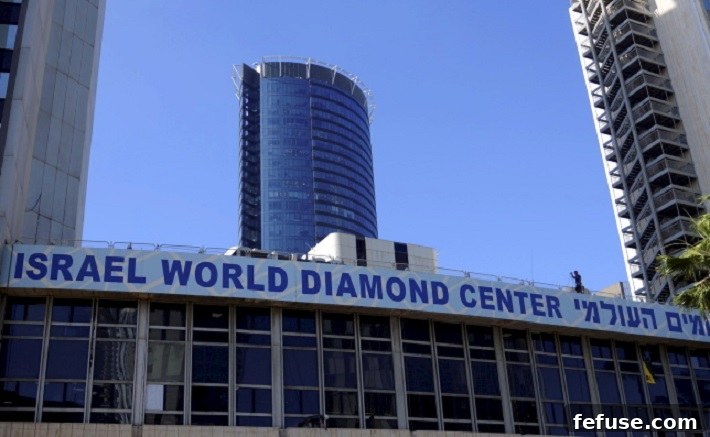
The Israel Diamond Exchange Navigates Unprecedented Membership Decline Amidst Global Shifts
For the first time since its establishment in 1937, the illustrious Israel Diamond Exchange (IDE) is witnessing a significant and concerning shrinkage in its membership base. This historic institution, a cornerstone of the global diamond trade, currently houses approximately 3,200 members within its vast, interconnected complex of four towers in Ramat Gan. However, recent trends indicate a worrying demographic shift, where the rate of members retiring or passing away now critically surpasses the influx of new professionals joining its ranks.
A Historic Institution at a Crossroads: The Israel Diamond Exchange
The Israel Diamond Exchange has long been revered as one of the world’s foremost centers for diamond trading, cutting, and polishing. Its sophisticated infrastructure, robust security measures, and the concentration of expertise have made it a critical nexus in the global supply chain for both rough and polished diamonds. For decades, the IDE has been instrumental in shaping Israel’s economic landscape, contributing significantly to national exports and fostering a vibrant community of diamond dealers, manufacturers, and artisans. Its reputation for quality, innovation, and ethical trading practices has attracted professionals from across the globe, solidifying its status as a pivotal player in the luxury goods market.
Historically, the IDE served as a beacon for aspiring diamond professionals, offering unparalleled networking opportunities, access to state-of-the-art facilities, and a supportive ecosystem for business growth. The influx of new members was a testament to the industry’s dynamism and its enduring appeal. However, the current predicament underscores a deeper malaise, pointing towards systemic challenges that extend beyond immediate economic fluctuations. The shrinking membership signals a potential generational gap and a need for innovative strategies to reignite interest and engagement among younger entrepreneurs and professionals looking to enter the highly specialized field of diamond trade.
Unprecedented Decline: Alarming Trends in Membership
The stark reality of the IDE’s membership decline was articulated by its president, Nissim Zuaretz. Speaking to the Ynet news website, Zuaretz highlighted a dramatic shift in recruitment figures. “In the good years of the industry, we received 200 new members a year,” he revealed, painting a picture of past prosperity. In sharp contrast, he added, “in the past year, only 30” new members joined. This staggering drop, from an average of 200 to just 30 new entrants annually, represents a decline of over 85% and is a clear indicator of the severe challenges currently facing the Israeli diamond industry. Such a precipitous fall in new memberships poses a significant threat to the long-term vitality and sustainability of the exchange, potentially impacting the transfer of knowledge, skills, and business networks essential for future growth.
In an immediate attempt to counteract this alarming trend and stimulate renewed interest, the Israel Diamond Exchange has taken proactive measures. President Zuaretz confirmed that the cost of joining the IDE has been halved. This strategic move aims to lower the barrier to entry for potential new members, making it more accessible for young entrepreneurs and businesses to become part of the esteemed diamond community. While a necessary step, the effectiveness of this financial incentive will ultimately depend on addressing the broader underlying issues that deter new entrants and encourage existing members to maintain their commitment to the IDE and the diamond trade.
Multifaceted Challenges Plaguing the Israeli Diamond Industry
The decline in membership and overall business activity at the Israel Diamond Exchange is not an isolated incident but rather a symptom of a complex interplay of local and global factors. The industry faces an unprecedented confluence of geopolitical instability, economic downturns, and evolving market dynamics that collectively exert immense pressure on its operations and future prospects.
Geopolitical Headwinds and Economic Pressures
One of the most immediate and impactful challenges cited is the ongoing conflict in Gaza. Geopolitical tensions inherently create an environment of uncertainty, which can significantly deter international business activities, including the sensitive trade of luxury goods like diamonds. The perception of instability can lead to hesitancy among foreign buyers and investors, impacting trade volumes and fostering a cautious approach to new commitments within the region. Furthermore, the conflict has contributed to limitations in international travel, with many foreign airlines reducing or suspending flights to Israel. This logistical hurdle directly affects the ability of international buyers, sellers, and manufacturers to physically visit the IDE, inspect goods, and conduct face-to-face negotiations – a crucial aspect of the traditional diamond trade. The reduced accessibility inevitably translates into fewer transactions and diminished business opportunities for IDE members.
Compounding these local challenges is the broader global recession, which has cast a long shadow over luxury markets worldwide. Economic downturns typically lead to a contraction in consumer spending on non-essential items, and high-end diamonds are often among the first categories to be impacted. Consumers become more budget-conscious, prioritizing necessities over luxury purchases, which directly affects demand for polished diamonds. This global economic squeeze is further evidenced by the sharp decline in Israeli diamond exports. President Zuaretz reported a staggering 48 percent year-on-year decrease in diamond exports in July alone, a statistic that starkly illustrates the severity of the economic headwinds buffeting the industry. This reduction in export volumes directly impacts the revenue and profitability of diamond companies and traders operating within the IDE, making it harder for businesses to thrive and attract new talent.
Global Market Shifts and Evolving Consumer Behavior
Beyond immediate crises, the global diamond market itself is undergoing significant structural changes. The rise of new diamond trading centers, particularly in Asia (like Dubai and India), has introduced fierce competition for traditional hubs such as Antwerp and Israel. These emerging centers often offer competitive pricing, lower operational costs, and proximity to burgeoning consumer markets, drawing business away from established players. Moreover, the increasing prevalence and acceptance of lab-grown diamonds present a formidable challenge to the natural diamond industry. Lab-grown diamonds offer a more affordable alternative with identical physical and chemical properties, appealing to a segment of consumers who are either budget-conscious or prioritize ethical and sustainable sourcing without the environmental and social concerns often associated with traditional mining.
Consumer preferences are also evolving. Younger generations, particularly Millennials and Gen Z, often place a greater emphasis on sustainability, transparency, and personalization. They may be less inclined to invest in traditional diamond jewelry or seek unique, bespoke pieces over mass-market offerings. This shift necessitates that the Israel Diamond Exchange and its members adapt their marketing strategies, product offerings, and sourcing practices to align with contemporary values and expectations. Failure to adapt risks alienating a crucial demographic of future buyers, further exacerbating the industry’s challenges.
The Israel Diamond Exchange: A Hub of Global Significance
The Israel Diamond Exchange, often simply referred to as the IDE, is far more than just a trading floor; it is a sprawling ecosystem. Located in Ramat Gan, the complex is an architectural marvel comprising four interconnected towers – the Maccabi, Shimshon, Noam, and Diamond Tower. These towers house hundreds of diamond companies, polishing factories, cutting-edge laboratories for grading and certification (such as the Gemological Institute of America – GIA and the Israel Gemological Institute – IGI), financial institutions, and secure vault services. It functions as a self-contained city dedicated to the diamond trade, providing a comprehensive range of services from rough diamond tenders to the export of finished polished stones. The security protocols within the IDE are legendary, reflecting the high value and sensitive nature of the goods traded within its confines.
For decades, the IDE has played a crucial role in the global diamond pipeline. It has been a significant center for the import of rough diamonds from major mining companies and independent producers, as well as for the sophisticated cutting and polishing of these stones into dazzling finished products. Israeli diamond cutters are renowned for their craftsmanship and innovation, particularly in developing unique cuts and maximizing the brilliance of each stone. The exchange also facilitates a vast network of international trade, connecting Israeli diamantaires with buyers and sellers across continents. Its continued success is vital not only for the thousands of individuals directly employed in the industry but also for Israel’s overall economic health, as diamond exports remain a significant component of the nation’s trade balance.
Strategic Responses and Future Prospects for the IDE
To combat the current challenges and secure its future, the Israel Diamond Exchange must implement a multi-pronged strategy that addresses both immediate concerns and long-term structural shifts. The halving of membership costs is a commendable first step, but a more comprehensive approach is required to revitalize the industry.
Attracting New Blood: Membership Incentives and Beyond
While reducing joining fees is crucial, the IDE needs to develop more robust programs to attract and retain new talent. This could include mentorship programs connecting seasoned diamantaires with aspiring professionals, educational scholarships, and incubation initiatives for diamond tech startups. Emphasizing the innovative aspects of the modern diamond industry – from advanced cutting technologies to blockchain for provenance tracking – could appeal to a younger, tech-savvy generation. Marketing campaigns that highlight career opportunities, the global reach of the industry, and the unique blend of tradition and innovation at the IDE are essential to rebuild its appeal.
Embracing Digitalization and E-commerce
The traditional, physical trading floor remains important, but the future of the diamond trade increasingly lies in digital platforms. The IDE should accelerate its adoption of e-commerce solutions, developing secure, transparent, and user-friendly online trading platforms that can reach a global audience. Virtual showcases, 3D imaging of diamonds, and digital certification processes can overcome geographical barriers and appeal to modern buyers. Leveraging data analytics to understand market trends and consumer preferences will also be vital for members to stay competitive in a rapidly evolving digital landscape.
Innovation, Diversification, and Brand Building
To maintain its competitive edge, the Israeli diamond industry must continue to innovate. This includes investing in research and development for new cutting techniques, exploring niche markets like fancy colored diamonds, and enhancing transparency in the supply chain through technologies like blockchain. Building a stronger “Israeli Diamond” brand, emphasizing ethical sourcing, superior craftsmanship, and unique design capabilities, can differentiate its products in a crowded market. Collaborative marketing efforts showcasing the heritage and future of Israeli diamonds to international consumers will be critical.
Nurturing the Next Generation of Diamond Professionals
The long-term health of the IDE depends on a continuous influx of skilled and passionate individuals. This necessitates robust training and education programs within Israel that cover gemology, diamond cutting, design, and business management specifically tailored for the diamond industry. Partnerships with universities and vocational schools could create pathways for young talent to enter the sector. Highlighting the entrepreneurial opportunities within the diamond trade and providing support for startups can help cultivate a new generation of diamantaires.
Navigating the Rough Diamond and Polished Diamond Markets
The IDE must strategically engage with major rough diamond producers to ensure a consistent and competitive supply for its manufacturers. Simultaneously, it needs to strengthen relationships with international buyers of polished diamonds, exploring new markets beyond traditional ones. This includes adapting to the growing demand in regions like China and India, and understanding the specific cultural and aesthetic preferences of these markets. Diversifying sources and destinations can mitigate risks associated with over-reliance on any single market or supplier.
The Road Ahead: Ensuring Sustainable Growth
The Israel Diamond Exchange stands at a pivotal juncture. While facing unprecedented challenges, its rich history, established infrastructure, and the inherent resilience of its community provide a strong foundation for future growth. Addressing the current membership decline requires a concerted effort to adapt to new market realities, embrace technological advancements, and actively cultivate a new generation of diamond professionals. By fostering innovation, prioritizing ethical practices, and aggressively marketing its unique value proposition on the global stage, the IDE can overcome its present difficulties. The goal is not merely to survive but to evolve, ensuring that Ramat Gan remains a vibrant and influential center in the global diamond trade for generations to come, contributing significantly to Israel’s economy and maintaining its legacy as a beacon of excellence in the luxury sector.
The path forward for the Israel Diamond Exchange is one of proactive transformation. It demands strategic leadership, collaborative action from its members, and sustained efforts to innovate across all facets of the industry. Only by confronting these challenges head-on with vision and adaptability can the IDE not only reverse its membership decline but also solidify its position as a forward-thinking, resilient, and indispensable player in the intricate and ever-evolving world of diamonds.