Unveiling Royal Grandeur: King Charles III and Queen Camilla’s Coronation Exhibition at Buckingham Palace
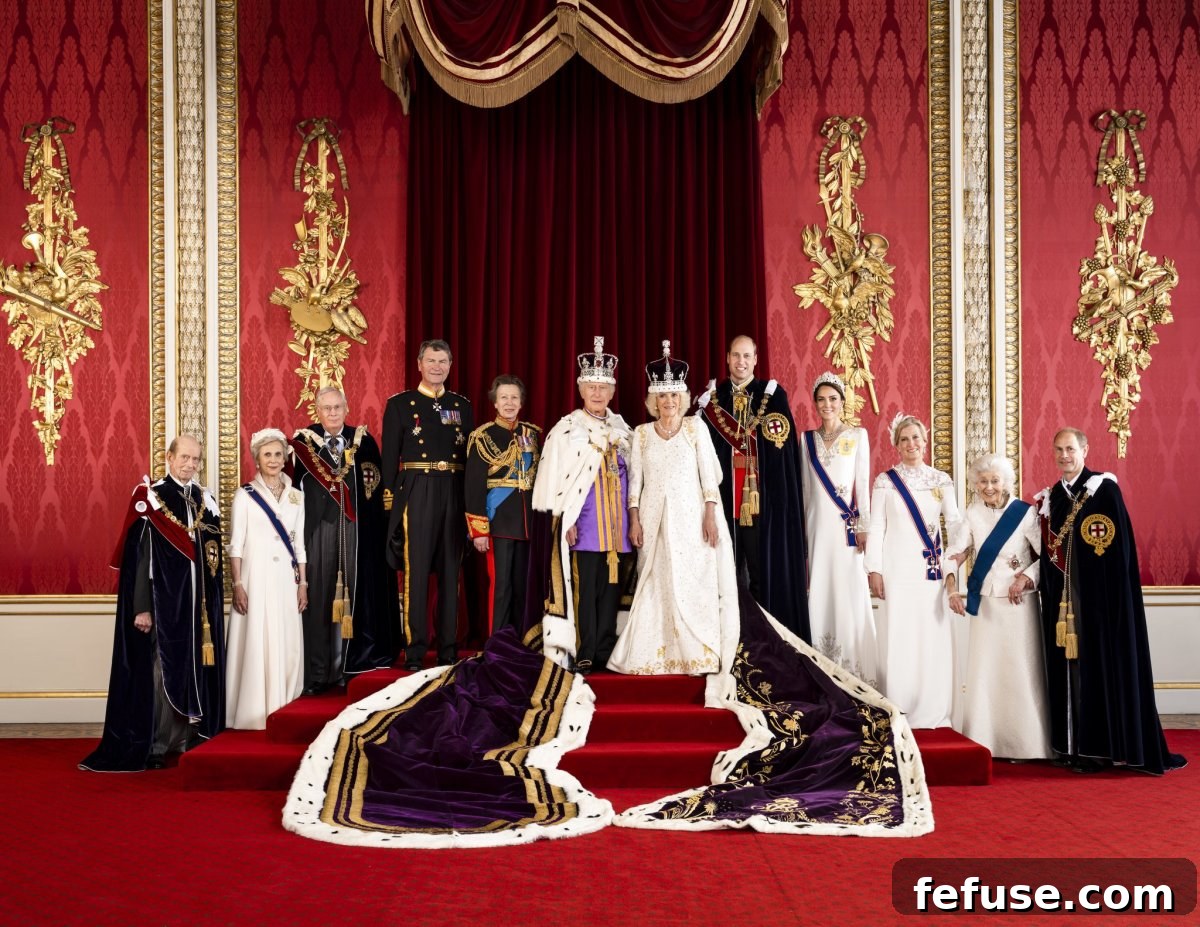
If you’re planning a visit to Buckingham Palace this summer, prepare for an extraordinary historical and cultural immersion. For the first time, visitors have the exclusive opportunity to witness the magnificent regalia and attire worn by Their Majesties King Charles III and Queen Camilla during their historic Coronation in May. This special exhibition, a highlight of the annual summer opening, offers a unique window into the pomp, tradition, and personal touches that defined a pivotal moment in British history. Step into the hallowed halls of the Palace and experience the splendor up close, complete with exquisite garments, historic ceremonial objects, and a legendary piece of royal jewelry.
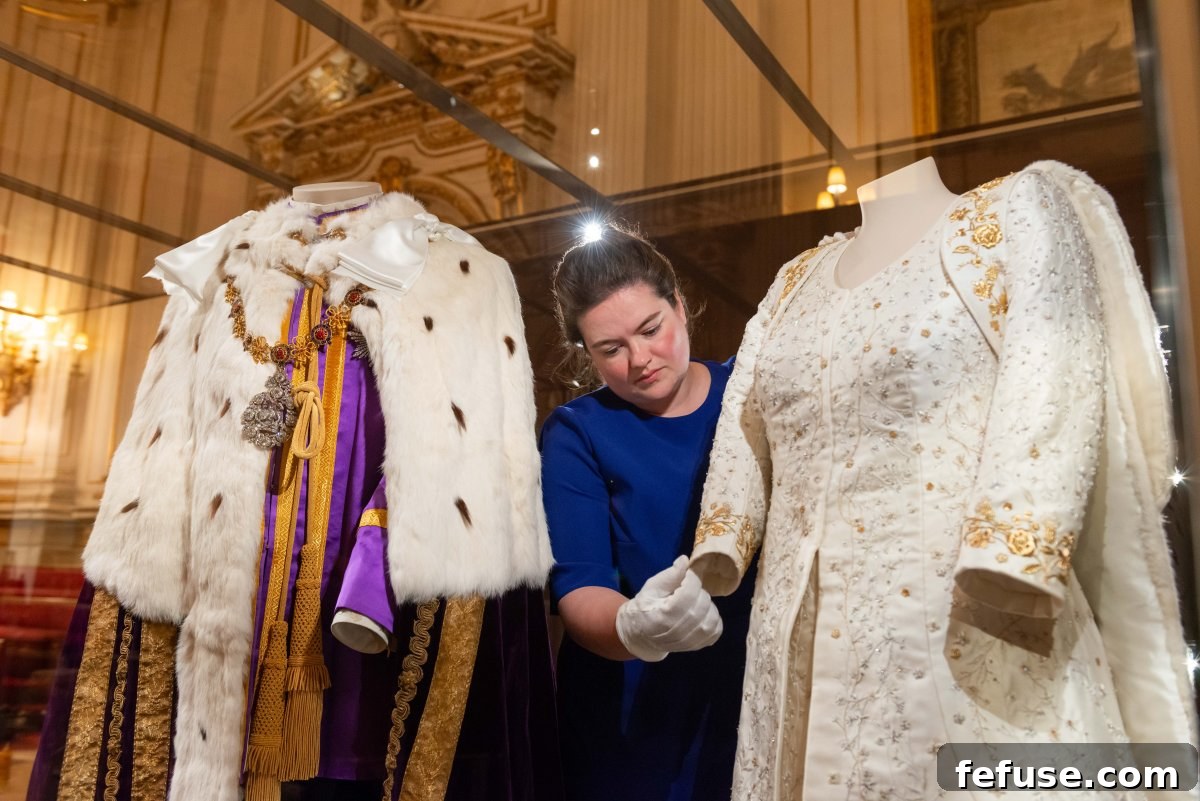
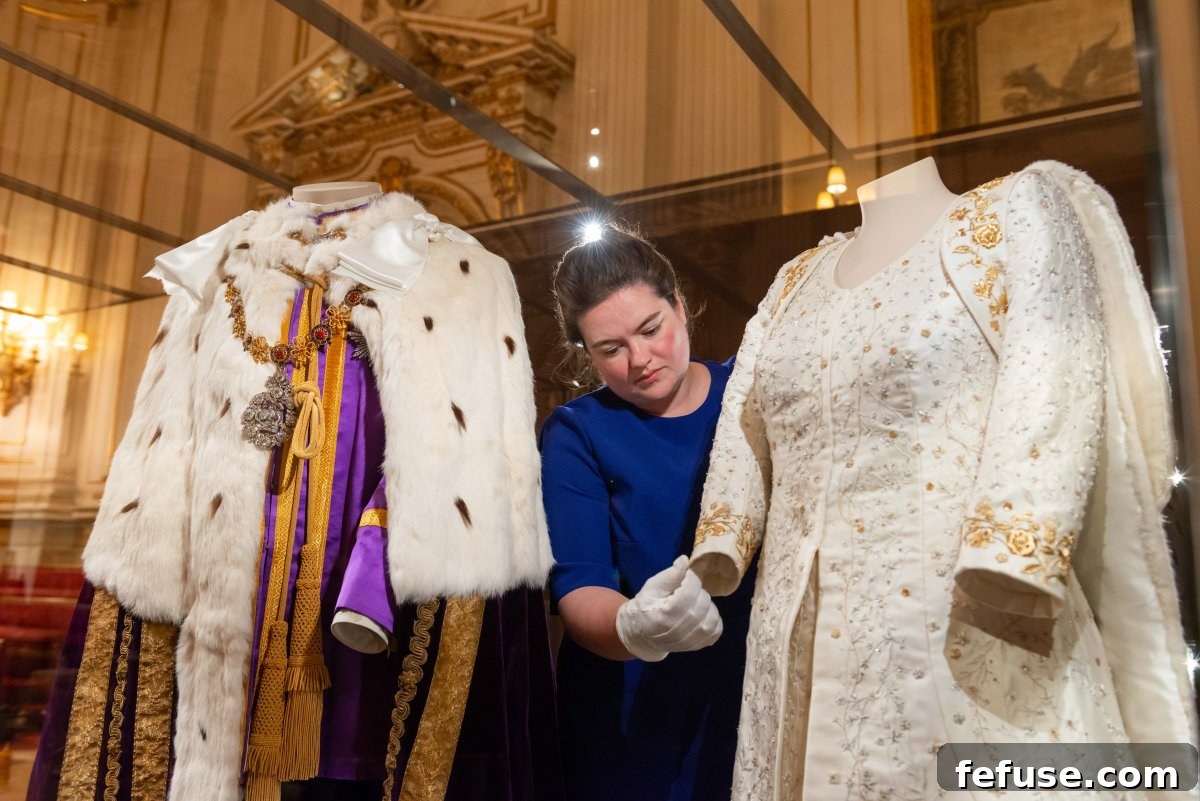
The Royal Collection Trust has meticulously curated this captivating display, transforming sections of the Palace into a vibrant showcase of the Coronation’s splendor. Visitors are treated to an intimate viewing of the garments that graced Their Majesties during the solemn ceremony at Westminster Abbey. To give royal enthusiasts and prospective visitors a glimpse, the Royal Collection has generously shared an array of breathtaking preview photographs, capturing the essence of this must-see exhibition.
A Glimpse into Royal Tradition: The King’s Coronation Attire
At the heart of this spectacular exhibition lies the regalia worn by His Majesty King Charles III. From the richly embroidered robes to significant personal garments, each piece tells a story of tradition, heritage, and the intricate craftsmanship involved in a royal Coronation. The display provides an unparalleled opportunity to appreciate these sartorial masterpieces up close, revealing details often missed on television or in photographs.
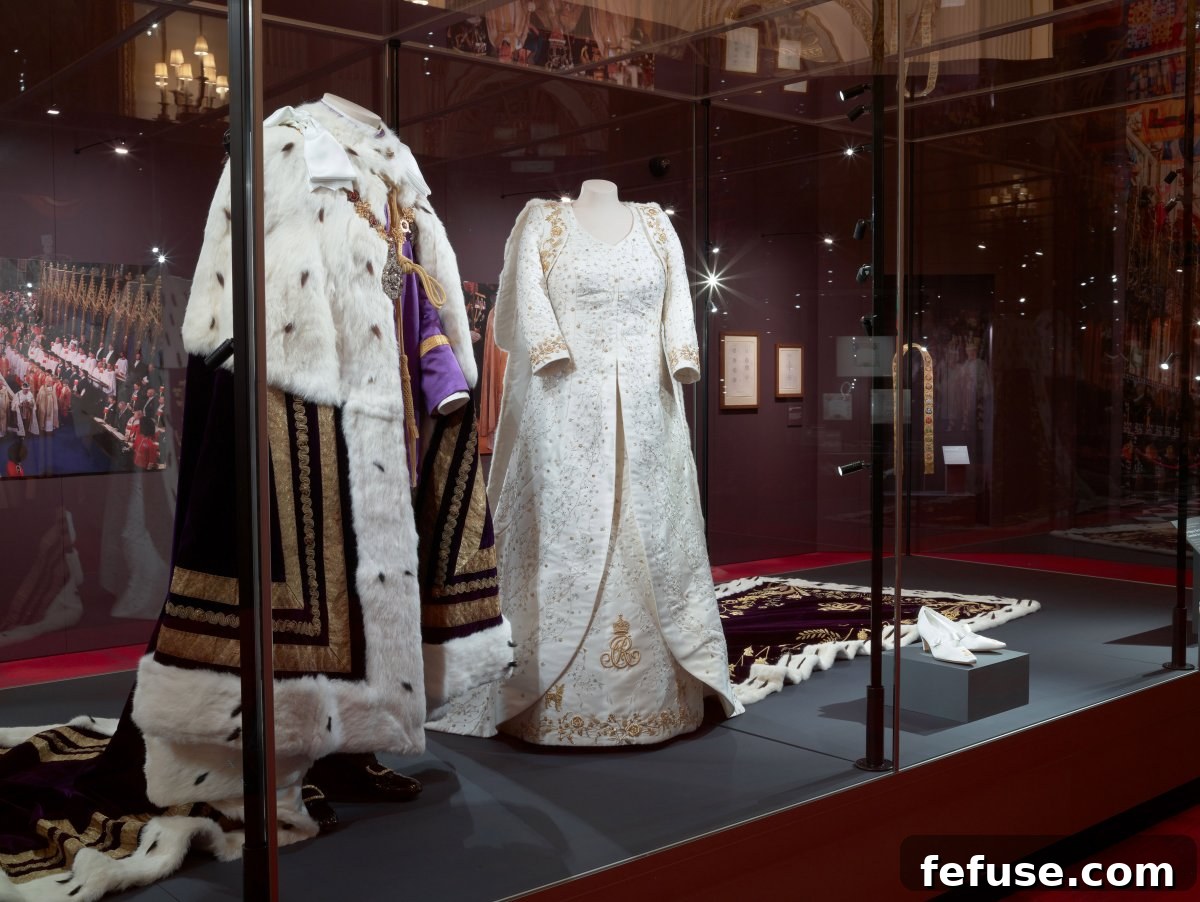
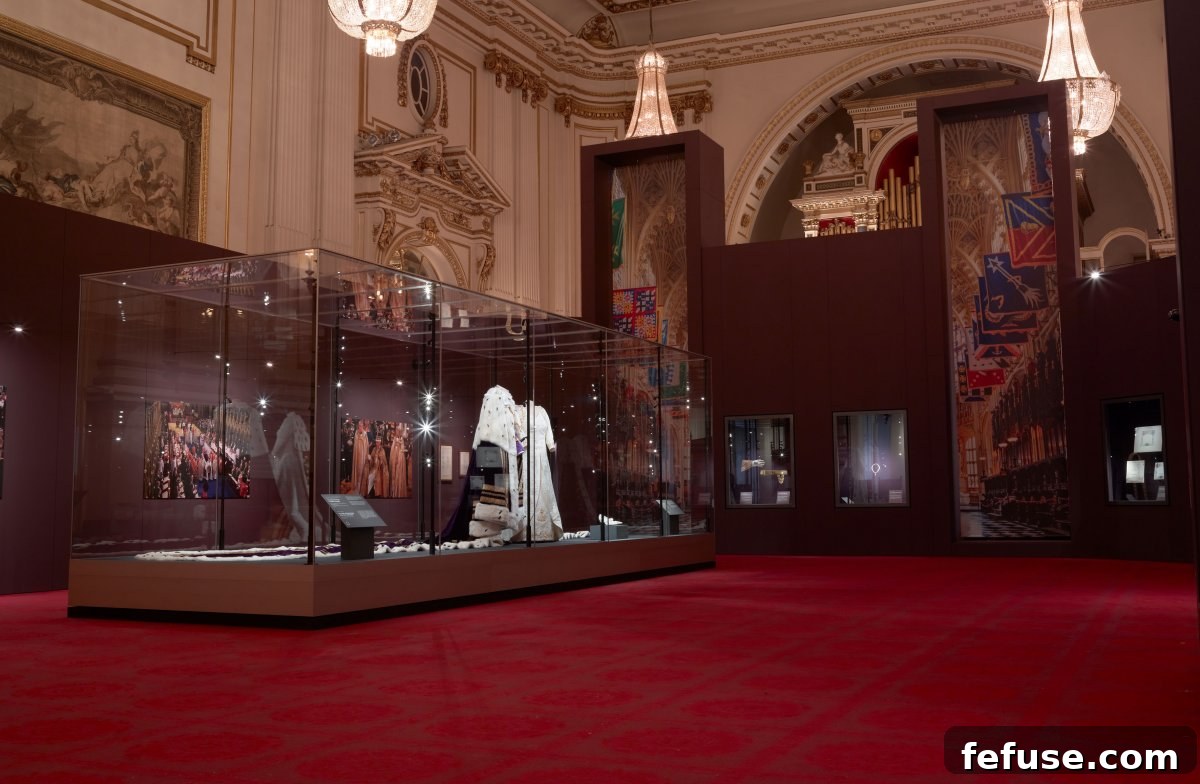
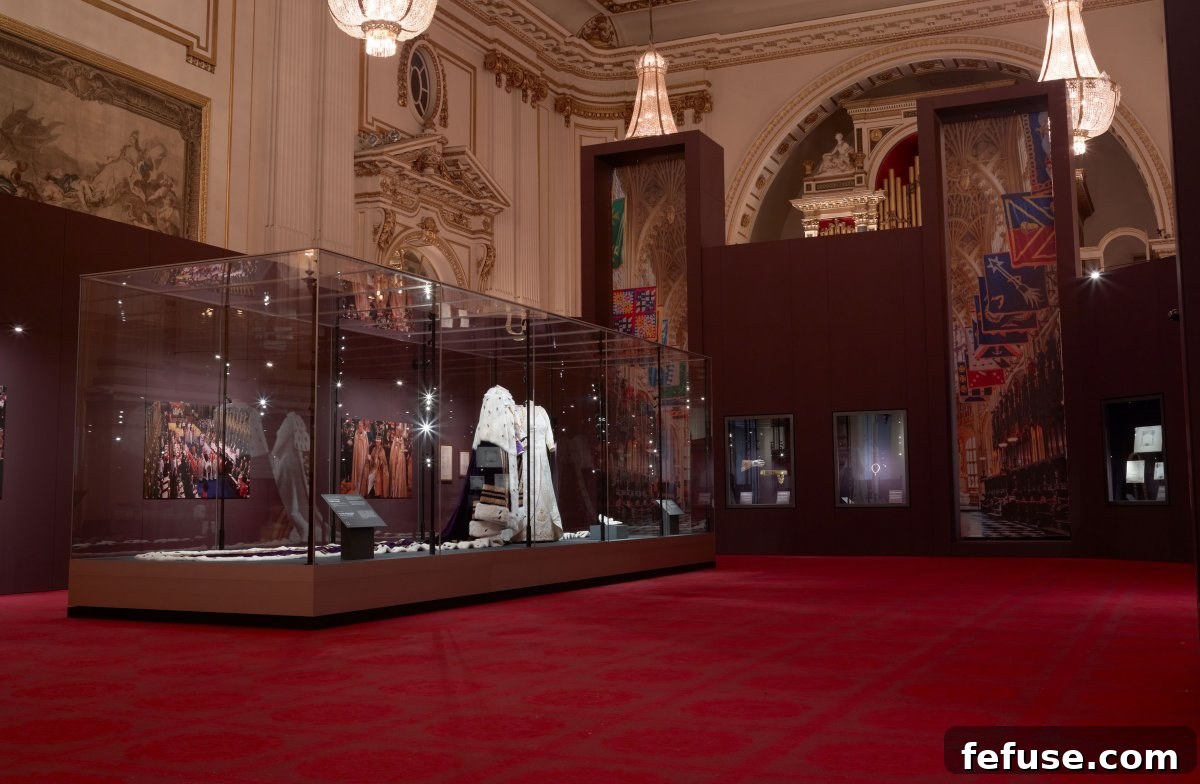
The King’s ensemble, a meticulously assembled collection of historic and newly commissioned items, showcases centuries of royal tradition blended with contemporary adaptations. Housed within the grandeur of the Palace Ballroom, this segment of the exhibition allows visitors to marvel at the detailed craftsmanship and symbolic significance of each garment and accessory.
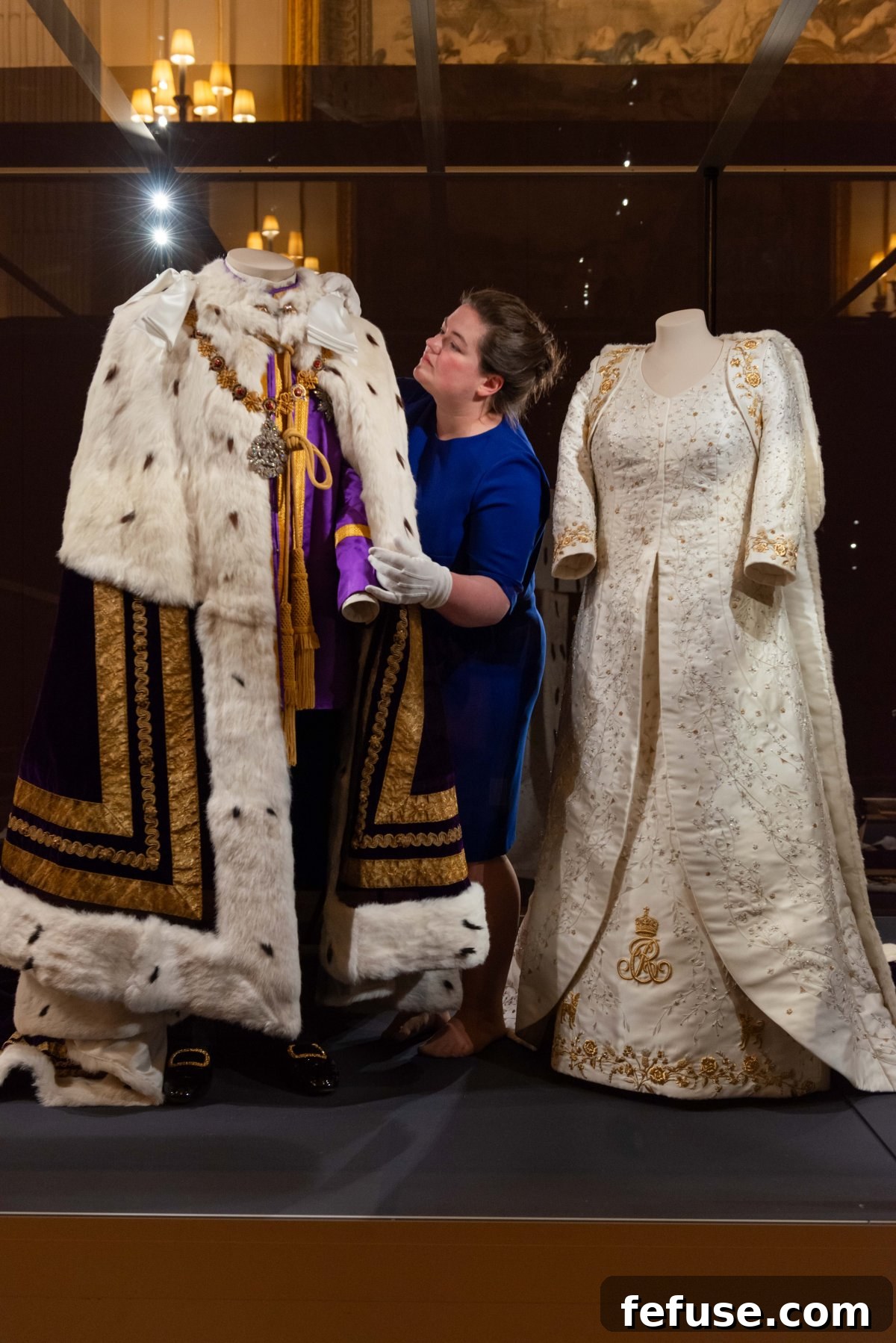
The King’s Ceremonial Garments: A Blend of New and Historic
Among the most striking items are the garments specially created for the Coronation ceremony itself. The King’s cream silk overshirt, worn throughout the service, was masterfully crafted by Turnbull & Asser, while the resplendent Purple Coronation Tunic, donned for his departure from Westminster Abbey, was produced by Ede and Ravenscroft. Both pieces reflect a deep respect for royal heritage, drawing inspiration from similar attire worn by King George V and King George VI at their own Coronations. The overshirt features delicate embroidered oak leaves and acorns on its collar and cuffs, symbolizing strength and longevity. The tunic, a vibrant purple satin, is elegantly trimmed with gold artillery lace, embodying regal splendor. Complementing these ceremonial pieces are The King’s Royal Naval Trousers, a personal touch as they are regularly worn by His Majesty as part of his full Royal Navy ceremonial uniform, connecting his military service to his role as Sovereign.
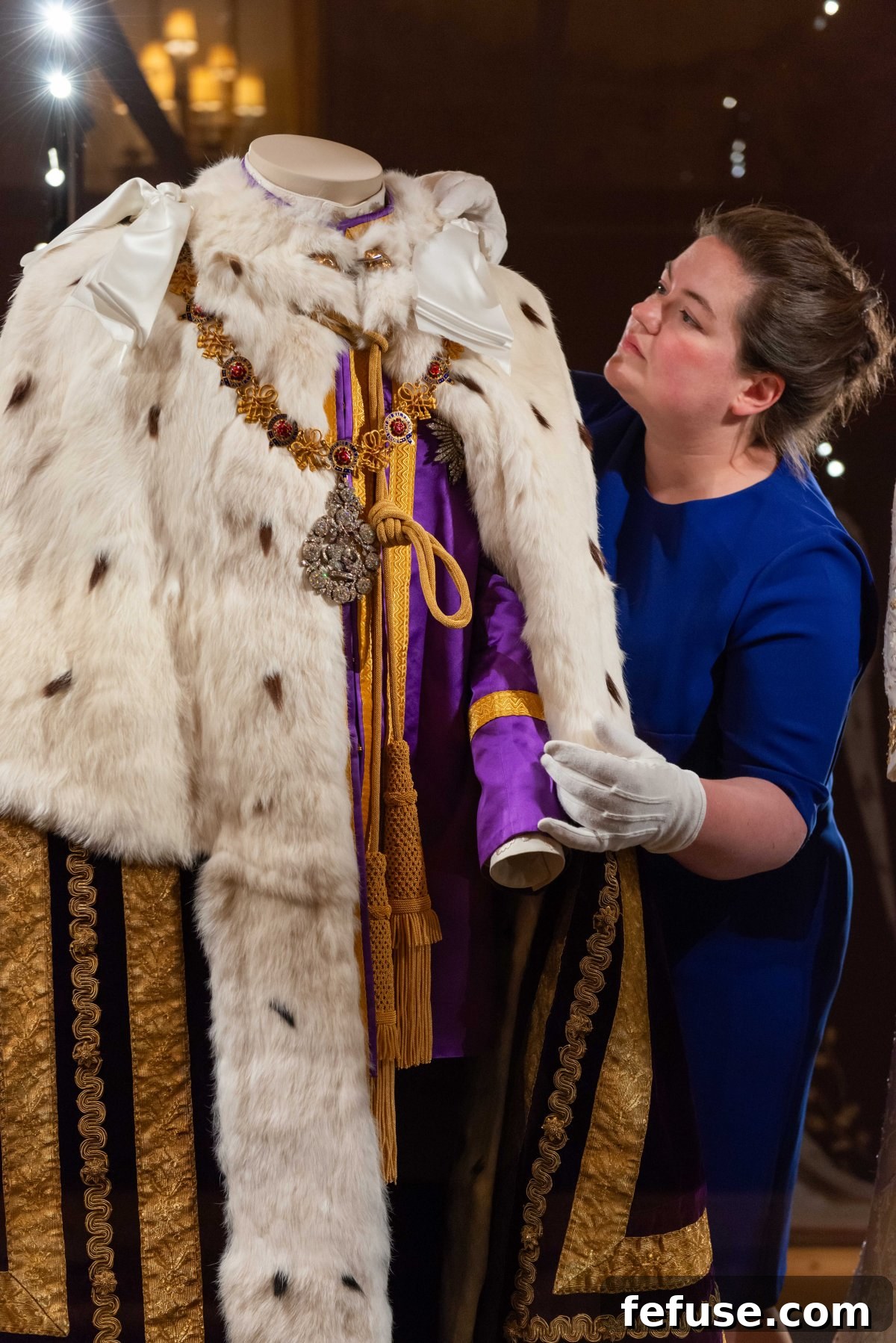
Historic Insignia and Royal Robes
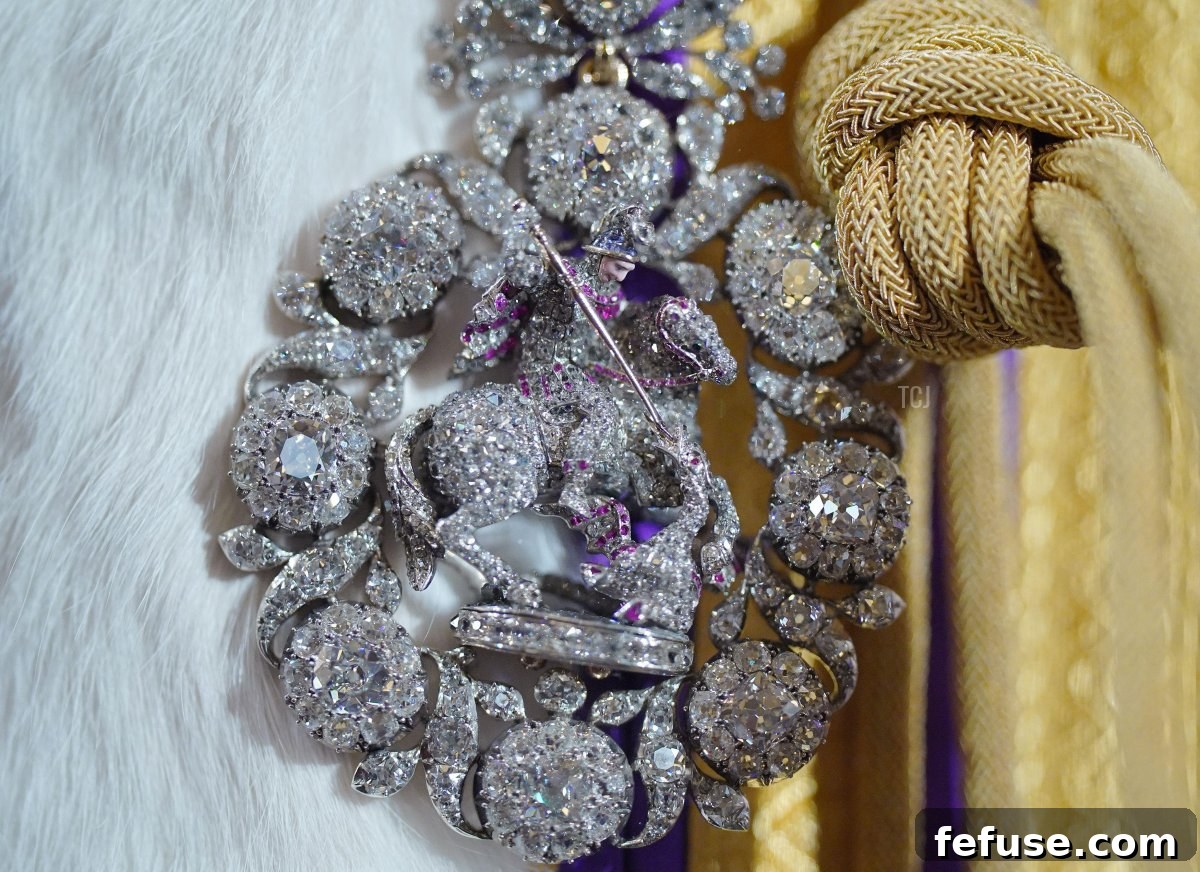
The exhibition also proudly showcases significant pieces of insignia that underscore the King’s new role. Visitors can admire the Star, Collar, and the magnificent Great George of the Order of the Garter, the most ancient and prestigious order of chivalry in the United Kingdom. The exquisite jewelled Great George pendant, believed to have been originally created for King George II, has a rich lineage, having been worn for the Coronations of King George V and King George VI. The Garter Star, another prominent piece, holds a unique personal history as a wedding gift to King George V from the officers of the Royal Navy, Royal Marines, and Royal Naval Reserve, symbolizing deep military ties and loyalty.
A true testament to enduring royal traditions is the inclusion of the Robe of Estate worn by King Charles III for his departure from Westminster Abbey. This magnificent robe, made of rich purple silk velvet with intricate gold lace, carries significant historical weight as it was originally worn by his grandfather, King George VI, for his Coronation in 1937. Prior to its use by His Majesty, the robe underwent careful conservation by the esteemed robemakers Ede and Ravenscroft, ensuring its majestic presence for another generation.
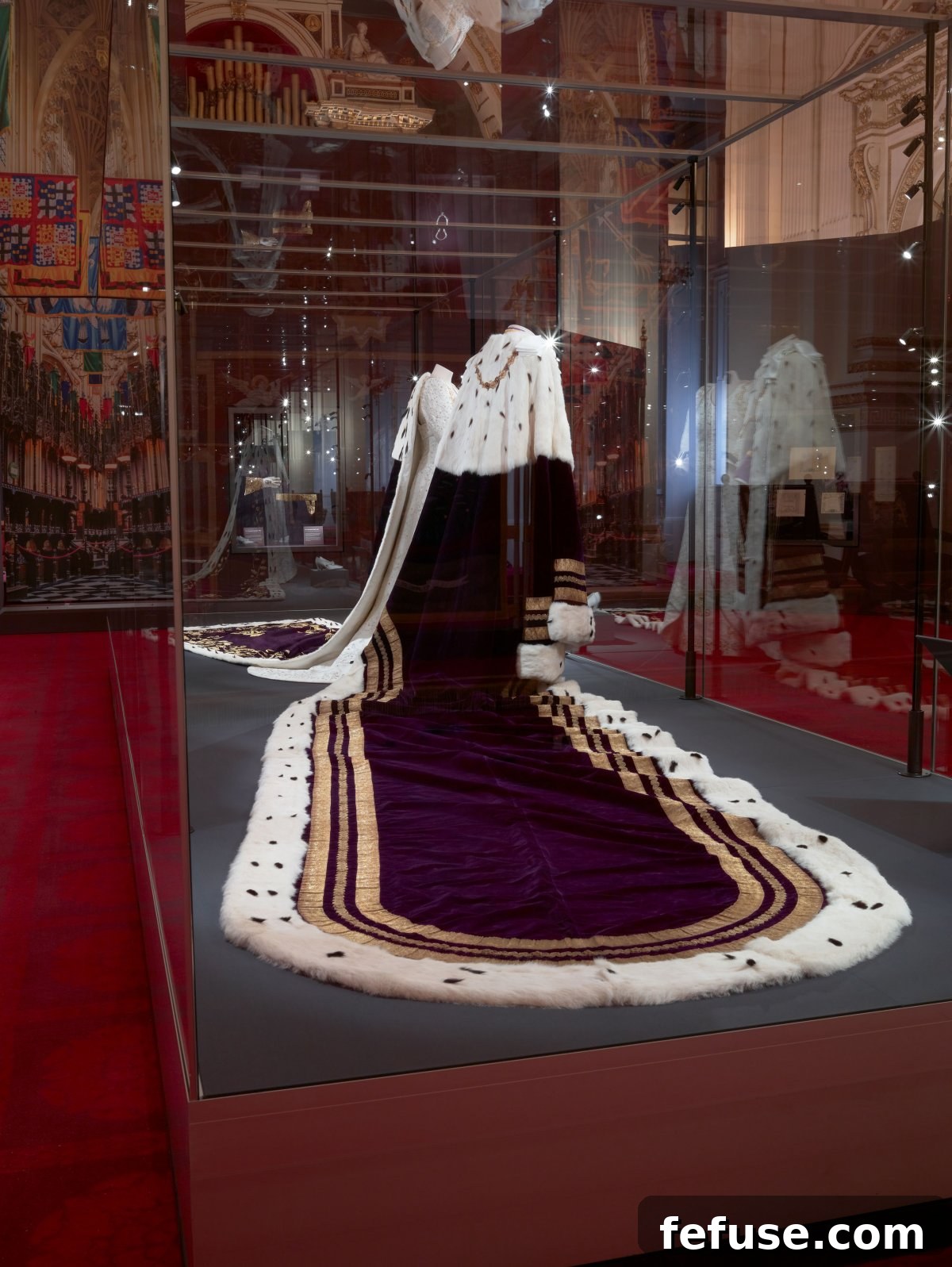
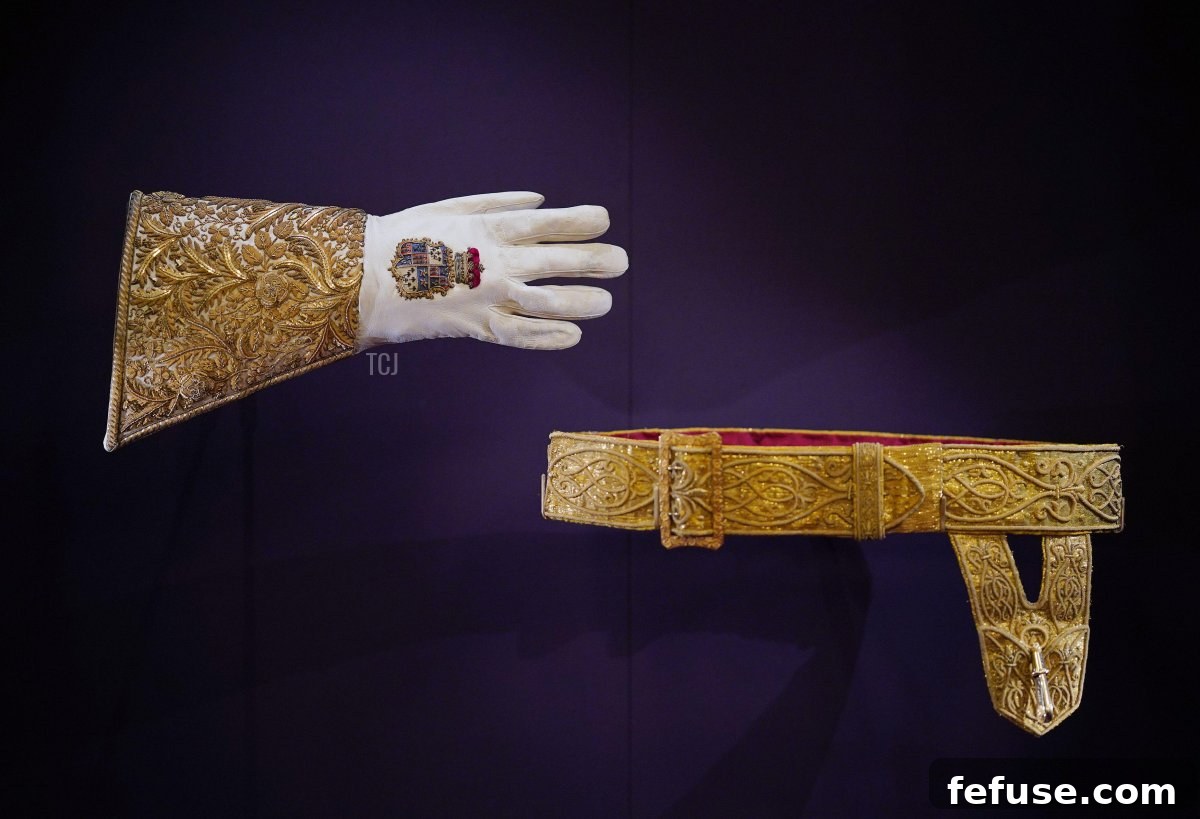
Further enriching the King’s section are additional items crucial to the Coronation ceremony. The Coronation Glove, essential for holding the Sovereign’s Sceptre, and the Girdle (Coronation Sword Belt), designed to secure the Jewelled Sword of Offering around the King’s waist, are also on display. Both items hold an intriguing historical connection, as King Charles III consciously chose to reuse them, following in the footsteps of his grandfather, King George VI, who wore them for his Coronation in 1937. This decision highlights a commitment to sustainability and continuity within the Royal Family.
Queen Camilla’s Coronation Splendor: A Gown of Personal Significance
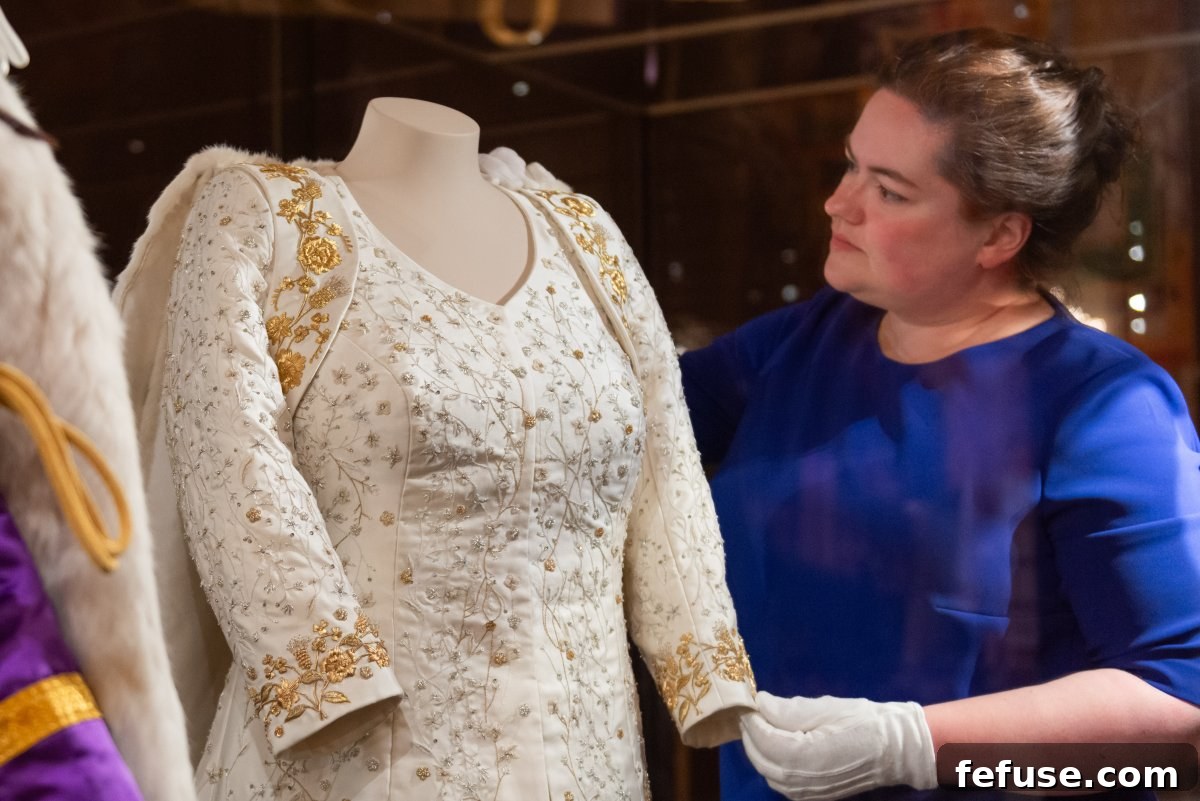
Equally captivating is the display dedicated to Her Majesty Queen Camilla’s Coronation ensemble, offering an intimate look at a gown designed with profound personal meaning and symbolic artistry. Designed by the esteemed British couturier Bruce Oldfield, the Queen’s Coronation Dress is a masterpiece of modern royal fashion, seamlessly blending tradition with unique personal touches that celebrate her affection for nature and her family.
A Dress Woven with Personal Narratives
The dress itself is structured much like a coat dress, fashioned from modern ivory Peau de Soie silk. Its surface is a canvas of breathtaking silver and gold embroidered floral designs, elegantly intertwined with celebratory bunting, evoking a sense of national jubilation. The embroidery tells a story of affection for nature and the British countryside, featuring swathes of wildflowers such as delicate daisy chains, symbolic forget-me-nots, vibrant celandine, and the charming scarlet pimpernel. These choices reflect Their Majesties’ deep connection to the natural world.
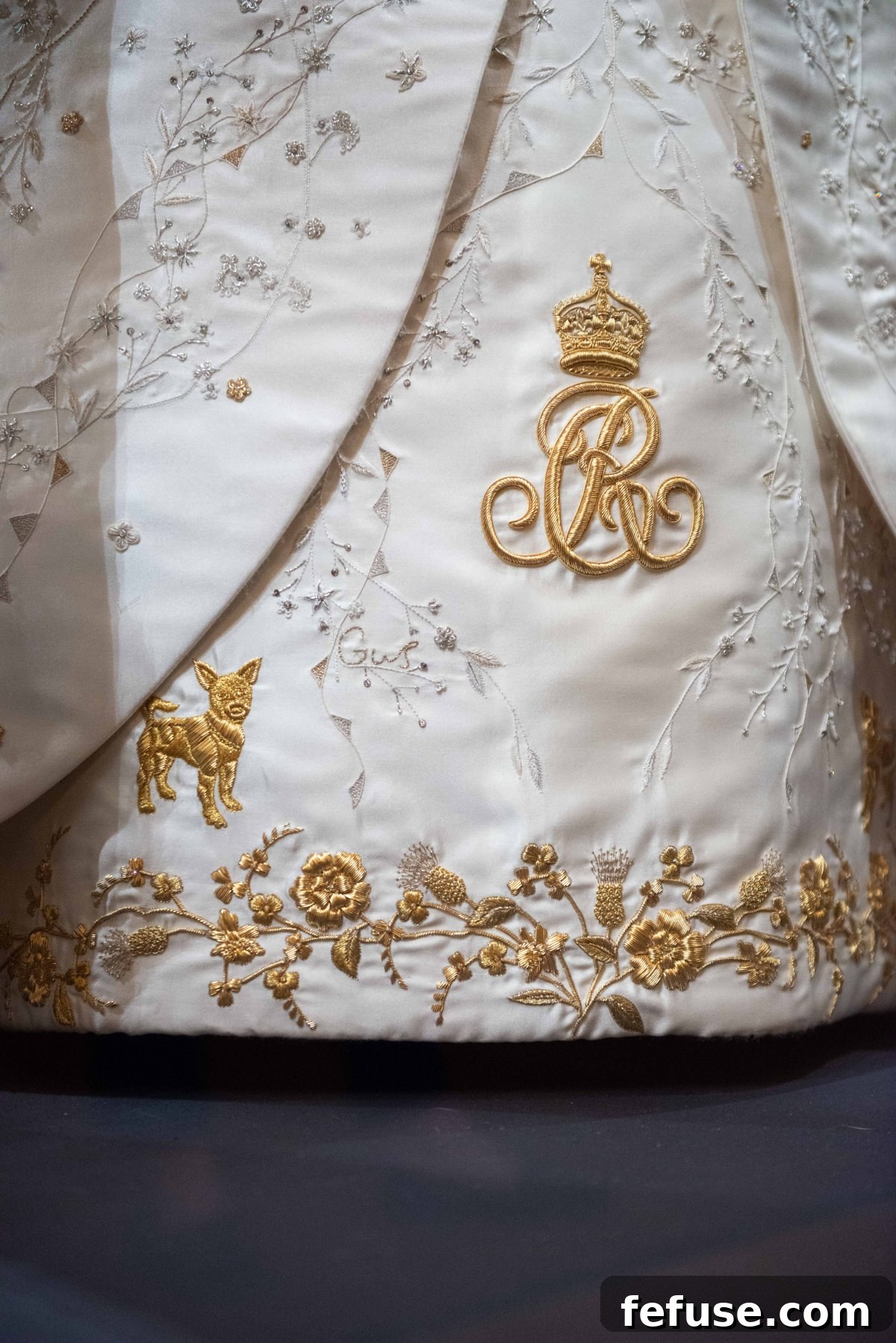
Beyond the sweeping floral motifs, visitors can discern the finely embroidered floral emblems of the four nations of the United Kingdom – the graceful rose for England, the proud thistle for Scotland, the cheerful daffodil for Wales, and the iconic shamrock for Northern Ireland – strategically placed on the front hem of the underskirt and the cuffs of each sleeve. This detail subtly celebrates the unity of the Commonwealth. Closer inspection reveals even more touching personal details: Queen Camilla’s royal cypher, along with endearing portraits of her beloved Jack Russell terriers, Beth and Bluebell, are subtly woven into the gown’s skirt. Furthermore, the names of her cherished children and grandchildren – Tom, Laura, Lola, Freddy, Eliza, Gus, and Louis – are intricately embroidered, making this historic garment a truly personal family heirloom.
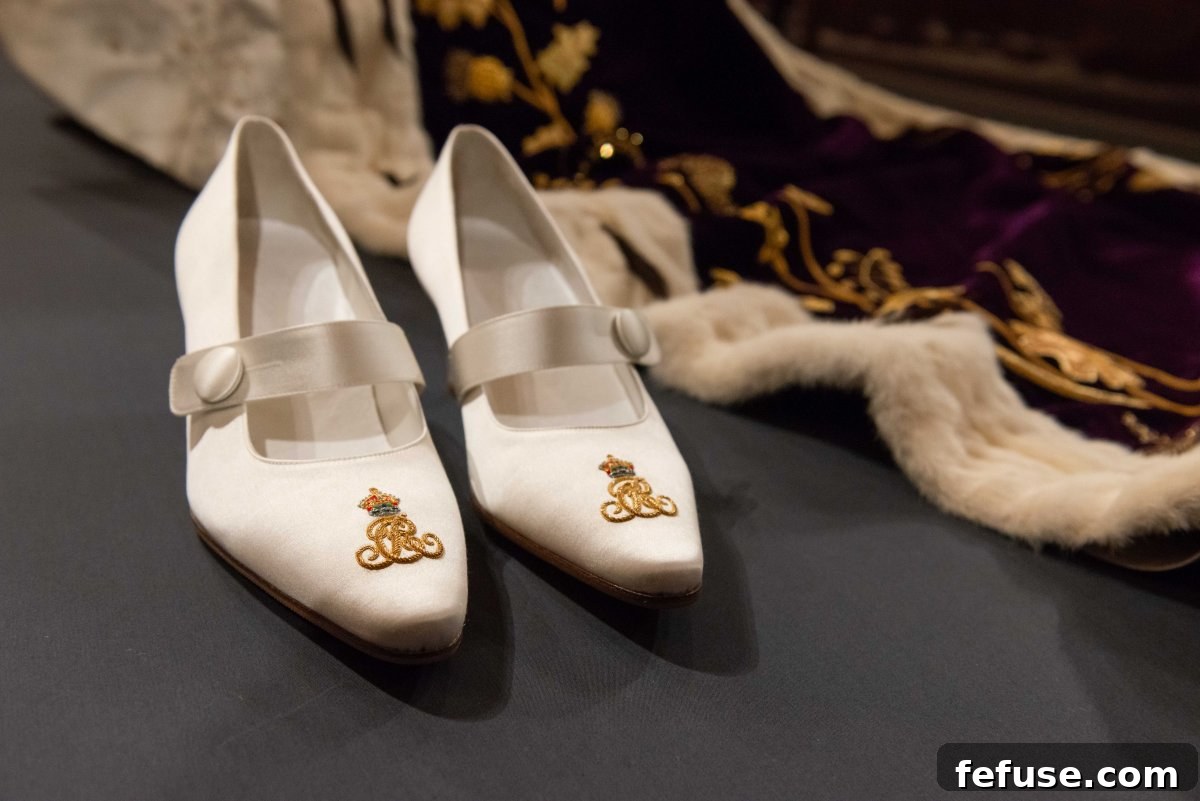
Completing Her Majesty’s Coronation day ensemble are the special shoes she wore during the ceremony. These elegant footwear items are also on display, featuring subtle embroidery of her royal cypher, demonstrating the meticulous attention to detail that extended to every aspect of her attire.
Queen Camilla’s Robe of Estate: A Tapestry of Nature and Family
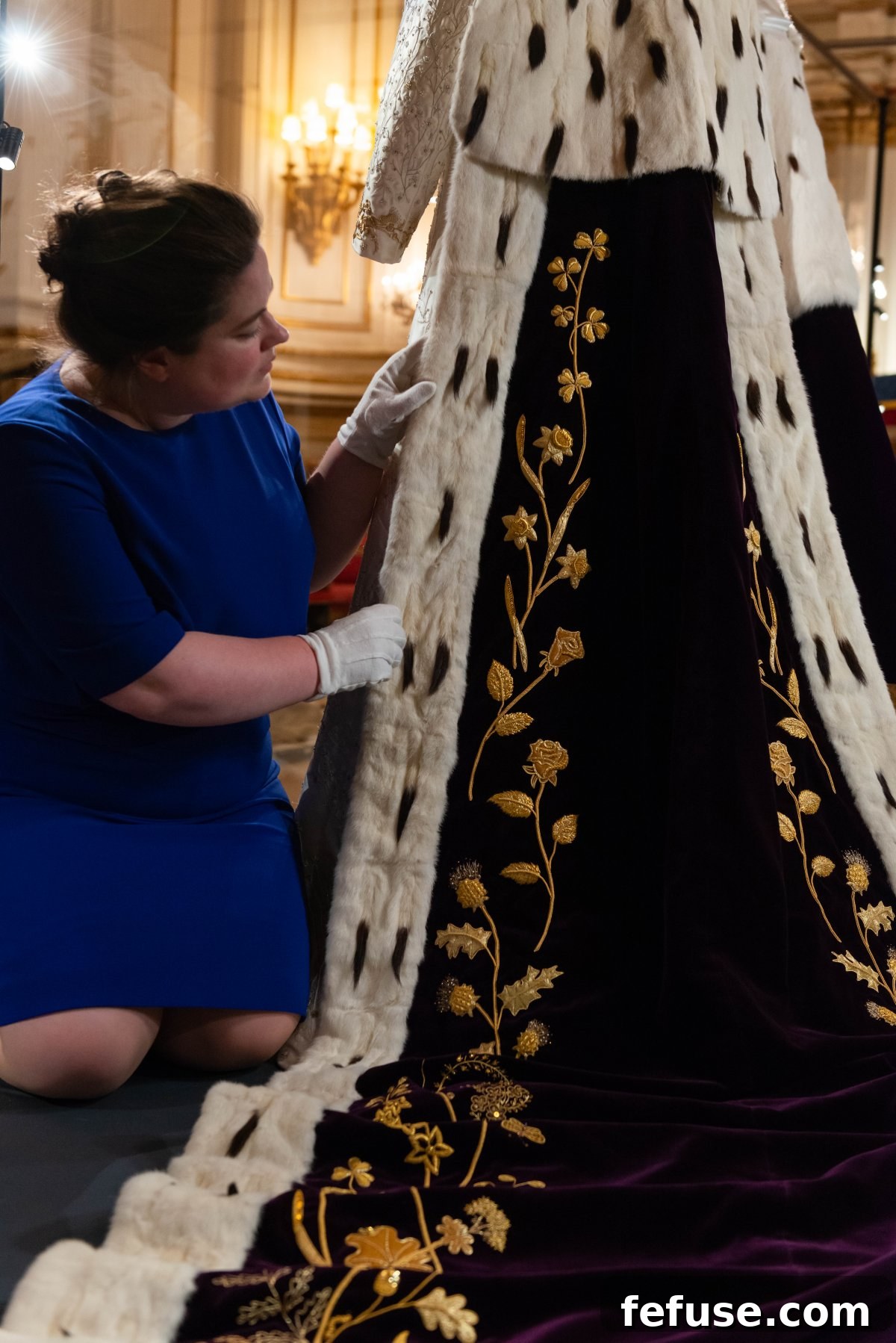
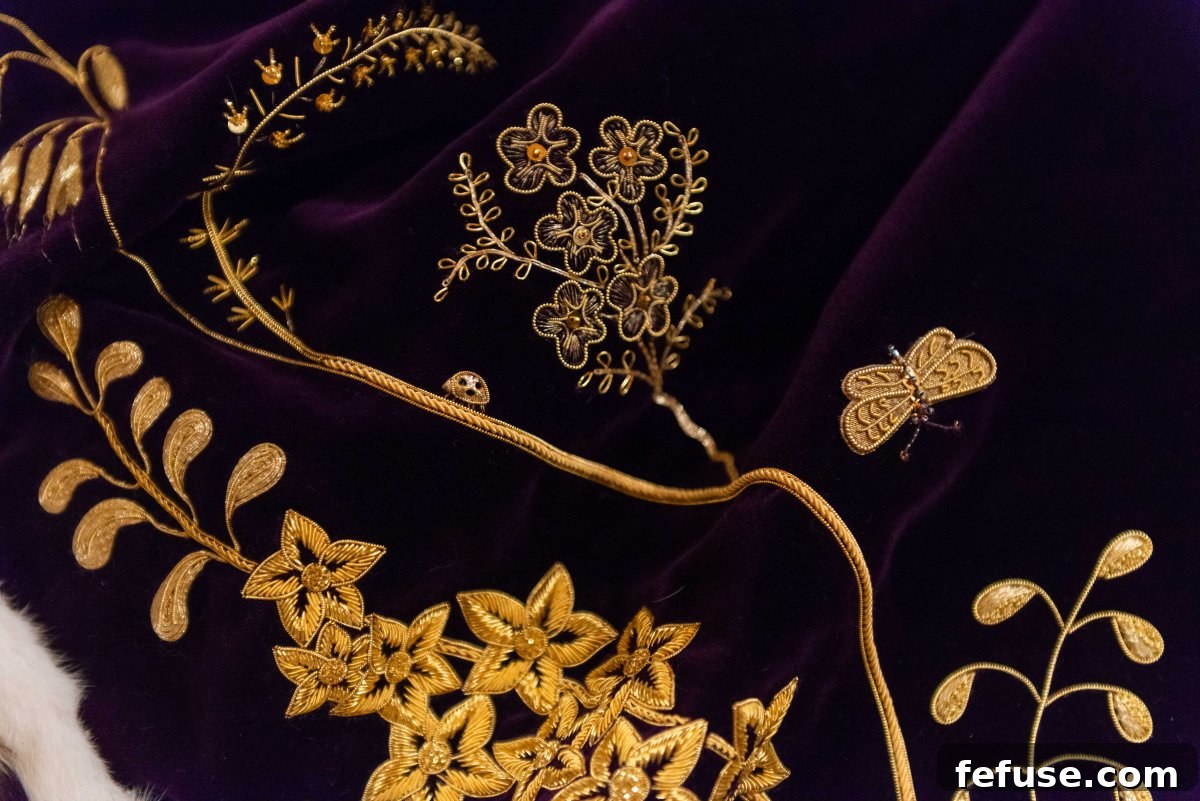
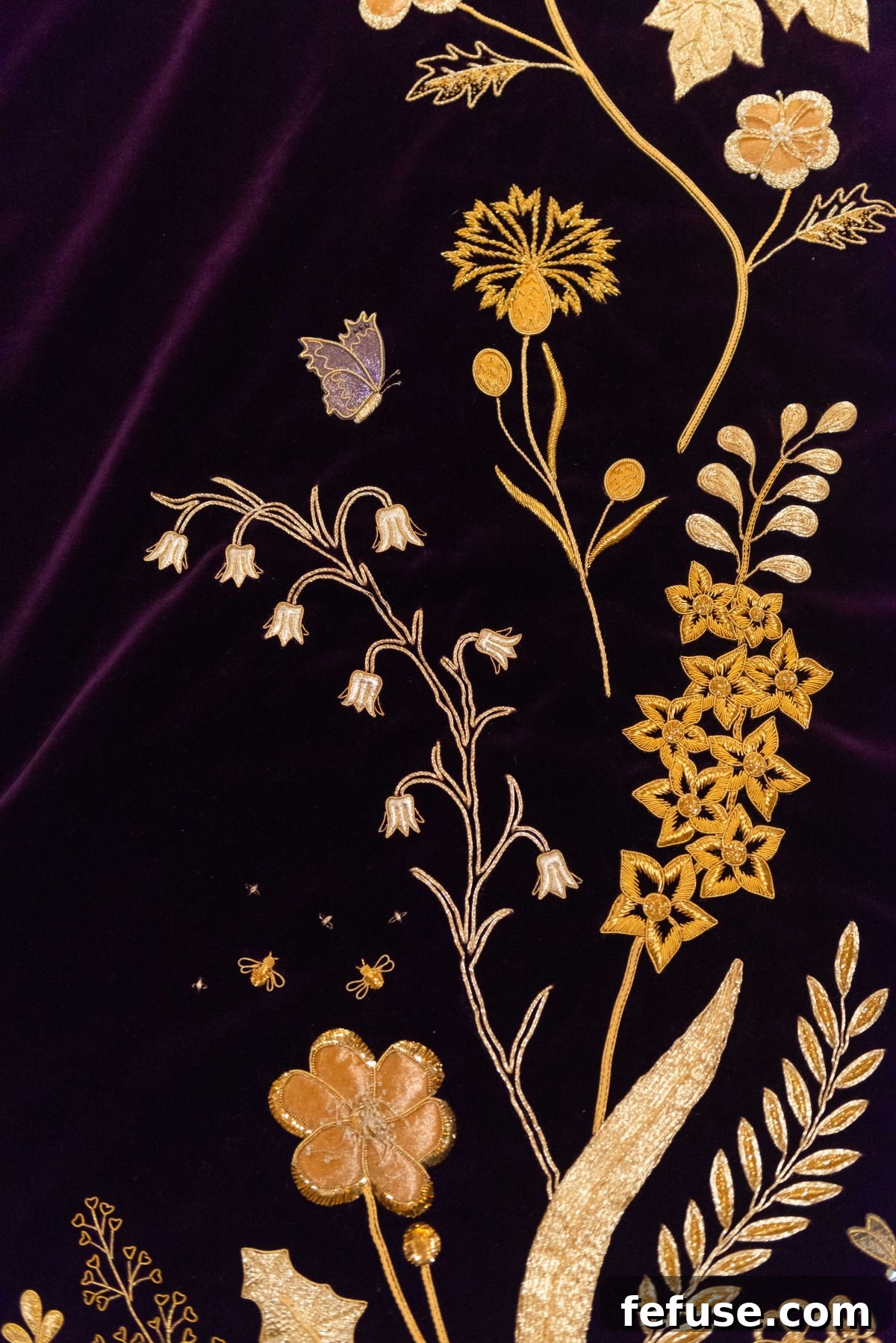
In contrast to the King’s recycled Robe of Estate, Queen Camilla’s Robe of Estate was newly commissioned, allowing for a deeply personalized design. Crafted from sumptuous purple velvet by Ede and Ravenscroft, the robe was exquisitely designed and hand-embroidered by the renowned Royal School of Needlework. They utilized the ancient technique of goldwork, a craft dating back over a thousand years, to bring its intricate patterns to life.
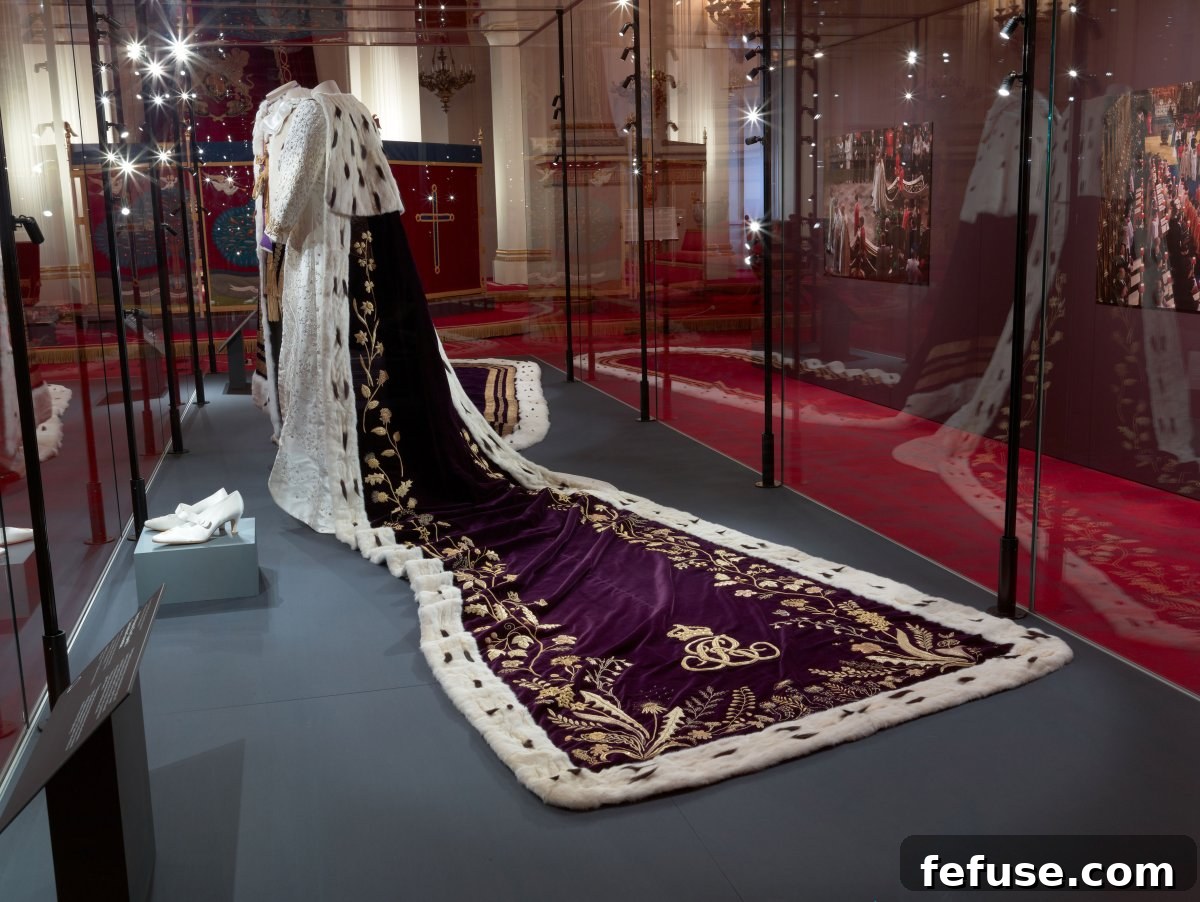
The robe’s design is a profound tribute to nature and the environment, themes close to Their Majesties’ hearts. It features the floral emblems of the United Kingdom alongside an additional 20 plants specifically chosen for their personal associations to the Queen. This rich tapestry of flora includes Scabiosa, also known as pincushion flowers, referencing Her Majesty’s patronage of the Royal School of Needlework during her time as Duchess of Cornwall. Lily of the Valley, a flower that adorned her wedding bouquet and was a cherished favorite of Queen Elizabeth II, also finds its place. Delphinium, representing the Queen’s birth month and a particular favorite of the King, further personalizes the design. In an unprecedented move for a Coronation robe, the design also incorporates beautifully embroidered insects, including bees, butterflies, a beetle, and a caterpillar, symbolizing biodiversity and the interconnectedness of nature.
Beyond the Robes: Ceremonial Furnishings and Sacred Objects
The exhibition extends beyond the royal attire to encompass other profound elements of the Coronation ceremony, offering a holistic view of the historic event. These include the very seats of power and a screen of immense spiritual significance.
The Throne Chairs and Chairs of Estate
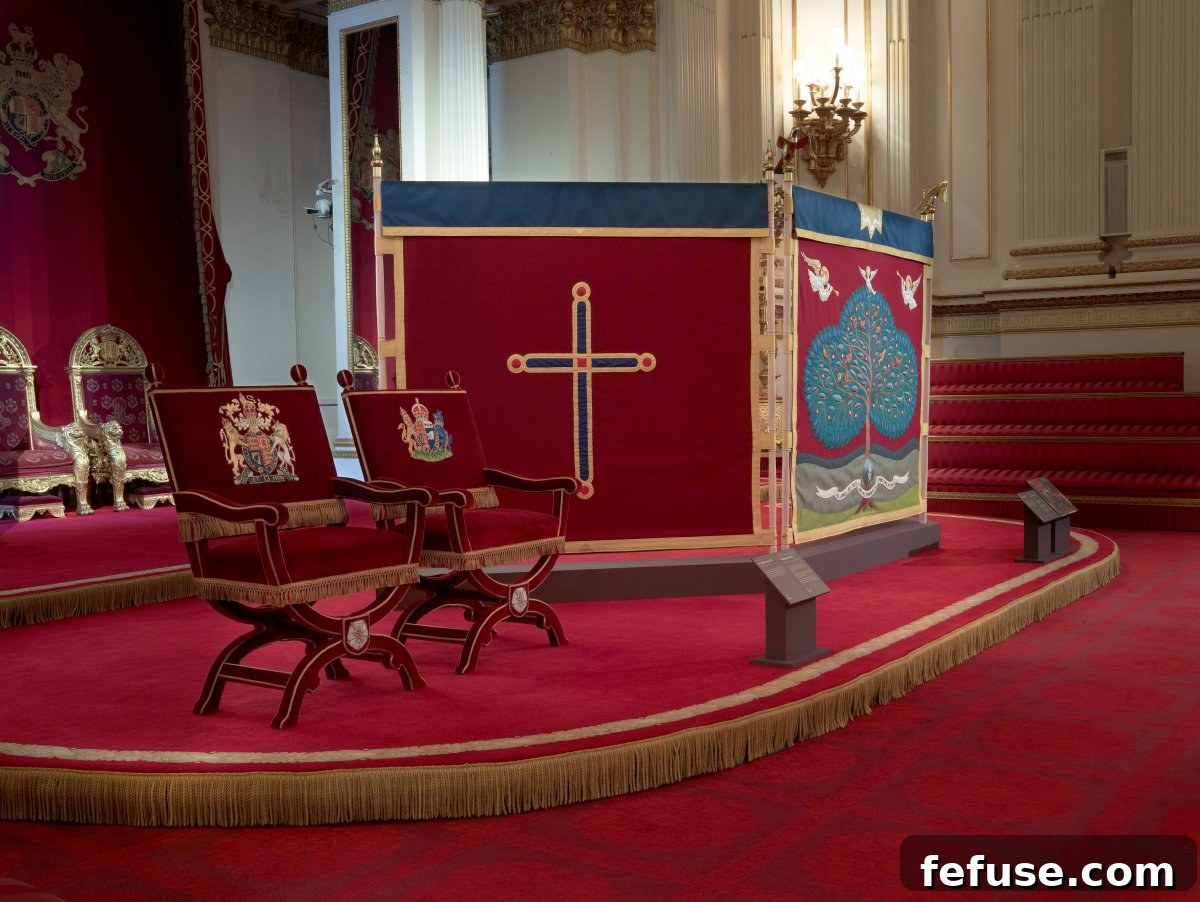
Beneath the Ballroom’s magnificent Throne Canopy, visitors will encounter the imposing Throne Chairs used by Their Majesties for the pivotal moments of the Enthroning and the Homage during the Coronation service. As visitors continue their journey through the Palace’s State Rooms, they will also discover the Chairs of Estate, utilized during the earlier stages of the Coronation in the Throne Room. Both sets of chairs boast a rich heritage, having been crafted for previous Coronations. They have been lovingly conserved by experts from the Royal Household and Royal Collection Trust, with additional conservation and new, exquisite embroidery meticulously carried out by the Royal School of Needlework, ensuring their continued legacy.
The Anointing Screen: A Symbol of Faith and Commonwealth
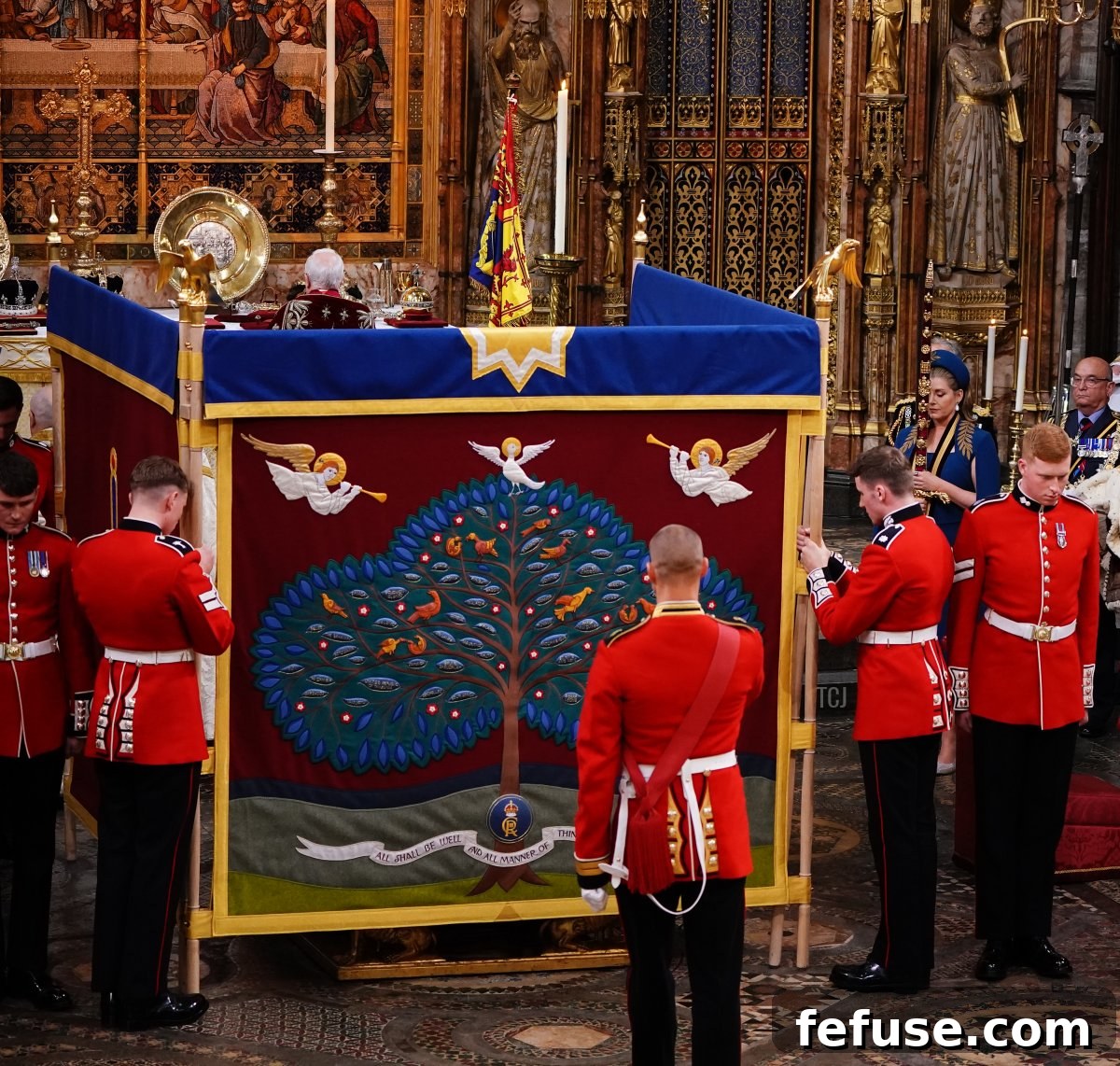
A truly remarkable piece on display is the new Anointing Screen, specifically created for King Charles III’s Coronation. This screen played a profoundly sacred role, shielding His Majesty from public view during the anointing with holy oil – the most sacred and spiritual part of the ceremony. Its central design is a stunning tree with 56 leaves, each representing one of the 56 member countries of the Commonwealth, symbolizing unity and global connection. The screen’s rich maroon, gold, blue, and red color scheme beautifully echoes the historic Cosmati pavement at Westminster Abbey, where the anointing took place.
The design was personally selected by The King, drawing inspiration from the captivating stained-glass Sanctuary Window in the Chapel Royal at St James’s Palace, a gift from the Livery Companies to mark Queen Elizabeth II’s Golden Jubilee in 2002. The screen’s four sturdy oak poles, crafted from a windblown oak tree planted in 1765 on the Windsor Estate, are crowned with two magnificent gilded bronze eagles. This exceptional screen was generously gifted for the Coronation by the City of London Corporation and City Livery Companies, designed by the esteemed iconographer Aidan Hart, and brought to life through a combination of traditional hand and innovative digital embroidery, expertly managed by the Royal School of Needlework. Its presence in the exhibition provides a rare glimpse into a moment of profound spiritual significance.
The Enduring Sparkle: A Historic Royal Jewel
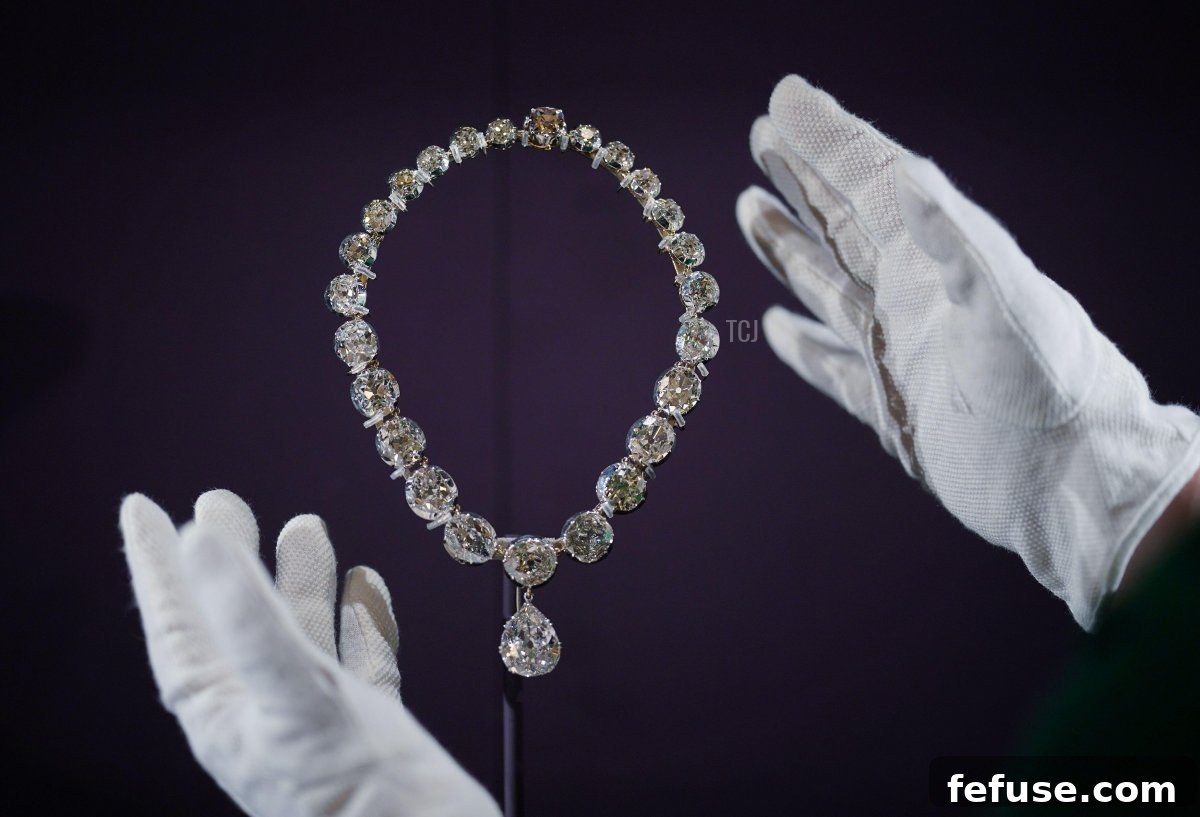
As visitors reach the far side of the ballroom, a radiant sparkle catches the eye, signaling the presence of an additional treasure from the Coronation day.
While the iconic Crown Jewels reside in their permanent home at the Tower of London, this special Royal Collection display features a gem of unparalleled historical significance: the magnificent Coronation Necklace. Crafted by the renowned jewelers Garrard in 1858 for Queen Victoria, this breathtaking necklace has been a constant presence at every subsequent Coronation. Its sparkling legacy includes adornment by Queen Alexandra in 1902, Queen Mary in 1911, Queen Elizabeth (the Queen Mother) in 1937, Queen Elizabeth II in 1953, and most recently, Queen Camilla in 2023. Seeing this enduring symbol of royal heritage up close offers a tangible connection to centuries of monarchy and tradition.
Plan Your Visit: Experience Royal History This Summer
This truly exceptional coronation exhibition is open to the public at Buckingham Palace five days a week, offering a limited-time opportunity from now until September 24th. In addition to the stunning coronation outfits and ceremonial objects, visitors will also have the chance to admire other special touches, including the majestic Diamond Jubilee State Coach, further enriching the royal experience. Don’t miss this unique chance to delve into the heart of British royal history. For tickets, opening times, and comprehensive additional information, prospective visitors are encouraged to consult the official Royal Collection Trust website at rct.uk. Immerse yourself in the grandeur and intricate details of a monumental moment in time.