
Unveiling the Secrets of Earth’s Deep Mantle: How the World’s Largest Diamonds Are Born
The allure of large, exceptional gem diamonds has captivated humanity for centuries. Iconic stones like the legendary Cullinan or the magnificent Lesotho Promise stand as testaments to nature’s profound artistry. Yet, the precise origins of these colossal gems, distinct from other diamonds, have long remained one of geology’s most intriguing enigmas. Recent groundbreaking research by a team of GIA scientists, led by Postdoctoral Research Fellow Evan Smith, has shed brilliant light on this mystery. Their findings, published in the prestigious Science magazine under the title ‘Large Gem Diamonds From Metallic Liquid in Earth’s Deep Mantle,’ propose a revolutionary understanding of how these unparalleled treasures come into existence.
Understanding CLIPPIR Diamonds: A Unique Category of Gems
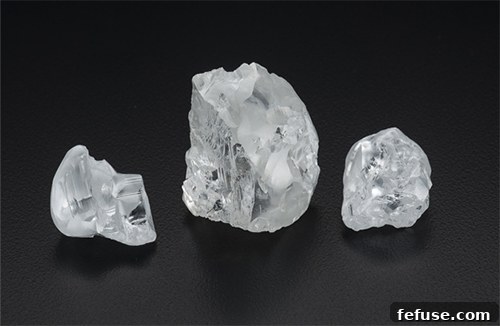
The GIA researchers have identified a distinct category of diamonds, which they’ve dubbed “CLIPPIR” diamonds. This nomenclature, though not an acronym defined in the original text, refers to a specific set of physical characteristics that set them apart. Foremost among these traits is their remarkably low nitrogen concentration, a feature that offers crucial clues about their formation environment. Beyond their chemical composition, CLIPPIR diamonds are often characterized by their immense size, irregular shapes, and sometimes resorbed surfaces, indicating a complex growth history within the Earth’s interior. These unique attributes, the researchers emphasize, provide an extraordinary window into the processes unfolding within the deep recesses of our planet, telling a remarkable story about the conditions far beneath our feet.
The Metallic Liquid Hypothesis: A Paradigm Shift in Diamond Formation
The most significant revelation from this GIA study is the postulate that CLIPPIR diamonds may have grown from a metallic liquid deep within Earth’s mantle. This groundbreaking hypothesis challenges previously held notions about diamond genesis, suggesting a much more complex and dynamic environment than once imagined. Specifically, the article states that “The new findings show that CLIPPIR diamonds may have grown from a metallic liquid in Earth’s deep mantle.” This metallic liquid is primarily composed of iron and nickel, and its stability is maintained by the extreme pressures and temperatures characteristic of the deep mantle. While the concentration of this metal in these regions is estimated to be approximately 1% or even less, its presence is profoundly significant. It plays a pivotal role in regulating and limiting the availability of oxygen, a critical parameter that governs not only the local chemistry but also the large-scale geological evolution of the Earth. This understanding fundamentally alters our perception of the deep mantle’s chemical landscape and its potential for fostering such magnificent gems.
Inclusions: Tiny Witnesses from the Deep Earth
The foundation of this discovery lies in the meticulous examination of inclusions – minute fragments of foreign material trapped within diamonds during their growth. While CLIPPIR diamonds typically exhibit few inclusions, especially once they are cut and polished, occasionally they harbor small, invaluable metallic inclusions. These inclusions, the researchers explain, provide direct physical evidence supporting their theory. “The metallic inclusions coexist with traces of fluid methane and hydrogen,” the article notes, indicating a highly reduced, hydrogen-rich environment. This co-existence is a powerful indicator of the diamond’s formation conditions. Furthermore, beyond the metallic phases, some CLIPPIR diamonds also contain mineral inclusions that serve as geological barometers, precisely constraining the depths at which these diamonds crystallized. These mineral indicators reveal that CLIPPIR diamonds formed at astonishingly extreme depths, likely within a range of 360 to 750 kilometers deep within the convecting mantle. This contrasts sharply with the formation depths of most other gem diamonds, which typically crystallize in the lower part of continental tectonic plates at shallower depths of 150 to 200 kilometers. This profound difference in origin depth is crucial, as it implies a distinct set of physical and chemical conditions, far removed from the more commonly understood diamond formation processes. This new explanation elegantly resolves one of the major enigmas in the study of diamond formation: how the world’s most exceptional and largest diamonds truly came to be.
The Composition of Metallic Inclusions and the Molten Origin
Delving deeper into the nature of these pivotal inclusions, the GIA study reveals that the metallic inclusions are a solidified mixture primarily composed of iron, nickel, carbon, and sulfur. Within the minuscule spaces between these metallic phases and the surrounding diamond, traces of fluid methane and hydrogen are also present, further emphasizing the unique chemical environment. The researchers postulate, “Originally, this mix was a larger mass of molten metallic liquid in Earth’s deep mantle, from which the pure carbon crystallized to form diamonds.” As these immense diamonds grew over geological timescales, small droplets of this molten metallic liquid were occasionally entrapped within them, preserving a pristine sample of their birth environment. These metallic droplets, now solidified, serve as time capsules, offering an unparalleled glimpse into the deep mantle’s primordial soup from which the rarest and most valuable diamonds emerged. The consistency and systematic nature of these inclusions across various CLIPPIR diamonds provide compelling evidence for this novel formation mechanism, moving it beyond mere theoretical speculation into empirically supported scientific fact.
Broader Implications for Earth Sciences: Decoding the Deep Earth
The GIA researchers’ findings extend far beyond the realm of gemology; they hold profound implications for our understanding of Earth’s deep interior and fundamental geological processes. Prior theoretical models and experimental studies had predicted that “parts of the deep mantle below about 250 km depth contain small amounts of metallic iron and have limited available oxygen.” The discovery of metallic inclusions, encased by methane and hydrogen jackets within CLIPPIR diamonds, now provides systematic physical evidence that definitively supports these long-standing predictions. This is a monumental step forward, transforming theoretical frameworks into observable realities. While the full extent of metal distribution within the deep mantle remains an area for future investigation, this key observation significantly enhances our understanding of the Earth’s inner workings. It has broad implications for several critical aspects of deep Earth behavior, including:
- The Recycling of Surface Rocks: Understanding how surface materials are subducted and reintegrated into the convecting mantle, influencing its chemical composition and physical properties.
- Deep Storage and Cycling of Carbon: Carbon is a fundamental element for life and plays a crucial role in Earth’s climate system. The discovery of deep mantle carbon cycling through metallic liquids provides new insights into the planet’s long-term carbon reservoir and its interaction with surface processes.
- Deep Storage and Cycling of Hydrogen: Hydrogen, often overlooked, is a volatile element with significant implications for mantle rheology, melting, and the generation of magmas. Its presence in metallic inclusions suggests a previously underappreciated hydrogen reservoir and cycling pathway in the deep Earth.
These findings underscore the dynamic and complex interplay of elements and conditions deep within our planet, influencing everything from plate tectonics to atmospheric composition over geological timescales. The GIA’s pioneering research on CLIPPIR diamonds not only unravels a long-standing mystery in gemology but also contributes vital pieces to the larger puzzle of Earth’s evolution and internal dynamics.
GIA’s Continuing Legacy of Scientific Excellence
This pivotal research reaffirms the Gemological Institute of America’s (GIA) standing as a world leader in gemological research and education. By pushing the boundaries of scientific inquiry, GIA scientists like Evan Smith are not only advancing our understanding of precious stones but also contributing significantly to broader fields of Earth and planetary sciences. Their rigorous methodology, cutting-edge analytical techniques, and dedication to unraveling the Earth’s secrets continue to yield insights that reshape our comprehension of natural phenomena.
Conclusion: A New Chapter in Diamond Science
The discovery that the world’s largest and most exceptional diamonds, the “CLIPPIR” stones, originate from metallic liquid deep within Earth’s convecting mantle marks a profound advancement in both gemology and Earth sciences. Through the study of tiny metallic inclusions and associated volatiles, GIA researchers have unlocked a revolutionary understanding of the extreme conditions under which these magnificent gems are formed, far deeper than previously imagined. This research not only resolves a persistent enigma about diamond genesis but also provides invaluable physical evidence for the presence of metallic iron, limited oxygen, and the deep cycling of carbon and hydrogen within the Earth’s interior. As we continue to explore the mysteries beneath our feet, these deep mantle diamonds stand as radiant messengers, carrying tales of our planet’s hidden depths and its dynamic, ever-evolving story.

Rough CLIPPIR diamonds, from the Letseng mine, Lesotho, exemplifying large size (14 to 91 carats here), irregular shape and resorbed surfaces. Photo by Robert Weldon/GIA; courtesy of Gem Diamonds Ltd.
Source: gjepc.org