
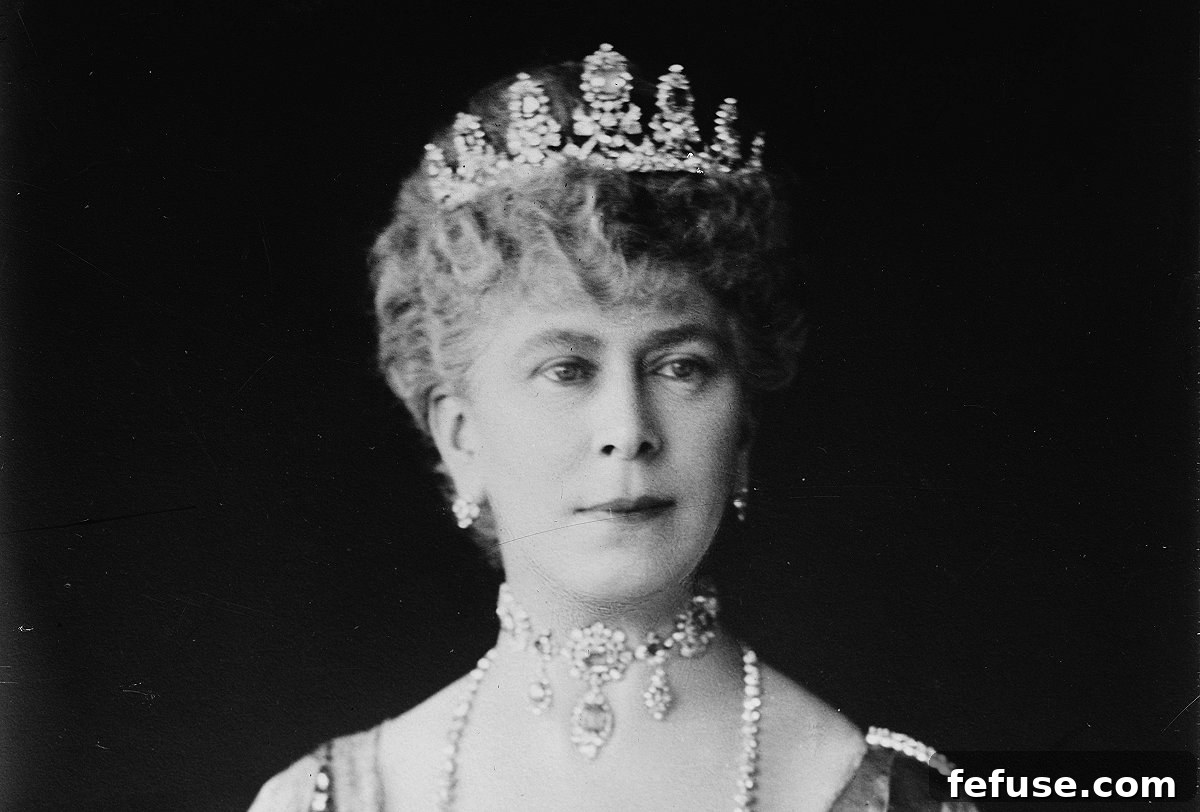
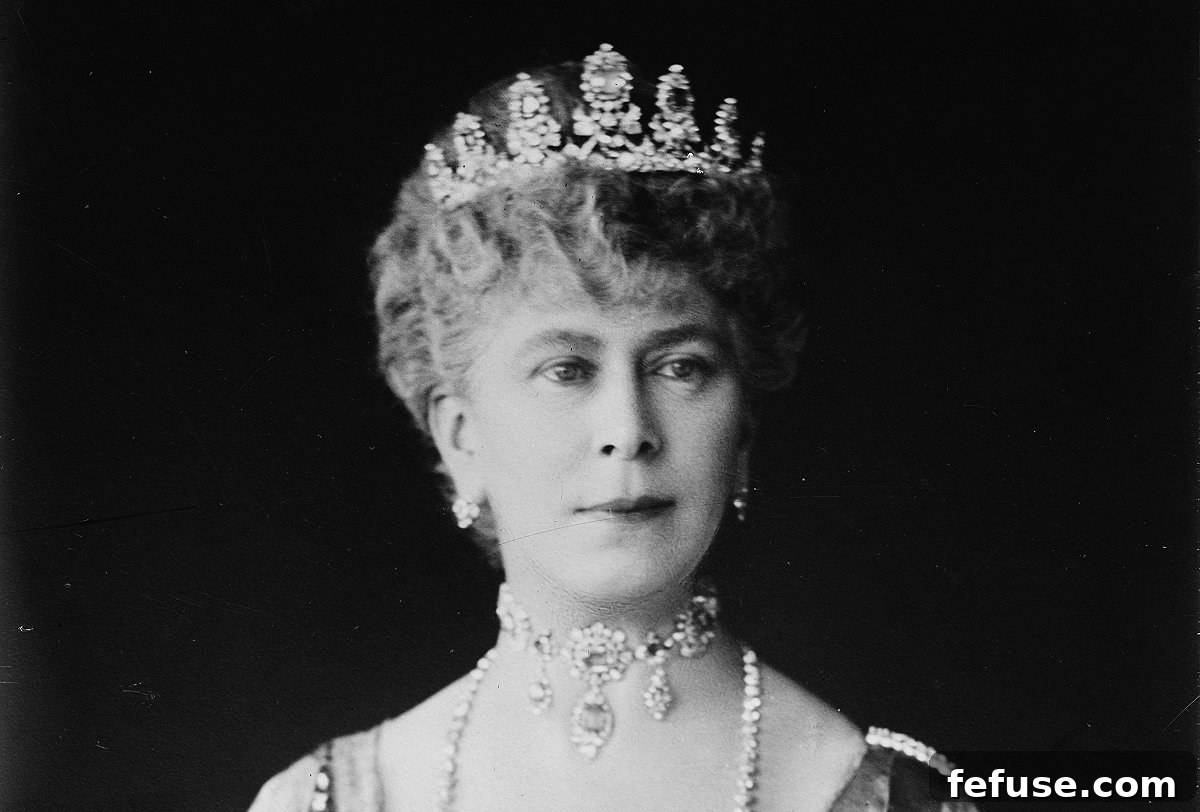
The Royal Blue Legacy: Unveiling Queen Mary’s Exquisite Sapphire Jewelry Collection
While Queen Mary of Teck is famously associated with magnificent pearls and dazzling emeralds, her personal jewelry collection, a treasure trove of unparalleled splendor, also boasted an extraordinary array of blue sapphires. These majestic gemstones, celebrated for their deep, captivating hues and symbolic significance, adorned some of the most spectacular and historically rich pieces ever owned by the British monarchy. From grand tiaras that crowned her regal presence to intricate brooches that added a touch of elegance to her ensembles, and dazzling necklaces that shimmered with every movement, Queen Mary’s sapphires tell a fascinating story of royal acquisitions, dynastic connections, and timeless style. This comprehensive exploration delves into the origins, design intricacies, and succession of these cherished sapphire jewels, highlighting their enduring beauty and the legacy they continue to uphold within the British Crown Jewels. Join us on a captivating journey through the shimmering world of Queen Mary’s most beloved sapphire masterpieces, pieces that continue to inspire awe and admiration.
Queen Mary’s Russian Brooch: A Precious Romanov Wedding Gift
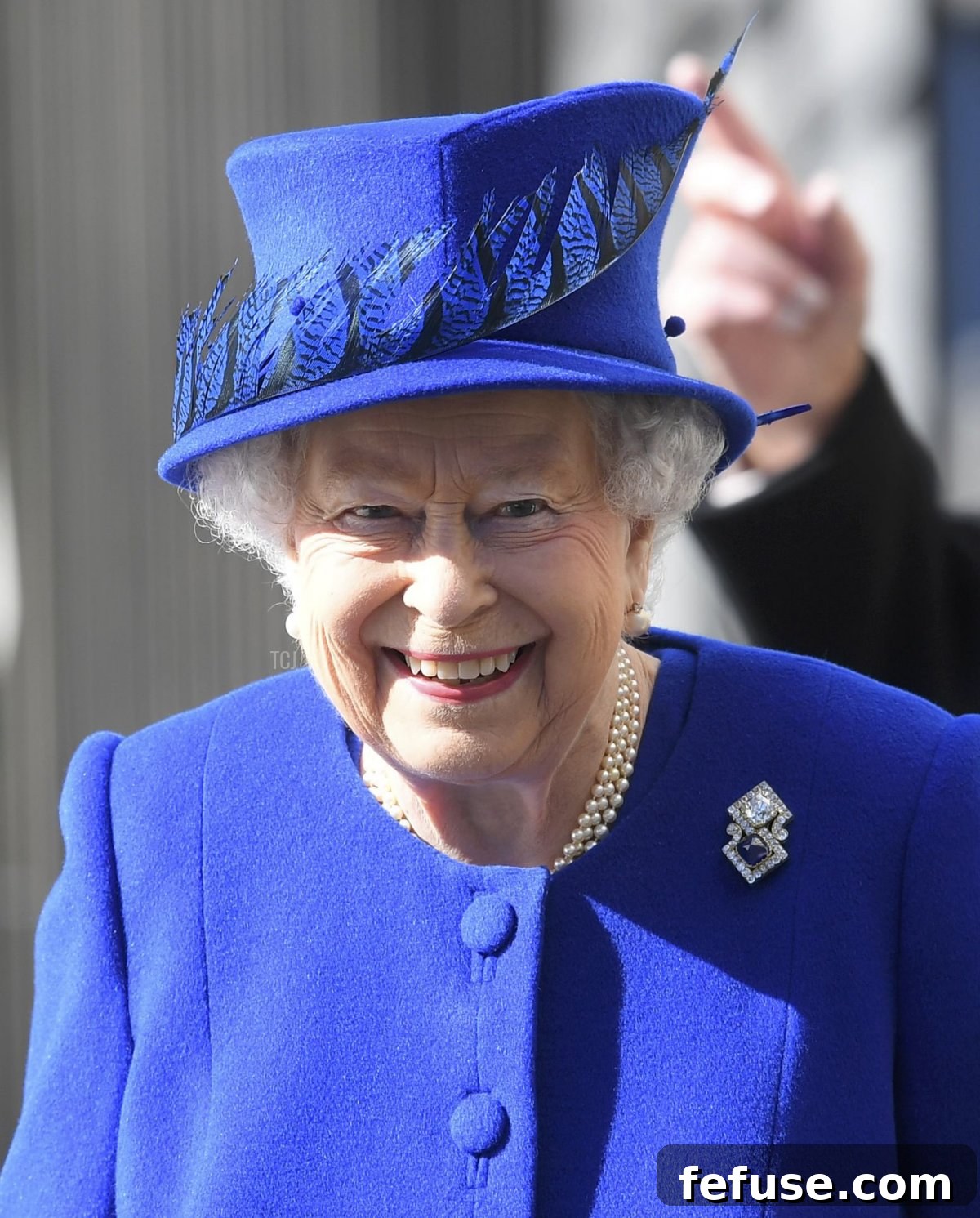
Among the earliest and perhaps most sentimentally significant sapphire jewels in Queen Mary’s illustrious collection was this breathtaking geometric brooch. This remarkable piece served as an exceptional wedding gift to the then Princess Victoria Mary of Teck in the summer of 1893, presented by her new husband’s esteemed Romanov aunt, Empress Marie Feodorovna of Russia. The brooch stands as a magnificent example of turn-of-the-century jewelry design, masterfully crafted with a prominent, exquisitely cut diamond at its core, elegantly framed by a striking sugarloaf sapphire. The sugarloaf cut, renowned for its distinctive domed or pyramidal facet pattern, allows the sapphire’s deep, velvety blue color to exhibit an extraordinary depth and luminosity, making it truly stand out. Queen Mary, celebrated for her refined taste, frequently adorned her attire with this brooch, typically choosing to pin it horizontally across her bodice or a sash. This particular orientation emphasized its unique geometric silhouette and allowed the interplay of light on its precious gemstones to be fully appreciated. Following her passing in 1953, Queen Mary thoughtfully bequeathed this treasured heirloom to her beloved granddaughter, Queen Elizabeth II. Her Majesty has continued the tradition of wearing the Russian Brooch frequently throughout her long reign. While Queen Mary preferred a horizontal placement, Queen Elizabeth II often opts for a vertical orientation, showcasing the brooch’s versatility and adapting it to her own distinct style while honoring its rich history and familial connection. This magnificent sapphire brooch remains a cherished and regularly worn item within the current Queen’s extensive collection, symbolizing an enduring link between the British and Russian royal houses.
Prince Albert’s Brooch: An Enduring Emblem of Royal Love and Succession
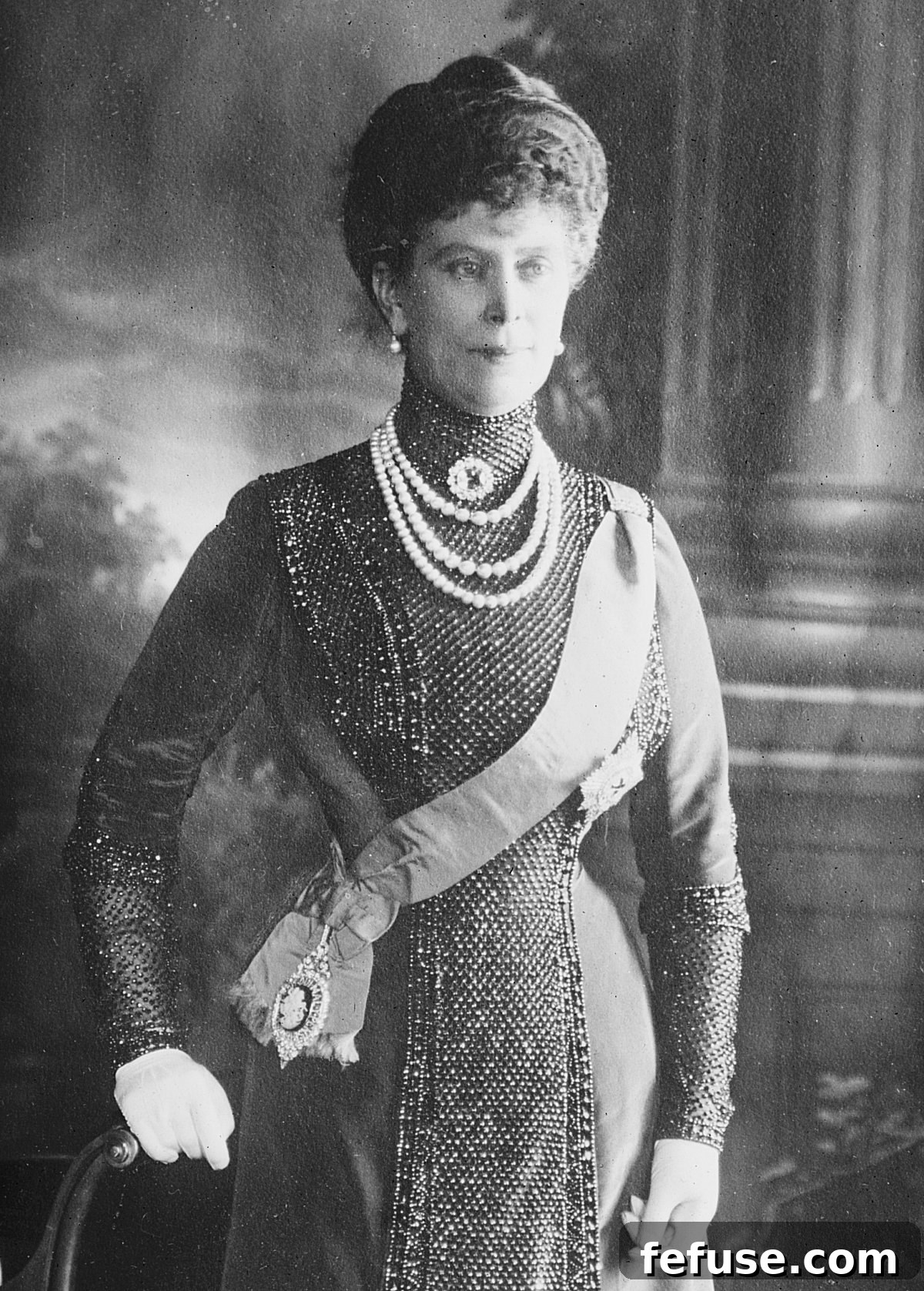
A pivotal moment for Queen Mary’s jewelry collection occurred in 1910 when her husband ascended to the throne as King George V. With this, they inherited a significant portion of the royal jewelry designated as “heirlooms of the Crown.” These invaluable pieces are not merely personal possessions but are specifically set aside for the use of the reigning monarch or their consort, ensuring their continuity and preservation through generations of the British royal family. Among these profoundly historic treasures was the iconic Prince Albert’s Brooch, a jewel imbued with deep sentimental value and royal significance. This exquisite diamond and sapphire cluster brooch was originally a poignant gift from Prince Albert to Queen Victoria, presented to her on the evening before their highly anticipated royal wedding in 1840. Its design is a masterpiece of classic elegance: a magnificent central sapphire, famed for its intense blue hue, is encircled by a dazzling halo of perfectly matched diamonds, creating a timeless and regal aesthetic. Since its original presentation, Prince Albert’s Brooch has been worn by every British queen, cementing its status as a powerful symbol of conjugal love, dynastic continuity, and the enduring legacy of the monarchy. Above, Queen Mary is seen proudly wearing this iconic brooch for an official photograph taken in July 1911, an image that captures her regal bearing and the brooch’s prominent place in her collection. Today, it remains a favorite of successive monarchs, frequently chosen for significant state occasions and public appearances, underscoring its historical importance and undeniable beauty within the Crown Jewels.
Queen Mary’s Honeysuckle Tiara: A Paragon of Versatile Royal Design
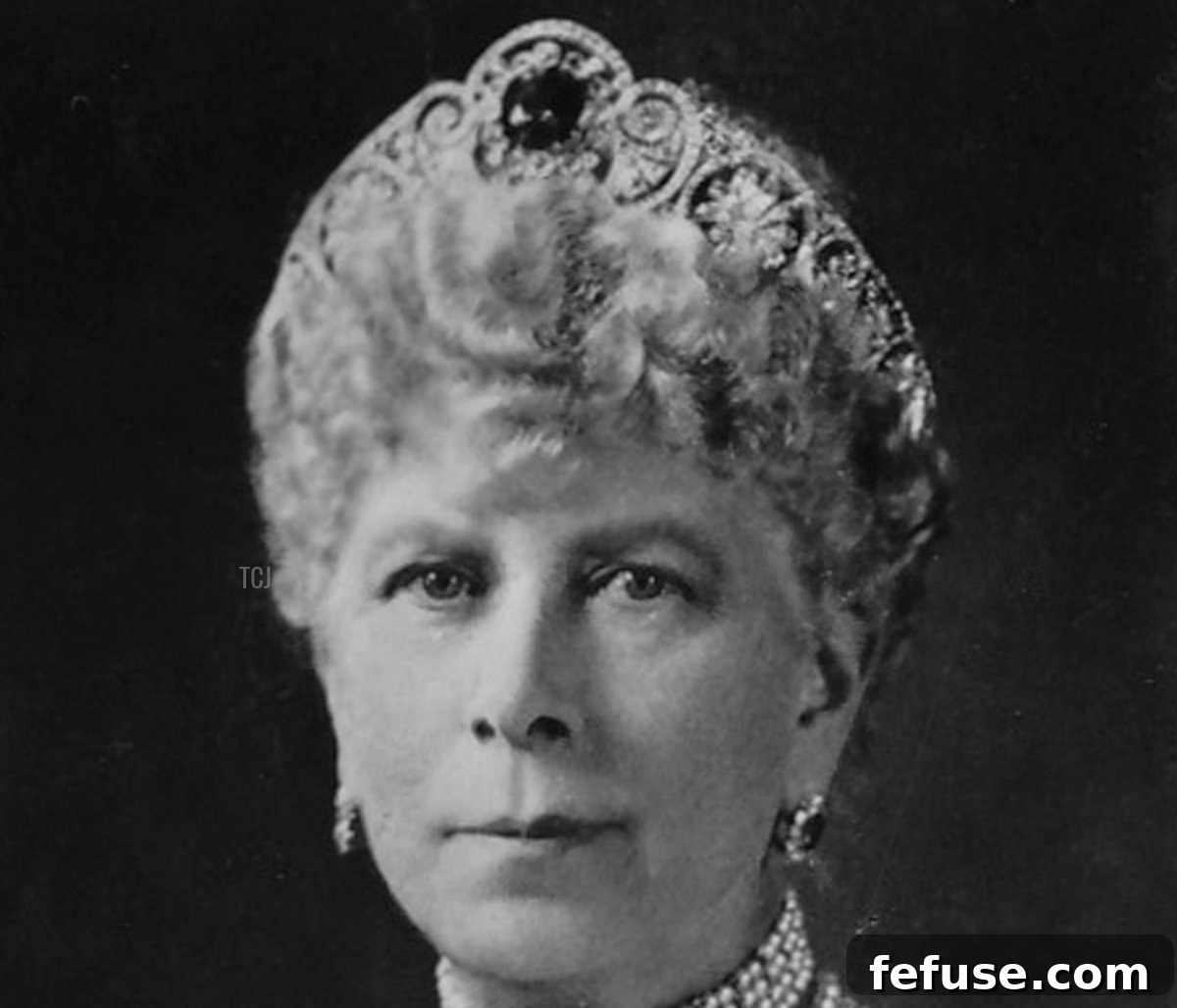
Queen Mary, known for her astute appreciation of adaptable and multi-functional jewels, personally commissioned the exquisite Honeysuckle Tiara from the renowned royal jewelers Garrard in 1914. This magnificent diamond tiara was crafted with a keen eye for resourcefulness, utilizing a selection of diamonds repurposed from the dismantled County of Surrey Tiara. The design of the Honeysuckle Tiara is a masterclass in classic elegance, featuring intricate diamond scrolls and delicate floral motifs that evoke the natural beauty of the honeysuckle plant, providing a timeless and stately appearance. A defining characteristic and perhaps its most ingenious feature was its remarkable versatility, achieved through interchangeable elements. One of the tiara’s three original central ornaments was a truly spectacular sapphire and diamond cluster. This particular sapphire element was not merely designed to be the crowning glory of the tiara but was also cleverly engineered to detach and be worn independently as a stunning brooch, offering Queen Mary various styling possibilities for different occasions. This sapphire center later found a new life and versatility when it was adapted for use with the Sunray Bandeau, further exemplifying Queen Mary’s innovative approach to her extensive jewelry collection. Today, the Honeysuckle Tiara, though sometimes seen with alternative gem clusters such as pearls, remains within the royal family, belonging to the Duke and Duchess of Gloucester. Its sapphire ornament stands as a testament to the pioneering spirit of royal jewelry design during Queen Mary’s reign, showcasing how supreme elegance can be harmoniously combined with practical functionality in pieces destined for enduring royal splendor.
The Cambridge Sapphire Parure: A Majestic Dynastic Inheritance
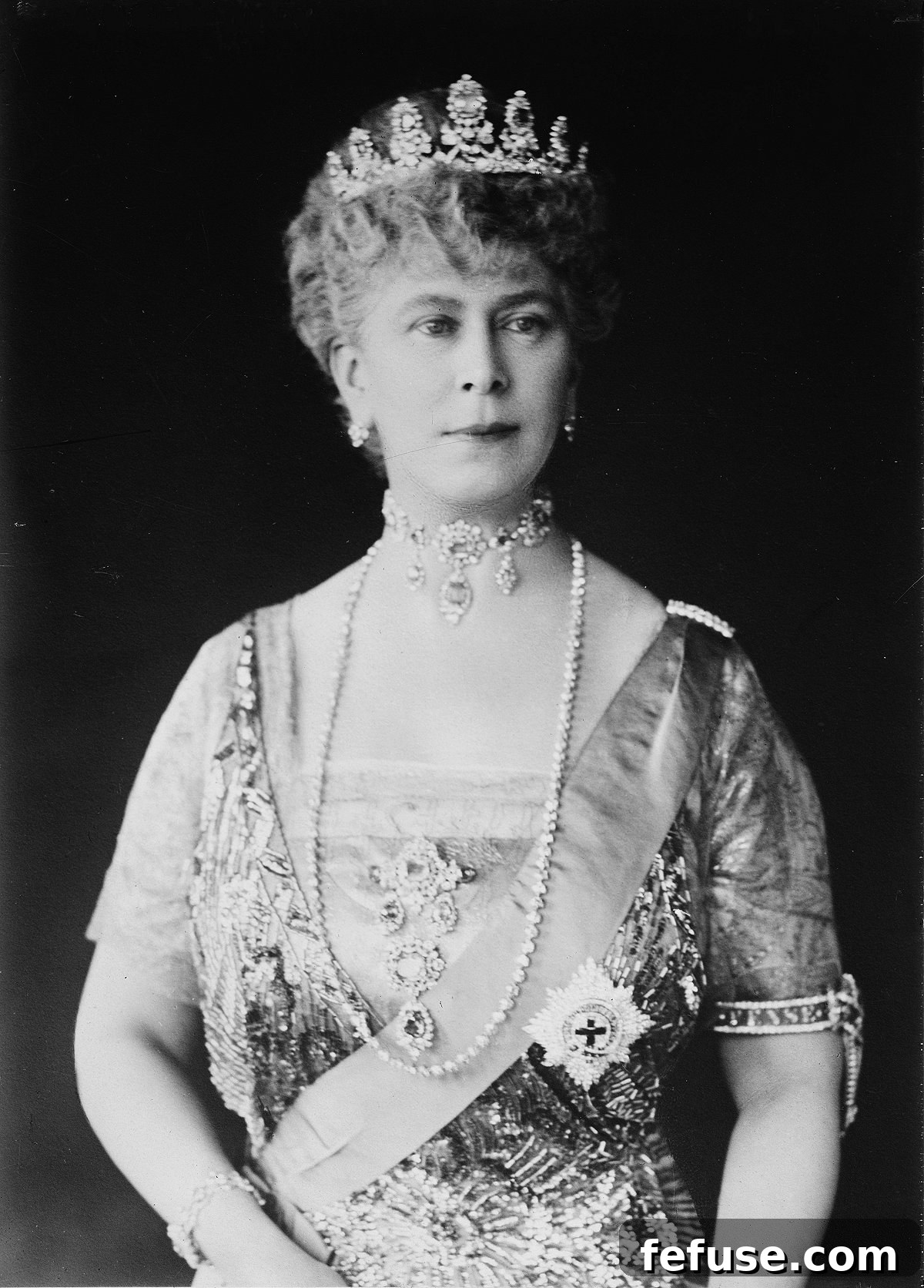
The year 1916 marked a significant enrichment of Queen Mary’s sapphire collection with the acquisition of the magnificent Cambridge Sapphire Parure. This comprehensive suite of sapphire and diamond jewels was inherited from her aunt, Grand Duchess Augusta of Mecklenburg-Strelitz, who herself had received it from Mary’s beloved grandmother, Princess Augusta, Duchess of Cambridge. Such a direct and significant line of inheritance underscores the deep dynastic connections and profound personal significance woven into the very fabric of these precious pieces. A parure, by definition, is a set of matching jewels designed to be worn together, and the Cambridge Sapphire Parure typically included a resplendent tiara, a necklace, earrings, and various brooches, all showcasing a dazzling array of perfectly matched sapphires, each exquisitely framed by brilliant diamonds. The consistent quality and vibrant blue of the gemstones made this set particularly striking. Queen Mary, ever the regal figure with a profound appreciation for history, famously posed for an official portrait in the 1920s adorned with these splendid sapphires, the image serving as a testament to their grandeur and her appreciation for their storied past. However, these jewels did not remain in her personal collection indefinitely. In a grand gesture of immense generosity and familial affection, Queen Mary presented the entire Cambridge Sapphire Parure to her new daughter-in-law, Princess Marina, Duchess of Kent, as a magnificent wedding gift in 1934. The parure continued to be a cherished possession of the Duchess of Kent and her descendants for another generation, gracing numerous royal occasions. Sadly, due to the passage of time and evolving family circumstances, elements of this historic parure have since been dispersed. The original tiara from the set, along with potentially other accompanying pieces, has been sold at auction by the present Duke and Duchess of Kent, scattering parts of what was once a cohesive and iconic royal jewel set. Despite this fragmentation, photographs and detailed historical accounts ensure that the unparalleled splendor of the Cambridge Sapphire Parure and its fascinating journey through generations of royal women remain an indelible and captivating chapter in royal jewelry lore.
Empress Marie Feodorovna’s Sapphire Brooch: A Prized Acquisition from Imperial Russia
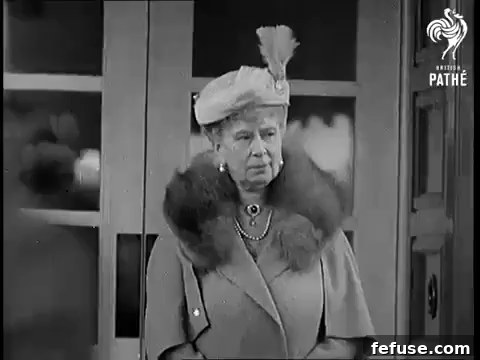
The year 1928 marked a significant moment in the history of European royal jewels, particularly for this remarkable sapphire brooch. Following the death in exile of Empress Marie Feodorovna of Russia, who was King George V’s aunt and a central figure in European royalty, her daughters were compelled to sell a substantial portion of her extensive and opulent jewelry collection. Queen Mary, driven by her keen eye for historical significance and perhaps a sense of familial connection to the late Empress, became one of the documented purchasers from the estate, ensuring these precious pieces found a new home within the British royal collection. In 1930, she acquired this captivating diamond and sapphire cluster brooch. The piece is particularly exquisite for its central, deeply saturated sapphire, which is beautifully encircled by a dazzling array of brilliant diamonds. Adding to its charm and versatility is a delicate pearl pendant, cleverly designed to be attached or removed, allowing Queen Mary to adapt the brooch to suit various outfits and occasions. Above, she is pictured in 1938, elegantly wearing the brooch complete with its lustrous pearl pendant, showcasing its full splendor and the intricate craftsmanship. Upon Queen Mary’s demise in 1953, the brooch was inherited by her granddaughter, Queen Elizabeth II. Her Majesty has frequently worn this distinguished piece throughout her reign, demonstrating its timeless appeal and adaptability. She often chooses to wear it both with and without the pearl pendant, depending on the formality of the event or her personal stylistic preferences. This brooch not only stands as a stunning piece of jewelry but also serves as a tangible link to the tragic yet opulent history of the Romanov dynasty and the strong familial ties that interconnected European monarchs for centuries.
Queen Mary’s Sapphire Sunray Bandeau: An Adaptable Masterpiece of Royal Adornment
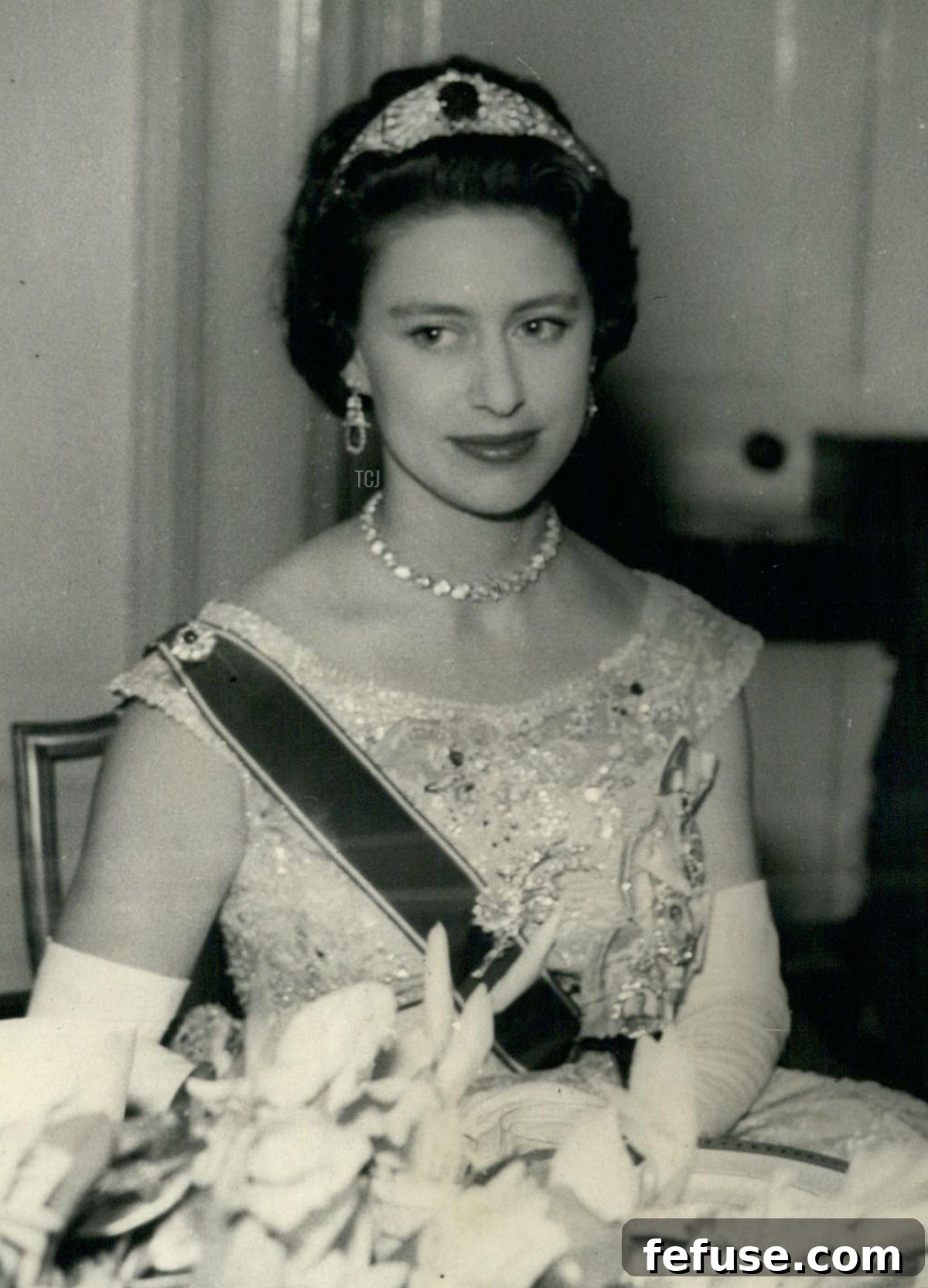
Further enriching her already magnificent collection through the advantageous sales from Empress Marie Feodorovna’s estate, Queen Mary also acquired the remarkable Sapphire Sunray Bandeau, a significant piece meticulously documented by the esteemed royal jewelry historian Leslie Field. This elegant bandeau-style tiara, characterized by its slender, flexible form designed to hug the head, became yet another testament to Queen Mary’s discerning preference for adaptable and versatile jewels. She frequently adorned it with a magnificent diamond and sapphire center ornament, a key feature that underscored its multi-purpose design. Notably, this sapphire center was ingeniously crafted to be used interchangeably with her Honeysuckle Tiara, showcasing the brilliant engineering and forward-thinking design prevalent in her extraordinary jewelry box. The bandeau’s versatility was further enhanced by Queen Mary’s creative styling; on occasion, she would swap out the sapphire element for the intricately carved emerald brooch, originally an integral part of the Delhi Durbar Parure, demonstrating her innovative approach to maximizing the aesthetic potential of her precious stones. Following Queen Mary’s death, Leslie Field records that the tiara was inherited by the Queen Mother, who also greatly appreciated its exquisite beauty and inherent flexibility. Most recently, the Sapphire Sunray Bandeau gained prominence when it was famously worn by Princess Margaret, Queen Elizabeth II’s younger sister. Princess Margaret not only wore the bandeau in its intended tiara form but also cleverly utilized its adaptability by wearing the sapphire center element separately as a brooch, perfectly echoing Queen Mary’s original intent for maximizing the utility and elegance of her precious gemstones. This bandeau represents not just a beautiful piece of royal jewelry but a lasting symbol of the ingenious craftsmanship and the distinctive personal style that defined Queen Mary’s approach to her unparalleled royal collection.
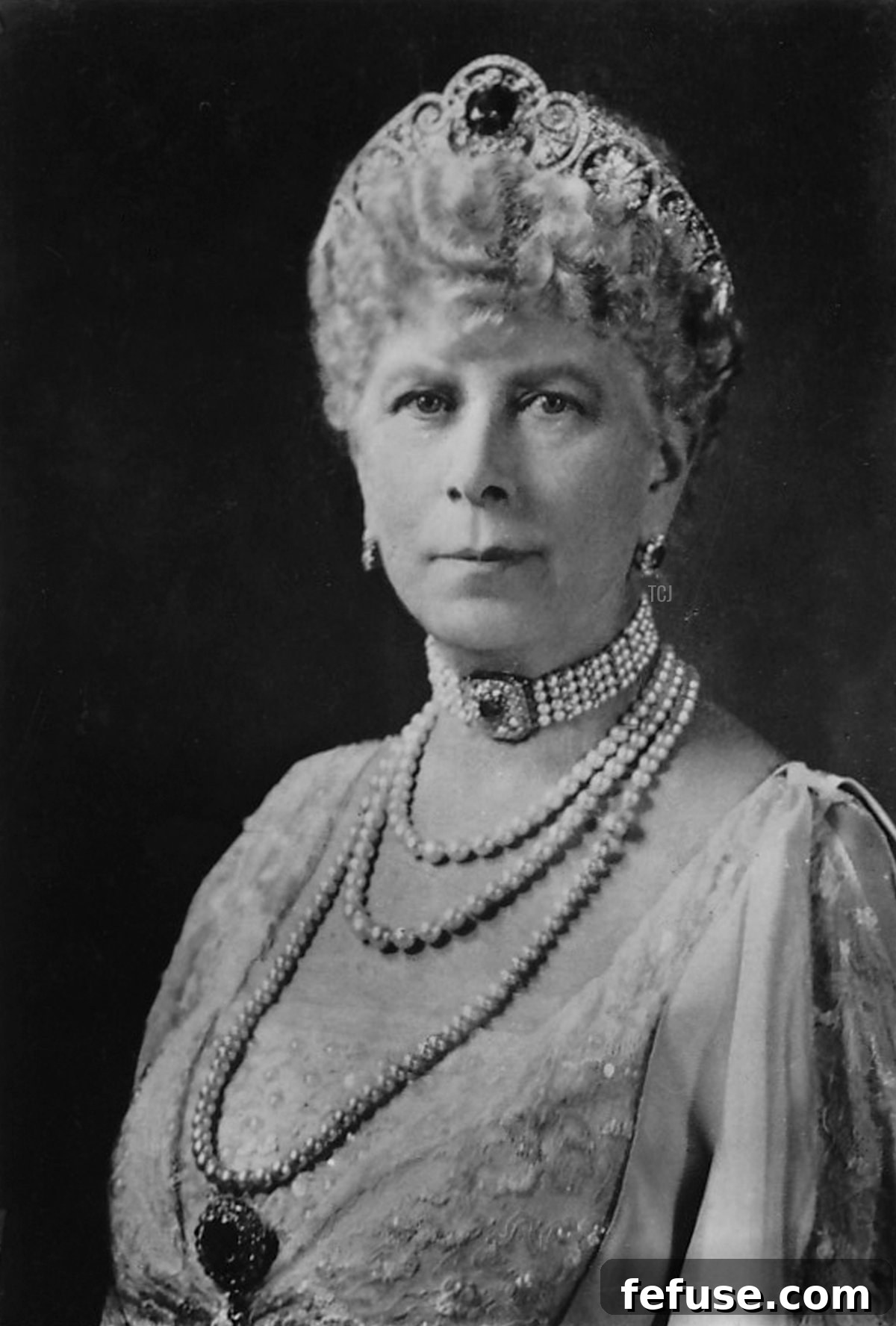
Empress Marie Feodorovna’s Sapphire Choker Necklace: A Convertible Royal Gem
Continuing her strategic and significant acquisitions from the vast and historically rich estate of Empress Marie Feodorovna of Russia, Queen Mary also secured this truly exquisite pearl and diamond choker necklace. This piece is particularly celebrated for its distinctive and intricately designed diamond and sapphire clasp, which serves as both a functional element and a stunning focal point. This purchase, made during a period when many precious Romanov jewels were dispersed across Europe, further solidified Queen Mary’s role as a discerning collector and a preserver of royal heritage. The choker itself is a marvel of jewelry artistry, featuring multiple lustrous strands of pearls, often intertwined with delicate diamond elements, all converging at a breathtaking clasp. This clasp is centered around a vibrant, deep blue sapphire, exquisitely framed by an array of sparkling diamonds, creating a truly regal effect. Its inherent beauty is matched only by its remarkable versatility: the necklace was ingeniously designed to be separated and elegantly worn as a pair of sophisticated bracelets, offering Queen Mary multiple sophisticated styling options for various formal and informal events. This innovative convertible feature was highly prized in royal jewelry collections, maximizing the utility and aesthetic appeal of its precious components. Following Queen Mary’s passing, the pearl and sapphire choker necklace was inherited by her granddaughter, Queen Elizabeth II, adding another layer to its already storied history. Later, in a gesture of familial continuity and personal affection, Queen Elizabeth II graciously passed this magnificent piece along to its current wearer, her daughter, Anne, the Princess Royal. The Princess Royal has been frequently seen wearing this choker on numerous occasions, often favoring its configuration as elegant bracelets, thereby continuing its legacy of versatility and timeless elegance within the modern British Royal Family. It stands as a shining example of the enduring beauty and clever, adaptable design characteristic of late 19th and early 20th-century royal jewelry.
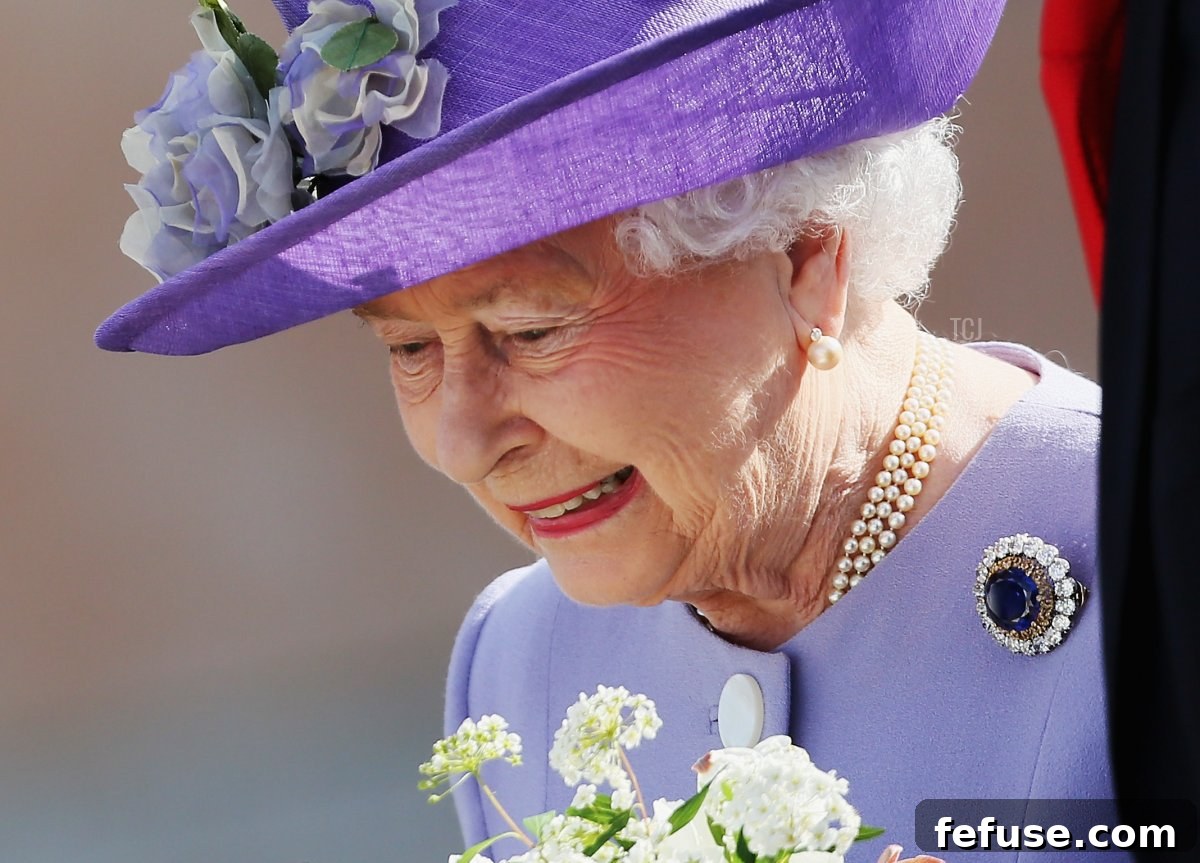
The Russian Sapphire Cluster Brooch: A Romanov Treasure Endures in British Royal Hands
Concluding our insightful journey through Queen Mary’s extraordinary sapphire collection, we shine a spotlight on yet another magnificent Romanov piece: The Russian Sapphire Cluster Brooch. This particular brooch, reportedly acquired by Queen Mary from Empress Marie Feodorovna’s daughters in 1934, stands as a true spectacle of royal jewelry design and precious gemstones. Its central feature is a breathtaking sapphire cluster, radiating an intense, mesmerizing deep blue hue that captures light beautifully. This magnificent central cluster is elegantly encircled by a brilliant ring of sparkling diamonds, which in turn is framed by a delicate and intricate border of gold filigree. The detailed filigree work adds a layer of antique charm, exquisite craftsmanship, and refined texture, elevating the brooch to an art form. The acquisition of such a piece further underscored Queen Mary’s impeccable taste for fine craftsmanship and her unwavering dedication to enriching the British royal collection with jewels of significant historical provenance. The Russian Sapphire Cluster Brooch later became a firm favorite of the much-loved Queen Mother, Queen Elizabeth, who frequently wore it during her long public life, showcasing its timeless appeal and versatile beauty across countless engagements. In more recent years, this cherished heirloom has been occasionally worn by Queen Elizabeth II, continuing its illustrious journey through generations of royal women. Its rare public appearances are always met with widespread admiration, serving as a glittering reminder of the deep historical connections between European monarchies and the enduring beauty of precious gemstones. This brooch, with its rich history, stunning design, and imperial connections, remains a powerful testament to Queen Mary’s discerning eye and her pivotal role in shaping the iconic and unparalleled British royal jewelry collection we admire today.
Queen Mary’s dedication to curating and preserving an unparalleled collection of royal jewels, especially her significant array of blue sapphires, has left an indelible and sparkling mark on the British monarchy’s heritage. Each piece we have explored, whether a grand tiara, a versatile brooch, or a convertible necklace, tells a unique story of its origins, its wearers, and its journey through centuries of history. These sapphires are far more than mere precious stones; they are tangible links to past reigns, potent symbols of enduring elegance, and profound testaments to the continuous splendor and tradition of the royal family. From cherished wedding gifts steeped in the opulent history of the Romanov dynasty to invaluable inherited heirlooms and meticulously commissioned masterpieces from the finest jewelers, Queen Mary’s sapphires continue to captivate. Their vibrant blue hues persist in sparkling with an inner fire, captivating all who behold them and ensuring that Queen Mary’s legacy as a true connoisseur and guardian of royal adornment will shine brilliantly for centuries to come, illuminating the rich tapestry of the British Crown Jewels.