
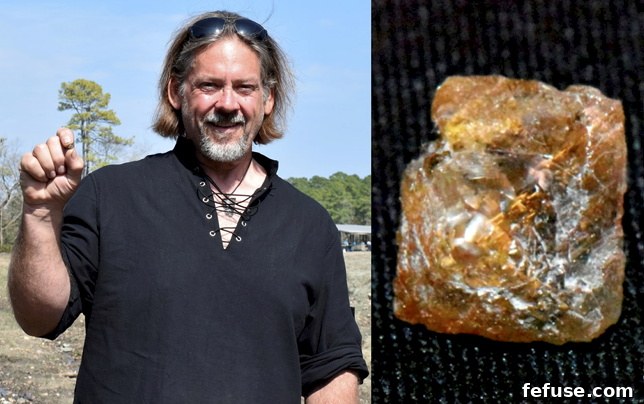
Unearthing Arkansas Gems: David Anderson’s Latest Diamond Discovery at Crater of Diamonds State Park
The allure of discovering a hidden treasure has captivated humanity for centuries. In Murfreesboro, Arkansas, this ancient dream becomes a tangible reality at the renowned Crater of Diamonds State Park. This unique destination, often described as the world’s only “sift your own diamond” mine open to the public, recently witnessed another remarkable find by one of its most dedicated visitors. David Anderson, a seasoned diamond hunter, unearthed a striking 3.29-carat brown diamond, marking the largest discovery at the park in the past 18 months and reigniting the hopes of countless aspiring gemologists and adventurers.
The Enduring Appeal of Crater of Diamonds State Park
Crater of Diamonds State Park stands as an unparalleled geological wonder and a premier tourist attraction in the United States. Unlike traditional commercial mines, this park offers an extraordinary opportunity: for a modest fee, visitors can enter a 37.5-acre plowed field – the eroded surface of an ancient, diamond-bearing volcanic pipe – and search for diamonds, keeping whatever precious stones they uncover. This unique “finders keepers” policy has cemented the park’s status as a must-visit destination for families, tourists, and serious gem enthusiasts alike.
The park’s rich history dates back to 1906, when farmer John Huddleston discovered two diamonds on his property. This initial find sparked a diamond rush, leading to various commercial mining attempts that ultimately proved unsuccessful on a large scale. Recognizing its unique potential, the State of Arkansas acquired the land in 1972, transforming it into a state park dedicated to public education and recreational diamond hunting. Since its inception as a state park, thousands of diamonds of various colors and sizes have been found by visitors, including some of the most famous and largest diamonds discovered in North America, solidifying its legendary status.
David Anderson: A True Diamond-Finding Legend
David Anderson is far from a newcomer to the diamond fields of Murfreesboro; he is, in many ways, an institution at Crater of Diamonds State Park. Over the past 16 years, Anderson has dedicated countless hours to meticulously sifting through the park’s soil, a testament to his passion, patience, and persistence. His commitment has yielded incredible results, with over 400 diamonds discovered under his careful watch. Among these hundreds of glittering finds, a remarkable 15 have weighed over one carat, a significant achievement by any standard.
His impressive track record includes some truly spectacular discoveries. In December 2011, Anderson unearthed a stunning 3.83-carat yellow diamond, a vibrant gem that caught the eye with its sunny hue. This was followed by an even more significant find in April 2014: a magnificent 6.19-carat white diamond, a testament to the park’s potential for yielding world-class gems. These previous triumphs underscore his profound understanding of the diamond-bearing terrain and the most effective techniques for extraction.
Anderson’s latest discovery, the 3.29-carat brown diamond, adds another remarkable chapter to his story. With a characteristic blend of humility and humor, he affectionately christened his new find “B.U.D.” – an acronym for “Big Ugly Diamond.” This moniker playfully acknowledges the diamond’s distinctive appearance, noting its pitted surface and mottled brown coloration. While perhaps not as conventionally “pretty” as some other gems, B.U.D. is a significant stone, both in size and in the narrative of personal discovery it represents. For Anderson, diamond hunting is not just a hobby but a lifestyle, and he frequently sells his smaller finds locally, contributing to the vibrant local economy and sharing the joy of his discoveries with others.
The Geology of Sparkle: Why Diamonds Are Found Here
The presence of diamonds at Crater of Diamonds State Park is a fascinating geological anomaly. The park sits atop a lamproite pipe, an ancient volcanic vent that brought diamond-bearing rock from deep within the Earth’s mantle to the surface approximately 100 million years ago. Over eons, erosion has worn down the softer lamproite rock, releasing the harder, more resilient diamonds into the topsoil. This continuous process, aided by regular plowing by park staff, constantly brings new diamond-bearing soil to the surface, replenishing the field and offering fresh opportunities for discovery.
Diamonds found at the park come in a remarkable array of colors, including white, brown, and yellow, with occasional discoveries of rarer pink, purple, and green diamonds. The most common shapes are rounded and nodular, often with a frosted or pitted exterior, similar to Anderson’s “B.U.D.” While not all diamonds are of gem quality, many possess clarity and color that make them highly desirable to collectors and jewelers. Understanding this geological context helps visitors appreciate the rarity and journey of each diamond unearthed.
Your Guide to Successful Diamond Hunting
For those inspired by David Anderson’s success and eager to try their hand at diamond hunting, Crater of Diamonds State Park offers accessible methods for discovery. Patience and persistence are paramount, but a few practical tips can significantly enhance your chances:
- Tools of the Trade: While some diamonds are found purely by surface searching, many visitors bring essential tools. These include a small shovel or trowel, buckets for collecting soil, and a set of screens for sifting (typically a larger screen for coarse material and a finer screen for smaller sediments).
- Surface Searching: This is the simplest method. Walk slowly, scanning the ground for any unusual sparkles, especially after a fresh rain, which can wash away loose dirt and expose new diamonds.
- Wet Sifting: Many experienced hunters prefer wet sifting. Fill your bucket with soil, take it to one of the park’s washing stations, and use water to separate lighter soil and rock from heavier minerals, including diamonds. Diamonds, being denser, will sink to the bottom of your screen.
- Dry Sifting: Similar to wet sifting but without water. This method is often used on dry, loose soil and involves shaking the screens to separate materials by size and weight.
- Target Areas: Pay attention to the furrows left by the park’s plowing, as these often expose fresh soil. Also, areas where water naturally collects or drains can be fruitful, as water can concentrate heavier materials.
- Time and Dedication: David Anderson’s success is a testament to the power of consistent effort. The more time you spend searching, and the more you learn about the terrain, the higher your chances of making a memorable find.
Beyond the Sparkle: Impact on Tourism and Local Economy
Crater of Diamonds State Park is more than just a place to find precious gems; it’s a vital economic engine for the small town of Murfreesboro and a significant contributor to Arkansas’s tourism industry. Thousands of visitors flock to the park annually, generating revenue through entrance fees, concessions, and merchandise. More broadly, these tourists support local businesses, including hotels, restaurants, gas stations, and shops, creating jobs and stimulating economic growth in a rural area.
The park’s global reputation as a unique destination also elevates Arkansas’s profile on the international tourism map. It draws attention to the state’s natural beauty and diverse recreational opportunities, encouraging further exploration of the “Natural State.” The stories of individuals like David Anderson, who consistently make significant finds, serve as powerful testimonials, reinforcing the park’s allure and driving continued visitation.
A Legacy of Discovery: Famous Finds at Crater of Diamonds
The history of Crater of Diamonds State Park is punctuated by a series of extraordinary discoveries that underscore its incredible potential. While David Anderson’s finds are impressive, they are part of a longer legacy of remarkable gems unearthed by ordinary people:
- The Strawn-Wagner Diamond: Discovered in 1990, this 3.03-carat white diamond was cut into a perfect 1.09-carat D-flawless diamond, making it the most perfect diamond ever certified by the American Gem Society at the time.
- The Amarillo Starlight: Found in 1975, this 16.37-carat white diamond remains one of the largest diamonds ever discovered by a visitor at the park.
- The Uncle Sam: The largest diamond ever found in the United States, weighing an incredible 40.23 carats, was unearthed in 1924, prior to the area becoming a state park. While not found by a park visitor, its discovery highlights the immense potential of the diamond field.
- The Esperanza Diamond: A stunning 8.52-carat white diamond found in 2015, which was later cut and polished into a magnificent 4.6-carat flawless trifacet diamond.
These legendary diamonds serve as constant reminders that the next world-famous gem could be just beneath the surface, waiting for a fortunate visitor to uncover it.
More Than Just Diamonds: A Diverse Mineral Landscape
While diamonds are undoubtedly the star attraction, Crater of Diamonds State Park offers more than just precious stones. The unique geology of the lamproite pipe means that visitors can also find a variety of other fascinating minerals. Amethyst, garnet, jasper, agate, quartz, and various types of lamproite host rock are commonly discovered. This diversity adds another layer of excitement to the digging experience, ensuring that even if a diamond remains elusive, visitors often leave with a collection of interesting rocks and minerals, making every visit a rewarding geological exploration.
Conclusion: The Endless Lure of the Diamond Field
Crater of Diamonds State Park continues to inspire and enchant visitors from around the globe. David Anderson’s latest find, the 3.29-carat “B.U.D.,” is a powerful testament to the park’s enduring potential and the rewards of dedication. It reminds us that the dream of finding a diamond is not confined to fantasy but is a real possibility waiting in the Arkansas soil.
Whether you’re an experienced gem hunter like David Anderson or a curious first-timer, the park offers an unforgettable adventure and the chance to connect with the Earth’s hidden treasures. The magic of digging for diamonds, the thrill of discovery, and the unique “finders keepers” policy make Crater of Diamonds State Park a truly one-of-a-kind destination. Who knows, perhaps your next visit will unearth the next legendary gem, adding your name to the illustrious history of diamond discoveries in Murfreesboro, Arkansas.