
The Digital Revolution in Mining: Paving the Way for Smart, Safe, and Sustainable Operations
The global mining industry stands at the precipice of a profound transformation, driven by an accelerating wave of technological innovation. While the immediate focus throughout 2020 understandably centered on ensuring operational safety and the health of employees amidst the COVID-19 pandemic, minimizing the risks of viral spread in often challenging environments, industry analysts at Fitch Solutions predict a pivotal shift. As the shadow of the pandemic recedes, miners are poised to channel their energies back into the core objectives of enhancing efficiency and drastically cutting operational costs, a strategic pivot that will be predominantly powered by advanced technology.
This renewed drive for technological integration marks a critical juncture for the sector. The era of traditional mining, characterized by manual processes and reactive maintenance, is rapidly giving way to a future defined by data-driven insights, predictive analytics, and autonomous systems. This paradigm shift promises not only economic benefits but also significant improvements in environmental stewardship and worker safety, repositioning mining as a high-tech industry ready for the challenges of the 21st century.
Australia’s Vanguard Role in Mining Innovation
At the forefront of this global and indeed Asian technological renaissance in mining is Australia. The continent is uniquely positioned to spearhead the widespread adoption of cutting-edge technologies aimed at optimizing efficiency, reducing expenses, and dramatically improving mine safety. Fitch Solutions highlights several key factors contributing to Australia’s leadership: robust network connectivity, reliable power infrastructure, a highly skilled and adaptable labor force, and unwavering government support for innovation within the sector.
These synergistic elements create an ideal ecosystem for technological experimentation and deployment. Strong digital infrastructure allows for the seamless transfer of vast amounts of data essential for real-time monitoring and remote operations. A stable energy supply underpins the operation of sophisticated machinery and data centers. The availability of a skilled workforce ensures that new technologies can be effectively implemented, maintained, and optimized, bridging the gap between innovation and practical application. Furthermore, proactive government policies, often involving R&D grants and regulatory frameworks that encourage innovation, provide the necessary impetus for companies to invest heavily in next-generation mining solutions. Australia’s commitment to developing remote operating centers and deploying autonomous fleets serves as a tangible example of its pioneering spirit, setting benchmarks for the rest of the world to follow.
Navigating the Technological Crossroads: From Traditional to Transformative Mining
Today, the mining landscape is undeniably in an age of profound technological disruption. Industry players find themselves at a crucial crossroads, balanced between a deeply entrenched traditional past and a rapidly emerging, transformative future — one that promises to be more sustainable, more efficient, and inherently safer. This transition isn’t merely incremental; it represents a fundamental re-imagining of how mining operations are conceived, executed, and managed.
State-of-the-art mines are no longer just vast pits in the earth; they are sophisticated, interconnected ecosystems brimming with the latest technological innovations. These advancements span a wide spectrum, from fundamental infrastructure improvements to complex artificial intelligence applications. The integration of these technologies is not arbitrary; it is a calculated strategy to unlock unprecedented levels of productivity and address long-standing industry challenges.
Key Technologies Driving the Transformation:
- Cloud Computing: The backbone of modern digital operations, cloud computing enables miners to store, process, and analyze colossal datasets generated from various operations. It facilitates real-time data access from anywhere in the world, fostering collaboration, streamlining decision-making, and providing the scalability needed for complex analytical tasks without the burden of extensive on-premise infrastructure. This foundational technology empowers everything from predictive maintenance schedules to complex geological modeling.
- New Sensors and the Internet of Things (IoT): Advanced sensors, deployed across equipment, infrastructure, and even personnel, form the nervous system of a smart mine. These IoT devices collect granular data on everything from machinery performance, energy consumption, and environmental conditions to worker location and vital signs. This real-time influx of information allows for proactive maintenance, optimizing operational parameters, ensuring compliance with environmental regulations, and significantly enhancing worker safety through immediate hazard detection and response.
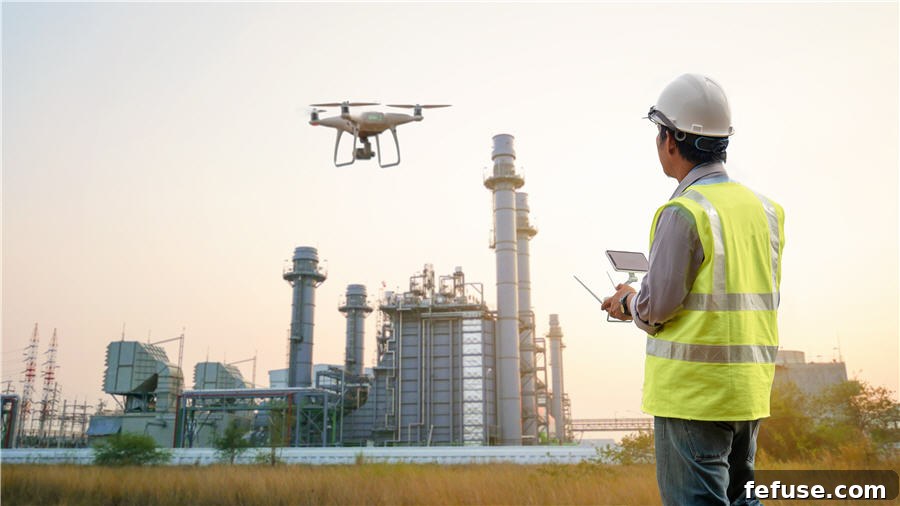
- Drones and Robotics: Unmanned Aerial Vehicles (UAVs), or drones, have revolutionized surveying, mapping, and inspection tasks. They can rapidly gather high-resolution imagery and topographical data, allowing for precise volumetric measurements, geological mapping, and infrastructure inspection in areas that might be dangerous or inaccessible for human personnel. This not only improves accuracy but also drastically reduces the time and cost associated with these critical tasks. Ground-based robots are also emerging for hazardous tasks, further shielding human workers from risk.
- Enhanced Automation: Automation goes beyond simple mechanization; it involves systems that can perform tasks with minimal or no human intervention. This includes autonomous haulage systems, which operate trucks along pre-defined routes 24/7 with enhanced safety and consistent performance. Automated drilling rigs precisely execute drilling patterns, improving accuracy and reducing wear and tear. Remote operating centers allow skilled personnel to manage multiple machines and processes from a safe, comfortable, off-site location, optimizing resource allocation and responding to operational changes in real-time.
- Machine Learning (ML) and Artificial Intelligence (AI): These advanced analytical tools represent the brain of the smart mine. ML algorithms can analyze vast datasets from sensors and historical operations to identify patterns, predict equipment failures before they occur, optimize energy consumption, and even refine extraction processes. AI is being used to develop sophisticated ore body modeling, improve blast designs, and enhance safety protocols through predictive hazard identification. The integration of AI allows mines to move from reactive problem-solving to proactive, predictive management, unlocking efficiency gains that were previously unimaginable.
Industry Leaders Forging the Path Forward
The journey towards a fully digitized and automated mining future is being spearheaded by major industry players. Fitch Solutions specifically identifies global mining giants like Rio Tinto as leaders in technological integration, closely followed by Fortescue Metals Group (FMG) and BHP. These companies are not merely adopting technology; they are actively investing in its development, deploying it at scale, and demonstrating its transformative potential.
Rio Tinto, for instance, has been a pioneer in developing and implementing autonomous haulage systems and remote operating centers, managing complex networks of mines from thousands of kilometers away. FMG has likewise made significant strides in automation, leveraging its expertise to boost productivity and reduce operational costs across its iron ore operations. BHP continues to invest heavily in data analytics, AI, and sustainable mining practices, striving for operational excellence and environmental stewardship. These leaders are setting new industry standards, pushing the boundaries of what is possible, and driving the broader industry toward a more technologically advanced future.
Beyond Efficiency: The Pillars of Safety and Sustainability
While the initial impetus for technological adoption often stems from a desire for cost reduction and efficiency gains, the benefits extend far beyond the balance sheet. Digital transformation is fundamentally reshaping mine safety and environmental sustainability, moving these critical aspects from compliance burdens to inherent operational advantages.
Enhanced Safety: The deployment of autonomous vehicles, remote operations, and intelligent monitoring systems drastically reduces human exposure to hazardous environments. Workers can oversee complex machinery from safe control rooms, minimizing risks associated with falls, heavy equipment interactions, and exposure to dust or harmful gases. Predictive maintenance, informed by sensor data and AI, prevents equipment failures that could lead to accidents. Real-time monitoring of personnel and environmental conditions ensures immediate alerts and responses to potential dangers, creating a significantly safer working environment for all.
Environmental Sustainability: Technology is also a powerful enabler of sustainable mining practices. Precision mining techniques, guided by advanced analytics, allow for more accurate ore body extraction, reducing waste and minimizing the environmental footprint. Optimized energy consumption through AI-driven process control lowers greenhouse gas emissions. Water management systems, often integrated with IoT sensors, ensure efficient water usage and reduce discharge. By enhancing resource utilization and minimizing waste, smart mining technologies contribute directly to the industry’s commitment to a more responsible and environmentally conscious future, aligning economic imperatives with ecological stewardship.
The Road Ahead: Challenges and Continuous Evolution
Despite the immense potential, the transition to smart mining is not without its challenges. Significant initial capital investment is often required to implement advanced technologies. Furthermore, there’s a critical need for workforce reskilling and upskilling to manage and maintain these complex digital systems. Data security and the integration of disparate systems also pose considerable hurdles that need to be addressed comprehensively. However, the long-term benefits in terms of productivity, safety, and sustainability overwhelmingly outweigh these initial obstacles.
The mining sector’s digital journey is far from over; it is a continuous evolution. As technologies like quantum computing, advanced robotics, and sophisticated digital twin models become more accessible and refined, they will unlock even greater levels of optimization and innovation. The industry is on an irreversible trajectory towards a future where mines are not only more productive and cost-effective but also inherently safer and more sustainable, solidifying their role in supplying the essential resources for a growing global economy while meeting the highest environmental and social standards.