
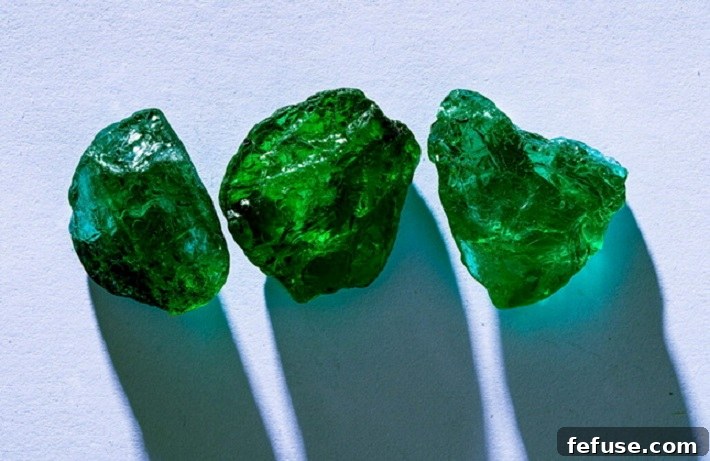
Gemfields Navigates Turbulent Waters: A Deep Dive into Kagem Emerald Auction Results and Market Dynamics
Gemfields, a globally renowned leader in the responsible sourcing and marketing of colored gemstones, recently concluded its latest auction of rough emeralds from its iconic Kagem mine in Zambia. The results, however, painted a challenging picture, revealing a significant slump in both sales volumes and average prices. This downturn signals a period of heightened market volatility for luxury gemstones, prompting a detailed examination of the complex interplay of global economic factors, competitive pressures, and the company’s strategic responses in the face of an evolving market landscape.
Unpacking the Auction’s Performance: A Snapshot of Key Figures
The series of auctions, which culminated on September 13th in Jaipur, India, and through parallel online platforms, saw Gemfields manage to sell only 61 percent of the nearly 4 million carats of rough emeralds on offer. This figure represents a considerable reduction compared to the company’s historical performance, where it had consistently achieved impressive sell-through rates exceeding 90 percent across its preceding four sales. The financial impact of this subdued demand was equally pronounced.
Total sales generated from the auction amounted to $10.8 million, marking a precipitous 67 percent decline when contrasted with the sales figures from its September 2023 auction. Furthermore, the average price per carat experienced a substantial erosion, falling to $4.47 – effectively halving the price achieved at the corresponding event just one year prior. While Gemfields acknowledges that the specific mix and quality of lots vary from one auction to another, making direct comparisons sometimes challenging, the cumulative results undeniably point towards a significant weakening of market sentiment and buyer appetite for emeralds.
Global Headwinds and Competitive Dynamics: Explaining the Downturn
The UK-based gemstone powerhouse attributed this challenging performance to a complex confluence of macroeconomic headwinds and intensified competitive pressures. At the forefront of these challenges are persistent global geopolitical conflicts, such as the ongoing situations in Ukraine and the Middle East, which contribute to a pervasive sense of instability. Simultaneously, significant election cycles in major economies worldwide are adding layers of political and economic uncertainty. These factors collectively erode consumer confidence, particularly impacting discretionary spending on high-value luxury items like exquisite emeralds.
A critical contributing factor cited by Gemfields was the ongoing economic slowdown in China, a traditionally vital market for luxury goods. The Chinese economy has grappled with various challenges, including concerns within its property market and broader deceleration, which have collectively dampened consumer sentiment among affluent buyers. The ripple effects of this cautious spending in a key luxury market are felt acutely across the high-end sector, significantly impacting the demand trajectory for precious gemstones.
Beyond these overarching macroeconomic forces, a unique and impactful competitive dynamic played a role. Gemfields specifically highlighted a “diary clash” involving another emerald producer. This competitor reportedly scheduled their own auction to conclude in early September 2024, directly overlapping with the duration of Gemfields’ event. Furthermore, customer feedback indicated that this rival was “selling through their emeralds at what customers reported as low prices.” This strategic timing, coupled with aggressive pricing by a significant competitor, likely diverted potential buyers, saturated a portion of the market, and placed considerable downward pressure on overall market expectations and bidding behaviors at Gemfields’ auction.
Gemfields’ Steadfast Commitment to Responsible Sourcing and Market Integrity
Despite the challenging market conditions and the resultant financial impact, Gemfields reiterated its unwavering commitment to responsible and disciplined sales practices. Adrian Banks, Gemfields’ Managing Director of Product and Sales, offered candid insights into the situation: “Today’s overall result is weaker than expected… exacerbated in part by a competing emerald producer scheduling their own auction to finish in early September 2024, in the middle of ours, and selling through their emeralds at what customers reported as low prices.” Crucially, Banks further emphasized the company’s long-standing and principled policy of withholding auction lots when fair market prices cannot be achieved.
This responsible approach, while potentially impacting immediate revenue figures and sales volumes, is a cornerstone of Gemfields’ overarching strategy to preserve the long-term value, integrity, and prestige of the emerald market. By actively refusing to flood the market with material at depressed prices, Gemfields aims to safeguard the intrinsic worth of its high-quality gemstones and maintain robust confidence among discerning collectors, investors, and the broader jewelry trade. This strategy underscores a commitment to market stewardship that prioritizes sustainable value creation over short-term gains, a philosophy that has earned Gemfields a reputation for reliability and quality in the industry.
This dedication to responsible action is deeply intertwined with Gemfields’ broader commitment to ethical sourcing and transparent market practices. In an industry that has historically faced scrutiny regarding its supply chain and environmental impacts, Gemfields has consistently championed transparency, robust community engagement, and stringent environmental protection at all its mining operations, including the world-renowned Kagem mine. These foundational principles are not merely corporate social responsibility initiatives; rather, they are integral to the brand’s premium positioning and resonate strongly with a growing segment of conscious luxury consumers who place a high value on provenance, ethical conduct, and sustainability.
The Broader Landscape of the Global Colored Gemstone Market
The performance of Gemfields’ recent Kagem auction offers a pertinent and timely case study in the broader dynamics governing the global colored gemstone market. While diamonds have traditionally captured the lion’s share of attention in the realm of precious stones, colored gemstones – particularly magnificent emeralds, captivating rubies, and vibrant sapphires – have witnessed a significant surge in interest from discerning buyers, astute investors, and high-end jewelry designers. Their unique beauty, profound rarity, and often compelling origins contribute significantly to their enduring allure and increasing demand. However, this specialized market, despite its unique attributes, is far from immune to the pervasive influence of global economic fluctuations and shifts in consumer behavior.
The luxury sector, encompassing high-end jewelry and precious gemstones, is frequently perceived as a sensitive barometer for overall economic health. During periods of sustained prosperity and robust economic growth, demand for such discretionary and aspirational items typically surges. Conversely, during times of economic uncertainty, characterized by inflationary pressures, fluctuating interest rates, and geopolitical instability, consumers tend to defer large luxury purchases or pivot towards more conservative investment avenues. The current global economic environment, marked by these complex challenges, naturally impacts consumer sentiment at the top echelons of the market, affecting the appetite for luxury goods.
Moreover, the modern gemstone industry is increasingly being shaped by an imperative demand for ethical sourcing and unparalleled transparency. Contemporary consumers, especially younger generations, exhibit a heightened awareness of the environmental, social, and governance (ESG) impacts associated with mining and supply chains. Companies like Gemfields, with their meticulously developed frameworks for responsible mining, robust community development programs, and clear chain of custody protocols, are exceptionally well-positioned to meet these evolving ethical expectations. However, even with formidable ethical credentials and a strong brand reputation, overarching market forces related to supply, demand, and competitive pricing remain absolutely paramount in determining success.
The Significance of Kagem: A Pillar of World Emerald Production
The Kagem emerald mine, nestled in the rich mineral belt of Zambia, stands as an undisputed titan in the world of colored gemstones. Recognized globally as one of the single largest emerald mines, it is celebrated for consistently producing a significant proportion of the world’s finest and most sought-after emeralds. Kagem operates as a successful joint venture between Gemfields (holding a 75% stake) and the Government of the Republic of Zambia (with a 25% ownership), a partnership model that effectively exemplifies a mutual commitment to shared prosperity, national development, and responsible resource management.
The mine’s rich history, coupled with its consistent output of high-quality emeralds, has firmly cemented its status as a crucial and indispensable source for the global jewelry industry. Kagem’s operations are characterized by the application of advanced mining techniques, adherence to stringent safety standards, and a profound, demonstrable commitment to environmental stewardship and rehabilitation. Beyond its economic contributions through significant taxes, royalties, and employment generation for thousands of Zambian citizens, Kagem actively invests heavily in local community development programs. These initiatives span critical areas such as healthcare, education, and essential infrastructure, reflecting Gemfields’ holistic philosophy of creating enduring value for all its stakeholders, from local communities to international investors.
Navigating Forward: Strategic Implications and Future Outlook for Gemfields
The recent auction results, while challenging, present Gemfields with both immediate hurdles and strategic opportunities for refinement. In the short term, the company will need to meticulously assess evolving market sentiment, refine its auction strategies, and potentially explore diversification of its sales channels to mitigate risks associated with intense competition or isolated market events. Adapting proactively to changing buyer preferences and the ongoing shifts in the global economic landscape will be absolutely crucial for sustained success.
Looking ahead, Gemfields’ unwavering commitment to responsible pricing and its leading position in ethical sourcing will undoubtedly serve as a cornerstone of its long-term resilience and competitive advantage. By persistently prioritizing the intrinsic value and rarity of its exceptional gemstones over transient short-term sales volumes, the company aims to protect its sterling reputation for unparalleled quality and unwavering integrity. This forward-thinking strategy is particularly vital in a sophisticated luxury market where provenance, authenticity, and brand trust are increasingly paramount drivers of discerning consumer choice and investment decisions.
The company may also consider enhancing its market intelligence capabilities and fostering deeper, more proactive engagement with its extensive customer base. This would allow it to better understand, anticipate, and respond to demand fluctuations and emerging trends. Strategic marketing initiatives that powerfully highlight the unique beauty, exquisite rarity, and impeccable ethical origins of Kagem emeralds can further differentiate Gemfields’ offerings and reinforce their premium positioning within the fiercely competitive global gemstone market. Emphasizing the story behind each stone, from mine to market, can resonate deeply with a new generation of luxury buyers.
While the immediate outlook certainly presents a complex set of hurdles, the fundamental and enduring demand for rare and beautiful colored gemstones, particularly magnificent emeralds, remains robust in the long run. As global economic conditions inevitably stabilize and consumer confidence rebuilds across key markets, Gemfields, with its powerful brand equity, world-class mining assets like Kagem, and deeply embedded responsible business practices, is exceptionally well-positioned to regain momentum, strengthen its market leadership, and continue its influential trajectory in the colored gemstone sector for years to come.
In conclusion, the recent Gemfields auction results serve as a compelling testament to the complex interplay of global economics, fierce market competition, and strategic pricing in the high-stakes luxury gemstone industry. While the immediate figures reflect a challenging and uncertain operating environment, Gemfields’ steadfast commitment to responsible sales practices and ethical sourcing from its legendary Kagem mine in Zambia firmly positions it for enduring and sustained success. This principled approach not only meticulously protects the inherent value of its exceptional emeralds but also profoundly reinforces its reputation as a vanguard leader in sustainable and transparent gemstone mining, thereby ensuring its lasting appeal to discerning buyers and connoisseurs worldwide.