
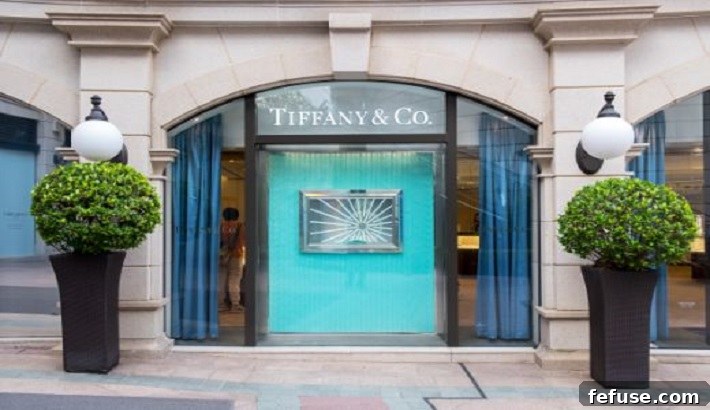
Tiffany & Co. Deepens Roots in China: A Strategic Masterclass in Luxury Market Dominance
In a bold strategic move to capture the burgeoning luxury market, iconic jeweler Tiffany & Co. is significantly expanding its footprint across mainland China. This decisive pivot is designed to capitalize on a notable shift among Chinese consumers towards local purchasing, a trend that has accelerated in recent times. The venerable brand’s ambitious plans include the inauguration of new retail boutiques, the much-anticipated launch of its renowned Blue Box Cafe within the country, and the introduction of a broader array of exquisite fine-jewelry collections directly on the mainland. This comprehensive strategy was outlined by CEO Alessandro Bogliolo during a recent call with analysts, transcribed by Seeking Alpha, underscoring China’s pivotal role in Tiffany’s global vision.
“Over the past 18 months, we have made substantial decisions regarding mainland China, which stands as a key strategic market,” Bogliolo articulated. He emphasized, “From the very beginning of this journey, we identified China as a region deserving of high-level management focus and significant investment.” This commitment reflects a deep understanding of the market’s potential and a proactive approach to cultivating a robust presence in a region increasingly vital to global luxury brands.
Navigating Market Dynamics: Local Growth Amidst Regional Shifts
While Tiffany’s overall sales across the broader Asia Pacific region experienced a modest decline of 1% year-on-year, reaching $298 million in the second quarter, Bogliolo highlighted a particularly encouraging counter-trend: the company recorded robust double-digit growth specifically among local Chinese consumers. This strong performance signals the effectiveness of Tiffany’s localized strategies and its ability to resonate directly with the mainland populace, proving that tailored approaches can yield significant returns even amidst broader regional fluctuations. The resilience of local demand underscores the importance of domestic market cultivation.
The successful introduction of the jeweler’s distinctive Paper Flowers collection into the Chinese market played a crucial role in this growth. Coupled with intensified marketing campaigns and strategic partnerships with local influencers and entities, these initiatives have demonstrably elevated Tiffany’s brand visibility and popularity across the nation. Such targeted efforts are instrumental in forging deeper connections with consumers, ensuring the brand remains top-of-mind in a highly competitive landscape.
The Evolving Chinese Consumer: A Shift Towards Domestic Luxury
A significant driver behind Tiffany’s updated strategy is the observable change in Chinese consumer behavior. Historically, many affluent Chinese individuals would travel to luxury hubs like Hong Kong or Paris to purchase high-end goods. However, there is a clear and accelerating trend towards increased local spending. Factors such as evolving government policies, increased domestic offerings, improved shopping experiences on the mainland, and even recent global travel restrictions have contributed to this shift. Recognizing this, Tiffany plans to substantially increase its jewelry offering within its mainland stores, bringing the desired luxury experience closer to home for its Chinese clientele. To further cater to this domestic focus, Tiffany intends to establish a new store within the bustling Beijing airport, ensuring that Chinese tourists have the opportunity to purchase exquisite pieces within their home country, irrespective of their final travel destination.
“We have strategically shifted our high-jewelry assortments to mainland China, specifically to our flagship stores in Shanghai and Beijing,” Bogliolo explained. He elaborated on the rationale: “As Chinese tourists tend to spend less abroad than they once did, we are making more high-jewelry products readily available within the country. This approach allows us to partially offset any potential dip in sales from international tourism, by catering directly to the powerful domestic demand.” This agility in inventory management and distribution highlights Tiffany’s commitment to adapting to dynamic market conditions.
Beyond expanding existing collections, the company is set to open additional brand-new stores in Beijing and Shanghai, strategically positioning them in the most prominent and high-traffic luxury-shopping destinations within these vibrant metropolitan centers. These new locations will not only enhance brand visibility but also provide immersive retail experiences tailored to the discerning tastes of Chinese luxury consumers.
Introducing the Blue Box Cafe: An Iconic Experience for China
Adding another layer to its immersive brand experience, Tiffany will also debut its iconic Blue Box Cafe. Following its success in New York, the cafe will open in Hong Kong and at the new Shanghai flagship store. These openings mark the very first permanent locations for the beloved eatery outside of its original New York City home. The cafes are slated to commence operations in the latter half of the year, promising to offer a unique, branded culinary experience that extends beyond jewelry, further solidifying Tiffany’s status as a lifestyle luxury brand in the region. The Blue Box Cafe concept is designed to encapsulate the aspirational allure of Tiffany, offering patrons an opportunity to ‘breakfast at Tiffany’s’ and immerse themselves fully in the brand’s elegant universe, a concept expected to resonate strongly with image-conscious Chinese consumers seeking unique and Instagrammable experiences.
The Tariff Effect: Navigating Global Trade Headwinds
Despite these ambitious expansion plans, Tiffany & Co. is concurrently grappling with significant external challenges, particularly the repercussions of the ongoing US-China trade war. The company is meticulously weighing the effects of higher tariffs imposed on goods traded between the two economic giants. As Tiffany manufactures a substantial portion of its exquisite products in the United States and subsequently ships them to China, recent escalations in trade taxes could significantly impact its operational costs. Chief Financial Officer Mark Erceg explained that import fees for the jeweler’s products destined for China could potentially surge from approximately 28% to more than 30%. This increase presents a considerable dilemma for Tiffany, as the company expresses reluctance to pass these elevated costs directly onto its valued customers, fearing it could undermine their competitive pricing strategy.
The tariff situation is further complicated by the competitive landscape. Erceg noted that Tiffany’s European competitors do not face the same prohibitive levies when importing their luxury goods into China, primarily because they do not manufacture in the United States. This disparity creates an uneven playing field. If Tiffany were to raise its prices in China to offset the increased import taxes, it would inevitably place the company in a disadvantageous position, making it difficult to compete effectively with the pricing of these European luxury brands. Such a scenario could potentially erode market share and dilute the brand’s value proposition in a highly price-sensitive luxury segment. The intricate balance between maintaining profitability, preserving brand perception, and staying competitive in the Chinese market is a complex tightrope walk for Tiffany, requiring careful strategic foresight and agile decision-making in a continuously evolving global trade environment. This challenge underscores the broader economic implications for global luxury brands heavily invested in cross-border manufacturing and distribution, highlighting the strategic risks associated with geopolitical tensions.
Tiffany’s Enduring Vision: A Future Forged in China
Tiffany & Co.’s comprehensive strategy for China is a clear testament to its long-term commitment to what is undeniably one of the most vital luxury markets globally. By focusing on localization, expanding its physical and experiential presence, and adapting its product offerings to evolving consumer preferences, Tiffany aims to solidify its position as a leading luxury jeweler on the mainland. While external factors like trade tariffs pose considerable challenges, the brand’s robust growth among local consumers and its proactive investment in new stores and unique brand experiences demonstrate a resilient and forward-thinking approach. Tiffany’s strategic masterclass in China reflects a deep understanding of market dynamics and a resolute determination to capture the hearts and wallets of discerning Chinese luxury enthusiasts for generations to come, ensuring the iconic blue box remains a coveted symbol of elegance and aspiration.
Original Source: Seeking Alpha, artofjewellery