
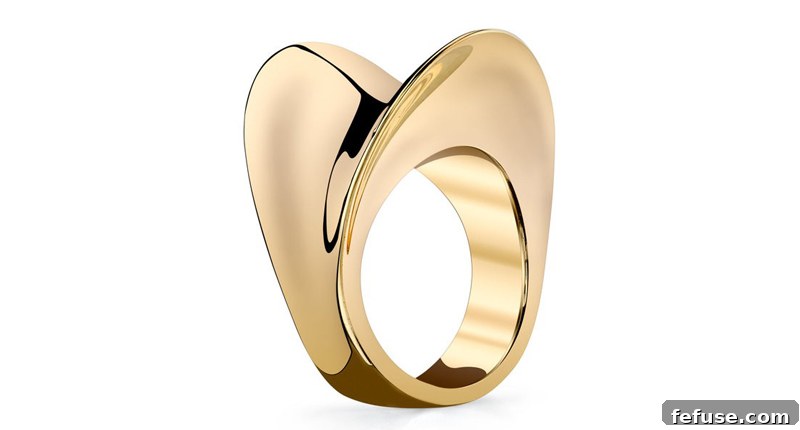
Global Gold Jewelry Demand Sees Resurgence: Key Trends and Market Dynamics in 2017
After a prolonged period of subdued performance, the global gold jewelry market experienced its first significant uplift since 2013, as reported by the World Gold Council (WGC) in its comprehensive Gold Demand Trends report for 2017. This resurgence marks a pivotal moment for the precious metal industry, signaling renewed consumer confidence and shifting market dynamics worldwide. While the increase was a welcome development, the WGC noted that demand, when viewed in a broader historical context, still has considerable ground to cover to reach previous highs, underscoring the nuanced recovery unfolding across different regions.
The report highlighted a robust 4 percent increase in worldwide gold jewelry demand, reaching a total of 2,135.5 tons. This encouraging growth was largely propelled by strong performances in key markets, demonstrating the enduring appeal of gold as both a symbol of wealth and a cherished adornment. The average price of gold throughout 2017, according to Kitco, stood at $1,257.12 per ounce, providing a stable backdrop for this renewed consumer interest.
Driving Forces Behind the Global Uptick: The US, India, and China
The primary engines behind this global resurgence were undeniably the United States, India, and China. These three economic powerhouses collectively accounted for an impressive 78 tons of the total 82-ton increase in worldwide gold jewelry demand. Their combined influence underscores their critical role in shaping the trajectory of the international gold market, driven by diverse cultural, economic, and demographic factors.
The United States Market: A Return to Growth and Robust Consumer Sentiment
The United States market, in particular, showcased a remarkable return to growth in 2017. Annual gold jewelry demand in the U.S. surged by 3 percent, culminating in 122.1 tons. This upward trajectory was particularly pronounced in the fourth quarter, which witnessed demand reaching an eight-year high. More broadly, the annual demand attained levels not seen since 2010, indicating a significant and sustained recovery. This positive trend was largely attributed to an “encouraging economic environment” that profoundly boosted consumer sentiment. A stable job market, rising disposable incomes, and overall economic optimism empowered consumers to invest in discretionary luxury items, with gold jewelry being a prime beneficiary.
Furthermore, the World Gold Council observed a growing trend towards online sales accounting for an increasingly larger share of the jewelry market. This shift towards e-commerce played directly into the strengths of larger, higher-end retailers who were well-positioned to leverage digital platforms and cater to affluent consumers seeking quality and convenience. Conversely, lower-end mass-market retailers, often reliant on traditional brick-and-mortar sales and a more price-sensitive customer base, struggled to keep pace with these evolving consumer behaviors. Despite the recovery, the WGC prudently cautioned that the U.S. market still remained a “long way from previous levels,” suggesting that while progress was being made, there was still significant potential for further expansion and a return to historical highs.
India and China: Sustained Cultural and Economic Significance
Beyond the U.S., India continued to demonstrate its deep-rooted affinity for gold. Indian gold jewelry demand experienced a substantial 12 percent increase over the full year. This strong performance was, in part, a rebound from a relatively weak 2016, a year that saw various economic disruptions impact consumer spending. Gold holds immense cultural and religious significance in India, serving as an integral part of weddings, festivals, and as a traditional store of wealth, factors that consistently underpin its demand regardless of short-term economic fluctuations. Similarly, China, another colossal market for gold, saw its jewelry demand climb by 3 percent. Economic prosperity, a growing middle class, and cultural traditions that value gold as a symbol of status and good fortune continue to drive robust demand in the world’s most populous nation.
Regional Disparities: Mixed Fortunes Across the Globe
While the overall picture painted a positive story for gold jewelry, regional variations highlighted a more complex landscape. Smaller Asian markets, with the notable exceptions of Indonesia and Vietnam, exhibited weaker demand in both the fourth quarter and for the full year. Factors such as slower economic growth, currency fluctuations, or shifts in local consumer preferences likely contributed to these declines. Indonesia and Vietnam, on the other hand, likely benefited from specific local economic growth drivers or demographic trends that bolstered consumer spending on precious metals.
Elsewhere, annual demand in Turkey and the Middle East also experienced a downturn. Geopolitical uncertainties, regional conflicts, and economic challenges in several countries within these regions likely impacted consumer confidence and discretionary spending, leading to a decreased appetite for luxury items like gold jewelry. These regions, traditionally strong consumers of gold, faced headwinds that temporarily dampened their demand.
Europe, too, recorded its third consecutive decline in annual gold jewelry demand, a concerning trend for a historically significant market. A substantial portion of this weakness was attributed to the United Kingdom, where demand suffered considerably due to ongoing Brexit concerns. The uncertainty surrounding the UK’s departure from the European Union created an environment of economic apprehension, leading consumers to exercise caution and defer purchases of non-essential luxury goods. This broader European decline reflects the complex interplay between political stability, economic outlook, and consumer spending habits.
Global Gold Demand and Supply Dynamics: A Broader Perspective
Looking beyond just jewelry, global gold demand across all categories — which includes investment (bars and coins, ETFs), technology, and central bank purchases — saw an overall decline of 7 percent, totaling 4,071.1 tons in 2017. While the fourth quarter did witness a rally, with demand increasing by 6 percent year-over-year to 1,095.8 tons, the WGC commented that it was “too little too late” to salvage the full-year performance, indicating that the strength in jewelry demand couldn’t entirely offset weaknesses in other sectors.
The dynamics on the supply side also presented notable shifts. Total gold supply in 2017 decreased by 4 percent. This contraction was primarily driven by a significant 10 percent decrease in the recycling of the precious metal. The unusually high levels of gold recycling reported in 2016, often spurred by higher gold prices or economic distress encouraging consumers to sell their existing gold, created a challenging comparative baseline for 2017. With less recycled gold entering the market, the overall supply faced downward pressure. Partially offsetting this decline, however, was a slight increase in mine production. Global gold mine output reached 3,268.7 tons in 2017, marking the highest annual total recorded in the WGC’s records, a testament to ongoing exploration efforts and technological advancements in the mining sector.
The Enduring Appeal of Gold: A Look Ahead
The 2017 gold market report provides a multifaceted view of the precious metal’s landscape. The resurgence in gold jewelry demand, particularly in key consumer markets like the US, India, and China, highlights gold’s enduring cultural significance and its role in luxury spending when economic conditions are favorable. While broader global demand faced challenges in other categories and supply dynamics saw a shift away from recycling towards increased mine production, gold continues to command attention as both an investment vehicle and a symbol of prestige. As global economies continue to evolve, understanding these intricate demand and supply trends will be crucial for stakeholders across the entire gold value chain. The journey back to historical highs for gold jewelry demand is ongoing, but 2017 undoubtedly marked a significant and hopeful step forward for the industry.