
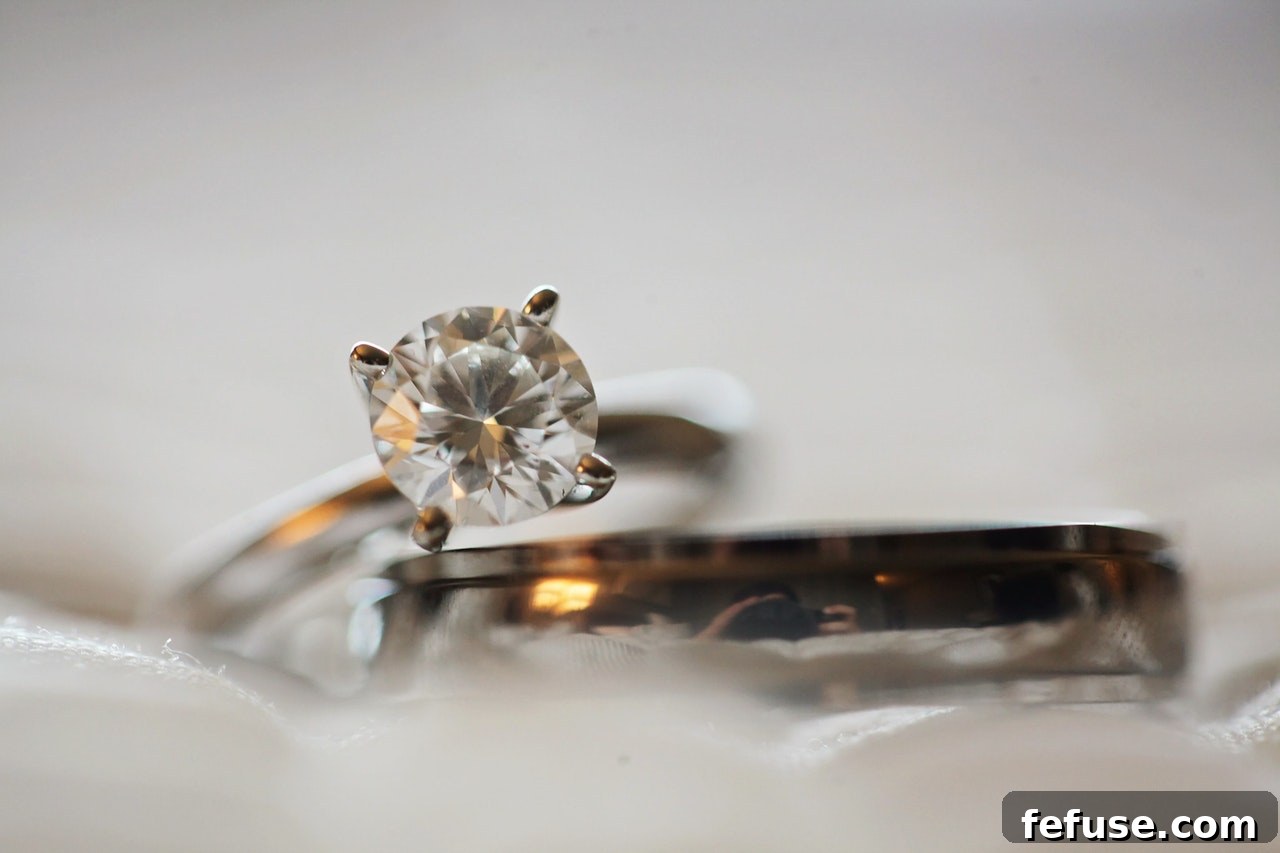
The captivating sparkle of a diamond is arguably its most enchanting feature. It’s the very essence of its allure, a mesmerizing dance of light that has captivated hearts for centuries. Beyond mere aesthetics, this brilliance is a crucial indicator of a diamond’s quality and, consequently, its value. A diamond without its dazzling twinkle is like a star without light – it simply loses its magic. Therefore, when selecting a diamond, your primary goal should be to find one expertly crafted to capture, refract, and reflect the maximum amount of light, unleashing an unparalleled display of fire and scintillation.
While every diamond cut possesses a degree of light reflection, certain cuts are engineered to perform this optical feat far more effectively than others. If you are on a quest for the diamond that truly sparkles the brightest, radiating an exceptional glow from every angle, then this comprehensive guide is precisely what you need. Today, we will delve deep into the fascinating world of diamond optics, revealing the secrets behind choosing the most brilliant diamond and uncovering the cuts renowned for their breathtaking sparkle. Prepare to unlock the brilliance within, as we explore the intricate details that make a diamond truly shine.
The Science of Sparkle: Why Do Diamonds Dazzle?
The magical twinkle of a diamond isn’t just an illusion; it’s a magnificent interplay of physics and precision artistry. Diamonds sparkle because of their unique ability to interact with light in three primary ways: brilliance, fire, and scintillation.
- Brilliance: This refers to the total amount of white light reflected from the diamond’s surface and interior. It’s the bright, white flash you see when light hits the diamond.
- Fire: Also known as dispersion, fire is the phenomenon where white light passing through the diamond is split into its spectral colors – the vibrant rainbow flashes you see. This is similar to how a prism works.
- Scintillation: This describes the flashes of light and dark areas (sparkle) produced when a diamond, light source, or observer moves. It’s the dynamic play of light that gives a diamond its lively appearance.
At its core, a rough diamond stone is meticulously cut and polished into a crystal featuring numerous flat surfaces called facets. These facets act as tiny mirrors and windows, strategically designed to absorb light from various angles, refract it internally, and then reflect it back to the viewer’s eye. The diamonds that brilliantly reflect white light, combined with vivid fire and dynamic scintillation, are truly considered the brightest and most captivating. The key lies in the number, size, shape, and precise arrangement of these facets. Generally, diamonds with a greater number of well-proportioned facets are engineered to maximize light return, resulting in a more intense and dazzling sparkle. However, it’s not just about quantity; the quality of the cut, which dictates how these facets are aligned and polished, is paramount.
The Critical Role of Cut in Diamond Brilliance
Among the renowned “4 Cs” of diamond quality – Carat, Color, Clarity, and Cut – it is undoubtedly the Cut that has the most profound impact on a diamond’s brilliance and overall sparkle. While carat weight determines size, color affects tint, and clarity pertains to internal imperfections, the cut is solely responsible for how effectively a diamond handles light. A diamond with an exceptional cut will outshine a larger, clearer, or whiter diamond with a mediocre cut, simply because of its superior light performance.
The brilliance of a diamond is meticulously rated by leading gemological laboratories like the Gemological Institute of America (GIA) and the American Gem Society (AGS). These organizations employ sophisticated grading systems that evaluate how well a diamond’s facets interact with light. Their assessments consider factors such as:
- Proportions: The precise angles and relative dimensions of the diamond’s facets, including the table size, crown angle, and pavilion depth. Optimal proportions ensure light enters the diamond, reflects off the pavilion facets, and exits through the top (table and crown) as brilliant sparkle.
- Symmetry: The exactness of the shape, alignment, and placement of the facets relative to each other. Poor symmetry can misdirect light, reducing brilliance.
- Polish: The smoothness of the diamond’s facet surfaces. A high-quality polish minimizes surface imperfections that could scatter light and dull the sparkle.
Diamond brilliance and reflectivity are also defined by the size and shape of the facets, and their ability to reflect light. Emily from Fergus James, a prominent Dubai-based diamond jewelry store, emphasizes that while precise measurements are crucial, understanding the overall light performance grade is key. Diamonds with larger, well-placed facets tend to reflect more significant flashes of light. Similarly, a greater number of expertly crafted facets will typically result in more points of light reflection, intensifying the diamond’s sparkle. However, the balance is crucial; too many or too few, or improperly distributed facets, can actually diminish brilliance.
Decoding Diamond Cut Grades for Maximum Sparkle
Understanding diamond cut grades is essential for anyone seeking the brightest diamond. Reputable grading laboratories assign cut grades that serve as a reliable indicator of a diamond’s light performance.
- Excellent (GIA) / Ideal (AGS): These are the highest cut grades, reserved for diamonds that display exceptional brilliance, fire, and scintillation. These diamonds are cut to near-perfect proportions, symmetry, and polish, maximizing light return. They represent the pinnacle of sparkle.
- Very Good: Diamonds in this category reflect most of the light that enters them, offering significant brilliance and sparkle, though slightly less than an Excellent/Ideal cut. They represent a fantastic balance of quality and value.
- Good: These diamonds reflect a good amount of light, providing decent sparkle. However, they may have slightly less optimal proportions or symmetry, resulting in some light leakage.
- Fair: Diamonds with a Fair cut leak a considerable amount of light, appearing noticeably less brilliant and sparkling than higher grades.
- Poor: These diamonds are cut to proportions that allow most of the light to escape, resulting in a dull, lifeless appearance with minimal sparkle.
When aiming for maximum brilliance, always prioritize diamonds with an Excellent or Ideal cut grade from a respected laboratory. These gems are more challenging to produce and often command a higher price, but the unparalleled visual impact they deliver in terms of sparkle, fire, and scintillation is well worth the investment for those who value ultimate brilliance.
Which Diamond Cut Shines the Brightest? The Reign of the Round Brilliant
Without a doubt, the undisputed champion of sparkle among all diamond shapes is the **Round Brilliant Cut**. Its superior brilliance is not accidental; it is the culmination of centuries of mathematical precision and optical engineering. The modern Round Brilliant cut features a meticulously designed pattern of 57 or 58 facets (including the culet), each strategically placed to maximize the diamond’s interaction with light.
The intricate arrangement of its facets – including the table, crown facets, girdle, pavilion facets, and culet – ensures that light entering the diamond is refracted, internally reflected, and then dispersed back through the top, creating an explosive display of white light (brilliance) and rainbow flashes (fire). No other diamond shape consistently achieves the same level of breathtaking sparkle and dynamic scintillation as a well-cut Round Brilliant. Its classic, timeless appeal is further enhanced by its exceptional light performance, making it the most popular choice for engagement rings and other fine jewelry.
Other Brilliant-Style Cuts: A Spectrum of Sparkle
While the Round Brilliant sets the standard, several other diamond shapes are also designed with brilliant faceting patterns to maximize sparkle, albeit with slightly different aesthetic outcomes. These cuts aim to capture and reflect light in a similar fashion but offer unique silhouettes and character. Some of the most popular brilliant-style cuts include:
- Oval Cut: A graceful, elongated brilliant cut that offers significant sparkle and can make fingers appear longer and more slender. It often has a higher facet count, contributing to its shine.
- Princess Cut: A square or rectangular brilliant cut, known for its sharp, modern lines and intense sparkle, offering a geometric take on brilliance.
- Cushion Cut: A romantic, softer square or rectangular shape with rounded corners and larger facets, often described as having a “pillowy” appearance with a beautiful crushed-ice sparkle.
- Radiant Cut: A unique hybrid that combines the straight edges of an emerald cut with the brilliant faceting of a round diamond, resulting in a vibrant, fiery sparkle within a rectangular or square outline.
- Pear Cut: A teardrop-shaped brilliant cut that blends the rounded end of an oval with the pointed end of a marquise, offering elegance and a striking sparkle.
- Marquise Cut: An elongated, boat-shaped brilliant cut with pointed ends, which can appear larger than its actual carat weight and delivers impressive sparkle.
While these brilliant-style cuts offer fantastic sparkle, they generally cannot match the consistent, all-encompassing brilliance of a well-cut Round Brilliant, which is optimized for maximum light return from every angle. However, their unique shapes often present larger surface areas for their carat weight and offer distinct aesthetic appeal that many find irresistible.
It’s also worth noting that “step cuts” like the Emerald and Asscher cuts, while beautiful, are designed to create a different optical effect. They feature parallel, rectangular facets that produce broad flashes of light and a “hall of mirrors” effect, rather than the intense, fragmented sparkle of brilliant cuts. Therefore, if sheer sparkle is your priority, focus on the brilliant-cut family.
Beyond the Cut: Other Factors That Enhance or Diminish Brilliance
While cut quality is the single most important determinant of a diamond’s sparkle, other characteristics also play a supportive role in enhancing or hindering its brilliance. Understanding these factors provides a holistic view of what makes a diamond truly shine.
Clarity
Clarity refers to the absence of inclusions (internal flaws) and blemishes (external imperfections). While minor inclusions might not be visible to the naked eye, significant or strategically placed inclusions can obstruct the path of light as it travels through the diamond. When light hits an inclusion, it can be scattered or absorbed, preventing it from reflecting back to the viewer as brilliance, fire, or scintillation. Diamonds with higher clarity grades (Flawless, Internally Flawless, VVS1, VVS2) tend to have fewer light-blocking imperfections, allowing for unobstructed light passage and superior sparkle.
Color
Diamond color is graded on a scale from D (colorless) to Z (light yellow or brown). While color itself doesn’t directly create sparkle, a diamond with a noticeable yellow or brown tint (lower color grade) can absorb some of the white light, making it appear less vibrant and brilliant. A truly colorless diamond (D-F range) allows white light to pass through and reflect without any interfering hues, enhancing the perception of pure, intense sparkle and fire. For fancy colored diamonds, the intensity of their natural color is what is sought, but for traditional white diamonds, less color generally means more perceived brilliance.
Polish and Symmetry
These two aspects are actually components of a diamond’s overall cut quality, but their individual impact on brilliance is significant enough to warrant a closer look.
- Polish: The quality of the finish applied to the diamond’s surface. A diamond with an “Excellent” polish will have perfectly smooth facets, allowing light to enter and exit cleanly without distortion. Poor polish, with features like polish lines or surface abrasions, can create a hazy appearance or scatter light unevenly, dulling the diamond’s sparkle.
- Symmetry: This refers to the precise alignment and evenness of the facets. A diamond with “Excellent” symmetry will have perfectly matched and aligned facets. Poor symmetry, such as misaligned facets or an off-center culet, can disrupt the diamond’s optical path, causing light to leak out rather than reflect back to the eye, diminishing its brilliance and creating uneven sparkle.
Light Environment
While not an intrinsic diamond characteristic, the lighting conditions under which a diamond is viewed significantly affect how its brilliance is perceived. Diamonds appear most vibrant in dynamic lighting environments that allow for movement and varying light sources, such as natural daylight or well-placed spotlights, which highlight their scintillation and fire. Dim or static lighting can make even the most brilliant diamond appear less lively.
Practical Tips for Choosing the Brightest Diamond
Equipped with this knowledge, you are now better prepared to navigate the exciting journey of selecting a truly brilliant diamond. Here are some actionable tips:
- Prioritize Cut Grade: Always aim for an “Excellent” or “Ideal” cut grade from a reputable grading laboratory like GIA or AGS, especially for Round Brilliant diamonds. This is your single most important factor for sparkle.
- Review the Diamond Certification: Before making any purchase, meticulously review the diamond’s grading report. This document details all the crucial characteristics, including cut grade, proportions, symmetry, and polish, which are direct indicators of its light performance. For instance, when considering a diamond ring or any jewelry, the cut grade is paramount.
- See It in Person (or High-Quality Video): If possible, view the diamond under various lighting conditions – not just the bright, focused lights of a jewelry store. Observe its sparkle in natural light, office lighting, and even dimmer settings to get a comprehensive understanding of its brilliance. Many online retailers now offer 360-degree videos that can replicate this experience.
- Compare Side-by-Side: Ask your jeweler to show you several diamonds with similar carat weight, color, and clarity but different cut grades. This direct comparison will vividly illustrate the profound impact of cut on sparkle.
- Consult with a Reputable Jeweler: Work with a knowledgeable and trustworthy jeweler, like the experts at Fergus James, who can guide you through the intricacies of diamond selection, explain grading reports, and help you find a diamond that aligns with your desired level of brilliance and budget.
Conclusion: Embrace the Dazzling Allure of a Brilliant Diamond
The search for the brightest diamond is a journey rooted in understanding the intricate relationship between craftsmanship, science, and the inherent beauty of nature. The “magical twinkle” or sparkle of a diamond, formally known as its brilliance, is the quality that truly sets it apart. While every aspect of the 4 Cs plays a role, the quality of the diamond’s cut stands as the most influential factor, dictating how brilliantly a diamond will interact with light.
If your heart is set on a diamond that radiates maximum sparkle, you should unequivocally lean towards the brilliant-cut family, with the Round Brilliant diamond leading the charge as the pinnacle of light performance. However, remember that other factors such as clarity, color, and especially the precision of polish and symmetry, also contribute to the diamond’s overall dazzling effect.
Ultimately, purchasing a diamond is a significant investment and a deeply personal experience. By prioritizing an excellent cut grade, meticulously reviewing diamond certifications, and seeking guidance from trusted professionals, you can confidently choose a diamond that not only meets but exceeds your expectations for breathtaking brilliance, fire, and scintillation. Let your diamond be a radiant testament to everlasting sparkle.