
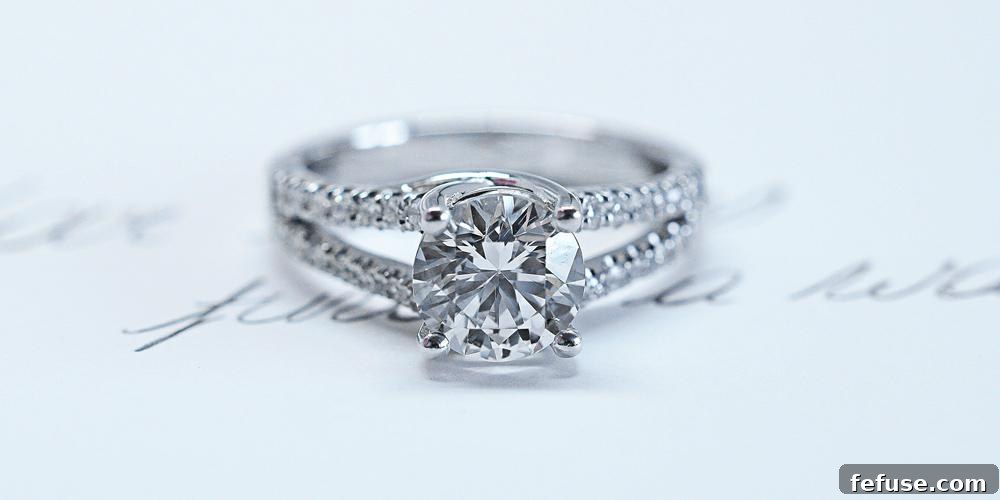
Determining the true value of a diamond ring is a multifaceted process that goes beyond a simple glance. Whether you’re considering an important purchase, evaluating an inherited piece, planning for insurance, or contemplating a sale, understanding the factors that influence a diamond ring price is crucial. This comprehensive guide will walk you through the essential elements, from the intrinsic qualities of the diamond itself to the intricacies of the setting and the realities of the market, empowering you to make informed decisions about your precious jewelry.
Unveiling the Diamond’s Worth: The Four Cs
At the heart of every diamond’s valuation are the universally recognized “Four Cs”: Carat, Cut, Clarity, and Color. These four characteristics, meticulously assessed by gemological laboratories, form the bedrock of a diamond’s quality and, consequently, its price.
1. Carat: The Weight of Distinction
Carat refers to a diamond’s weight, not its size. One carat is equivalent to 200 milligrams. Generally, the higher the carat weight, the rarer and more valuable the diamond. However, it’s important to remember that a larger diamond doesn’t automatically mean a more expensive one; the other three Cs play an equally vital role. A high-carat diamond with poor cut, clarity, or color may be less valuable than a smaller diamond with exceptional quality in the other areas. Diamond prices per carat increase exponentially, meaning a 2-carat diamond is significantly more expensive than two 1-carat diamonds of similar quality, due to its increased rarity. Understanding carat weight in conjunction with the other Cs provides a more accurate picture of a diamond’s true value.
2. Cut: The Sparkle Factor
The cut is arguably the most critical of the Four Cs, as it dictates a diamond’s brilliance, fire, and scintillation—its overall sparkle. A diamond’s cut refers to how well its facets interact with light. This includes its proportions, symmetry, and polish. An expertly cut diamond will reflect and refract light beautifully, maximizing its inherent beauty. Poorly cut diamonds, even with excellent clarity and color, will appear dull and lifeless. Reputable grading laboratories like the Gemological Institute of America (GIA) assign cut grades ranging from Excellent to Poor, directly impacting the stone’s desirability and price. Beyond the basic shape (round, princess, emerald, etc.), the quality of the cut is what truly brings a diamond to life, making it a paramount factor in determining its market value.
3. Clarity: The Absence of Imperfections
Clarity measures the absence of inclusions (internal flaws) and blemishes (external imperfections) within a diamond. Most diamonds have some level of clarity characteristics, which are natural birthmarks formed during their creation. These are typically magnified under 10x magnification. The less noticeable these inclusions and blemishes are, the higher the clarity grade, and the more valuable the diamond. Clarity grades range from Flawless (FL) to Included (I1, I2, I3). While Flawless diamonds are exceedingly rare and expensive, many diamonds with slightly lower grades (such as VS1, VS2, SI1, SI2) can still appear “eye-clean,” meaning their inclusions are not visible to the naked eye, offering excellent value. Evaluating clarity ensures that any natural characteristics do not detract from the diamond’s beauty or durability.
4. Color: The Degree of Colorlessness
Diamond color refers to the degree to which a diamond is colorless. Most diamonds used in jewelry have a hint of yellow or brown. The GIA color grading scale ranges from D (colorless) to Z (light yellow or brown). D, E, and F are considered colorless, G, H, I, J are near-colorless, and so on. Generally, the less color a diamond possesses, the rarer and more valuable it is. However, fancy colored diamonds (such as pink, blue, or yellow diamonds beyond the Z range) are graded on a separate scale and can command exceptionally high prices due to their extreme rarity and vibrant hues. For colorless diamonds, aiming for the near-colorless range (G-J) often provides a great balance between beauty and value, especially when set in white metals like platinum or white gold, which can help mask any subtle yellow tones.
The Indispensable Role of Certification
A reliable diamond certification is paramount when assessing a diamond’s quality and value. Organizations like the GIA (Gemological Institute of America), AGS (American Gem Society), and IGI (International Gemological Institute) provide detailed reports that objectively grade a diamond’s Four Cs. This certification acts as a diamond’s “fingerprint” and a guarantee of its stated characteristics. Without a reputable certificate, determining a diamond’s true quality and comparing it accurately with others becomes challenging and subjective, significantly impacting its perceived and actual market value. Always insist on a GIA or AGS certificate for significant diamond purchases, as they are globally recognized for their stringent and consistent grading standards, providing peace of mind and protecting your investment.
Navigating the Market: Determining a Diamond’s Current Value
Once you understand the inherent quality of your diamond through its Four Cs and a reputable certificate, the next crucial step is to evaluate its market worth. This involves looking at current pricing trends for comparable stones in the retail landscape.
To do this effectively, arm yourself with your diamond’s exact specifications – carat weight, cut grade, clarity grade, and color grade, preferably from a reputable certification. Then, explore leading online diamond retailers and marketplaces. Filter your searches using these precise criteria. By gathering prices from multiple vendors for loose diamonds that closely match your stone’s characteristics, you can generate an average price range. This average will serve as a strong indicator of your diamond’s current retail market value, giving you a realistic baseline for its worth.
For instance, if your ring features a 0.75-carat diamond with G color, VS2 clarity, and a Good cut, search for several loose diamonds online with these exact specifications. Average their listed prices to establish a benchmark. Remember that factors like fluorescence, specific cut parameters (e.g., depth and table percentages), and the presence of a strong brand name can also subtly influence prices. It’s advisable to compare within similar brand tiers; for example, don’t compare a generic diamond with a Tiffany-branded one if you’re trying to establish the value of a non-branded stone, as the brand itself adds a premium. For a truly professional opinion on market value, especially for higher-value pieces, consider consulting an independent gemological appraiser.
Beyond the Stone: Evaluating the Metal and Setting
While the diamond is undoubtedly the star, the metal setting contributes significantly to the overall value, durability, and aesthetic of the ring. Its worth is determined by the type of precious metal used, its purity, and its weight, along with the complexity and craftsmanship of the design.
Identifying the Metal Type and Purity
First, ascertain the primary precious metal of the band. Common choices include gold (yellow, white, or rose), platinum, and sometimes palladium or, less commonly for high-value diamonds, silver. Each metal has a different market value per gram, which fluctuates daily. You can usually find hallmarks or stamps inside the band indicating the metal type and purity.
- Gold: The purity of gold is measured in karats (k). Pure gold is 24k. However, pure gold is too soft for everyday jewelry, so it’s alloyed with other metals for durability. Common purities include 18k (75% pure gold), 14k (58.3% pure gold), and 10k (41.7% pure gold). The higher the karat, the higher the gold content and usually the higher the price. White gold is created by alloying pure gold with white metals like palladium or nickel and is typically rhodium plated for a bright white finish. Rose gold mixes pure gold with copper for its distinctive pink hue.
- Platinum: A naturally white and extremely durable metal, platinum is often more expensive than gold due to its rarity, density, and hypoallergenic properties. Jewelry is typically made from 90-95% pure platinum, denoted as “PT900” or “PT950.” It develops a natural patina over time but does not wear away, making it an excellent choice for longevity.
- Palladium: A member of the platinum group metals, palladium is also naturally white, hypoallergenic, and lighter than platinum. Its market value fluctuates but is generally comparable to or slightly less than platinum. It’s often marked as “PD950.”
- Silver: While beautiful, silver is significantly less valuable than gold or platinum and tarnishes over time. It’s less common for engagement or high-value diamond rings due to its softness and susceptibility to tarnish. Sterling silver is 92.5% pure silver and marked “S925.”
Weighing the Metal and Considering Design
After identifying the metal and its purity, the next step is to weigh the ring. Ideally, you would weigh the metal separately from any gems, but if that’s not possible, estimate the diamond’s weight and subtract it, or get a jeweler to do it. Once you have the net weight of the precious metal in grams or ounces, you can multiply it by the current scrap metal price for that specific purity. Websites dedicated to precious metal markets can provide daily updated prices, giving you an accurate valuation for the raw material.
Beyond the intrinsic metal value, the craftsmanship and design of the setting itself can add significant value. Intricate designs, custom work, designer settings, or the inclusion of accent diamonds or other gemstones can elevate the ring’s overall worth considerably. A simple solitaire setting will primarily reflect the metal’s weight, whereas a detailed halo or pavé setting will have added value due to the labor involved, the complexity of the design, and the number and quality of any additional stones. The condition of the setting—whether it’s worn, damaged, or requires repair—will also affect its contribution to the overall value.
Understanding Resale Value: The Reality of Selling Your Diamond Ring
It’s crucial to distinguish between a diamond ring’s retail market price and its resale value. The price you paid at a jewelry store, or the current retail value of a similar new ring, is almost never what you will receive when selling a pre-owned piece. This difference is often a source of surprise and disappointment for sellers, but it stems from fundamental economic principles in the jewelry industry.
Why Resale Value Differs from Retail
When a jewelry store sells a new ring, the retail price includes a significant markup to cover various business costs: overhead (rent, utilities), marketing, staff salaries, insurance, inventory holding costs, and profit margins. They also provide guarantees, warranties, and often financing options. When you, as a private individual, attempt to sell your diamond ring, you cannot offer these assurances or services. Therefore, professional diamond buyers—whether jewelry stores, diamond dealers, or online consignment shops—will not pay you anywhere near retail price.
These buyers typically operate on wholesale pricing models. They acquire stones at a lower cost, often directly from manufacturers or large-scale suppliers, to then resell them for a profit. When purchasing from a private seller, they factor in their own costs (testing, re-polishing, re-setting, marketing, and profit margin) and the inherent risk of buying a used item without a commercial warranty. Consequently, they aim to purchase well below wholesale to ensure profitability. The difference between retail and wholesale is substantial, and a private seller typically falls below wholesale due to these additional business considerations.
Realistic Expectations for Resale
A common estimate for the resale value of a diamond ring, when selling to a professional buyer, ranges from **20% to 50% of its original retail price or current new retail equivalent.** The 20-30% range is often more realistic for a quick sale, especially for common designs and sizes. Achieving 50% or more typically requires a very high-quality, sought-after stone, unique designer piece, or a direct sale to an educated end-consumer.
**Factors that can influence a higher resale percentage:**
- Exceptional Quality: Top-tier diamonds (D-F color, FL-VVS clarity, Excellent cut) with GIA/AGS certificates hold their value better. Such stones are rarer and always in demand.
- Desirable Design/Brand: Iconic designs or rings from prestigious brands (e.g., Tiffany & Co., Cartier) can fetch a premium, although still not retail. The brand’s recognition and craftsmanship add inherent value.
- Rarity: Very large diamonds (e.g., 3 carats and above), rare fancy colors (pink, blue), or antique pieces with unique provenance can command higher percentages due to their scarcity.
- Original Documentation: Keeping the original diamond certificate, appraisal documents, and purchase receipts significantly helps establish credibility and value, assuring buyers of the stone’s authenticity and characteristics.
- Condition: A well-maintained ring with no damage to the stone or setting, and minimal wear, will always command a better price. Repairs or significant wear will reduce its appeal and value.
Avenues for Selling and Their Implications
- Professional Diamond Buyers/Jewelers: Offers the quickest sale but often at the lowest percentage (typically 20-35% of retail). They provide cash or store credit, but their offer must cover their costs and profit.
- Online Consignment Marketplaces (e.g., Worthy, I Do Now I Don’t): These platforms act as intermediaries, connecting sellers with buyers. They aim for higher prices than direct buyers but take a commission (typically 10-25%). The process can be slower but often yields a better return (30-50%) for the seller.
- Auction Houses: Best for rare, high-value, or antique pieces, especially those with significant provenance. They can achieve high prices but involve significant commissions (for both buyer and seller) and a lengthy sales cycle. Not ideal for average, mass-produced rings.
- Private Sale to Friends/Family/General Public: This avenue offers the potential for the highest return (e.g., 40-70% of retail) because you cut out the middleman’s profit. However, it requires more effort, time, and the seller must be knowledgeable and trustworthy. You might advertise on local classifieds, social media, or dedicated online forums. Transparency, clear photos, and providing all original documentation are essential for building buyer confidence.
- Pawn Shops: Generally offer the lowest prices as they are interested in immediate liquidity and short-term loans, not maximizing resale value. They are a last resort for quick cash and rarely provide fair market value.
Ultimately, the resale value you achieve will depend on the diamond’s quality, current market demand, the method of sale you choose, and your patience as a seller. Proper documentation and realistic expectations are key to a satisfactory selling experience.
Additional Factors Influencing Value
Beyond the core elements, several other factors can subtly or significantly impact a diamond ring’s overall valuation:
- Brand and Designer: Rings from prestigious brands like Tiffany & Co., Cartier, or Harry Winston often carry a premium due to their reputation, craftsmanship, and exclusivity. Part of the value is in the brand name itself, which can influence both retail and, to a lesser extent, resale prices. Their designs are often unique and their quality control is exceptional.
- Fluorescence: Some diamonds exhibit fluorescence, a glow when exposed to ultraviolet light. While often undetectable in normal lighting, strong blue fluorescence can sometimes make a colorless diamond appear hazy or oily, potentially lowering its value for higher color grades. For lower color grades (I-M), however, mild to medium blue fluorescence can make the diamond appear whiter, which can be seen as a positive. The impact of fluorescence on value is subjective and depends on its intensity and color grade.
- Provenance and History: If a ring has a unique or historically significant story, or belonged to a notable individual, its provenance can add considerable value, especially in auction settings. This intangible aspect can transform a piece of jewelry into a collectible artifact.
- Market Trends and Demand: Just like fashion, certain diamond cuts (e.g., oval, emerald cut) or setting styles (e.g., halo vs. solitaire) might be more popular at different times, influencing demand and pricing. Current trends can temporarily inflate or deflate the market value for certain styles.
- Insurance Appraisal vs. Market Value: It’s important to understand that an insurance appraisal often reflects the replacement cost (what it would cost to buy a *new* equivalent ring at retail) and is typically higher than what you would receive if you sold the ring on the open market. This is because insurance is designed to cover the cost of replacing the item, not its liquidation value.
In Conclusion: A Holistic Approach to Valuation
Determining the value of a diamond ring is a comprehensive process that requires attention to detail and an understanding of both gemological science and market dynamics. Each diamond ring is unique, shaped by its individual characteristics—the precise interplay of its Carat, Cut, Clarity, and Color—as well as the quality and design of its metal setting. By diligently examining these factors, consulting reputable certifications, researching current market trends for comparable stones, and being realistic about resale expectations, you can arrive at a well-informed assessment of your diamond ring’s true worth. Whether for purchase, sale, or simply appreciation, a thorough evaluation ensures that you understand the profound value held within that sparkling piece of jewelry, allowing you to make confident and informed decisions about your precious asset.