
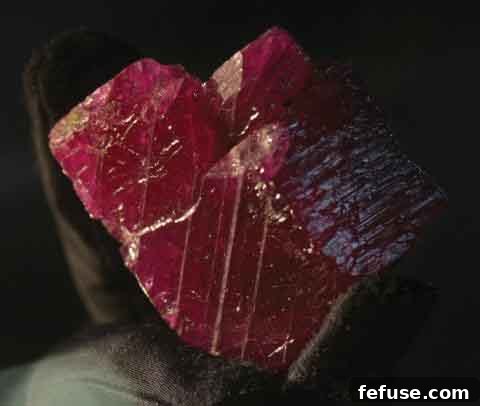
The Return of Burmese Rubies and Jade: A New Era for the Global Gemstone Industry
On October 7, a pivotal executive order dramatically reshaped the landscape of the international gemstone market, officially lifting an eight-year-old ban on the importation of Burmese rubies and jade into the United States. This significant policy shift opens the doors once again to some of the world’s most coveted precious stones, originating from Myanmar, formerly known as Burma.
The announcement itself had been foreshadowed weeks earlier, on September 14, when President Barack Obama publicly declared his intent to terminate the embargo against gems from Myanmar. This declaration came during a high-profile meeting with the country’s revered leader, Daw Aung San Suu Kyi, symbolizing a major step forward in diplomatic relations and economic engagement between the two nations.
While the precise scale of current ruby mining operations within Myanmar’s ancient, 1,000-year-old gem industry remains somewhat opaque, the allure of Burmese origin continues to command considerable prestige and desirability. The finest rubies from Myanmar are universally regarded among the most sought-after and valuable gemstones on the planet, often fetching astronomical prices and adorning the most exquisite jewelry collections. The reintroduction of these gems into the U.S. market is expected to have far-reaching implications for jewelers, collectors, and the entire supply chain.
Tracing the Origins: The JADE Act and Its Intent
The Genesis of the Ban (2008-2009)
The prohibition on these precious stones was initially implemented with the passage of the JADE Act (Junta’s Anti-Democratic Efforts) in 2008. This legislative initiative was a deliberate attempt by the U.S. Congress to exert economic and political pressure on Myanmar’s then-military government. The aim was to compel the junta towards democratic reforms and to address widespread human rights abuses. The following year, additional provisions were introduced, significantly strengthening the parameters and enforcement of the ban, effectively cutting off a vital revenue stream from the military regime.
The Unforeseen Economic and Market Repercussions
The imposition of the JADE Act had an immediate and profound impact across the global ruby business. Major luxury brands, such as Tiffany & Co., proactively responded by implementing company-wide bans on the sale of all rubies, irrespective of origin, as a precautionary measure to avoid inadvertently violating the sanctions or supporting illicit trade. This decision, while ethically sound, created a substantial void in the market for high-quality rubies.
Furthermore, many experts within the gemstone industry believe that the prolonged absence of natural Burmese rubies from the market inadvertently sparked the significant rise in popularity and demand for flux-grown gems. These laboratory-created or enhanced stones, while distinct from natural rubies, offered a viable alternative for consumers and jewelers seeking a ruby-like appearance in the absence of ethically sourced natural stones from Myanmar. The ban thus not only affected the supply of natural stones but also catalyzed innovation and acceptance within the synthetics and treated stone market.
Persistent Concerns: Why the Ban Endured Beyond Its Expiration
When the original JADE Act eventually expired in 2013, there was widespread anticipation and hope within the gemstone community that the ban would be allowed to lapse alongside it. This optimism was largely fueled by Myanmar’s discernible transition towards a more democratic form of governance, suggesting that the initial objectives of the JADE Act might have been met. However, despite these political shifts, President Obama chose to issue a new executive order, thereby maintaining the ruby and jade ban. This decision was primarily driven by persistent and well-documented human rights concerns, particularly those prevalent in the country’s gem-producing areas. Reports of forced labor, environmental degradation, and the exploitation of local communities continued to cast a shadow over the industry, making the U.S. government hesitant to fully re-engage without demonstrable improvements in ethical practices and transparency.
These ongoing concerns underscored the complex challenges of sourcing precious stones from regions with a history of conflict and human rights issues. The U.S. government sought to ensure that any re-engagement would not inadvertently legitimize or exacerbate these problems, emphasizing the need for robust mechanisms to promote responsible and ethical mining practices before opening the market.
A Collective Sigh of Relief: Industry’s Enthusiastic Welcome
The news of the ban’s official lifting was met with overwhelming enthusiasm and a palpable sense of relief across the gemstone dealing community. For many, though certainly not all, within the industry, the ban had always been contentious, with a strong sentiment that it should never have been enacted in the first place, or at least not maintained for such an extended period.
“There’s a huge collective sigh of relief,” remarked Doug Hucker, CEO of the American Gem Trade Association (AGTA), articulating the sentiment of many. “This has been a very difficult situation for our industry and, crucially, for the artisanal miners in Burma who depend on this trade for their livelihoods.” The embargo had created a black market, deprived legitimate businesses of valuable inventory, and often left artisanal miners in precarious economic situations without access to legal, regulated markets.
Significantly, at the very moment the ban was lifted, Hucker and a delegation of other prominent industry leaders were on a fact-finding tour of Myanmar. They discovered a country, and an industry, brimming with eagerness and readiness to re-establish connections and fully re-engage with the United States market. This firsthand observation provided critical insights into the local sentiment and the potential for positive collaboration.
Jeffrey Bilgore, President of AGTA, echoed this optimism, stating, “We have had an amazing reaction from the top down. This is a country coming out of the darkness of 50 years of military rule and eager to participate in the new order. America is the largest gem-consuming market in the world, and Myanmar hasn’t been able to sell us rubies for eight years. They are happy to come out from the darkness, come out from [under] the cloud.” This quote perfectly encapsulates the palpable desire for renewed economic partnership and integration into the global economy after decades of isolation.
Paving the Way for Responsible Sourcing: A New Chapter for Myanmar
Commitment to Ethical Practices
During their visit, Doug Hucker noted that local stakeholders in Myanmar strongly emphasized their commitment to adopting responsible mining practices. “We have made recommendations to them, and across the board, they have been receptive,” Hucker affirmed. “Everyone wants to do business in the right way. It’s ingrained in their philosophy, their religion.” This commitment is crucial for building trust and ensuring that the re-established trade benefits all parties, from the miners to the end consumers, without compromising ethical standards.
Distinguishing Gemstone and Jade Sectors
The tour group, which included distinguished figures such as David Bonaparte, President and CEO of Jewelers of America (JA); JA’s legislative counsel, Timothy Haake; and GIA distinguished research fellow James E. Shigley, acknowledged that considerable, deep-seated problems persist within the Burmese jade sector. Consequently, their immediate focus was primarily directed towards other gems, where the path to responsible sourcing might be clearer and more readily achievable.
Jeffrey Bilgore elaborated on this distinction: “The gem sector has always operated in a very different way than the jade sector. There is still an awful lot of work to do there. The gemstone sector can be a model to the jade sector in helping to modify their practices.” This suggests a strategic approach, where successes in responsible sourcing within the broader gemstone industry can serve as a blueprint and inspire reform in the more challenging jade sector. Beyond rubies and jade, Myanmar is also a notable producer of other valuable colored stones, including sapphires, topaz, and various other minerals, which also stand to benefit from the lifting of the ban and the focus on ethical trade.
The Road Ahead: Continued Oversight and Sustainable Practices
Even with the official ban now a matter of history, the gemstone industry in Myanmar remains firmly on the radar of the U.S. government. A fact sheet issued by the Department of State explicitly states that the United States intends to “work closely with the government [of Myanmar on] the need for responsible and transparent investment and business practices, in particular in the jadeite and gemstones sector.” This commitment signifies that while trade has resumed, the emphasis on ethical sourcing, transparency throughout the supply chain, and the protection of human rights will remain paramount.
The lifting of the ban represents a significant opportunity for Myanmar to fully integrate into the global responsible sourcing movement. It encourages the development of more transparent supply chains, supports local artisanal miners with fair wages and safe working conditions, and fosters environmental stewardship in mining regions. For the U.S. and international gem trade, it means renewed access to highly prized gemstones, with the added responsibility of ensuring that these gems are sourced ethically and contribute positively to Myanmar’s development. The journey toward a fully transparent and responsible gemstone sector in Myanmar is ongoing, but this landmark decision marks a hopeful and crucial step forward.
(Xinhua/Alamy)
News Source: JCKOnline.com