
Navigating the Gems: Key Challenges for Independent Jewellers in Today’s Retail Landscape
The high street has undeniably become a challenging arena for businesses, and independent jewellers are no exception. Beyond the well-documented issues of slow footfall and fluctuating consumer confidence, exacerbated by recent economic shifts, a deeper dive reveals a complex web of unique obstacles. While broad economic factors often dominate headlines, discussions among independent jewellers themselves point to more intrinsic, solvable problems that demand immediate attention and innovative solutions.
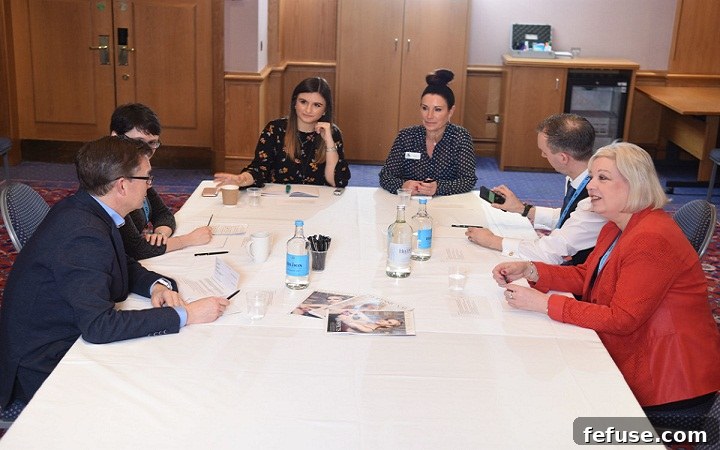
In recent roundtables, such as one hosted by Professional Jeweller, industry leaders were asked about their most pressing concerns. Interestingly, geopolitical events or wider economic downturns, though significant, were not at the forefront of their immediate struggles. This suggests a pragmatic focus on issues within their sphere of influence—problems that, with strategic thinking and adaptable approaches, can be directly addressed to secure a vibrant future for their craft.
The Human Element: Staffing and Generational Gaps in Jewellery Retail
One of the most significant and frequently cited challenges revolves around human capital: attracting, training, and retaining staff across diverse age groups. The landscape of employment has shifted dramatically, and independent jewellers find themselves at a crucial juncture in managing an evolving workforce.
Addressing an Ageing Workforce and Technological Adoption
Many long-established independent jewellers are experiencing the natural progression of an ageing workforce, which, while offering invaluable experience and loyalty, also presents unique hurdles, particularly concerning technology. John Henn, company director of T.A. Henn, candidly shared his perspective: “Ageing staff is a big problem for me. Ageing staff who are struggling with the changes in the industry regarding any sort of technology, and they all seem to be struggling to understand that it is a service to our customers that we establish what they are interested in and offer to supply them with information regarding their interests.”
This struggle often extends beyond simply operating new software. It encompasses a fundamental shift in understanding modern customer service, where personalised engagement and data-driven insights are paramount. The ability to seamlessly integrate digital tools for inventory management, customer relationship management (CRM), and targeted marketing is no longer a luxury but a necessity. Effective training programs are crucial here, focusing not just on ‘how to use’ a tool but ‘why’ it benefits the customer and the business, simplifying complex technologies and highlighting their practical advantages.
Navigating Data Privacy: GDPR and Customer Engagement
The imperative for staff to adapt to technological changes is closely linked to the evolving legal framework surrounding data privacy. Regulations like GDPR (General Data Protection Regulation) have made it more critical than ever for staff to openly and confidently discuss the capture and use of customer contact information. This requires a delicate balance between compliance and maintaining a warm, approachable customer experience.
Harriet France, director at Jeremy France Jewellers, highlighted this challenge and their innovative approach: “We’ve had some staff who have felt very uncomfortable asking for email addresses and the way that we have trained our staff is to say, ‘What gives you the right to take away their choice?’ Because by sending them an email saying, ‘We have a Ti Sento pre-launch preview event coming up, you’ve bought Ti Sento in the past, would you like to come and view the collection before it is available to the general market and pre-order items from the SS18 collection?’, who are we to look at a person and think they will not want to leave their email address and therefore not want to see the new collection.”
This perspective reframes data collection not as an imposition, but as an opportunity to offer enhanced service and exclusive value. It empowers staff to explain the benefits to the customer, fostering trust and providing a pathway for personalised marketing that genuinely resonates, rather than being perceived as intrusive. Training in this area must equip staff with clear scripts, an understanding of consent mechanisms, and the confidence to communicate the value proposition of sharing information.
Bridging the Generational Divide in the Workplace
Beyond technology and data, the generational gap presents a broader challenge in terms of employee engagement and retention. Retail environments increasingly host a diverse age range, from seasoned veterans to young millennials and Gen Z employees, each with distinct expectations, motivations, and learning styles. “What the older generation want and what the younger millennials want seems to be something very different,” explained Harriet France. “It’s quite difficult to treat two very different age ranges in very different ways but not ruffle the feathers of one side or the other.”
This dichotomy extends to training methodologies. Traditional, one-size-fits-all training days often fall short. France shared a vivid example: “How do you train all your staff in one day? How do you engage with all of them and keep it interesting? It used to be that you would have a training day and you would pass round the box of donuts to keep everyone happy, but for one of our girls we did a training day and it was her fasting day because she has one or two days a week where she only eats 300 calories. How do I train and keep this person interested in a day’s training when she is not keeping her sugar levels up?”
This highlights the need for flexible, empathetic, and multi-faceted training approaches. Judith Hart, director of the namesake retailer, concurred: “It’s really tough with millennials. They learn differently as well. I’ve got age ranges from a 16-year-old Saturday girl right the way up to a lady who has been with me 30 odd years, but I think if you are a small business it is possible, you just have to perhaps split the training a little bit.” Solutions could include blended learning models combining online modules with in-person sessions, peer mentoring, shorter and more frequent training bursts, and tailoring content to resonate with different generational values, such as career progression for younger staff or work-life balance for others.
Connecting with the Modern Consumer: Diverse Demographics and Marketing Strategies
The generational divide isn’t confined to the staff room; it extends directly to the customer base. Independent jewellers must master the art of appealing to a spectrum of ages, from the loyal, established clientele to the emerging millennial and Gen Z consumers, whose purchasing behaviours and expectations are vastly different.
Serving a Multi-Generational Customer Base
While evolution and relevance to younger generations are paramount, jewellers cannot afford to alienate their ever-loyal older consumers. The challenge lies in creating an in-store and online experience that feels authentic and appealing to everyone. “The physiology behind the different ages is so different,” shared Dipple’s managing director, Chris Ellis. “I see that in my son and he is only ten. How do we target the younger generation through marketing because the way that they look at marketing stuff is completely different to how I would.”
Younger consumers are digital natives; they are influenced by social media, value authenticity, and seek experiences over mere transactions. Their decision-making process often begins online, long before they consider stepping into a physical store. Conversely, older generations may value traditional service, established relationships, and a sense of trust built over years.
Targeting the Future: Digital Marketing for Younger Audiences
The conundrum for jewellers is “trying to work out how to target them because at the end of the day, in the next 20 years, they are going to be the ones with the money who are going to come in and buy engagement rings and they need to know about us rather than go onto the internet,” Ellis wisely noted. This necessitates a sophisticated and diversified marketing strategy. For younger audiences, this means a strong online presence across various platforms: Instagram for visual storytelling, TikTok for short-form engaging content, YouTube for detailed product reviews or brand stories, and personalised email campaigns. Content must be authentic, interactive, and reflect their values, such as sustainability, ethical sourcing, or personalised expression.
For older, loyal customers, direct mail, community involvement, and personalised in-store events might continue to be effective. The key is segmentation and crafting tailored messages through the most appropriate channels, ensuring the brand narrative remains consistent yet adaptable to different audiences.
The Digital Frontier: Online Competition and the Evolving High Street
Perhaps the most pervasive and long-term challenge for independent jewellers is the omnipresent internet. Online shopping has reshaped retail, and jewellers have been battling to master the omnichannel experience for several years, striving to capture shoppers wherever they are on their purchasing journey.
Mastering Omnichannel Retail and Building Trust Online
While the convenience of online shopping is undeniable, independent jewellers often feel that high-value purchases, especially fine jewellery like engagement rings or significant investment pieces, are still ultimately desired in-store. The tactile experience of seeing a diamond’s sparkle, feeling the weight of a gold chain, or trying on a unique design cannot be fully replicated online. As Chris Ellis explained, “People want to see a diamond. You can’t see what it looks like and a lot of people can’t trust what they are buying online at that kind of level.”
This inherent need for physical inspection and expert guidance is a powerful differentiator for brick-and-mortar jewellers. However, it doesn’t mean ignoring the digital realm. A robust omnichannel strategy means seamlessly integrating online and offline touchpoints. This could involve an intuitive e-commerce website for browsing and research, virtual consultations, online booking for in-store appointments, click-and-collect options, and interactive digital tools that enhance the in-store experience, such as augmented reality try-ons. The goal is to build trust online, encouraging customers to transition from digital exploration to a physical visit, where the true value of an independent jeweller shines through personalised service and expert advice.
The High Street’s Tipping Point and Community Impact
The long-term health of the high street itself presents an existential threat. If other retailers continue to shift predominantly online, the very ecosystem that drives footfall to physical stores could collapse. Ellis articulated this pressing concern: “But the issue is more what happens when there is a tipping point in the high street and most other retailers don’t need to have shops because they are doing so much more on the internet. If there aren’t shops on the high street people aren’t going to come into Norwich to come to my shop if there is nothing else in the city. So I think where we might be safe, we are also not safe because of what is happening in other retail sectors.”
Independent jewellers, often anchors in their local communities, rely on the vibrancy of the surrounding retail environment. A bustling high street, with diverse shops, cafes, and services, creates a destination that naturally draws customers. If this vibrancy diminishes, even a resilient jeweller might suffer from reduced incidental footfall. This necessitates proactive engagement with local business associations, town councils, and other independent retailers to advocate for initiatives that revitalise and promote high street experiences. Creating unique local events, collaborative marketing campaigns, and fostering a strong sense of community can help counter the broader trend of high street decline, positioning the independent jeweller as not just a shop, but a vital part of the local fabric.
Conclusion: Resilience and Adaptation in the Jewellery Sector
The challenges facing independent jewellers are multifaceted, ranging from internal operational concerns like staffing and training to external market pressures from evolving consumer behaviours and the omnipresent digital marketplace. However, the insights from these industry leaders highlight a sector that is acutely aware of its obstacles and actively seeking solutions.
The ability of independent jewellers to adapt, embrace technology judiciously, foster an inclusive and skilled workforce, and craft compelling customer experiences—both in-store and online—will define their success. By addressing these challenges head-on with innovative strategies, personalised service, and a deep understanding of their diverse customer base, independent jewellers can not only survive but truly shine, continuing to be cherished cornerstones of their communities and purveyors of timeless beauty in an ever-changing world.