
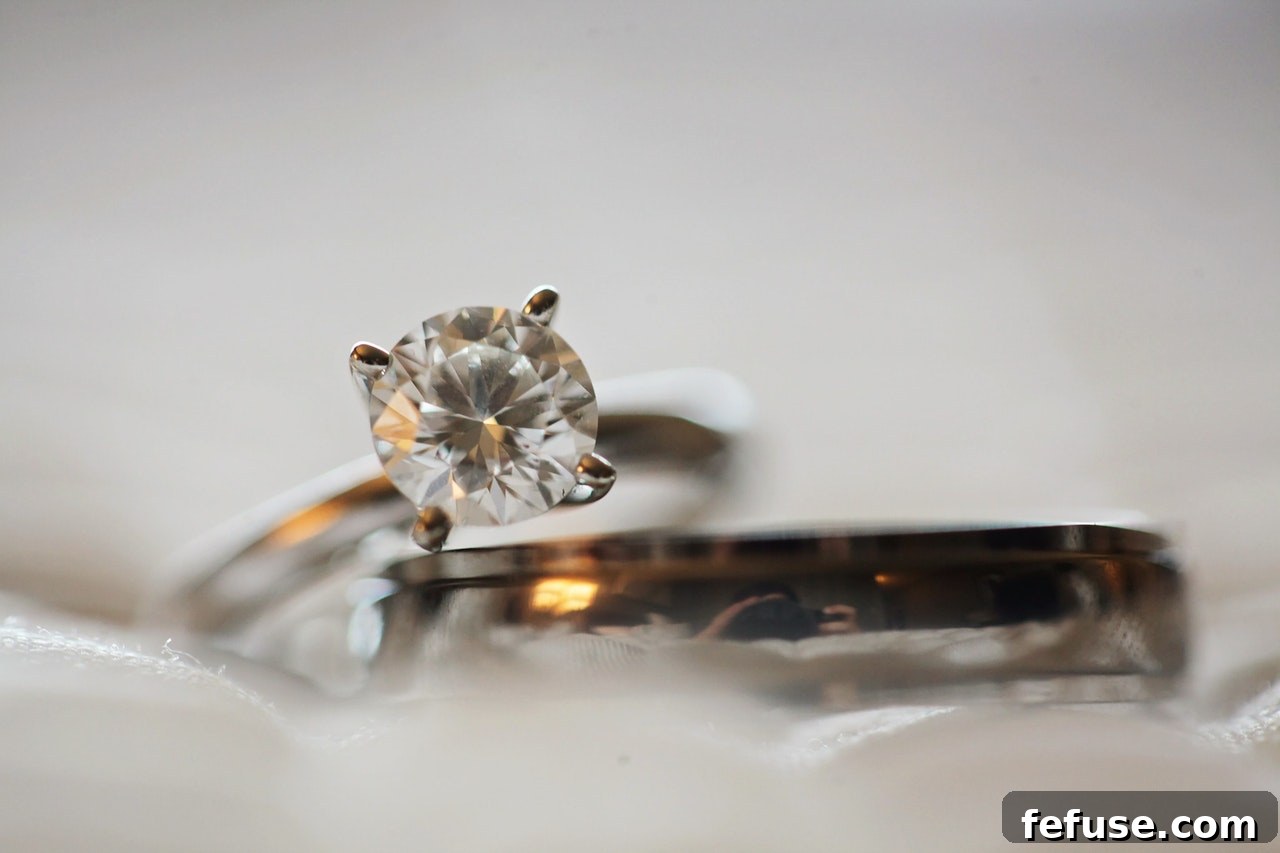
The captivating allure of a diamond lies predominantly in its brilliance – the breathtaking sparkle and intense fire it exhibits. This radiant display isn’t merely an aesthetic preference; it’s a fundamental indicator of a diamond’s quality and, consequently, its inherent value. After all, what truly defines a diamond if not its ability to mesmerize with its dance of light? To choose a diamond that truly stands out, one must understand how these precious gems capture and reflect light to create their legendary shimmer.
While every diamond cut possesses a degree of sparkle, some are masterfully crafted to optimize light performance, outshining their counterparts. If you envision a diamond that radiates with unparalleled brilliance, this comprehensive guide is tailored for you. We will delve into the intricate science behind a diamond’s sparkle, unveil the cuts renowned for their exceptional luminosity, and equip you with the knowledge to select a stone that truly gleams. Join us as we uncover the secrets to choosing the brightest diamond.
The Enchanting Science Behind Diamond Sparkle
The dazzling spectacle of a diamond’s sparkle is a complex interplay of light and geometry. At its core, a diamond’s ability to shine stems from its unique optical properties and the precision of its cut. When light enters a diamond, it undergoes several transformations: reflection, refraction, and dispersion. It’s the mastery of these phenomena that dictates how brilliantly a diamond will appear.
Diamonds are cut into specific shapes with numerous flat surfaces called facets. These facets act as a series of tiny mirrors and windows, meticulously angled to maximize light interaction. When white light enters the diamond through its top (the table), it travels through the stone, bounces off the internal facets (specifically the pavilion facets), and then reflects back up through the table to the viewer’s eye. This internal reflection is crucial for generating the diamond’s brilliance.
Brilliance, Fire, and Scintillation: The Three Pillars of Sparkle
To truly appreciate a diamond’s sparkle, it’s essential to understand its three primary components:
- Brilliance: This refers to the total amount of white light reflected from a diamond. It’s the bright, central flash of light that gives the diamond its overall luminosity. A well-cut diamond maximizes the return of white light, making it appear brighter and more vibrant.
- Fire: Also known as dispersion, fire is the phenomenon where white light is split into its spectral colors – the rainbow flashes you see within the diamond. This occurs as light passes through the diamond and separates into different wavelengths, similar to a prism. A diamond with excellent fire will exhibit vibrant, colorful flashes.
- Scintillation: This is the captivating sparkle and flash that occurs when the diamond, the light source, or the observer moves. It refers to the play of light and dark patterns within the diamond as it shifts, creating a dynamic, shimmering effect. Scintillation is further divided into “flash scintillation” (the flashes of light) and “pattern scintillation” (the contrasting dark and light areas).
A truly spectacular diamond achieves a harmonious balance of all three elements. While brilliance accounts for the overall brightness, fire adds bursts of color, and scintillation provides that irresistible, lively twinkle that makes a diamond come alive.
The Diamond Cut: The Foremost Driver of Brilliance
Among the famous 4 Cs (Cut, Color, Clarity, Carat), the diamond cut is unequivocally the most critical factor influencing a diamond’s brilliance and overall sparkle. While color and clarity contribute to a diamond’s purity and rarity, it is the quality of the cut that determines how effectively a diamond interacts with light. An exquisitely cut diamond, even one with slightly lower color or clarity grades, can often appear more stunning than a flawless stone with a mediocre cut.
The quality of the cut refers to how well a diamond’s facets are proportioned, symmetrically aligned, and polished. These precise measurements and angles are engineered to maximize the amount of light that enters the diamond and returns to the viewer’s eye. A poorly cut diamond, conversely, allows light to “leak” out of the sides or bottom, resulting in a dull, lifeless appearance.
Understanding Cut Grades and Proportions
Reputable gemological laboratories, such as the GIA (Gemological Institute of America) and AGS (American Gem Society), issue grading reports that provide a comprehensive assessment of a diamond’s cut quality. These grades typically range from “Excellent” (or “Ideal” for AGS) to “Poor.” When evaluating a diamond for maximum sparkle, always prioritize a cut grade of “Excellent” or “Very Good.”
Key proportions that influence light performance include:
- Table Percentage: The width of the table facet (the largest flat facet on top) relative to the diamond’s total width.
- Depth Percentage: The depth of the diamond from table to culet relative to its width.
- Crown Angle: The angle at which the crown facets (the facets above the girdle) meet the girdle.
- Pavilion Angle: The angle at which the pavilion facets (the facets below the girdle) meet the girdle.
- Girdle Thickness: The width of the perimeter where the crown and pavilion meet.
- Culet: The small facet at the bottom tip of the pavilion.
Each of these proportions must fall within specific ranges for optimal light return. For example, a diamond with a pavilion that is too deep will allow light to escape from the bottom, while a pavilion that is too shallow will let light leak from the sides, both resulting in a loss of brilliance. This meticulous balance of angles and dimensions is what differentiates a merely cut diamond from one that is truly brilliant.
Polish and Symmetry: Refining the Sparkle
Beyond the primary proportions, the GIA and AGS also grade a diamond’s polish and symmetry. These are critical components of a diamond’s overall cut quality:
- Polish: Refers to the smoothness of the diamond’s facets. A high-quality polish ensures that light can enter and exit the diamond without being diffused or scattered by microscopic imperfections on the surface. Imperfect polish can dull the diamond’s luster.
- Symmetry: Describes the precise alignment and evenness of the diamond’s facets. Perfect symmetry ensures that light is reflected evenly throughout the stone, preventing dark areas or uneven sparkle. Poor symmetry can lead to light leakage and an unbalanced appearance.
Both polish and symmetry are typically graded as Excellent, Very Good, Good, Fair, or Poor. For maximum brilliance, aim for diamonds with “Excellent” or “Very Good” grades in both categories.
Which Diamond Shape Sparkles the Most?
When it comes to sheer brilliance, one diamond shape consistently reigns supreme: the Brilliant Cut. The ingenious design of brilliant-cut diamonds, characterized by a multitude of precisely angled facets, is specifically engineered to maximize the return of white light, creating that coveted magical twinkle. Emily from Fergus James, a reputable Dubai-based diamond jewelry store, emphasizes that “brilliance and reflectivity are paramount, and the meticulous arrangement and size of facets are key contributors to a diamond’s brightness.”
The Unrivaled King: The Round Brilliant Diamond
The most popular and arguably the most brilliant of all diamond shapes is the modern Round Brilliant diamond cut. This timeless classic features a perfectly circular outline combined with an intricate facet arrangement, typically comprising 57 or 58 facets (when a culet is present). This specific facet pattern, developed over centuries, is scientifically proven to capture and reflect more light than any other diamond shape. The precise angles of its crown and pavilion are calibrated to achieve an optimal balance of brilliance, fire, and scintillation, making it the undisputed champion of sparkle.
The Round Brilliant’s dominance in light performance is a significant reason for its enduring popularity and its higher price point compared to fancy shapes. Its ability to return a dazzling amount of light makes it a perennial favorite for engagement rings and other significant jewelry pieces where maximum sparkle is desired.
Other Brilliant-Style Cuts: Chasing the Sparkle
While the Round Brilliant sets the benchmark, several other diamond shapes are also cut in a “brilliant” style, meaning they feature facet patterns designed to maximize sparkle. These shapes offer a similar fiery appeal but with unique outlines that cater to diverse tastes. Some of the most popular brilliant-style cuts include:
- Marquise Cut: An elongated, boat-shaped diamond with pointed ends. Its brilliant faceting gives it a significant sparkle, and its length can make it appear larger than its actual carat weight.
- Oval Cut: A modified brilliant cut with an elongated, symmetrical oval shape. It combines the brilliance of a round diamond with a unique, flattering silhouette that can make fingers appear longer.
- Radiant Cut: A rectangular or square diamond with cropped corners, featuring a brilliant facet pattern on both its crown and pavilion. It offers a stunning blend of the elegance of an emerald cut and the sparkle of a round brilliant.
- Pear Cut (Teardrop): A combination of a round brilliant and a marquise shape, with one rounded end and one pointed end. Its brilliant faceting provides excellent sparkle, and its unique shape is highly versatile.
- Princess Cut: A square or rectangular diamond with sharp, uncropped corners and a brilliant facet pattern. It is the second most popular diamond shape and offers exceptional brilliance, especially in smaller sizes.
While these brilliant-style cuts offer fantastic sparkle, they generally cannot match the consistent, all-encompassing light performance of a truly ideal Round Brilliant diamond. However, they provide beautiful alternatives for those seeking a distinct shape without compromising too much on brilliance.
Step Cuts: A Different Kind of Brilliance
It’s also worth noting “step cuts” like the Emerald and Asscher shapes. These diamonds feature long, rectangular or square facets arranged in parallel steps, resembling a staircase. Instead of a fiery sparkle, step cuts produce broad, elegant flashes of light known as the “hall of mirrors” effect. While they possess less overall sparkle (scintillation and fire) compared to brilliant cuts, their unique transparency and captivating flashes appeal to those who appreciate a more subtle, sophisticated brilliance.
Beyond the Cut: Other Factors Influencing a Diamond’s Brilliance
While the cut is undeniably the most significant determinant of a diamond’s sparkle, other factors also play a crucial role in its overall luminosity and visual appeal. Understanding these can help you make a more informed choice.
Clarity: Unobstructed Light Pathways
A diamond’s clarity refers to the absence of inclusions (internal flaws) and blemishes (external imperfections). While tiny inclusions might not be visible to the naked eye, larger or numerous inclusions can obstruct the path of light as it travels through the diamond. When light encounters an inclusion, it can be absorbed, scattered, or deflected, preventing it from reflecting back to the viewer. This can result in a reduction of brilliance and a duller appearance. For optimal sparkle, aim for a clarity grade that is “eye-clean,” meaning no inclusions are visible without magnification.
Color: The Purity of Light
Diamond color refers to the absence of color in a white diamond, graded on a scale from D (colorless) to Z (light yellow or brown). Even subtle yellow or brown tints (lower color grades) can absorb certain wavelengths of light. This absorption can subtly diminish the intensity of white light reflected from the diamond, thus reducing its overall brilliance. While a near-colorless diamond (G, H, I, J) can still exhibit excellent sparkle with a superior cut, a truly colorless (D, E, F) diamond will allow light to pass through and return with maximum purity and intensity.
Fluorescence: A Minor Influence
Some diamonds exhibit fluorescence, meaning they emit a visible glow (usually blue) when exposed to ultraviolet (UV) light. While often negligible, in rare cases of very strong blue fluorescence, some diamonds may appear “oily” or “milky” in strong sunlight, potentially impacting their transparency and, consequently, their brilliance. However, for the vast majority of diamonds, fluorescence has no discernible effect on appearance and can sometimes even make a slightly yellow diamond appear whiter.
Cleanliness: The Simplest Sparkle Enhancer
Perhaps the most straightforward factor affecting a diamond’s brilliance is its cleanliness. Over time, dirt, oils from skin, lotions, and everyday grime can accumulate on the surface of a diamond. This thin film acts as a barrier, preventing light from entering and exiting the diamond effectively. A dirty diamond will always look duller, regardless of its cut quality, color, or clarity. Regular cleaning with a soft brush, mild soap, and warm water can instantly restore a diamond’s lost sparkle.
Choosing Your Perfect Sparkling Diamond: A Buyer’s Guide
Embarking on the journey to purchase a diamond that sparkles the brightest requires careful consideration and an understanding of key metrics. Here’s how to ensure you make an informed decision:
Prioritize Cut Above All Else
As discussed, the cut quality is paramount. When reviewing a diamond’s certification, always look for “Excellent” or “Ideal” cut grades from reputable labs like GIA or AGS. These grades signify that the diamond’s proportions, symmetry, and polish have been optimized for maximum light performance. Don’t compromise on cut; it’s the single biggest factor in how brilliant your diamond will appear.
Review the Diamond Certification Thoroughly
Before making any purchase, insist on a complete diamond grading report from an independent, respected gemological laboratory (GIA or AGS are the industry gold standards). This report will detail all the characteristics of the diamond, including its exact measurements, cut grade, polish, symmetry, color, clarity, and fluorescence. This document is your assurance of the diamond’s quality and its potential for brilliance.
Specifically, pay close attention to the cut grade, as well as the percentages for table and depth, and the angles for the crown and pavilion. Comparing these numbers against recommended ranges for ideal light performance can provide valuable insight into the diamond’s potential sparkle.
For instance, when looking for a diamond ring or other fine jewelry, you should actively inquire with your jeweler about the specific cut grade. Every truly brilliant diamond comes with a comprehensive grading report that provides all the essential information about its cut quality. Ensure you thoroughly review this certification before finalizing your decision, as it offers a transparent overview of the jewel’s characteristics.
View the Diamond in Various Lighting Conditions
A diamond’s sparkle can vary dramatically under different lighting. A well-lit jewelry store might make almost any diamond look good. Request to see the diamond in various lighting environments – natural daylight, office lighting, and even dimmer settings. This will give you a realistic understanding of its brilliance, fire, and scintillation in everyday situations.
Work with a Reputable Jeweler
A knowledgeable and trustworthy jeweler is an invaluable resource. They can explain the nuances of diamond grading, help you understand the certification report, and guide you towards diamonds that align with your preferences and budget. They should be transparent about a diamond’s characteristics and empower you to make an educated choice.
In conclusion, the enchanting sparkle of a diamond, often referred to as its brilliance, is a symphony of light and precision. If your heart desires a diamond that radiates with unparalleled luminosity, prioritizing the cut is paramount. Seek out a diamond with an “Excellent” or “Ideal” cut grade, preferably a Round Brilliant, and always verify its quality through a reputable gemological certification.
The magical twinkle and dazzling fire of a diamond are a testament to meticulous craftsmanship and the wonder of nature. By understanding the factors that contribute to this brilliance—from the number and distribution of facets to the quality of the cut, polish, and symmetry—you can confidently select a diamond that will sparkle brilliantly for a lifetime, becoming a cherished symbol of lasting beauty and enduring value.