
Pandora’s Strategic Turnaround Gains Momentum: A Deep Dive into 2019 Performance and Future Outlook
Global jewellery behemoth Pandora appears firmly on track to achieve its previously communicated sales and profit margin forecasts for 2019, as indicated by its recently shared preliminary financial results. These early figures offer a compelling glimpse into the effectiveness of the company’s ambitious ‘Programme Now’ turnaround strategy, signaling a potential new chapter for the Danish brand amidst a challenging retail landscape. While sales figures reflect the ongoing transformation, the underlying profitability and the alignment with expectations underscore management’s diligent execution.
Preliminary 2019 Performance: A Strategic Overview
Based on unaudited financial data, Pandora has provided key insights into its performance for the fourth quarter (Q4) and the full financial year of 2019. These numbers are pivotal in understanding the trajectory of the company’s turnaround efforts.
- Q4 Total Like-for-Like Sales: Expected to be -4%. This figure, while still negative, demonstrates a significant moderation in sales decline compared to previous periods, hinting at a stabilizing trend as the year concluded. It suggests that the initiatives implemented under Programme Now are beginning to resonate with consumers and stem the outflow of sales.
- Full-Year 2019 Total Like-for-Like Sales: Projected to be -8%. Crucially, this result is entirely in line with the expectations communicated by Pandora at the beginning of the year. Meeting forecasts during a period of intense restructuring is a strong indicator of credible strategic planning and effective operational management, reinforcing investor confidence in the leadership team’s ability to guide the company through its transformation.
- Q4 Organic Growth: Expected at -1%. Organic growth measures the revenue generated from existing operations, excluding the impact of acquisitions or currency fluctuations. The nearly flat organic growth in Q4 further emphasizes the decelerating rate of decline and hints at nascent positive movements within the core business.
- Full-Year 2019 Organic Growth: Anticipated at -8%. Similar to the like-for-like sales, this full-year organic growth figure aligns perfectly with the company’s initial projections, showcasing consistent performance against internal benchmarks.
- Full-Year EBIT Margin (excluding restructuring costs): Forecasted to be at the upper end of the 26-27% range. The Earnings Before Interest and Taxes (EBIT) margin is a critical measure of a company’s operational profitability. Achieving the upper bound of this target range, even amidst declining sales, is a significant accomplishment. It suggests that Pandora has been highly successful in optimizing its cost structure, enhancing operational efficiencies, and managing its overheads effectively, thereby protecting its profit margins despite a challenging top-line environment. This financial discipline is a cornerstone of any successful turnaround.
These preliminary results, though showing a dip in sales, are being interpreted as tangible evidence that Programme Now is indeed having a positive impact on the business. The ability to meet previously stated financial guidance, particularly on the profitability front, provides a solid foundation for future growth and validates the strategic decisions made over the past year.
Unpacking ‘Programme Now’: Pandora’s Strategic Overhaul
At the heart of Pandora’s evolving narrative is ‘Programme Now’, a comprehensive and ambitious turnaround initiative launched to revitalise the brand and restore its market position. This multi-faceted strategy encompasses a broad range of operational and brand-centric changes designed to address the challenges Pandora faced in recent years, including perceived brand dilution, over-reliance on promotional activity, and increased competition.
Key pillars of Programme Now include:
- Brand Repositioning: A fundamental shift in how Pandora communicates its brand identity. This involves renewed focus on its core values, craftsmanship, and the emotional connection customers have with its jewellery. The aim is to re-establish Pandora as a desirable and aspirational brand rather than one solely associated with mass-market affordability.
- Product Innovation and Portfolio Streamlining: A concerted effort to refresh existing collections and introduce new, compelling designs that resonate with contemporary consumer tastes. This also includes optimizing the product assortment, removing underperforming lines, and ensuring a strong pipeline of innovative products that excite the market.
- Marketing and Communication Refresh: Investing in more impactful and targeted marketing campaigns that celebrate individuality and personal expression, moving away from overly broad promotional strategies. This includes leveraging digital channels more effectively and engaging with customers through authentic storytelling.
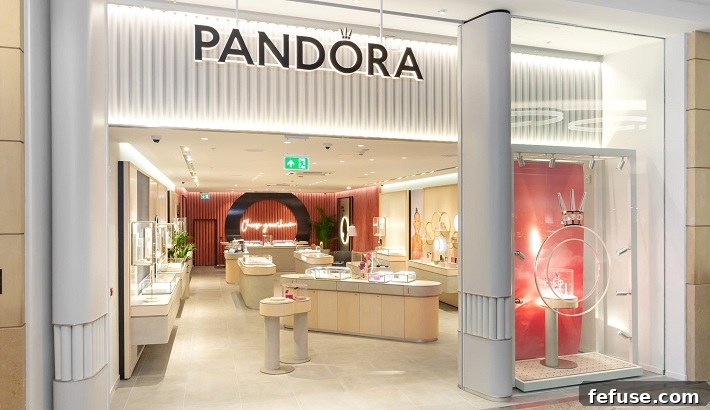
- Retail Experience Enhancement: Upgrading the physical retail environment to create more engaging and premium shopping experiences. This involves store renovations, improved visual merchandising, and enhanced customer service training to ensure a consistent and high-quality brand experience across all touchpoints.
- Supply Chain and Operational Efficiency: Streamlining production processes, optimizing inventory management, and enhancing supply chain agility to reduce costs, improve speed to market, and ensure product availability. The strong EBIT margin performance is a direct reflection of these efficiency gains.
- Digital Transformation: Significant investment in e-commerce platforms, digital marketing capabilities, and data analytics to better understand customer behaviour and drive online sales, which are increasingly crucial in modern retail.
The preliminary Q4 and full-year results suggest that these strategic initiatives are beginning to bear fruit. The slowing decline in like-for-like sales and the robust EBIT margin indicate that the company is successfully stabilizing its operations and improving profitability, even as it navigates the complexities of a major brand overhaul.
Navigating the Evolving Global Jewellery Market
Pandora’s turnaround efforts are unfolding against a backdrop of significant shifts in the global jewellery market. The industry faces intense competition from both established luxury brands and agile direct-to-consumer start-ups. Consumer preferences are evolving, with increasing demand for personalized, ethically sourced, and sustainable products. E-commerce continues to gain traction, challenging traditional brick-and-mortar retail models.
In this dynamic environment, Pandora’s strategy to refocus on its core brand identity and improve operational efficiencies is critically important. By emphasizing its unique selling propositions—hand-finished quality, collectibility, and personal storytelling—Pandora aims to differentiate itself. The commitment to innovation, particularly in design and material sourcing, will be key to capturing the attention of a new generation of consumers while retaining its loyal customer base.
Furthermore, the jewellery sector has seen a general trend towards “affordable luxury,” a segment Pandora pioneered. However, the market has become saturated, leading to price pressure and a need for brands to constantly innovate and maintain desirability. Programme Now addresses these issues by striving to elevate the brand perception and create products that justify their price point through perceived value and emotional resonance.
Outlook for 2020: A Continued Path to Recovery
Looking ahead, Pandora has openly communicated that like-for-like sales are expected to remain negative in 2020. This frank assessment underscores the realistic understanding that a comprehensive turnaround of this magnitude requires sustained effort and time. The “forceful turn-around programme” is not a quick fix but a multi-year endeavour aimed at building a stronger, more sustainable business for the long term.
The expectation of continued negative like-for-like sales suggests that the brand expects further pruning of underperforming stores or product lines, and that the full benefits of its strategic initiatives will take time to materialize on the top line. However, the focus will likely remain on enhancing profitability, optimizing the retail network, and strengthening the brand’s appeal. Investors will be keenly watching for signs of further deceleration in sales declines and continued strong margin performance as indicators of the strategy’s success.
Key areas of focus for Pandora in 2020 will likely include:
- Sustained Product Innovation: Launching new collections and refreshing existing ones to generate excitement and drive demand.
- Digital Acceleration: Further investment in e-commerce capabilities and digital customer engagement to capture growth in online channels.
- Retail Optimization: Continuing to refine its store footprint, focusing on profitable locations and enhancing the in-store experience.
- Marketing Efficacy: Ensuring that marketing spend is highly effective in communicating the renewed brand message and driving customer acquisition and retention.
The upcoming release of Pandora’s full annual report on February 4th will provide more granular details on these preliminary results, offering deeper insights into regional performance, category-specific trends, and the detailed financial implications of Programme Now. This report will be crucial for analysts and investors seeking a comprehensive understanding of the company’s progress and future trajectory.
Investor Confidence and Long-Term Vision
For investors and stakeholders, Pandora’s ability to meet its financial guidance for 2019 is a significant positive signal. It demonstrates effective management of expectations and a disciplined approach to executing a complex turnaround strategy. While the journey back to robust top-line growth may still be lengthy, the improved profitability and the stabilization of sales decline are encouraging signs that the company is moving in the right direction.
The market often rewards companies that show clear progress on strategic objectives, even if the immediate financial numbers aren’t explosive. Pandora’s current performance suggests a company that is taking difficult but necessary steps to reset its foundation. The consistent communication regarding its expectations for 2020 also builds trust and transparency, allowing the market to anticipate and react to its progress more effectively.
Ultimately, Pandora’s long-term success hinges on its ability to reconnect with its core consumer base, reignite brand desirability, and adapt to the evolving demands of the global jewellery market. Programme Now is the blueprint for this transformation, and the preliminary 2019 results indicate that the initial phases are yielding promising outcomes, laying the groundwork for what could be a powerful resurgence for the iconic jewellery brand.
News Source: professionaljeweller