
Signet Jewelers’ ‘Path to Brilliance’ Faces Uphill Battle as Q4 Results Disappoint
In 2018, Signet Jewelers, a global leader in diamond jewelry retail, embarked on an ambitious and comprehensive turnaround strategy dubbed “Path to Brilliance.” This root-and-branch transformation was designed to revitalize the company’s performance, streamline operations, and enhance customer experience, with expectations of tangible results by the end of the year. However, the latest financial disclosures for the fourth quarter (Q4) of its 2019 fiscal year paint a challenging picture, indicating that the journey towards brilliance is proving more arduous than anticipated. The results underscore the profound pressures facing the traditional jewelry retail sector, particularly in key markets like the United Kingdom, and highlight the complex challenges in executing large-scale corporate transformations amidst a volatile consumer landscape.
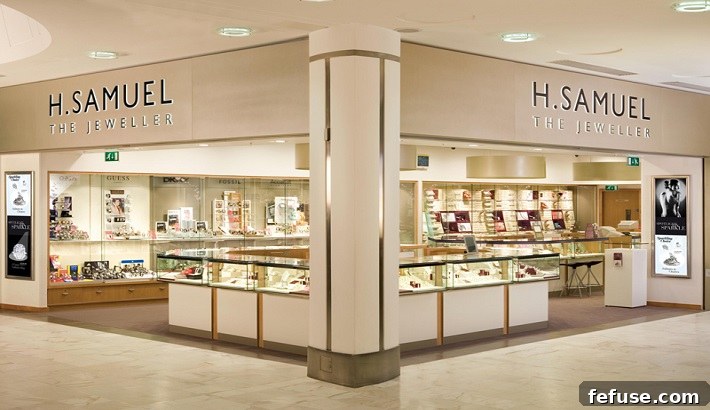
The crucial Christmas trading period, encompassing the three months leading up to February 2nd, saw Signet’s UK brands grappling with significant headwinds. Both H. Samuel and Ernest Jones, two prominent names in the UK jewelry market, experienced considerable declines in same-store sales. H. Samuel, known for its accessible range of jewelry and gifts, saw a same-store sales reduction of 5.8%. More surprisingly, Ernest Jones, positioned as the more upmarket and prestige-focused brand, fared even worse, with its same-store sales plummeting by an alarming 8.9%. This performance is particularly noteworthy given that, in recent years, both brands have generally maintained comparable turnover figures. For this most recent quarter, H. Samuel’s sales reached $102.8 million (£78.4 million), while Ernest Jones recorded $92.2 million (£69.9 million), illustrating a clear divergence in their short-term fortunes. The intense promotional environment, characterized by heavy discounting across the retail sector, undoubtedly contributed to these declines, as retailers vied for shrinking consumer discretionary spending. This aggressive pricing strategy, while aimed at driving footfall and clearing inventory, often erodes profit margins and can dilute brand perception, especially for premium retailers.
The downturn in same-store sales was not uniform across all product categories, revealing shifts in consumer purchasing habits within the jewelry sector. Signet identified lower sales in core categories such as bridal jewelry, fashion jewelry, and fashion watches as primary drivers of the overall decline. Bridal jewelry, a cornerstone of the industry, often reflects broader economic confidence and consumer sentiment regarding significant life investments. A dip here suggests a cautious approach from consumers. Similarly, the reduced demand for fashion jewelry and watches indicates a highly competitive market where consumers have a plethora of choices, and brand loyalty can be fleeting. These declines were, however, partially mitigated by a notable uptick in sales of prestige watches. This specific bright spot suggests a segment of the market that remains robust, potentially appealing to affluent consumers less affected by economic uncertainties or those making significant investment purchases. The resilience of the luxury watch segment often acts as a barometer for high-net-worth spending and brand desire at the upper echelons of the market.
Virginia C. Drosos, Signet’s chief executive officer, offered a candid assessment of the challenging Q4 results, specifically calling out the UK market in her analysis of the company’s financial year ending February 2019. Drosos acknowledged the initial strides made during the “Path to Brilliance” transformation journey, emphasizing the progress in building foundational capabilities designed to fuel future growth. She highlighted several positive outcomes of these initiatives, including robust double-digit growth in eCommerce globally, the realization of $85 million in net cost savings through efficiency drives, and continued optimization of the company’s extensive store footprint. These achievements demonstrate a clear commitment to modernizing the business and improving its operational health.
Despite these advancements, Drosos admitted that the year did not conclude with the expected strength. She attributed this underperformance to a confluence of challenging external factors and internal issues. Foremost among these was the “highly competitive promotional environment,” a common refrain from retailers struggling to maintain margins in a crowded marketplace. This suggests that the depth and frequency of discounts offered by competitors forced Signet to follow suit, impacting revenue and profitability. Crucially, Drosos also pointed to “continued consumer weakness in the UK,” indicating that broader macroeconomic factors and cautious spending habits among British consumers significantly dampened sales. Lastly, “lower than expected customer demand for legacy merchandise collections” impacted the holiday fourth quarter. This highlights an inventory challenge, where older stock failed to resonate with contemporary tastes, leading to discounting or write-offs and underscoring the critical need for agile product development and inventory management in the fast-paced retail world.
The “Path to Brilliance” strategy is multifaceted, with core pillars including the rationalization of Signet’s physical store estate and a significant pivot towards enhancing eCommerce capabilities. In the UK, these strategic adjustments have led to a noticeable reduction in the number of physical stores. Since February 2018, H. Samuel has closed 13 unprofitable locations, bringing its total to 288 doors. Ernest Jones has followed a similar trajectory, shuttering 17 stores and now operating 189. These closures are an essential part of improving operational efficiency and profitability per store, focusing resources on more viable locations or redirecting them to digital channels. However, the performance of the eCommerce channel in the UK tells a mixed story; despite global double-digit eCommerce growth mentioned by Drosos, Signet’s UK online sales actually declined by 6.9% during the quarter. This divergence indicates that while Signet’s overall digital strategy may be gaining traction, specific regional market dynamics and competitive pressures are presenting unique challenges, requiring a more nuanced approach to its UK online presence. The company’s ability to seamlessly integrate its online and offline experiences, a concept known as “omnichannel” retail, remains a critical determinant of future success.
On a global scale, Signet’s commitment to optimizing its store footprint is even more pronounced. The group closed a substantial 262 stores worldwide over the past year, reflecting a decisive move away from underperforming assets. This trend is set to continue, with management anticipating the disposal of at least another 150 stores, or potentially more, in the current financial year. Such aggressive portfolio management, while necessary for long-term health, can be disruptive in the short term, affecting local customer bases and requiring careful execution to avoid further sales erosion. The cumulative impact of these closures and the broader retail challenges contributed to Signet’s total global sales reaching $2.15 billion (£1.6 billion) for the 13 weeks ending February 2, 2019. This figure represents a 6.0% decrease on a reported basis and a 5.4% decline on a constant currency basis, underscoring the widespread nature of the company’s financial struggles beyond just the UK market. The sheer scale of these closures highlights a systemic shift in retail, where physical presence is increasingly being scrutinized for its direct contribution to profitability and its role in a broader omnichannel ecosystem.
Adding another layer of complexity to Signet’s transformation journey have been significant changes within its senior leadership team. Seb Hobbs, who previously served as the head of Signet’s UK operations before transitioning into the newly created role of president and chief customer officer in 2017, has departed the company. According to a filing with the SEC, Hobbs will continue to receive payment for a year and will provide assistance to CEO Virginia Drosos for three months, suggesting a structured transition process. Additionally, the group’s chief financial officer also tendered their resignation in March, adding another high-profile departure during a critical period of financial restructuring and strategic implementation. Such executive movements, particularly at the CFO and CCO level, can create uncertainty and impact the continuity of ongoing strategic initiatives. While sometimes necessary for bringing in new perspectives or aligning leadership with evolving strategic needs, a series of high-level departures during a turnaround effort can also signal underlying challenges or shifts in corporate direction, necessitating careful management to maintain investor and employee confidence.
The path forward for Signet Jewelers and its “Path to Brilliance” remains fraught with challenges. The latest Q4 results serve as a stark reminder that even well-conceived transformation plans require meticulous execution and adaptability in the face of dynamic market conditions. The company must navigate the persistent consumer weakness in key markets like the UK, contend with an intensely promotional retail environment, and efficiently manage its product lifecycle to avoid issues with legacy merchandise. The strategy of store closures and eCommerce expansion, while sound in principle, requires careful balance to ensure that physical rationalization doesn’t alienate customers while online growth effectively compensates for lost brick-and-mortar sales. The mixed eCommerce results, particularly the decline in the UK, underscore the need for a granular approach to digital strategy across different geographies. Moreover, maintaining strong leadership and ensuring seamless transitions during this period of significant change will be paramount to steering Signet towards sustainable growth and ultimately realizing the ambitious vision of its “Path to Brilliance.” The ability to foster innovation, embrace new consumer behaviors, and deliver a compelling, unified brand experience will define whether Signet can truly emerge as a shining example of retail reinvention in the years to come.
NewsSource: ProfessionalJeweller