
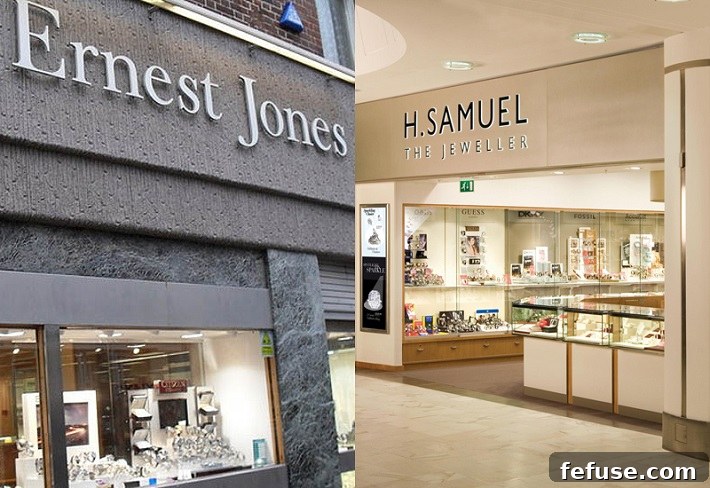
Signet Jewelers, the world’s largest retailer of diamond jewelry, has announced its first-quarter fiscal year 2022 results, significantly surpassing market expectations amidst a challenging yet evolving global retail landscape. The parent company of well-known brands such as Zales, Kay Jewelers, Jared, and the UK’s H. Samuel and Ernest Jones, Signet’s latest performance signals strong momentum in its ongoing strategic transformation. These impressive figures underscore the company’s resilience and its successful adaptation to shifting consumer behaviors, particularly the accelerated pivot towards digital commerce during a period marked by unprecedented retail disruptions. The reported success is a testament to Signet’s proactive strategies in navigating economic uncertainties and positioning itself for sustained growth in the post-pandemic era, demonstrating a clear rebound in consumer confidence for discretionary luxury items.
Remarkable Financial Rebound and Growth Drivers
The first quarter saw Signet Jewelers achieve total sales of an outstanding $1.7 billion. This represents a substantial increase of over $250 million compared to Q1 of fiscal year 2020, and an even more striking surge of more than $835 million when benchmarked against Q1 of fiscal year 2021. This significant uptick in revenue highlights a robust recovery trajectory that far exceeds prior forecasts. A cornerstone of this remarkable performance was the explosive growth in the company’s eCommerce division. Across the entire group, eCommerce sales soared by an astonishing 110%, showcasing the successful implementation of Signet’s digital-first initiatives and its ability to capture a rapidly expanding online consumer base. This digital acceleration has become a critical engine for growth, providing accessibility and convenience that resonated deeply with consumers confined by lockdown measures.
While digital channels led the charge, the reopening of physical stores in key markets also contributed significantly to the positive outlook. In the crucial North American market, brick-and-mortar same-store sales witnessed an impressive increase of 105.7%. This robust rebound is largely attributable to the speedier economic reopening in regions like the United States, coupled with substantial government stimulus packages that fueled consumer spending. The pent-up demand, combined with an enhanced in-store experience post-lockdown, clearly translated into strong sales performance within Signet’s North American portfolio of brands. This regional strength provides a crucial counterbalance to the more restrained performance seen in international markets.
Navigating Global Disparities: International Markets and UK Resilience
The global retail landscape, however, presented a more nuanced picture. Internationally, specifically outside of the North American market, Signet reported a decrease in same-store sales of 12.2%. This divergence largely reflects the differing paces and stringency of lockdown measures across various geographies. The United Kingdom, a significant international market for Signet through its H. Samuel and Ernest Jones brands, faced prolonged periods of mandated store closures. For 10 out of the 13 weeks in this quarter, UK stores remained shuttered, severely impacting physical retail performance. Consequently, international brick-and-mortar same-store sales declined by a significant 40.9%, a direct consequence of these necessary public health restrictions.
Despite the physical store challenges internationally, Signet’s digital agility proved to be a vital mitigating factor. International eCommerce sales demonstrated formidable growth, rising by an impressive 80.0%. This highlights the successful pivot to online channels even in markets facing severe restrictions, allowing the company to partially offset the decline in its physical retail footprint. The ability to maintain strong digital engagement and sales in these challenging environments underscores the effectiveness of Signet’s omnichannel strategy and its investment in robust online platforms.
Further analysis of transactional data reveals an interesting trend: the Average Transaction Value (ATV) increased by 5.8%, while the number of transactions declined by 16.6%. This pattern is indicative of several factors. Firstly, with stores closed, consumers who did make purchases, particularly online or during brief reopening windows, may have been making more considered, higher-value purchases. Secondly, the reduced number of transactions directly correlates with the limited accessibility to physical stores, especially in the UK. The increase in ATV, therefore, points towards a shift in consumer purchasing behavior, where fewer but more significant purchases were made, perhaps driven by special occasions or a desire for lasting value during uncertain times.
Leadership Insights: Driving Transformation and Financial Strength
Commenting on these pivotal results, Signet CEO Virginia C. Drosos expressed profound satisfaction and optimism for the future. “Our strong first-quarter results demonstrate the momentum we are building as we continue Signet’s transformation,” she stated. Drosos’s remarks highlight that these financial successes are not merely a rebound but a validation of the company’s strategic initiatives aimed at modernizing its operations and enhancing the customer experience. She extended her gratitude to the entire team, acknowledging their “relentless dedication to our customers and each other,” and commending their ability to “embrace new capabilities with excellence as we drive innovation and sustainable long-term growth.” This emphasis on team dedication and embracing innovation is central to Signet’s forward-looking strategy, ensuring that the company remains agile and responsive in a dynamic retail environment.
Further solidifying this narrative of strength and strategic foresight, Joan Hilson, Signet’s Chief Financial and Strategy Officer, provided an insightful perspective on the company’s financial footing. “We are entering this next phase of Signet’s transformation from a position of financial strength,” Hilson affirmed. She elaborated on the company’s commitment to increasing liquidity through “ongoing cash, cost, and inventory discipline.” This disciplined approach to financial management is crucial, especially in an industry susceptible to economic fluctuations. By meticulously managing its resources, Signet is strategically positioning itself to accelerate investments in critical areas such as innovation and growth initiatives. These investments are vital for maintaining a competitive edge, driving digital advancements, enhancing supply chain efficiencies, and ultimately improving the overall customer journey across all touchpoints.
Hilson also addressed potential future headwinds with a pragmatic outlook. While acknowledging that “some current tailwinds from the stimulus and slower than anticipated return to travel and experience spending” might subside in the latter half of 2021, she conveyed strong confidence in Signet’s ability to “deliver strong shareholder return and generate cash.” This forward-looking perspective, anticipating shifts in consumer spending patterns, underscores a well-thought-out financial strategy designed to ensure long-term stability and profitability. As a clear testament to this robust financial health and future confidence, Signet’s Board of Directors has approved the reinstatement of a common dividend in the second quarter. This move is a powerful signal to investors, indicating a belief in sustained profitability and a commitment to returning value to shareholders, marking a significant milestone in the company’s post-pandemic recovery and strategic journey.
The Broader Jewelry Market and Future Outlook for Signet
Signet Jewelers’ Q1 performance is not just an isolated success story but also reflects broader trends within the luxury and discretionary retail sectors. The pandemic, while disruptive, also shifted consumer priorities, with many opting for meaningful purchases that offer lasting value, such as jewelry, over experiences or travel. The strong digital adoption rates observed across the industry are likely to persist, making continued investment in omnichannel capabilities paramount. Signet’s robust eCommerce growth positions it advantageously to capitalize on this enduring shift in consumer behavior, offering seamless integration between online browsing and in-store personalized services.
Looking ahead, the company is poised to navigate a dynamic market. While the tailwinds from economic stimulus packages may indeed diminish, Signet’s strengthened financial discipline and strategic investments in innovation are expected to provide a solid foundation. The focus on enhancing customer experience, optimizing inventory, and leveraging data analytics will be crucial for sustained growth. Furthermore, the company’s diversified brand portfolio allows it to cater to a wide array of consumer segments, from accessible luxury to high-end fine jewelry, providing a broad base for market penetration and resilience against specific market fluctuations. The reinstatement of dividends is a clear indicator that Signet is not only recovering but is also confident in its ability to generate sustainable free cash flow and deliver consistent returns to its shareholders in the coming fiscal periods.
In conclusion, Signet Jewelers’ first-quarter results are a compelling narrative of successful transformation, strategic agility, and robust financial management. By significantly exceeding expectations, driven by an outstanding digital performance and a strong rebound in key physical markets, Signet has demonstrated its capacity to thrive even in complex retail environments. The company’s proactive measures, coupled with its commitment to innovation and shareholder value, set a promising trajectory for continued leadership in the global jewelry market. As the retail world continues to evolve, Signet Jewelers appears well-equipped to capitalize on emerging opportunities, cementing its position as a dominant force in the industry.