
The Dramatic Unraveling of a Gold Smuggling Empire: A High-Stakes Arrest at Kolkata Airport
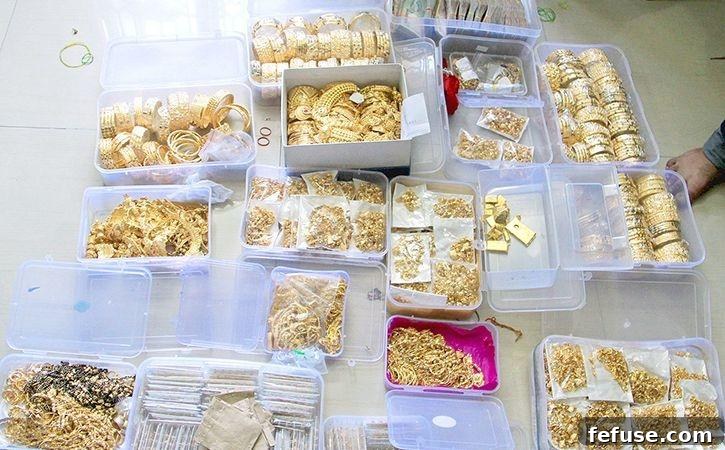
In a dramatic turn of events that underscores the relentless fight against economic crime, the Directorate of Revenue Intelligence (DRI) recently apprehended a prominent jeweller and his son in connection with an audacious gold smuggling operation. The arrests, made on a Friday, followed an extraordinary incident at Kolkata airport where an IndiGo flight, poised for take-off to Hyderabad, was dramatically recalled from the runway. This exceptional intervention led to the recovery of gold jewellery valued at over Rs 16 crore, exposing a sophisticated network of illicit trade that had been siphoning off national revenue for a considerable period.
The central figure in this intricate scheme, Sanjay Kumar Agarwal, a well-known jeweller, was found to be orchestrating a complex web of deception, diverting gold specifically designated for export into the lucrative domestic Indian market. His arrest, alongside his son, has sent ripples through the jewellery industry and highlighted significant vulnerabilities in both aviation security and customs regulatory frameworks. The incident not only brought a halt to a major smuggling attempt but also unveiled a much larger, multi-crore illicit operation that had been thriving under the radar.
A Mid-Air Intervention: The Kolkata Airport Drama Unfolds
The sequence of events leading to the arrests reads like a thrilling investigative drama. Two days prior to their formal apprehension, the jeweller and his son were initially detained at Kolkata airport. The catalyst for their capture was the highly unusual recall of IndiGo flight 6E725. This flight, scheduled for a domestic journey to Hyderabad, had already commenced its taxiing sequence on the runway, its engines roaring in anticipation of departure. However, based on precise intelligence inputs from the DRI, air traffic control intervened, ordering the aircraft to return to the terminal. Such a recall, particularly from the runway, is an extraordinary measure, typically reserved for severe security threats or critical operational failures, underscoring the urgency and gravity of the information the DRI possessed.
Upon the flight’s return, DRI officials swiftly boarded and identified Sanjay Kumar Agarwal. The subsequent search revealed the substantial quantity of gold jewellery, estimated to be worth over Rs 16 crore, stashed with him. This immediate recovery on a recalled domestic flight set the stage for a deeper investigation into what was clearly not an isolated incident but a meticulously planned smuggling operation.
The Deceptive Modus Operandi: Unmasking a Gold Diversion Scheme
The brilliance and audacity of Agarwal’s scheme lay in its deceptive simplicity, exploiting loopholes in travel and customs protocols. The investigation revealed that Sanjay Kumar Agarwal had boarded the IndiGo flight using a ticket booked in his son’s name. Simultaneously, his son had a separate booking on an Emirates flight from Kolkata to Dubai and had already completed his check-in procedures for the international journey. The gold, intended as an “export consignment” to be carried by the son to Dubai, was instead found with the father on the domestic IndiGo flight.
This elaborate setup aimed to create a façade of legitimate export, while the real intention was to divert the gold for sale within India. Exporters are often permitted to carry small consignments of gold jewellery on their person, rather than booking them through cargo, under specific regulations. Agarwal and his son allegedly exploited this provision, but instead of the gold leaving the country, it was being rerouted into the domestic market. This circumvention allowed them to evade significant customs duties and other taxes, creating an unfair advantage over legitimate businesses and causing substantial losses to the national exchequer. The fact that the duo had managed to execute this scheme “several times” suggests a sophisticated understanding of existing security checks and a deliberate effort to bypass them, raising serious questions about the efficacy of airport screening procedures.
The Astounding Scale of Illicit Trade: Over 1,100 kg of Gold Smuggled
Preliminary questioning of the arrested individuals has begun to peel back the layers of this colossal fraud, revealing a staggering scale of illicit activity. Sources close to the investigation have indicated that in the last year alone, the jeweller had allegedly smuggled approximately 1,100 kilograms of pure gold jewellery, intended as “export” consignments, into domestic markets. The estimated value of this diverted gold exceeds Rs 300 crore. This revelation paints a grim picture of a thriving parallel economy fueled by illegal gold trade, severely undermining the legitimate jewellery industry and the nation’s financial integrity.
The sheer volume of gold involved underscores the audacity and the network required to move such quantities without detection. It suggests not only a well-established supply chain for acquiring the gold but also a robust distribution network for selling it in the domestic market, likely at prices that undercut legal channels due to the absence of duties and taxes. This scale of operation points towards a highly organized criminal enterprise rather than a sporadic act of smuggling.
Duty Evasion and Economic Ramifications: A Blow to National Revenue
The primary motive behind this elaborate diversion scheme was the evasion of substantial customs duties. Gold bars are often purchased from public sector undertakings like the State Trading Corporation (STC) and the Metals and Minerals Trading Corporation of India (MMTCIL) with a declared intention of exporting jewellery. This declaration allows jewellers to avail a significant duty exemption of 10%. Had the same gold bars been purchased for domestic consumption or diverted to the Indian market, the jeweller would have been liable to pay approximately Rs 30 crore in customs duty alone, in addition to income tax and other applicable state taxes.
The evasion of such monumental sums has profound economic ramifications. It directly translates into a loss of government revenue, which could otherwise be channeled into public services and development projects. Furthermore, it creates an uneven playing field for honest jewellers who adhere to regulations and pay their dues, putting them at a competitive disadvantage against those operating in the grey market. This illicit trade distorts market prices, encourages black money circulation, and erodes public trust in financial systems.
Beyond Smuggling: Layers of Financial Crime and Identity Fraud
The investigation into Sanjay Kumar Agarwal has quickly transcended mere gold smuggling, uncovering a more extensive web of financial irregularities and identity fraud. The DRI is reportedly examining massive banking credits, running into hundreds of crores of rupees, that Agarwal allegedly received from the State Bank of India (SBI). These credits were purportedly obtained using forged collateral securities from Punjab National Bank (PNB). This indicates a sophisticated understanding of financial instruments and a willingness to manipulate banking systems for illicit gains, suggesting potential links to money laundering and other serious financial crimes.
Adding another layer to his criminal history, it has emerged that Agarwal had obtained a new passport under the assumed identity of “Srikant Gupta.” This revelation is particularly significant as it follows his previous booking by the Central Bureau of Investigation (CBI) in 2012 for accessing banking credit through forged collaterals. The act of acquiring a new identity after being implicated in a major financial fraud underscores his deliberate attempts to evade law enforcement and continue his illicit activities, highlighting a long-standing pattern of criminal behavior.
Aviation Security Breaches: A Major Concern for National Safety
The incident at Kolkata airport has raised serious questions about the vulnerabilities in India’s aviation security framework. The DRI has proactively raised these concerns with the Ministry of Home Affairs, emphasizing the grave implications of criminals being able to enter and board flights using fake identity cards. The fact that Sanjay Kumar Agarwal could board a domestic flight using a ticket booked in his son’s name, potentially bypassing stringent identity verification checks, points to critical gaps in airport security protocols.
The successful repeated execution of this modus operandi implies that either security personnel were unable to detect the fraud or there were systemic weaknesses that allowed such deception to pass unnoticed. This is not merely an economic crime issue; it poses a significant national security risk, as individuals with malicious intent could potentially exploit similar loopholes. The ongoing probe into how the gold, intended for a foreign destination, was transferred to Agarwal for transport on a domestic flight, along with the consistent failure of security checks to detect large quantities of gold, mandates a comprehensive review and tightening of airport security measures, including identity verification processes, baggage screening, and personnel training.
The Role of the Directorate of Revenue Intelligence (DRI): Upholding Economic Integrity
The successful interception of this gold smuggling attempt and the subsequent unraveling of Agarwal’s complex criminal enterprise are a testament to the crucial role played by the Directorate of Revenue Intelligence. The DRI, India’s premier intelligence and enforcement agency for anti-smuggling operations, works tirelessly to combat illicit trade, customs fraud, and economic offenses. Their intelligence-led approach, meticulous planning, and swift execution were pivotal in bringing this high-profile case to light. The dramatic recall of the IndiGo flight exemplifies the agency’s commitment to acting decisively on actionable intelligence to protect national economic interests and ensure compliance with customs laws.
Industry-Wide Implications and Ongoing Investigations
The ramifications of this case extend far beyond the immediate arrests. The DRI suspects that this may not be an isolated incident and has initiated a broader probe across various airports in India. Investigators are actively looking into whether other jewellers have been employing a similar modus operandi to divert “export consignments” into the domestic market, indicating a potentially widespread organized crime network within the sector. The arrests of Agarwal, his son, and a cousin on smuggling charges signal a resolute crackdown on such illicit activities.
This ongoing investigation is expected to lead to stricter regulations and enhanced oversight in the gold trade, particularly concerning export-oriented units and personal carriage of gold consignments. The insights gained from this case will be crucial in fortifying existing loopholes and developing more robust mechanisms to prevent duty evasion and combat financial fraud, ensuring that the legitimate jewellery trade can flourish without being hampered by illegal competition.
Conclusion: A Resounding Message Against Illicit Gold Trade
The dramatic events at Kolkata airport and the subsequent revelations about Sanjay Kumar Agarwal’s multi-faceted criminal activities serve as a powerful reminder of the persistent challenges posed by economic offenders. From large-scale gold smuggling and massive duty evasion to intricate banking fraud and identity theft, this case highlights the sophisticated and interconnected nature of modern financial crimes. The collaborative efforts of agencies like the DRI, CBI, and the airline industry are paramount in detecting and dismantling such networks.
As investigations continue and the legal process unfolds, this incident will undoubtedly contribute to a re-evaluation of security protocols, customs procedures, and banking oversight. It sends a resounding message that law enforcement agencies are vigilant and committed to upholding economic integrity and national security, ensuring that those who attempt to subvert the system will be held accountable for their actions.