
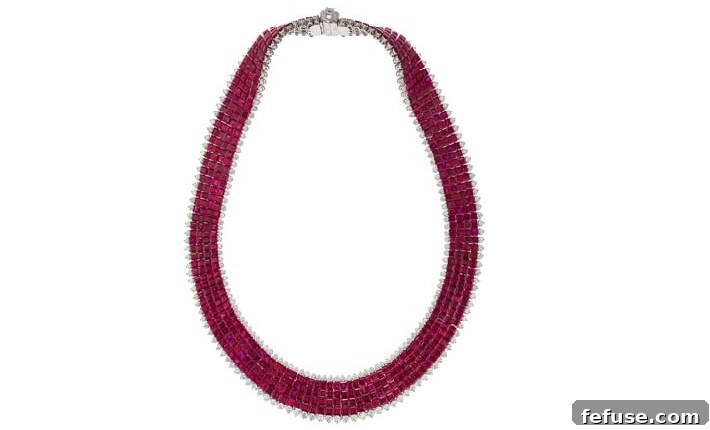
For centuries, the mesmerizing allure of the ruby has captivated humanity, earning it the revered title of the “King of Gems.” This fiery crimson stone, synonymous with passion, power, and enduring love, recently took center stage, captivating gem enthusiasts and casual viewers alike with its profound history and undeniable splendor. The recent segment on “CBS Sunday Morning,” titled “A Real Gem,” offered a glimpse into the ruby’s rich legacy, sparking renewed interest in this magnificent jewel.
Introduced by Jane Pauley, who fittingly stood adorned with exquisite ruby jewelry from Oscar Heyman, the segment underscored the gem’s timeless appeal, particularly its symbolism for romance, making it “perfect for Valentine’s Day.” Yet, the ruby’s story extends far beyond a single holiday; it’s a saga woven through ancient civilizations, royal courts, and the hallowed halls of high fashion. This precious stone, with its deep red hue, embodies a narrative of rarity, geological marvel, and profound cultural significance that continues to enchant the world.
The journey into the heart of the ruby often begins with its historical roots. Revered in ancient cultures across Asia, particularly India and Myanmar (formerly Burma), rubies were believed to possess mystical powers. Ancient Hindus called the ruby “ratnaraj,” meaning “king of precious stones,” and believed it could protect its wearers from evil. Warriors embedded rubies in their skin before battle, convinced the gems would grant invincibility. In Burma, rubies were treasured not just for their beauty but for their perceived ability to confer health, wealth, and wisdom upon their owners. European royalty and nobility adorned themselves with rubies, seeing them as symbols of power, prosperity, and status. The sheer intensity of their color, often likened to drops of blood or the glow of an internal fire, made them uniquely desirable and spiritually significant.
What gives the ruby its unparalleled crimson splendor? Chemically, a ruby is a variety of the mineral corundum (aluminum oxide). It is the presence of chromium that imparts the stone’s characteristic red color. The intensity of this red can vary significantly, from a deep, purplish-red to a vibrant, fiery red-orange. The most highly prized rubies exhibit a vivid, saturated red, often described as “pigeon’s blood” — a term historically associated with the finest rubies from Myanmar’s Mogok Valley. This specific hue, a pure red with a hint of blue, is exceptionally rare and commands the highest prices in the global market. Unlike diamonds, where clarity and cut often dominate the valuation, for rubies, color is king. A ruby’s value is overwhelmingly determined by its color saturation, hue, and tone, with clarity and cut playing supporting but still important roles.
The allure of rubies is frequently underscored by the legendary pieces that have graced the world’s most prominent figures. The CBS segment appropriately opened with an image of the iconic Elizabeth Taylor, a true connoisseur of fine jewelry, showcasing her magnificent Cartier ruby and diamond parure. This exquisite set, a gift from her third husband, Mike Todd, epitomizes the romance and grandeur associated with rubies. Her profound love for these gems was evident in her extensive collection, which cemented rubies’ status as a symbol of passionate devotion and opulent luxury. But Taylor is just one among many who have succumbed to the ruby’s charms.
The article also thoughtfully mentioned composer Irving Berlin, who marked his 40th wedding anniversary by gifting his wife, Ellen, a ruby ring. Such gestures highlight the ruby’s enduring role in celebrating milestones and expressing profound affection. For centuries, rubies have been the gemstone of choice for commemorating deep personal bonds and significant life events. Their vibrant red hue naturally evokes sentiments of love, passion, and vitality, making them a perfect embodiment of enduring commitment and heartfelt adoration.
No discussion of extraordinary rubies would be complete without mentioning the “Sunrise Ruby.” This monumental 25.59-carat Burmese gemstone made headlines in May 2015 when it shattered world records, fetching an astonishing $30.3 million at Sotheby’s Geneva. Its exquisite “pigeon’s blood” color, combined with its exceptional clarity and size, solidified its status as the most expensive ruby ever sold at auction. The Sunrise Ruby is a testament to the unparalleled beauty and extreme rarity of the finest Burmese rubies, showcasing exactly why these stones command such astronomical prices and global fascination. It represents the pinnacle of ruby perfection, a benchmark against which all other fine rubies are often measured.
Beyond the Sunrise Ruby, many other famous rubies have left an indelible mark on history and the gem world. The “Carmen Lúcia Ruby,” a 23.1-carat Burmese ruby, is one of the largest and finest faceted rubies in existence, housed in the Smithsonian National Museum of Natural History. Its vivid red color and impressive size make it a breathtaking example of nature’s artistry. Another notable gem is the “DeLong Star Ruby,” a 100.32-carat cabochon-cut star ruby, also at the Smithsonian, which exemplifies the rare phenomenon of asterism, where a six-rayed star appears to float across the gem’s surface. These legendary stones not only highlight the diversity and beauty of rubies but also underscore their intrinsic value and historical significance.
The conversation about ruby value inevitably leads to its rarity, a point powerfully articulated by Christie’s Daphne Lingon in the original segment. Lingon highlighted that a top-quality, gem-quality ruby of, say, 5 carats, would be “much rarer and much more expensive than that top-quality diamond” of comparable size. This statement holds profound truth in the gem trade. While diamonds are indeed rare, high-quality, natural, untreated rubies of significant size and exceptional color are astronomically rarer. The geological conditions required for their formation are extremely specific, and finding stones that combine vivid color, good clarity, and substantial size without needing extensive treatment is an exceptional occurrence.
The scarcity of these natural marvels drives their market value. The most desirable rubies come from specific regions, with Myanmar (Burma) historically producing the finest specimens. Other important sources include Thailand, Sri Lanka, Mozambique, and Tanzania, each yielding rubies with distinctive characteristics. However, Burmese rubies, particularly those from the Mogok Valley, remain the gold standard due renowned for their exceptional color and often lack of heat treatment. Treatments, such as heat enhancement, are common in the ruby market and can significantly affect a stone’s value. While heat treatment is widely accepted to improve color and clarity, untreated rubies of fine quality command a substantial premium due to their natural perfection and extreme rarity. This intricate interplay of origin, color, clarity, and treatment history makes the ruby market complex but incredibly rewarding for connoisseurs.
Beyond their monetary value, rubies possess profound cultural significance. As the birthstone for July, rubies symbolize love, health, and wisdom for those born in this summer month. Throughout history, they have been associated with various positive attributes: protection from evil, reconciliation of disputes, and even the ability to bring good fortune. Their fiery hue has often linked them to vitality and the life force itself. In many cultures, rubies are not just adornments but talismanic objects, imbued with power and meaning. They are frequently incorporated into royal regalia, religious artifacts, and ceremonial pieces, signifying their status as a gem of profound spiritual and symbolic importance.
In contemporary fashion, rubies continue to captivate designers and collectors alike. From classic solitaires to avant-garde creations, the ruby’s versatility allows it to shine in a myriad of settings. Modern jewelers often pair rubies with diamonds, contrasting the brilliant white fire of diamonds with the deep red glow of rubies to create breathtaking pieces. The demand for ethical sourcing and transparency has also grown, leading to greater scrutiny of ruby origins and treatment disclosures. As consumers become more informed, the value of certified, natural, untreated rubies from reputable sources continues to rise, reflecting a discerning appreciation for authenticity and provenance.
For those looking to acquire a ruby, several considerations are paramount. Always prioritize color, aiming for a vivid, saturated red with good uniformity. Next, consider clarity; while flawless rubies are exceedingly rare, eye-clean stones are highly desirable. The cut should maximize the stone’s brilliance and color. Finally, origin and treatment are crucial. Seek out reputable dealers who provide comprehensive grading reports from independent laboratories like GIA, GRS, or Gubelin, detailing the ruby’s characteristics, origin, and any treatments it may have undergone. Such diligence ensures the acquisition of a genuine and valuable gem.
In conclusion, the ruby is more than just a beautiful stone; it is a profound testament to nature’s artistry and humanity’s enduring fascination with beauty and power. From ancient myths to modern auctions, from royal adornments to symbols of deep affection, the ruby’s journey through history is as rich and captivating as its fiery red hue. Its unparalleled rarity, combined with its vibrant symbolism, firmly establishes the ruby as a gem of timeless allure and immeasurable value. As the “King of Gems,” the ruby continues to reign supreme, forever captivating hearts and minds with its incandescent glow and stories whispered through the ages.