
GJEPC Reinforces Commitment to MSMEs at Mega Sammelan, Charting India’s Gem & Jewellery Future
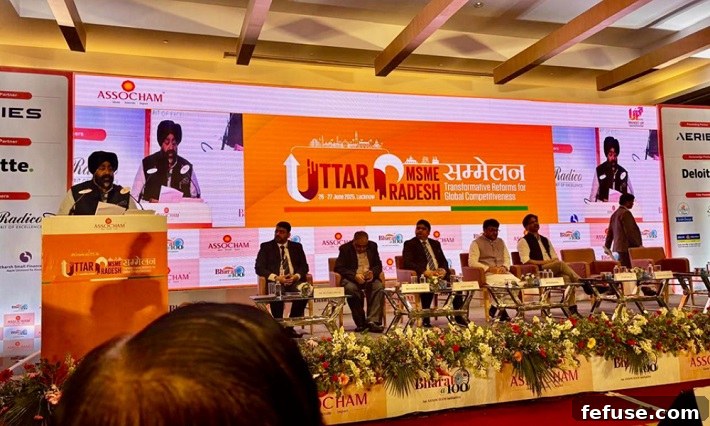
The **Gem & Jewellery Export Promotion Council (GJEPC)**, India’s apex body for the gem and jewellery trade, recently reiterated its profound commitment to the nation’s micro, small, and medium enterprises (MSMEs) through its active participation in the highly anticipated **Mega MSME Sammelan 2025**. Hosted by **ASSOCHAM** in the vibrant city of **Lucknow** on June 26–27, the two-day event served as a crucial platform to celebrate **International MSME Day** and underscore the indispensable role of MSMEs in fueling India’s economic growth engine. The Sammelan brought together a diverse group of stakeholders to explore collaborative strategies aimed at accelerating the sector’s development and enhancing its global footprint.
MSMEs are often referred to as the backbone of the Indian economy, contributing significantly to GDP, employment generation, and fostering regional development. Within the dynamic gem and jewellery sector, these enterprises are particularly vital. They are the driving force behind craftsmanship, innovation, and maintaining India’s rich heritage in jewellery making. GJEPC’s presence and proactive engagement at the Sammelan highlighted the Council’s strategic alignment with national economic goals, emphasizing that the growth of the gem and jewellery industry is intrinsically linked to the prosperity and empowerment of its MSME contingent.
GJEPC’s Vision for MSME Empowerment
Representing the GJEPC, **Mr. Antarpal Singh Sawhney**, the esteemed Regional Chairman (North), delivered a compelling address to the assembled audience. His remarks illuminated the Council’s comprehensive and multi-faceted approach to empowering MSMEs within the gem and jewellery domain. Mr. Sawhney meticulously detailed a wide spectrum of initiatives designed to uplift these enterprises, ensuring they are well-equipped to navigate a competitive global market and seize emerging opportunities.
Key initiatives highlighted by Mr. Sawhney included:
- Facilitating Access to Government Schemes: GJEPC plays a pivotal role in bridging the gap between MSMEs and various government support programs. This includes assisting them in understanding, applying for, and leveraging schemes related to financial assistance, technology upgrades, skill development, export incentives, and preferential procurement policies. By simplifying access to these crucial resources, GJEPC ensures that even the smallest enterprises can benefit from national development agendas.
- Supporting Participation in Trade Exhibitions: Market access is paramount for MSME growth. GJEPC actively supports and subsidizes MSME participation in both domestic and international trade exhibitions. Events like the India International Jewellery Show (IIJS), considered one of Asia’s largest, provide invaluable opportunities for MSMEs to showcase their products, network with buyers, understand market trends, and generate vital business orders. Similarly, facilitating their presence at global exhibitions helps them explore new markets and expand their export reach.
- The Impactful Parichay Card Program: A cornerstone of GJEPC’s social responsibility and formalization efforts is the **Parichay Card program**. This initiative is dedicated to formalizing the workforce within the gem and jewellery sector, providing identity cards to karigars (artisans) and workers. Formalization brings a host of benefits, including improved working conditions, access to social security schemes, financial literacy, and overall welfare for the skilled workforce, thereby enhancing the sector’s human capital and sustainability.
- Skill Development and Training: Beyond formalization, GJEPC is deeply committed to continuous skill enhancement. Through various training programs and collaborations, the Council ensures that the workforce, particularly those in MSMEs, remains updated with the latest technologies, design trends, and manufacturing techniques, ensuring a competitive edge in the global market.
Pillars of Growth: Infrastructure and Innovation
Mr. Sawhney also brought to the fore critical infrastructure developments spearheaded by GJEPC, projects specifically designed to bolster manufacturing capabilities, foster innovation, and amplify the global competitiveness of India’s gem and jewellery MSMEs. These strategic investments are foundational to the sector’s long-term growth trajectory:
- Bharat Ratnam Mega Common Facility Centre (CFC): This state-of-the-art facility is a game-changer for MSMEs. CFCs provide shared access to advanced machinery, cutting-edge technology, and specialized services that individual MSMEs might find prohibitively expensive to acquire on their own. The Bharat Ratnam Mega CFC aims to significantly reduce production costs, improve product quality, enhance efficiency, and promote innovation across the value chain, making Indian jewellery more competitive internationally.
- The Upcoming Gem Bourse in Jaipur: Jaipur, renowned as a global hub for coloured gemstones, is set to receive a significant boost with the establishment of a dedicated Gem Bourse. This integrated trading platform will facilitate transparent and efficient trading of rough and polished gemstones, streamline logistics, and provide a secure environment for business transactions. The Bourse will enhance Jaipur’s position as a leading gem trading center, attracting more international buyers and fostering further growth for MSMEs in the region.
- Indian Institute of Gems & Jewellery (IIGJ) Delhi: The IIGJ network, with its prominent campus in Delhi, stands as a beacon for education and skill development in the industry. These institutes offer comprehensive training programs in design, manufacturing, gemmology, and retail. By nurturing new talent and upskilling the existing workforce, IIGJ contributes directly to raising the overall quality and design prowess of Indian jewellery, preparing professionals for the evolving demands of the global market and ensuring a pipeline of skilled artisans for MSMEs.
Aligning with National Ambitions: Vision 2047 and Export Targets
Reiterating the Council’s forward-looking and ambitious outlook, Mr. Sawhney articulated GJEPC’s unwavering alignment with India’s broader national vision. “GJEPC is firmly aligned with India’s broader vision of becoming a developed economy by 2047. Our export target of **USD 45 billion by 2030** is not just aspirational—it’s achievable through coordinated support for MSMEs and strategic infrastructure investments,” he affirmed.
This statement underscores a profound understanding that the prosperity of the gem and jewellery sector is intertwined with India’s overall economic ascension. The ambitious export target of USD 45 billion by 2030 represents a significant leap from current figures, demanding concerted efforts from all stakeholders. MSMEs, with their inherent agility and capacity for innovation, are expected to be frontrunners in achieving this goal. By providing them with robust support systems – from market access and skill development to technological infrastructure and policy advocacy – GJEPC aims to unlock their full export potential, contributing substantially to India’s foreign exchange earnings and global trade presence.
The vision of a developed India by 2047 necessitates a thriving, technologically advanced, and globally competitive manufacturing sector. The gem and jewellery industry, with its unique blend of traditional craftsmanship and modern technology, is poised to be a key contributor to this national aspiration. GJEPC’s strategies are meticulously crafted to ensure that MSMEs are not merely participants but active architects of this future, driving innovation and sustainable growth.
A Platform for Dialogue and Policy Insights
The Mega MSME Sammelan 2025 proved to be an overwhelming success, drawing an impressive audience of nearly **500 participants**. This diverse gathering included esteemed government officials, dynamic entrepreneurs, influential sector leaders, and a wide array of MSME stakeholders from various industries. The event fostered a vibrant and constructive platform for dialogue, enabling meaningful exchanges of ideas, sharing of best practices, and the formulation of critical policy insights.
Such gatherings are indispensable for informing policy-making, identifying industry challenges, and collaboratively devising solutions. The interactive sessions, panel discussions, and networking opportunities allowed MSMEs to voice their concerns directly to policymakers and industry leaders, ensuring that their perspectives are incorporated into future strategies. For government officials, it provided a grassroots understanding of the practical implementation challenges and successes, thereby facilitating more targeted and effective support mechanisms.
Conclusion
GJEPC’s robust participation in the Mega MSME Sammelan 2025 unequivocally demonstrates its steadfast commitment to nurturing and elevating India’s micro, small, and medium enterprises within the gem and jewellery sector. Through comprehensive support initiatives, strategic infrastructure development, and a clear alignment with national economic objectives, GJEPC is paving the way for a future where Indian gem and jewellery MSMEs are not only globally competitive but also significant contributors to the nation’s journey towards becoming a developed economy by 2047. The path to achieving the ambitious USD 45 billion export target by 2030 is illuminated by this focused empowerment, promising a brilliant future for the industry and the millions it sustains.