
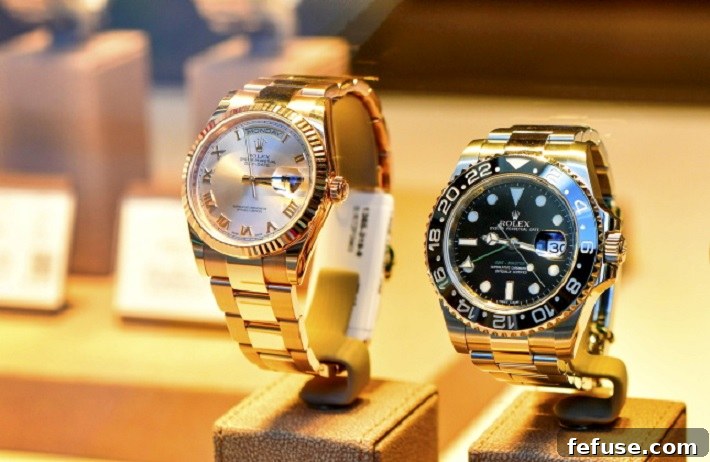
Rolex Fined $100 Million by French Antitrust Watchdog Over Online Sales Ban
In a landmark decision reverberating through the luxury goods industry, Rolex, the iconic Swiss watchmaker, has been hit with a substantial €91.6 million (approximately $100 million) fine by France’s Competition Authority. The hefty penalty stems from Rolex’s long-standing policy prohibiting its authorized retailers from selling its prestigious timepieces online, a practice the antitrust agency deemed anti-competitive and detrimental to both consumers and retailers.
The ruling marks a pivotal moment for a brand traditionally known for its tightly controlled distribution network and signals a significant shift in how regulatory bodies view the intersection of luxury, exclusivity, and digital commerce. For years, Rolex has maintained that its restrictive online sales policy was a necessary measure to uphold brand integrity, combat counterfeiting, and prevent parallel trade, often referred to as the grey market. However, the French regulator found these justifications insufficient, particularly in an era where online luxury sales have become a dominant and rapidly expanding channel.
The Heart of the Dispute: Rolex’s Traditional Stance vs. Digital Evolution
Rolex has built an unparalleled reputation on exclusivity, craftsmanship, and a carefully curated purchasing experience, traditionally centered around physical boutiques and authorized dealerships. This strategy has long been considered integral to maintaining the brand’s mystique and premium positioning. The company’s argument against online sales rested primarily on two pillars:
- Combating Counterfeiting: Rolex contended that direct online sales by unauthorized entities or even authorized dealers without stringent oversight could facilitate the proliferation of counterfeit watches, thereby diluting the brand’s authenticity and harming consumer trust.
- Preventing Parallel Trade (Grey Market): The brand also argued that an online sales ban helped control the supply chain and prevent authorized dealers from selling watches outside their designated territories or at discounted prices to unauthorized resellers. This grey market activity can undermine official pricing strategies and brand control.
These concerns are not unique to Rolex; many high-end luxury brands have historically struggled with how to embrace digital channels without compromising their carefully cultivated image of exclusivity and quality. The challenge lies in balancing the desire for broad market reach and consumer convenience with the need to protect brand equity and combat illicit trade.
The Autorité de la Concurrence’s Decisive Ruling
France’s antitrust agency, the Autorité de la Concurrence, meticulously examined Rolex’s arguments and ultimately rejected them. In its comprehensive ruling, the Authority emphasized that the violations were “serious,” fundamentally impeding a crucial marketing channel. It highlighted the detrimental impact on both consumers, who are denied the convenience and broader selection of online purchasing, and retailers, who are restricted in their ability to adapt to modern commerce trends and reach a wider audience.
The Authority’s decision underscored the dramatic transformation in the luxury goods sector over the past 15 years, during which online distribution of high-end products, including watches, has experienced exponential growth. This booming digital landscape has reshaped consumer expectations and forced many luxury brands to recalibrate their strategies, moving towards more integrated online and offline experiences.
A key aspect of the Autorité’s rejection of Rolex’s defense was its observation that many of Rolex’s main competitors, facing similar risks of counterfeiting and parallel trade, have successfully implemented online sales strategies. These competitors have found ways to authorize online selling under specific conditions that effectively mitigate the identified risks without resorting to an outright ban. This comparative analysis weakened Rolex’s claim that a complete prohibition was the only viable solution.
The French regulator concluded that objectives such as combating counterfeiting and parallel trade could be achieved through “means that are less restrictive of competition.” This implies that Rolex could have adopted advanced authentication technologies, secure digital platforms, stricter contractual clauses with retailers regarding online sales, or even robust certified pre-owned programs, all of which are utilized by other luxury watch brands to manage digital distribution risks.
The Financial Penalty and Corporate Accountability
The significant fine of €91,600,000 has been imposed jointly on several entities within the Rolex corporate structure, underscoring the collective responsibility for the anti-competitive practices. The fine targets Rolex France, the local subsidiary responsible for the French market, alongside Rolex Holding SA, the broader corporate entity, the Hans Wilsdorf Foundation (which owns Rolex), and Rolex SA, the primary watchmaking company. This broad application of the penalty signals the Authority’s intent to ensure comprehensive accountability across the organization.
The Hans Wilsdorf Foundation, a private foundation established by the founder of Rolex, Hans Wilsdorf, plays a crucial role in the company’s ownership and governance. Its inclusion in the fine highlights the deep-seated nature of the policy within the brand’s overall strategic direction.
Compliance and Public Transparency Requirements
Beyond the financial penalty, the Autorité de la Concurrence has mandated a series of compliance and public disclosure actions for Rolex France. These measures are designed to ensure transparency, inform the market, and prevent future similar infringements:
- Summary to Retailers: Rolex France must send a summary of the decision to all its authorized retailers. This ensures that the entire distribution network is aware of the ruling and the implications for their business practices.
- Online Posting: The decision summary must be posted online, likely on Rolex France’s official website or related platforms, making it publicly accessible to consumers and stakeholders.
- Publication in Media: The summary must also be published in the print and digital editions of Le Figaro, a prominent French national newspaper, and in Montres Magazine, a specialized watch publication. These publications will ensure broad dissemination of the ruling within both the general public and the specific luxury watch enthusiast community.
These requirements aim not only to publicize the specific ruling but also to serve as a deterrent to other companies in the luxury sector who might be considering similar restrictive practices. They reinforce the message that competition authorities are actively monitoring the market, particularly regarding digital channels.
Future Implications and the Road Ahead for Rolex
Rolex has chosen not to comment publicly on the ruling at this stage, a common practice in such legal matters. However, the company retains the right to appeal the decision to the Paris Court of Appeal. Such an appeal would initiate a new legal process, allowing Rolex to present its arguments once more and potentially challenge the Authority’s findings or the severity of the fine.
Regardless of a potential appeal, this ruling holds significant implications for Rolex and the wider luxury industry. For Rolex, it necessitates a fundamental re-evaluation of its distribution strategy. While an immediate pivot to unrestricted online sales is unlikely, the company will be compelled to devise less restrictive methods that align with competition laws while still safeguarding its brand values. This could involve highly controlled e-boutiques, partnerships with select luxury e-commerce platforms, or advanced authentication procedures for online transactions.
More broadly, the decision sends a strong message to other luxury brands, especially those that maintain strict controls over their online presence. It highlights a growing regulatory push towards fostering competition and enhancing consumer choice in the digital marketplace. As consumer habits continue to evolve, with an increasing preference for online purchasing, luxury brands face the challenge of adapting their strategies while preserving their unique appeal.
The Shifting Landscape of Luxury E-commerce
The Autorité de la Concurrence’s emphasis on the “booming” nature of online luxury sales is critical. Over the past decade and a half, the digital channel has transformed from a niche platform to a cornerstone of luxury retail. Consumers worldwide now expect to research, browse, and purchase high-value items online, driven by convenience, global accessibility, and the ability to compare options. Luxury platforms like Net-a-Porter, Farfetch, and Mytheresa, along with brand-operated e-boutiques, have demonstrated that high-end products, including watches, can be successfully sold online without compromising brand integrity. These platforms often invest heavily in sophisticated authentication processes, premium packaging, secure logistics, and personalized customer service to replicate the luxury in-store experience digitally.
This ruling underscores a fundamental tension in the luxury market: the desire for exclusivity and controlled distribution versus the undeniable advantages of digital accessibility and reach. Brands are increasingly adopting “omnichannel” strategies that seamlessly integrate online and offline experiences, recognizing that modern luxury consumers move fluidly between physical stores, brand websites, social media, and third-party platforms. Rolex, with its deeply entrenched traditional approach, now faces a compelling mandate to navigate this evolving landscape in a way that satisfies both regulatory requirements and contemporary consumer expectations.
A Defining Moment for Luxury Watch Retail
In conclusion, the €100 million fine against Rolex by the French Competition Authority marks a defining moment for the luxury watch industry and indeed, the broader luxury sector. It unequivocally states that even the most prestigious brands are not exempt from competition laws and must adapt their distribution models to the realities of the digital age. While Rolex’s legacy of exclusivity and meticulous craftsmanship remains unchallenged, its approach to market access is now subject to greater scrutiny. This decision not only impacts Rolex’s immediate strategy but also serves as a potent reminder for all luxury brands that embracing digital commerce, while navigating its complexities, is no longer merely an option but an essential component of a competitive and compliant business model in the 21st century.