
Revolutionizing Diamond Prospecting: A Breakthrough in Geochemistry and Efficiency
The age-old, often arduous, and undeniably costly quest for diamonds has just entered a new era. Geologists have achieved a monumental breakthrough, establishing a direct and incredibly valuable link between the chemical composition of olivine – a mineral commonly found in diamond-bearing rocks – and the likelihood of diamonds being present. This pivotal discovery promises to significantly reduce the time and financial investment typically required for diamond prospecting, marking a transformative moment for the global mineral exploration industry.
Unlocking Kimberlite’s Secrets: The Role of Olivine
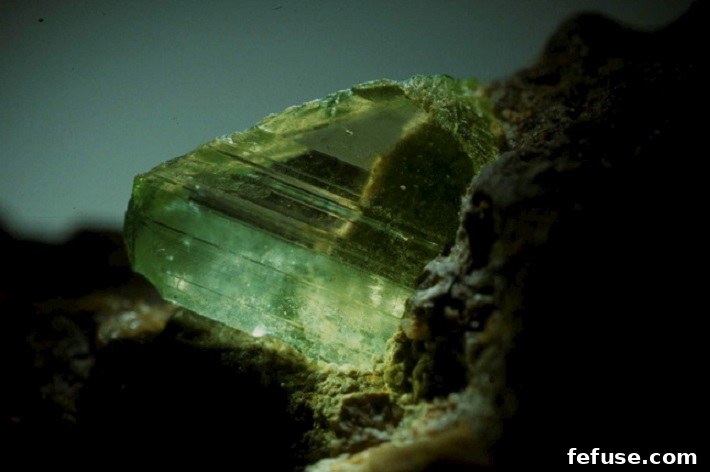
At the core of this innovative approach lies olivine, a green-hued mineral that forms a substantial portion – roughly half – of kimberlite rock. Kimberlite is exceptionally significant because it acts as the primary host rock that brings diamonds from deep within the Earth’s mantle to the surface. For decades, prospectors have painstakingly analyzed kimberlite samples, but now, thanks to this new research, they possess a more efficient indicator.
The extensive research behind this discovery was spearheaded by Dr. Andrea Giuliani, a distinguished senior scientist at ETH Zurich’s Institute of Geochemistry and Petrology in Switzerland. Dr. Giuliani has been deeply immersed in the study of diamond formation and occurrence since 2015, beginning his insightful work at the University of Melbourne. His journey involved analyzing an immense number of kimberlite samples, many of which were generously provided by De Beers, a world leader in diamond exploration and mining, highlighting a powerful collaboration between academia and industry.
The Critical Distinction: Magnesium vs. Iron Content in Olivine
Dr. Giuliani and his dedicated research team uncovered a precise correlation: the varying proportions of magnesium and iron within the olivine mineral are direct indicators of diamond potential. Their findings revealed that olivine characterized by a higher magnesium content strongly suggested the presence of diamonds. Conversely, if the olivine samples exhibited a greater concentration of iron, the likelihood of finding diamonds diminished significantly. This straightforward yet profound chemical fingerprint offers an unprecedented advantage in early-stage exploration.
Dr. Giuliani himself underscored the reliability and consistency of these observations, stating in a press release issued by ETH Zurich: “In rock samples where the olivine was very rich in iron, there were no diamonds or only very few. We started to collect more samples and data, and we always got the same result.” This consistent outcome across a vast array of samples and geological contexts provided the robust scientific evidence needed to validate the new methodology, transforming it into a dependable tool for prospectors.
Understanding the Geological Mechanism: Why Olivine Matters
To truly grasp the magnitude of this discovery, it’s crucial to understand the geological processes at play. Diamonds originate under immense pressure and heat deep within the Earth’s mantle, specifically within the ancient, stable regions of the lithospheric mantle. They are then transported rapidly to the surface during explosive volcanic events, encapsulated within kimberlite pipes. The conditions within the mantle that favor diamond stability also inherently influence the chemical composition of other minerals forming or interacting within that environment.
Olivine, being a primary constituent of the mantle, acts as a pristine geological messenger, preserving the chemical signatures of its formation environment. Magnesium-rich olivine, scientifically known as forsterite, is typically stable and prevalent under the high-pressure, high-temperature conditions characteristic of the diamond stability field. In contrast, iron-rich olivine (fayalite) often indicates different, perhaps shallower or hydrothermally altered, mantle conditions that are less conducive to diamond preservation or where diamonds may have been resorbed. Thus, by analyzing the Mg/Fe ratio in olivine from a kimberlite sample, geologists can effectively ‘read’ the deep-earth conditions from which that kimberlite originated, directly inferring the potential for diamond presence. This geochemical ‘telescope’ allows for a deeper and more accurate assessment of a kimberlite’s prospectivity.
Transforming Industry Practice: From Research to Real-World Application
The practical implications of Dr. Giuliani’s research for the diamond industry are nothing short of revolutionary. Traditional diamond prospecting has historically been a high-risk, high-reward endeavor, plagued by the necessity for extensive and expensive drilling campaigns that often yield barren results. This new olivine-based approach fundamentally changes the game by offering a significantly more efficient and targeted pathway to identify promising diamond-bearing deposits much earlier in the exploration lifecycle.
De Beers Embraces the Innovation for Enhanced Efficiency
Recognizing the immense potential and tangible benefits of these findings, Dr. Giuliani promptly presented his research to De Beers. The company, known for its forward-thinking approach to exploration, quickly appreciated the value proposition and has since moved to integrate olivine analysis into its routine diamond prospecting operations. This swift adoption by one of the world’s preeminent diamond companies serves as a powerful testament to the method’s reliability, accuracy, and practical applicability.
A significant advantage of this novel technique lies in its simplicity and speed when compared to established methods. Current diamond exploration often relies on the detailed analysis of other ‘indicator minerals’ such as clinopyroxene and garnet. While effective, these traditional methods can be more complex, time-consuming, and require specialized analytical equipment and expertise. Olivine, being abundant within kimberlite and relatively straightforward to analyze for its Mg/Fe ratio, offers a more direct, rapid, and potentially less expensive assessment. This translates directly into substantial time and cost savings for exploration companies, allowing them to optimize resource allocation, reduce their exploration footprint, and concentrate efforts on the most promising targets with greater confidence, thereby minimizing the financial risks associated with unproductive drilling.
Dr. Giuliani eloquently articulated the dual benefits of this breakthrough: “The great thing about this new method is not only that it’s simpler, but also that it finally allows us understand why the previous methods worked.” This latter point is particularly profound. By unraveling the fundamental geological and geochemical reasons underpinning the effectiveness of existing indicator minerals, the research not only delivers a powerful new tool but also deepens our foundational understanding of diamond genesis, preservation, and the complex processes of the Earth’s mantle. This more holistic and integrated insight is paving the way for even more sophisticated and synergistic exploration strategies in the future, building on a stronger scientific basis. The immediate integration by De Beers vividly demonstrates the tangible and significant advantages this method offers to the industry.
Scientific Validation and the Future of Diamond Exploration
The scientific community has widely acclaimed the profound impact of this discovery. Dr. Giuliani’s meticulously conducted research and its comprehensive findings underwent rigorous peer-review and were subsequently published in the prestigious scientific journal Nature. The article, aptly titled “Diamond preservation in the lithospheric mantle recorded by olivine in kimberlites,” provides a detailed exposition of the research methodology, experimental results, and the geological interpretations, firmly cementing its status as a landmark contribution to both mineral exploration and the broader field of earth sciences.
This breakthrough signifies a genuine paradigm shift in the strategies and methodologies employed in diamond exploration. By intelligently leveraging the intrinsic geochemical signature of a common mineral like olivine, geologists are now equipped to make far more informed and precise decisions. This dramatically reduces both the environmental impact and the economic risks typically associated with traditional prospecting. The enhanced ability to quickly and accurately differentiate between potentially diamond-rich kimberlites and barren ones means fewer exploratory boreholes, minimized disturbance to natural landscapes, and a more environmentally responsible and economically sustainable approach to resource extraction globally.
This collaborative success story, uniting the rigorous academic research of institutions like ETH Zurich with the vast practical experience and resources of industry leaders such as De Beers, powerfully underscores the immense potential of applied geoscience. As this innovative olivine-based method gains wider acceptance and subsequent implementation across the global diamond exploration sector, it is poised to become a new standard practice. This will ensure that the future of diamond prospecting is not only characterized by greater success rates but also by enhanced efficiency, reduced costs, and a heightened sense of environmental stewardship. This remarkable discovery stands as a shining testament to the continuous spirit of innovation in geology, eloquently demonstrating that even seemingly simple and ubiquitous minerals can indeed hold the crucial keys to unlocking complex and immensely valuable geological secrets.