
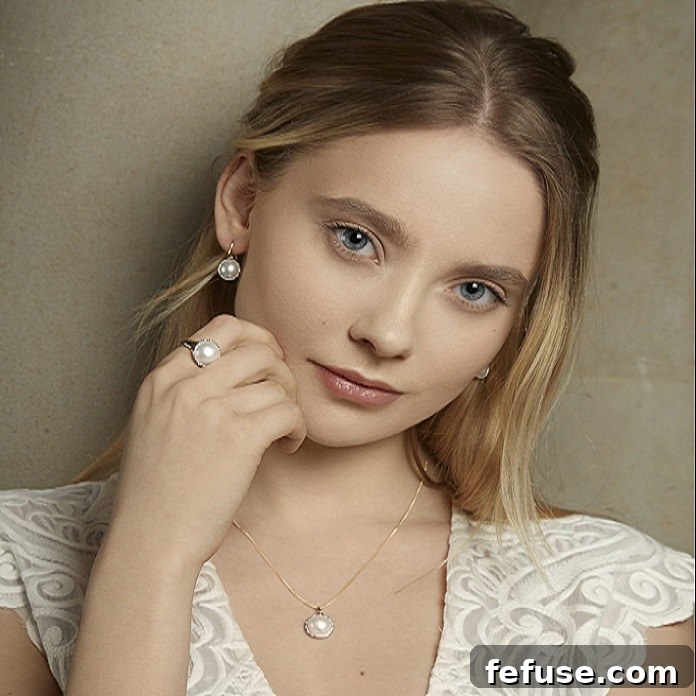
The year 2019 ushered in a period of considerable economic uncertainty, particularly impacting the British high street amidst delays in exiting the European Union. This widespread trepidation naturally raised questions about its ripple effect on various luxury markets, most notably the gold jewellery sector. While initial sentiments were mixed, a deeper dive into market performance, consumer behaviour, and industry trends reveals a fascinating landscape of challenges and remarkable resilience within the UK’s gold jewellery industry.
Navigating the UK Gold Jewellery Market Amidst Uncertainty
The initial quarter of 2019 presented a nuanced picture for the gold jewellery market. According to the World Gold Council, Europe witnessed a marginal 1% dip in gold jewellery demand, settling at 12.7 tonnes. Experts largely attributed this decline to the pervasive political uncertainty and a fragile economic outlook, particularly within key markets like the UK and France. However, against this backdrop, the UK’s internal market showed a surprising counter-trend. British assay offices reported a positive 2.1% increase in the number of hallmarked gold articles, indicating sustained domestic demand for both 9ct and 18ct gold. This divergence underscores the unique dynamics at play within the UK, suggesting a consumer base still drawn to the intrinsic value and stability of gold, even in turbulent times.
Conversations with UK retailers provided a spectrum of opinions on gold’s performance. While individual experiences varied, a prevailing consensus emerged: the fine jewellery market, particularly gold, was significantly outperforming its fashion and costume jewellery counterparts. This trend highlights a crucial shift in consumer psychology. When faced with economic instability, buyers tend to gravitate towards products that promise longevity and enduring value. Whether it’s an accessible pair of 9ct gold earrings or a high-end diamond ring, consumers increasingly view fine jewellery as a wise investment, a reliable asset in unpredictable circumstances. The inherent trust in gold as a precious metal that retains its worth makes it a compelling choice for those seeking stability and lasting quality.
Retailer Perspectives: Challenges and Shifting Dynamics
Despite the underlying strength of gold, the fine jewellery sector wasn’t without its challenges. Some jewellers, particularly those who had enthusiastically embraced branded fashion jewellery lines a few years prior, found it difficult to re-engage their traditional fine jewellery clientele. Jo Bourne, General Manager of Henns Jewellers in Wolverhampton, candidly explained this predicament: “For Henns, fine jewellery hasn’t performed that well. Since the manic Pandora days, fine jewellery has struggled and for jewellers who had the fashion jewellery in their flagship stores it has changed the way the general public have seen the shop. For most jewellers they wouldn’t have even thought that they would be selling silver charms in their stores and without realising it they lost their identity for selling fine jewellery.” This sentiment highlights a common struggle for retailers trying to balance diversified offerings with core brand identity.
Beyond identity crises, a more widespread issue was the overarching lack of consumer confidence. David Clark, Managing Director of W. E. Clark & Son, conveyed this directly to Professional Jeweller, stating, “2019 has proved to be a little challenging so far, we are just needing a bit of certainty for our customers to have the confidence to purchase.” This underscores the broader economic climate’s impact on discretionary spending, even for resilient categories like fine gold jewellery.
Nevertheless, even within these challenging conditions, retailers observed a silver lining. Fine jewellery consistently performed better than other product categories within their stores, often alongside services like repairs and bespoke commissions. Kirstie Adcock, Retail Marketing & E-commerce Executive at Lumbers, articulated this trend: “Fine jewellery in general has been performing well. We notice that clients are slowly moving away from fast fashion and costume jewellery to invest in something that will last.” This shift signals a maturing consumer base, prioritising enduring quality and sustainable choices over fleeting trends.
Industry Brands and Suppliers See Golden Opportunities
For many industry brands and suppliers, 2019 began on a distinctly positive note, with numerous companies reporting increased sales as their financial year drew to a close. Fei Liu Fine Jewellery, for instance, identified gold as its strongest performing category since 2018. The designer noted that in times of uncertainty, consumers sought items that were both personal and intrinsically valuable. Similarly, Alex Monroe observed a significant rise in non-wedding gold jewellery sales, as loyal customers upgraded from silver and plated gold pieces to more sophisticated fine designs.
The success stories extended across the market. Amore, a prominent name in both silver and gold jewellery, reported that gold jewellery accounted for a remarkable 60% of its turnover in the initial part of the year. Barry Mislin, founder of Amore Argento and Amore Oro, commented on this achievement: “Considering the retail climate, which to say the least is tricky, Amore are doing well on our gold sales. When I compare gold sales to last year we are slightly up, with sales of Amore Argento Silver similar to last year. This justifies the company’s strategy, implemented over the past few years, to increase investment into innovative new gold jewellery.” This strategic focus on innovation within gold proved fruitful.
Further corroborating this positive trend, Gecko’s gold jewellery sales saw a healthy 5% increase compared to the same period in 2018, solidifying gold as its top-performing product line over recent years. Italian fine jewellery brand Chimento also described 2019 as a “fantastic year” overall, attributing soaring sales to new structures implemented at the close of the previous year. However, the UK market presented a tougher challenge for Chimento. Matt McCawley, Chimento’s sales agent for the UK, explained: “With all of the uncertainty over the first quarter within the economy many retailers have been delaying restocking and line extension purchases until a little later in the year. I also think the changes within the international trade shows have impacted buying patterns.”
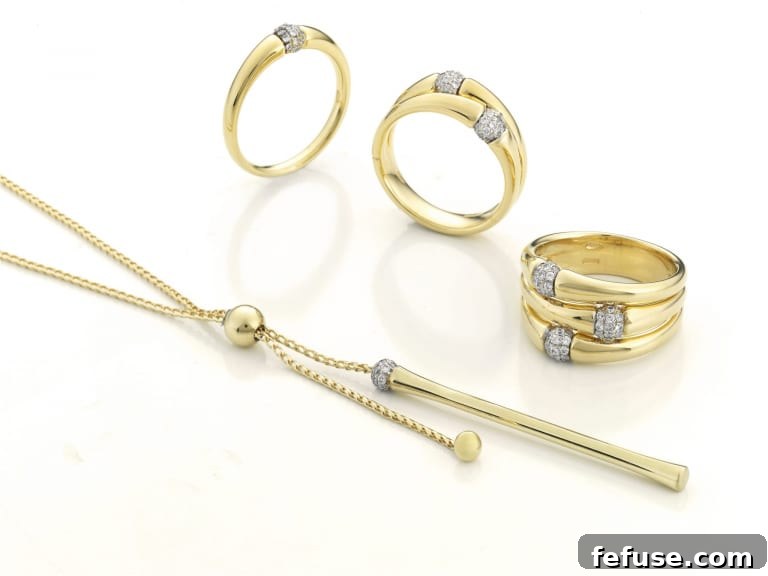
Despite these challenges, proactive engagement proved key. McCawley highlighted a “fantastic January,” their best ever, which was “driven by utilising the Vicenza trade show and actively encouraging our retailers to come and experience it.” This hands-on approach of bringing retailers directly to international showcases clearly yielded significant dividends. Bloch & Co echoed this sentiment, also experiencing a positive start to the year by maximising their participation at the Vicenza trade show. Leslie and Michael Bloch of Bloch & Co shared their success: “We had a fantastic time in Vicenza in January 2019. We hosted a number of key current and prospective clients at a beautiful 5* hotel in Abano Terme. This was something that seemed to be very well received, and coupled with a very positive experience at the Vicenza show made for a very successful start to the year.” These examples underscore the enduring importance of direct engagement and experiential marketing in building strong retailer relationships and boosting sales in the fine jewellery sector.
Unearthing the Latest Gold Jewellery Trends
When delving into gold jewellery trends, one consistent theme in the UK market is the unwavering dominance of diamonds. Despite the vibrant and colourful displays often seen at international trade shows, products featuring diamond embellishments continue to be the order of the day. While gemstone-adorned pieces certainly find their audience, diamonds remain the reigning favourite, deeply intertwined with the delicate and classic British style aesthetic. Jewellers consistently report strong performance from diamond-detailed products, reflecting a national preference for understated elegance and timeless sparkle.
Chimento’s sales agent affirmed this, noting, “If I look at the successes of Chimento I would say it is a modern twist on the classic, with the possibility to add a little of your own personality that will be the key trend.” This insight suggests that while classic designs endure, consumers are also seeking ways to infuse their jewellery with individual character. Desiree Pringle, Creative Director at Gecko, expanded on specific successful trends: “This spring, where we have seen our biggest successes have been hearts in the run up to Valentines, along with diamond product in general, pearl and plain gold.” This highlights the appeal of sentimental motifs and the enduring beauty of fundamental materials.
Curteis Marketing Manager, Rachael Nash, provided further detail on popular designs: “The close trace pendant chain across all alloys to house fine pendants and pearls are always a top seller for us. We’ve also added a range of earrings as a second phase to our popular Gold collections. These have been received very well. Simple forms have shown to be the top sellers. This backs up the popularity of wearing multiple studs. We’ve also seen a real shift towards classic designs and our traditional wristwear has proved popular especially in the last quarter.” This comprehensive view points to a mix of foundational pieces and versatile, modern layering options.
Earrings, as a product category, have consistently been identified as top performers this year. Jewellers across the UK reported strong sales in a diverse range of styles, from bold statement pieces to delicate multiple mini-piercing designs. Alisha Duffy, Showroom Manager at David M Robinson, explained this trend: “We are continuing to see huge interest in our own collections of statement earrings, fuelled by the styles that continue to dominate the catwalk. The modern lady who wears DMR jewellery wants the opportunity to be bold and our statement earrings allows them to do this.” This reflects a desire for self-expression and fashion-forward choices.
Personalised jewellery continues to shine brightly, with a strong emphasis on consumers curating their own unique style. This trend extends to bespoke commissions, allowing for truly individual creations. Naomi Newton-Sherlock, Creative Director at Domino Jewellery, commented on the enduring appeal of this trend: “We will continue to see personalisation as a key trend; it’s much more about how we provide nuance and innovation for retailers in this space. So, stacking, diamond coverage, metal choice and trends are all key; so, too are laser engraving options, choice of stone and flexibility of design. So, we are increasingly looking at how each collection can complement previous ranges.” This intricate approach ensures personalization remains fresh and dynamic.
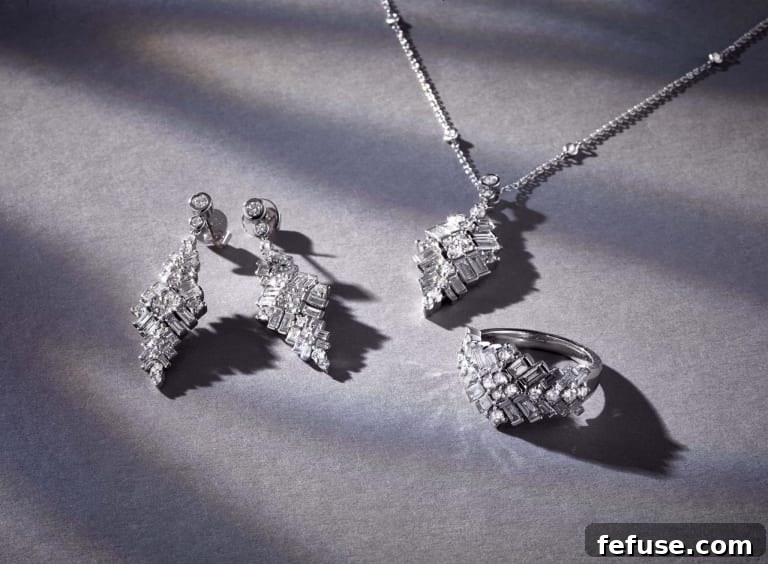
Lumbers’ Kirstie Adcock further affirmed the demand for bespoke pieces: “Generally customers love bespoke and customisable jewellery so they are getting exactly what they want and also an item that is unique to them. Customers like to wear classic jewellery in more modern ways such as modern pearl drop earrings, other trends include multi rings, layering and classic design.” This highlights the consumer’s desire for individuality and the fusion of classic aesthetics with contemporary styling.
Regarding price points, the market exhibits a dual dynamic. While affluent consumers continue to invest in high-end luxury gold jewellery, there’s a clear rise in demand for more affordable gold pieces among those feeling the pinch of political uncertainty. These consumers seek lasting quality without the prohibitive price tag, looking to add durable, value-retaining items to their everyday collections. This trend was effectively tapped into by jewellery suppliers Unique & Co and British brand Hot Diamonds, both of whom launched accessible gold jewellery lines for the first time last year, exceeding expectations.
Unique & Co’s debut accessible gold line was so well-received by retailers that it won Professional Jeweller’s Fine Jewellery Collection of the Year accolade. Daniel Ozel, Director at Unique & Co, revealed the success: “We opened over 85 accounts in a few months and have received really valuable feedback from our retailers. People are looking for items in more areas of their life that have longevity. In the jewellery market, we think people are turning to fine jewellery to do this and are looking to wear it on a daily basis. This means styles need to be more wearable for daily life and attainable in price points.” This insight points to a strategic understanding of the modern consumer’s need for versatile, long-lasting, and budget-friendly fine jewellery.
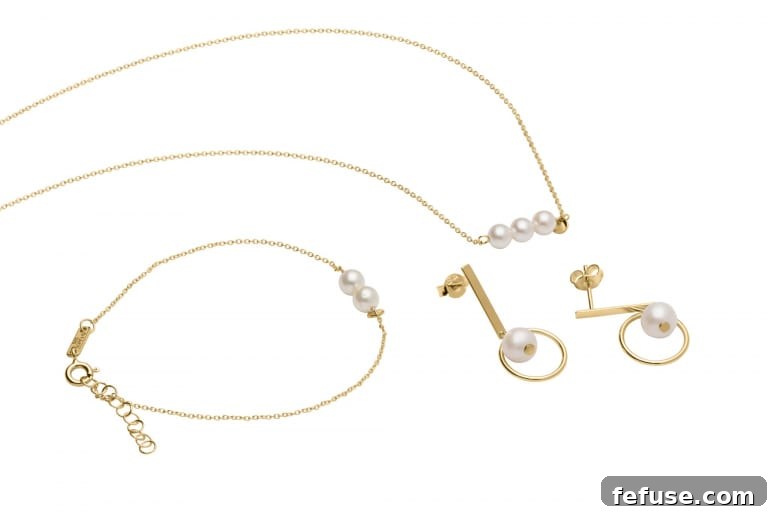
Hot Diamonds also received overwhelmingly positive feedback from the independent retail market for their gold collection. The brand strategically partnered with the Company of Master Jewellers to bolster the high street, offering its gold products exclusively to brick-and-mortar businesses. This focus on physical retail resonated strongly. The brand outlined the criteria for its success: “First and foremost, the jewellery is beautifully designed and finished to a high quality. Secondly, retailers can see that the value proposition is strong, given the high diamond count in each design within the collection. Thirdly, retailers can see there is a gap in the market for branded gold jewellery within the £150-£500 RRP range. The Hot Diamonds Gold collection addresses that gap. Finally, the range is very much focused towards high street retailers rather than online and I think jewellers really resonate with that.” This comprehensive strategy highlights understanding market gaps and supporting traditional retail channels.
Beyond these core trends, other notable shifts included an increased demand for sapphires and rubies, a renewed appreciation for Art Deco aesthetics, and a noticeable return to white gold after a period dominated by yellow gold in the previous year. These diverse preferences demonstrate a rich and evolving landscape within gold jewellery design.
The Evolving Role of Suppliers: Beyond Just Goods
In today’s competitive retail environment, the relationship between retailers and suppliers has evolved significantly. Retailers are increasingly seeking comprehensive partnerships with suppliers that extend far beyond the mere provision of goods. The modern supplier’s role now encompasses actively helping sell products to the end consumer, offering a complete support package.
Andrew Sollitt, Sales Director at Domino Jewellery, elaborated on this new paradigm: “Retailers are looking for a full-service package from suppliers — it is no longer just about providing retailers with a high-quality product. We aim to provide our retailers with high quality, design led, innovative products that are ethically manufactured in the UK, within the most competitive lead times, delivered with industry leading service levels, all backed by a full marketing support package.” This comprehensive approach covers product quality, ethical sourcing, efficiency, service, and crucial marketing assistance, forming a powerful partnership.
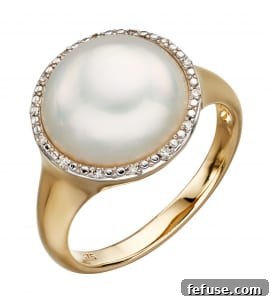
The WB Creative Jewellery Group exemplifies this client-centric model, regularly soliciting feedback from its clients and adapting its offerings accordingly. For Domino Jewellery, this responsive approach translated into concrete actions: expanding its wedding ring collection to offer greater choice, strategically reducing price points for the end consumer, and substantially increasing its on-site stock holding. This commitment ensures that retailers can access products within a swift 24-48 hours of ordering, a critical factor for maintaining inventory and meeting customer demand efficiently.
Similarly, at Gecko, customer feedback directly fuelled an increase in gold jewellery launches this year. Retailers had requested a greater variety of weights and price points within the popular Elements Gold line, and the supplier responded promptly. Creative Director Desiree Pringle detailed the extensive support services Gecko offers: “We already offer a lot of services which our customers really appreciate, and is part of the reason why they buy from us including next day delivery, quantity discounts, free engraving, free point of sale and display imagery, professional product and model imagery, which they are free to use on their websites and in-store marketing.”
Pringle further explained Gecko’s product development process: “In terms of product we are always receiving requests for new products and these can vary a lot from region to region. We always review this when we are at the planning stage for new collections and include anything which we think has real commercial value. An example of a recent request has been for more interesting chain necklace and bracelet options in plain gold, we have seen such a demand for this that we have included eight new options in the collection including some heavier weight lines to ensure the offer has some great choice.” This proactive and responsive approach to product development ensures suppliers remain aligned with market needs.
For Curteis, an award-winning supplier, its greatest strength lies in its exceptional customer service. The firm proudly states: “Customer service is considered a great strength of Curteis. This was highlighted by the jewellery award we won last year. As a supplier we continue to develop all aspects of the company, ensuring we deliver the very best in customer service.” A significant aspect of their support is the ability to offer a comprehensive bespoke service. “Not only do we have the facilities to make beautiful bespoke jewellery, we also make modifications to order on our own products to suit our customer’s needs. It’s a big part of our business and we are really geared up for this not just in manufacturing terms but service and support too,” Curteis emphasized, highlighting their commitment to tailored solutions.
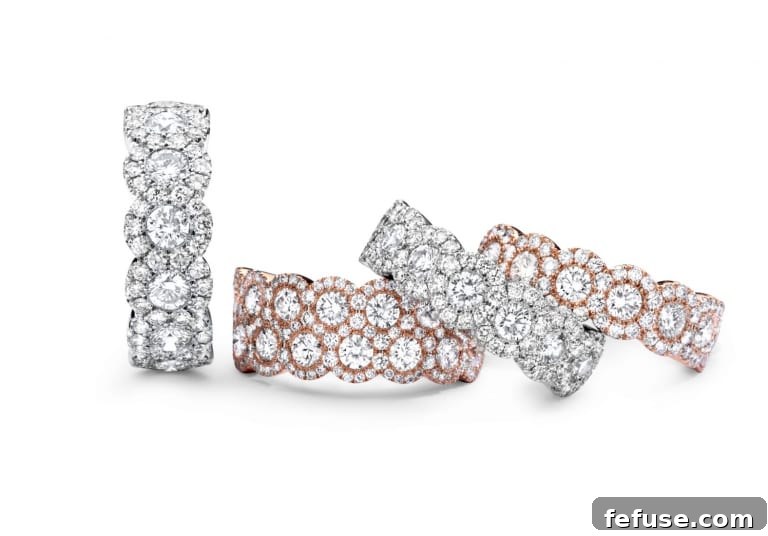
Amore’s founder echoed the sentiment that retailers are actively seeking differentiation. “The overwhelming message from retailers is they are looking for something different to set them apart from multiples and online sales. As a supplier we are now working very closely with our retail partners, offering them the opportunity to buy ‘one off’ specials across the gold range. They can create every piece of jewellery in 9/18ct, yellow, white or rose gold and any gemstone combination. With bespoke being the key word at the moment this flexibility is proving very popular allowing the retailer to offer a very personalised service,” Mislin stated. This bespoke capability empowers retailers to offer truly unique products, a crucial advantage in a crowded market.
In terms of marketing support, suppliers have historically excelled at providing point-of-sale (POS) materials and in-store display aids. However, a significant shift has occurred, with jewellers now demanding more sophisticated digital assistance. Ilaria Furlotti, CEO of Ferrari Firenze, articulated this evolving need: “We get more and more content requests, videos, short interviews, designer inspiration, pictures on models and still life, because digital has become a big part of everyone’s business and to promote items you have to have great content. There is no way around that.” This highlights the critical role of compelling digital assets in driving online engagement and sales for modern jewellery retailers.
The Future is Golden: Collaboration and Innovation
Looking ahead, both retailers and suppliers unanimously agree that close collaboration is paramount for sustained success in the gold jewellery market. While fine jewellery will always hold a cherished place, its future prosperity hinges on continuous, open communication between all stakeholders. This dialogue is essential for understanding and adapting to evolving consumer needs and market demands, whether for specific product types, innovative designs, or enhanced service offerings.
Gecko’s Creative Director concluded with a forward-looking perspective: “I think we are facing challenging times with a certain level of uncertainty, however reports in the news are that the economy is doing well and we need to focus on this. Putting all our efforts as a jewellery industry into creating product which the end consumer will love, and the retailer will want to buy into is key in helping to ensure we are protecting our market share in disposable income spend.” This reinforces the message of focusing on opportunities, innovating with purpose, and working together to capture the consumer’s heart and wallet. The UK gold jewellery market, despite its undulating journey in 2019, demonstrates a robust capacity for adaptation and growth, fueled by the enduring appeal of gold and strategic industry partnerships.
News Source: professionaljeweller