
De Beers Implements Sweeping Rough Diamond Price Cuts Amidst Evolving Market Landscape
The global diamond industry is witnessing a significant strategic shift as De Beers Group, one of the world’s foremost diamond companies, has implemented a series of notable price reductions for its rough diamonds. This week, the company announced a downward adjustment in the cost of smaller stones, marking another crucial step in its response to current market conditions. This move follows earlier, equally impactful decisions, signaling a potential recalibration across the entire natural diamond value chain.
Strategic Adjustments Across the Diamond Spectrum
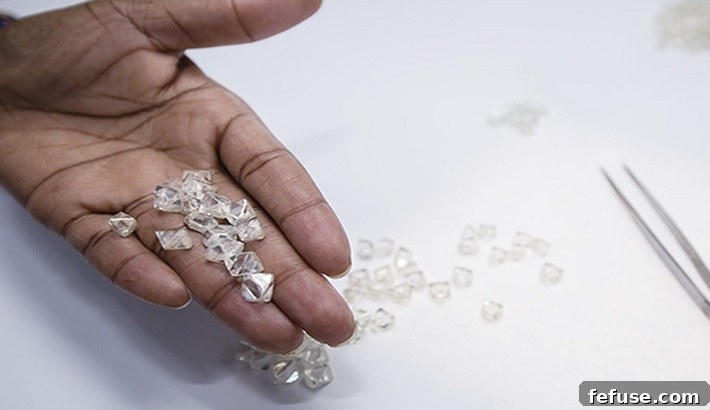
The latest round of price cuts specifically targets rough diamonds weighing under 1 carat, with reports from Bloomberg indicating a reduction of over 10%. This decision arrives on the heels of a more substantial adjustment made late last month, where De Beers slashed prices for larger rough diamonds, those exceeding 1 carat, by an average of 10%. This comprehensive approach demonstrates a clear intent to realign pricing structures across its entire product offering, from high-value investment-grade stones to smaller, more accessible diamonds that feed the broader jewelry market.
Historically, De Beers has held immense sway over rough diamond pricing, often acting as a stabilizing force in the market. Its move to cut prices across different size categories suggests a robust response to persistent market signals that have been building over recent months. This pricing strategy impacts not only the miners but also the subsequent stages of the diamond pipeline, including cutters, polishers, and ultimately, retailers, who can anticipate altered input costs and potentially new retail strategies.
The Domino Effect: ALROSA Follows Suit
In a testament to the interconnectedness of the global diamond trade, De Beers’ primary competitor, Russian diamond giant ALROSA, has swiftly mirrored these price adjustments. The quick response from ALROSA underscores the competitive pressure within the industry and the necessity for major players to maintain market share and remain attractive to their sightholders and buyers. While details of ALROSA’s exact reductions mirror De Beers, their alignment indicates a shared recognition of current market realities and a collective effort to stimulate demand and liquidity within the pipeline.
For years, both De Beers and ALROSA, collectively responsible for a significant portion of the world’s natural rough diamond supply, maintained a steadfast stance against price reductions, even during challenging periods like the height of the global pandemic. Their ability to hold prices steady for an extended duration was a hallmark of their market power. However, the current environment has proven sufficiently compelling to prompt a significant deviation from this long-standing strategy, marking a pivotal moment for the industry.
Market Forces and Competitive Pressure
The shift in pricing strategy by these diamond behemoths is not arbitrary; it’s a direct consequence of evolving market dynamics. Following the initial surge in demand post-pandemic, which saw unprecedented consumer spending on luxury goods, the market began to show signs of softening. Factors contributing to this include global economic uncertainties, inflationary pressures impacting consumer purchasing power, and a slowdown in key markets such as China.
Moreover, the unwavering refusal of De Beers and ALROSA to lower prices throughout the pandemic created an environment where smaller competitors and independent traders began to offer discounts. This created a bifurcated market, with the larger players facing increasing pressure from buyers who could source rough diamonds at more competitive rates elsewhere. As demand began to normalize and inventory levels accumulated across the supply chain, the sustained pressure from these smaller entities eventually compelled the industry leaders to re-evaluate their positions. The market’s need for liquidity and the desire to clear existing stocks became paramount, paving the way for the current price adjustments.
Broader Implications for De Beers and Anglo American
These significant price cuts for De Beers’ core product arrive at a time when its parent company, Anglo American, a multinational mining giant, is undergoing a substantial transformation process. Anglo American has openly acknowledged that job cuts are a possibility as part of its ongoing efforts to streamline operations, enhance efficiency, and adapt to a changing global economic landscape. While not directly linked to the diamond price reductions, this broader context highlights a period of intense strategic review and operational restructuring within the larger corporate umbrella.
The profitability of De Beers, which contributes significantly to Anglo American’s overall earnings, will undoubtedly be impacted by these pricing decisions. While lower prices might stimulate sales volume in the short term, they also inherently reduce profit margins unless offset by substantial increases in volume or operational cost efficiencies. The transformation process at Anglo American, therefore, could encompass strategies to bolster De Beers’ operational resilience and cost-effectiveness in a more price-sensitive market environment. This period of adjustment is crucial for both De Beers and Anglo American as they navigate challenges in various commodity markets and strive to maintain investor confidence.
Navigating the Future: Outlook for the Natural Diamond Industry
The current pricing adjustments by De Beers and ALROSA reflect a mature industry adapting to new realities. While some may interpret these cuts as a sign of weakness, they can also be viewed as a proactive measure to stabilize the market, clear inventory, and re-invigorate demand across the entire diamond pipeline. The long-term health of the natural diamond industry hinges on its ability to adapt to changing consumer preferences, particularly among younger generations who value sustainability, ethical sourcing, and authenticity.
The rise of lab-grown diamonds also continues to be a significant factor, offering a competitively priced alternative that appeals to a segment of consumers. While natural diamonds retain their unique allure of rarity and geological marvel, the market is becoming increasingly segmented. Major players are thus compelled to refine their value propositions, emphasizing the enduring legacy, emotional connection, and investment potential of natural diamonds.
Looking ahead, the diamond market will likely see continued innovation in marketing, a heightened focus on storytelling around the origin and journey of each stone, and an emphasis on transparent and responsible sourcing practices. These measures are critical for maintaining the aspirational value of natural diamonds in a competitive and evolving luxury landscape. The current price adjustments are therefore more than just a momentary reaction; they are indicative of a deeper strategic recalibration designed to ensure the long-term vitality of the natural diamond sector.
Conclusion
De Beers’ recent decision to significantly reduce rough diamond prices marks a watershed moment for the natural diamond industry. Following months of resistance, both De Beers and ALROSA have acknowledged the imperative to respond to market pressures, increased competition from smaller players, and softening global demand. This strategic pivot, coupled with the ongoing transformation efforts at parent company Anglo American, signals a period of profound adjustment and strategic realignment for the sector’s giants. While challenging, these moves are designed to foster liquidity, stimulate demand, and ensure the continued relevance and resilience of natural diamonds in a dynamic global luxury market. The industry now watches closely to see how these fundamental price changes will reshape the trajectory for diamond miners, manufacturers, and retailers in the coming months.