
The Golden Shift: Asia Fuels Future Gold Jewellery Demand
The global gold jewellery market is on the cusp of a significant transformation, with a monumental shift in demand predicted to emanate from the vibrant economies of Asia. According to a seminal report by the World Gold Council (WGC) titled “Gold 2048: The next 30 years for gold,” nations like China, India, and other rapidly developing Southeast Asian countries are poised to become the primary drivers of gold jewellery consumption in the coming decades. This surge is fundamentally underpinned by two powerful forces: burgeoning incomes and the expanding middle class across these dynamic regions, signalling a promising era for the precious metal’s role in personal adornment and cultural expression.
For generations, gold jewellery has held a profound place in human culture, transcending mere ornamentation to embody wealth, status, and deep-seated traditions. While three decades ago, the epicentre of gold jewellery demand resided predominantly in Western markets, the WGC’s comprehensive study unequivocally highlights a dramatic reorientation. The pendulum has swung decisively eastward, reflecting the colossal economic ascent and demographic shifts observed across Asia. This geographical realignment is not merely a fleeting trend but a fundamental recalibration of the global luxury and consumer goods landscape, with gold jewellery firmly positioned at its heart.
Emerging Markets: The New Golden Frontier
Looking ahead, the WGC report projects that while developed markets will continue to exhibit a steady and persistent demand for gold jewellery, the true excitement and exponential growth potential lie squarely within emerging economies. As these developing nations witness sustained economic expansion and, in numerous instances, significant population growth, their collective purchasing power swells. This creates a vast, untapped reservoir of consumers eager to embrace gold, not just as a commodity, but as an integral part of their cultural identity, personal milestones, and investment portfolios. The allure of gold, deeply woven into the fabric of many Asian societies, is now meeting the financial capacity to acquire it on an unprecedented scale, making these markets the undeniable focal point for future industry innovation and growth.
China and India: Giants of Gold Consumption
Currently, China and India stand as the undisputed titans of gold jewellery acquisition, collectively accounting for a substantial share of global demand. However, their rapid development and evolving demographic profiles, particularly the trend towards aging populations, might inherently exert certain pressures on future jewellery consumption patterns. Yet, the WGC offers an optimistic counter-narrative, asserting that these potential headwinds will be effectively mitigated by several robust economic and social factors. In China, the ongoing governmental pivot towards a more consumption-oriented economy, coupled with a steady increase in disposable incomes, is expected to fuel sustained demand. Similarly, India’s favourable demographics, characterized by a large and young population entering their peak earning years, alongside rising affluence, are anticipated to more than offset any decelerating forces, ensuring these two nations remain at the forefront of the gold jewellery market for the foreseeable future.
India’s Evolving Gold Landscape: Tradition Meets Modernity
The Indian gold market, long characterized by its intricate traditions and unorganized retail segments, is on the cusp of a transformative evolution. The WGC predicts a significant shift towards greater organization within the Indian jewellery trade. This will manifest in the consolidation of jewellery manufacturers, leading to more structured and efficient supply chains. Consumers, becoming increasingly urbanized and sophisticated, will benefit from this modernization, gaining access to a wider array of hallmarked pieces that seamlessly blend traditional aesthetics with contemporary designs. Gold’s timeless role as a reliable store of wealth, deeply ingrained in Indian cultural psyche, will undoubtedly endure. Nevertheless, the market is expected to witness a burgeoning prevalence of dedicated gold investment products, offering consumers diversified options beyond physical jewellery. Consequently, while investment avenues expand, gold jewellery itself will increasingly solidify its primary purpose in India: an irreplaceable component of cultural celebrations, religious ceremonies, and, most prominently, matrimonial rituals, where it holds unparalleled symbolic and emotional value.
China’s Innovative Gold Market: Design and Demand
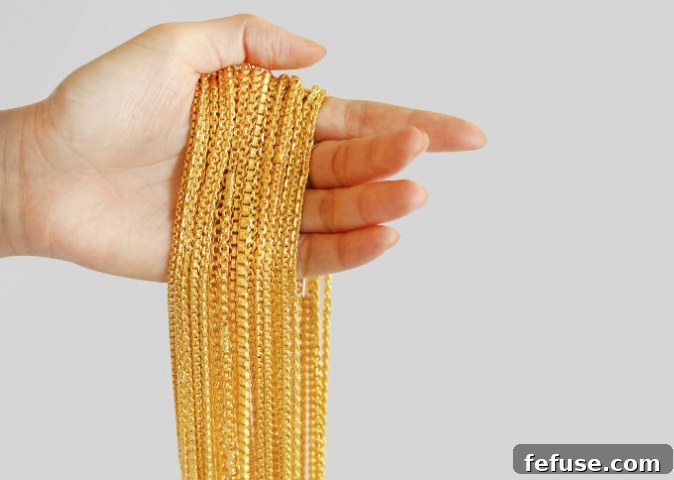
China’s gold jewellery market, much like its broader economy, is defined by dynamism and innovation. The WGC report highlights that 18-, 22-, and “modern” 24-karat jewellery are set to dominate the Chinese market. The term “modern” 24-karat signifies a pivotal trend: while pure gold (24k) has always been prized for its intrinsic value and cultural significance in China, advancements in design and manufacturing techniques are revolutionizing its form. Chinese manufacturers are pioneers in developing intricate pieces that, despite appearing solid and substantial, are remarkably lighter. This innovative approach addresses consumer preferences for both the purity of 24-karat gold and contemporary, wearable designs, often allowing for more elaborate pieces at a more accessible price point due to reduced gold weight. These sophisticated manufacturing capabilities, coupled with China’s burgeoning consumer base and increasing appetite for luxury goods, position the country as a hotbed for design innovation and a robust driver of global gold demand, continually pushing the boundaries of what gold jewellery can be.
Southeast Asia: The Next Wave of Gold Growth
Beyond the colossal markets of China and India, the World Gold Council identifies other emerging economies in Southeast Asia as crucial catalysts for future gold demand. Countries such as Vietnam, Indonesia, and Cambodia are experiencing rapid economic growth, rising disposable incomes, and a youthful demographic, all of which are fertile grounds for the expansion of the gold jewellery market. These nations, with their rich cultural heritage and deeply rooted appreciation for gold, are increasingly adopting the precious metal into their daily lives, for celebrations, as status symbols, and as prudent long-term investments. As their economies mature and urbanization accelerates, the WGC anticipates a steady and significant uptick in gold consumption across these vibrant markets, collectively contributing to the region’s overall dominance in the global gold sector and further solidifying Asia’s role as the epicentre of gold jewellery growth.
The Ethical Imperative: Responsible Sourcing of Gold
A unifying theme, critical to both developed and developing gold markets, that the WGC report emphasizes is the escalating importance of responsible sourcing. As global consciousness around ethical consumption grows, consumers, industry stakeholders, and regulatory bodies are demanding greater transparency and accountability in the gold supply chain. This heightened emphasis underscores a collective commitment to eradicate practices that tarnish gold’s reputation and undermine its inherent value.
The industry is now actively engaged in a concerted, multi-faceted effort to eliminate gold that has been mined irresponsibly. This includes rigorous initiatives to prevent the use of child labour and coerced labour, which represent egregious human rights abuses. Furthermore, there is an intense focus on mitigating the environmental impact of gold mining, addressing concerns such as unsafe environmental practices, including mercury pollution and deforestation, and unjust social practices that exploit local communities or compromise worker safety. The global gold industry is striving for a future where every gram of gold can be traced back to sources that uphold the highest standards of human dignity and ecological stewardship.
Beyond mining practices, the gold industry is also acutely aware of gold’s potential vulnerability to illicit activities. Significant concerns revolve around gold’s potential role in money laundering, smuggling operations, and tax evasion schemes. These activities not only undermine financial integrity but also tarnish the legitimate trade of gold. In response, a powerful mandate for integrity has emerged across the value chain. Refineries, jewellery fabricators, and vault holders, who are pivotal gatekeepers in the gold ecosystem, are intensifying their efforts to implement stringent due diligence processes. Their paramount objective is to ensure that the gold they handle, process, and store is of unimpeachable origin and possesses the best possible reputation, thereby safeguarding the industry’s integrity and fostering consumer trust. This unwavering commitment to ethical sourcing and combating illicit trade is not merely a regulatory compliance issue but a fundamental pillar for the sustainable growth and enduring legacy of the global gold market.
Conclusion: A Golden Future for Asia and Beyond
The World Gold Council’s “Gold 2048” report paints a compelling picture of the future of gold jewellery demand, clearly delineating Asia as its primary engine of growth. The confluence of rising incomes, expanding middle classes, and deep-seated cultural reverence for gold in countries like China, India, Vietnam, Indonesia, and Cambodia promises to fuel unprecedented demand over the coming decades. While developed markets will maintain their steady appetite for gold, the dynamism and scale of growth in emerging economies will define the industry’s trajectory.
Crucially, this future is not just about quantity but also about quality and responsibility. The increasing emphasis on ethical sourcing will compel the industry to continue its efforts against irresponsible mining practices and illicit financial activities, ensuring that gold’s journey from mine to market is transparent, ethical, and sustainable. As the global economy evolves and consumer values shift, gold jewellery, with its timeless appeal and newfound commitment to responsibility, is poised to not only maintain but enhance its cherished position in the hearts and minds of consumers worldwide, particularly across the vibrant and ascendant markets of Asia.