
The Dazzling Sapphire and Diamond Jewels of Queen Margrethe II: A Royal Legacy
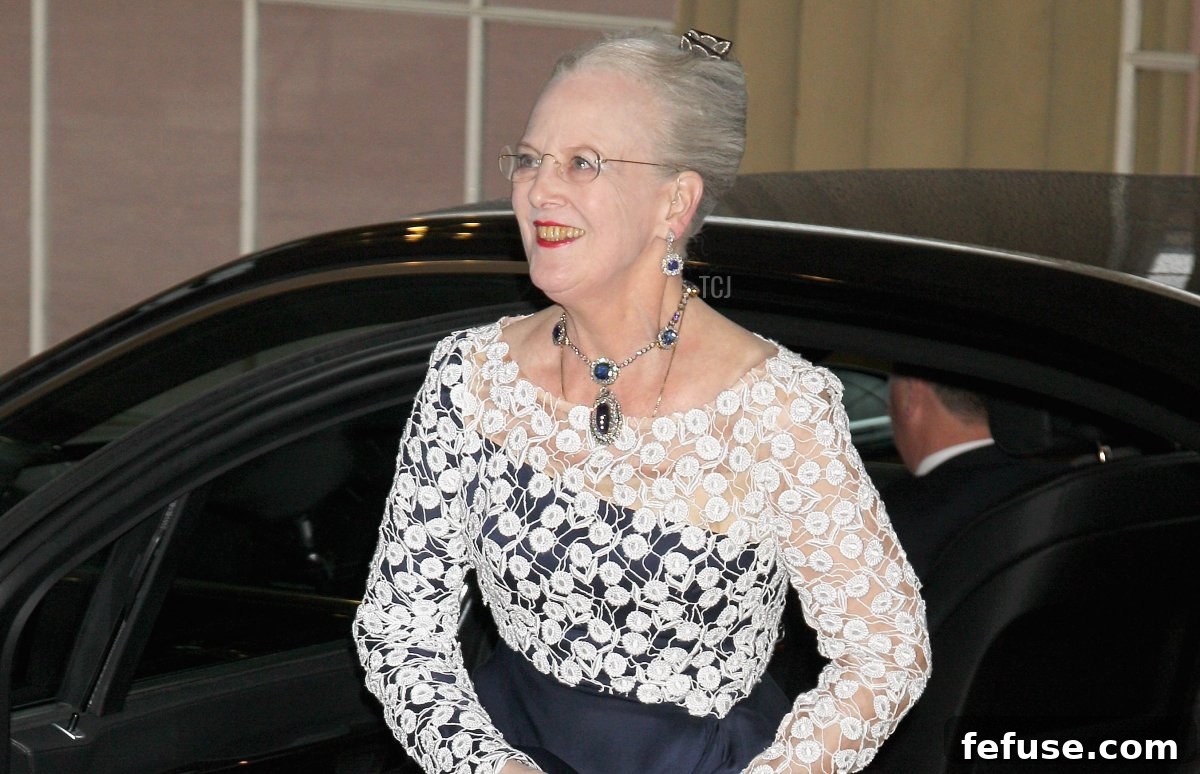
Queen Margrethe II of Denmark, renowned for her vibrant personality and keen artistic sense, possesses an extraordinary collection of personal jewelry that truly embodies the splendor of the Danish monarchy. Among her most cherished possessions are breathtaking gems of nearly every hue, each piece telling a story of history, tradition, and personal significance. Particularly captivating is a magnificent suite of diamond and sapphire jewels, a regal inheritance passed down through generations from one of her royal grandmothers, adding an invaluable layer of heritage to its dazzling beauty. These exquisite pieces not only reflect the wealth and prestige of the Danish Crown but also offer a glimpse into the personal history and impeccable taste of its wearer.
As the reigning monarch for over five decades, Queen Margrethe II has frequently showcased various treasures from her extensive jewelry vault at state occasions and significant royal events. Each appearance is a masterclass in regal elegance, where her choice of adornment often complements her sartorial selections with thoughtful precision. The sapphire and diamond parure featured here stands out for its deep historical roots and the undeniable elegance it lends to any ensemble. It is a testament to the enduring allure of classic gemstones and the timeless art of royal jewelry design.

A Royal Gathering at Buckingham Palace: The Diamond Jubilee Dinner
The occasion for showcasing these exceptional jewels was a truly momentous event on the international royal calendar. On May 18, 2012, Queen Margrethe II and her beloved husband, Prince Henrik of Denmark, embarked on a significant visit to London. Their destination was the iconic Buckingham Palace, where they were welcomed for a very special evening. The dinner was graciously hosted by then-Prince Charles (now King Charles III) and Camilla, Duchess of Cornwall (now Queen Camilla), as part of the grand celebrations honoring Queen Elizabeth II’s remarkable Diamond Jubilee.
This jubilee marked sixty years of Queen Elizabeth II’s extraordinary reign, a milestone celebrated with great pomp and pageantry across the United Kingdom and the Commonwealth. The dinner for foreign sovereigns was a particularly high-profile event, gathering monarchs and heads of state from around the globe to pay tribute to one of the world’s longest-reigning rulers. Such gatherings underscore the intricate web of kinship and diplomatic ties that bind royal families internationally, serving as rare opportunities for shared celebration and solidarity. The presence of Queen Margrethe II and Prince Henrik was a poignant symbol of the enduring bond between the Danish and British monarchies, both historically and personally.
Buckingham Palace, a symbol of British royalty, provided a spectacular backdrop for this grand assembly. The convergence of so many royal personages, adorned in their finest regalia and historic jewels, created an unforgettable tableau of tradition and majesty. For Queen Margrethe, attending such a significant event called for an outfit and jewels that were both deeply personal and fitting for the occasion’s grandeur, making her choice of the sapphire and diamond parure all the more noteworthy.
Queen Margrethe’s Elegant Attire: A Nod to Her Nickname
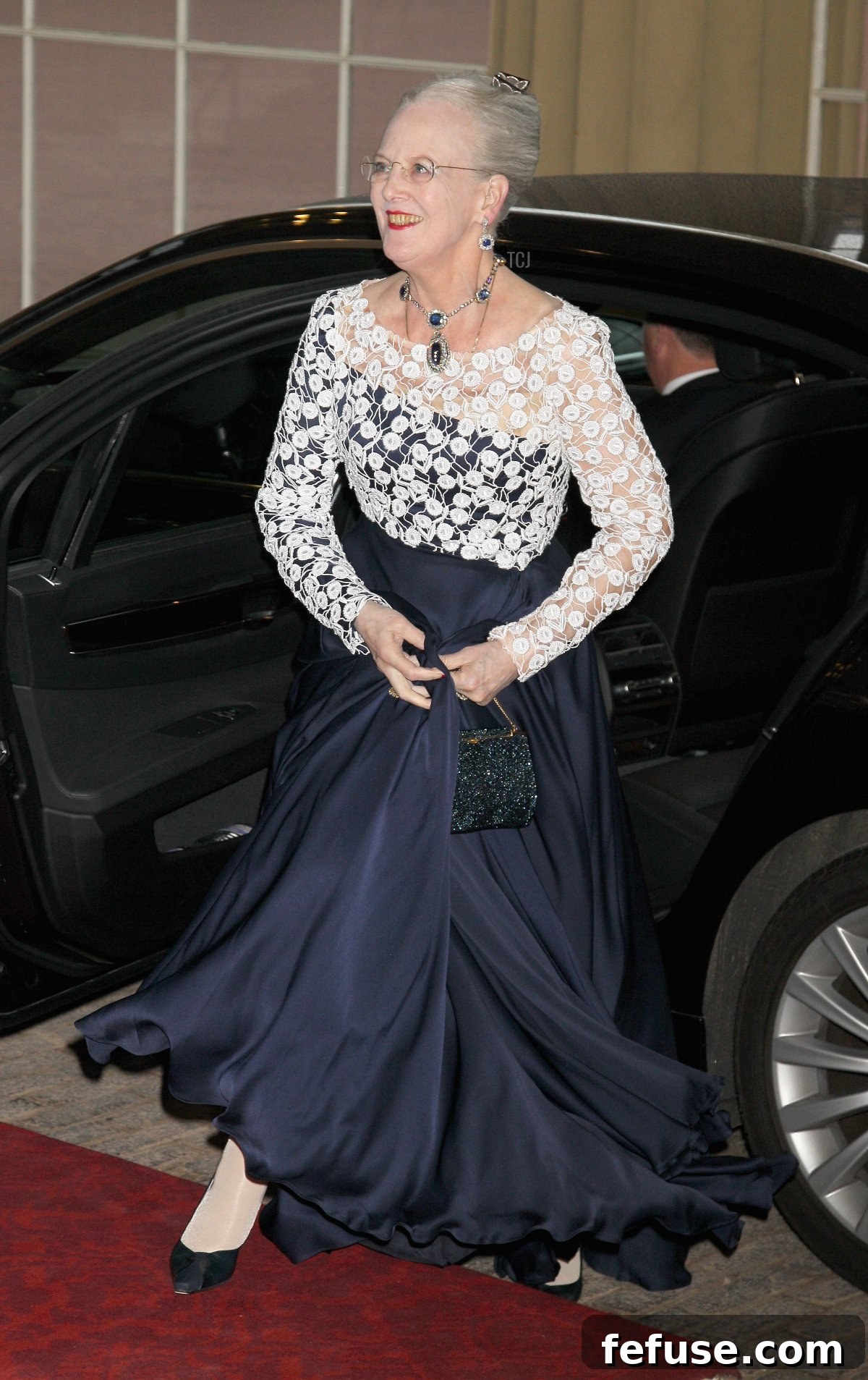
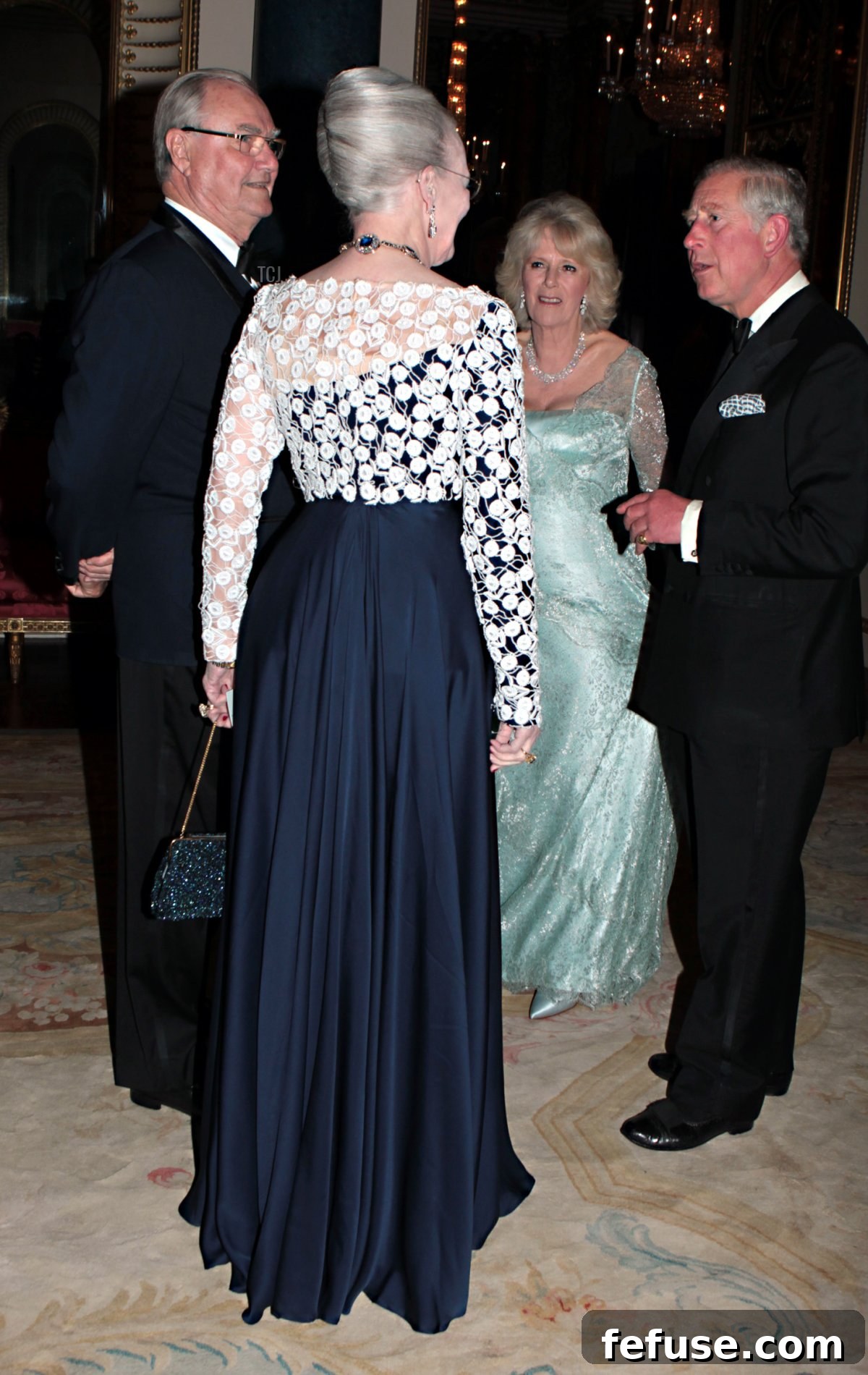
For this prestigious dinner at Buckingham Palace, Queen Margrethe II selected a truly special gown that perfectly encapsulated her unique style and personality. The elegant dress featured a flowing navy blue skirt, offering a rich and sophisticated base, beautifully complemented by a bodice of delicate white lace. What made the bodice particularly charming and personal was its intricate design, adorned with subtle yet distinctive daisy motifs. This choice of pattern was far from coincidental, carrying a delightful significance for the Danish monarch, whose affectionate nickname is “Daisy.”
The nickname “Daisy” has been associated with Queen Margrethe since childhood, a tender sobriquet adopted by her family and, over time, affectionately by the Danish public. It references the marguerite daisy (Bellis perennis), a flower that shares a phonetic similarity with her name and is also Denmark’s national flower, holding a special place in Danish culture. Therefore, a gown featuring daisy designs was an incredibly appropriate and charming choice for the Queen, subtly weaving a personal touch and national symbolism into her formal attire. It showcased her ability to blend regal formality with touches of personal warmth and national pride.
Queen Margrethe’s fashion choices are often lauded for their distinctive flair, reflecting her background as a talented artist and designer. She is known for embracing color, bold patterns, and unique silhouettes, always managing to strike a balance between tradition and individual expression. Her ensembles are thoughtfully curated, not merely for aesthetic appeal but often to convey deeper meanings, whether through color, motif, or the historical significance of her jewelry. The navy blue and white daisy gown served as an exquisite canvas for the equally magnificent jewels she chose to wear, creating a harmonious and memorable look befitting a Queen celebrating another Queen’s historic reign.
The Illustrious Sapphire and Diamond Suite: A Legacy from Queen Alexandrine
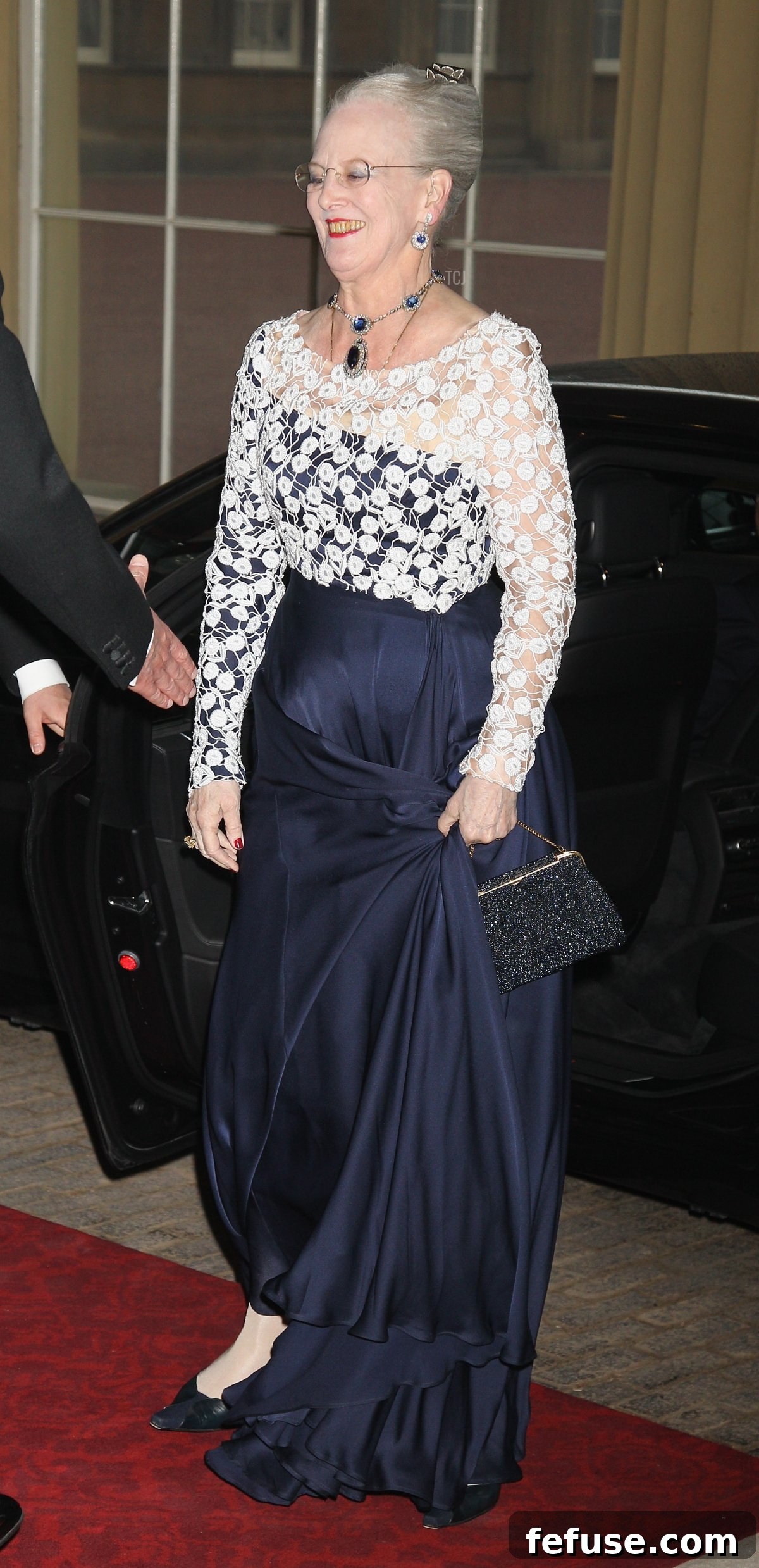
Completing her elegant ensemble, Queen Margrethe adorned herself with a breathtaking suite of diamond and sapphire jewels from her personal and extensive collection. This particular parure, consisting primarily of a magnificent necklace and coordinating earrings, is not just a display of precious stones but a tangible link to Danish royal history. These pieces were masterfully crafted using elements originally derived from a grand diamond and sapphire stomacher ornament that once belonged to her paternal grandmother, Queen Alexandrine of Denmark.
Queen Alexandrine (1879-1952), born Duchess Alexandrine of Mecklenburg-Schwerin, became Queen Consort of Denmark upon her husband Christian X’s accession to the throne in 1912. Her personal jewelry collection, much like many royal treasuries, was rich with magnificent pieces suitable for a queen. The original stomacher, a large, elaborate ornament worn on the bodice of a gown, was a hallmark of high fashion in earlier centuries. Such pieces were designed to make a grand statement, cascading with diamonds and colored gemstones, often designed to be flexible or transformable.
The transformation of this stomacher into a versatile necklace and earrings is a common practice within royal families, allowing historic pieces to be adapted to contemporary fashion and worn more frequently. This ingenious repurposing ensures the longevity and continued relevance of the jewels, blending tradition with modern sensibilities. The result is a necklace that showcases a cascade of brilliant diamonds interspersed with vivid blue sapphires, radiating an undeniable aura of regal splendor. Queen Margrethe II frequently demonstrates the versatility of this particular necklace, wearing it both with and without its prominent oval-shaped cluster pendant. This detachable feature allows her to tailor the piece to the neckline of her gown or the formality of the event, highlighting the thoughtful design that went into its re-creation.
The sapphires, with their deep, velvety blue hue, are perfectly complemented by the sparkling brilliance of the diamonds, creating a timeless combination revered in royal jewelry for centuries. Sapphires have long been associated with royalty, wisdom, and nobility, making them an ideal choice for adornment by a reigning monarch. The intricate setting and exceptional quality of the gemstones speak volumes about the craftsmanship involved in both the original stomacher and its subsequent reimagining. This suite of jewels is not merely an accessory; it is a wearable piece of Danish history, carrying the legacy of Queen Alexandrine into the modern era through her granddaughter, Queen Margrethe II.
Details of Distinction: The Necklace and Royal Accessories
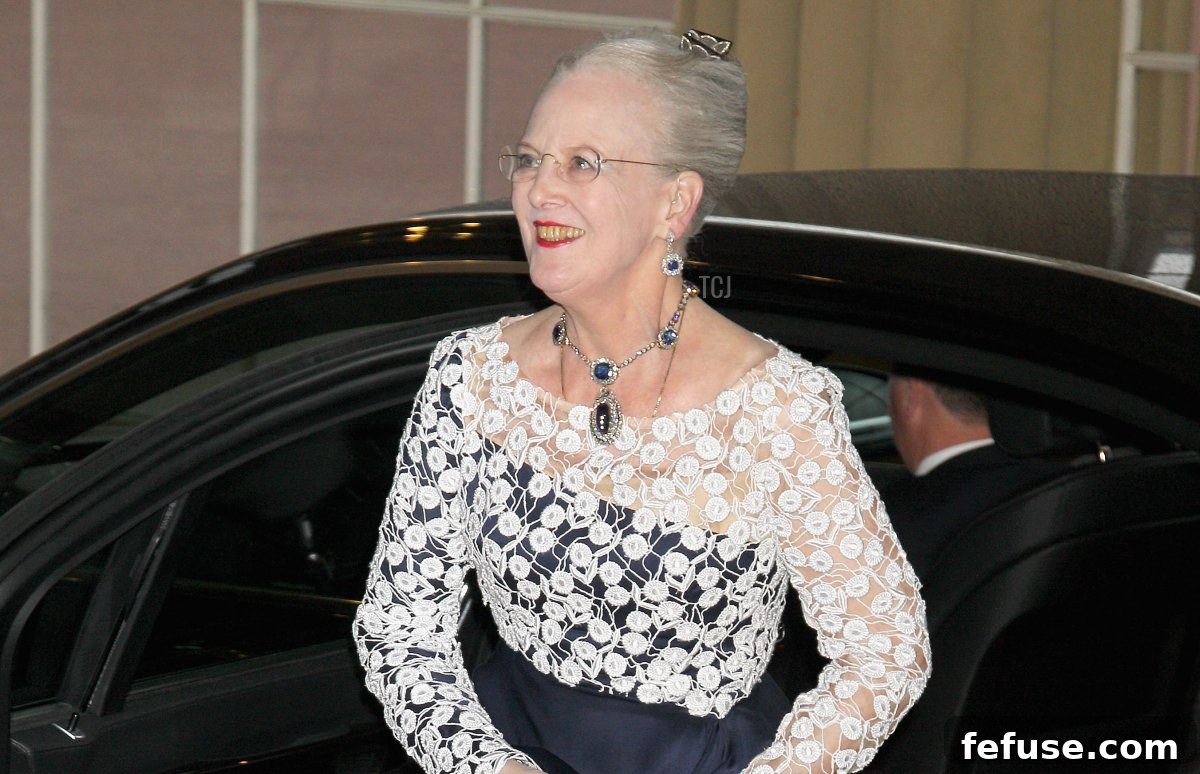
A closer inspection of the necklace, particularly from various angles, reveals its exquisite design and the meticulous attention to detail in its construction. This particular view of the necklace beautifully showcases the large sapphire and diamond cluster that forms the prominent centerpiece, whether worn as the main pendant or as a significant element within the broader design. The way the sapphires catch the light, interspersed with brilliant diamonds, creates an almost ethereal glow, symbolizing the enduring splendor of royal heritage.
Beyond the magnificent jewels, Queen Margrethe’s overall presentation at the Diamond Jubilee dinner was impeccable. Her hair was styled in an elegant, neat chignon, a classic and sophisticated updo that perfectly complemented the grandeur of her gown and the brilliance of her jewels. This timeless hairstyle allowed the neckline of her dress and the sparkling details of her sapphire and diamond earrings to be fully appreciated. Furthermore, in several of the images captured during the event, a subtle yet refined detail in her hairstyle is visible: a pair of delicate combs accessorizing the chignon. These combs, often adorned with diamonds or other precious materials, are a traditional element of royal formal wear, adding an extra touch of sparkle and ensuring the hairstyle remains perfectly coiffed throughout a long evening of royal engagements.
The combination of the historically rich sapphire and diamond suite, her thoughtfully chosen daisy gown, and the elegant simplicity of her chignon, accessorized with subtle combs, created a cohesive look of timeless regal elegance. Queen Margrethe II, as a guardian of her nation’s heritage and a monarch with a profound understanding of tradition and style, consistently demonstrates how royal jewels transcend mere ornamentation to become poignant symbols of continuity, history, and personal identity. The sapphire and diamond suite, inherited from Queen Alexandrine, is a shining example of this, embodying both the grandeur of the Danish monarchy and the personal connection of its wearer to her illustrious ancestry.