
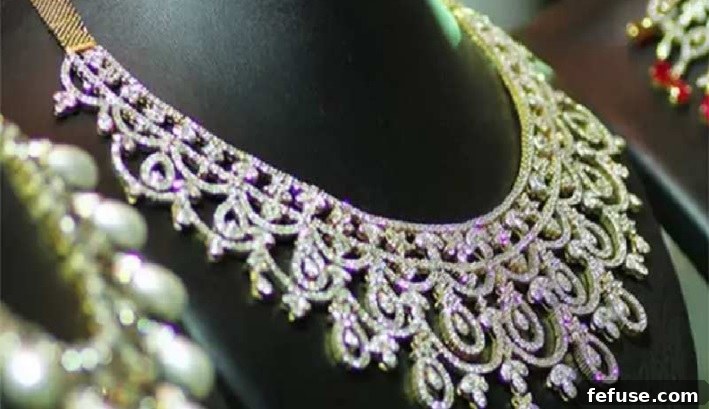
The Indian jewelry market, long synonymous with the unparalleled allure and cultural significance of gold, is currently undergoing a remarkable and fascinating transformation. A distinct new sparkle is increasingly captivating the attention of Indian consumers, particularly the vibrant younger generations: diamond-studded jewelry. This shift is not merely a passing trend but represents a profound evolution in tastes, lifestyles, and consumer priorities, challenging deeply ingrained traditions and significantly reshaping the retail landscape across the nation. Once largely perceived as an exclusive luxury reserved for the elite, diamonds are now asserting their dominance, moving steadily from aspirational purchases to becoming versatile and cherished everyday essentials for a growing segment of the population.
India’s Growing Love Affair with Diamonds: A Modern Narrative
The compelling narrative of this burgeoning trend is beautifully personified by individuals like Namisha Jain, a 24-year-old resident of Mumbai. As her January wedding approaches, Namisha’s choice to acquire a diamond bracelet from Umedmal Tilokchand Zaveri, an esteemed 80-year-old jewelry store in Mumbai’s historic Zaveri Bazaar, speaks volumes about the changing preferences. Her deliberate preference for diamond-studded pieces over traditional plain gold for what she describes as the “most special occasion” of her life is far more than a personal whim; it is a clear reflection of a broader societal shift. Namisha succinctly articulates two primary reasons for her choice: the inherent lightness and unparalleled comfort of diamond-studded jewelry, coupled with its undeniable and contemporary style quotient. Critically, she envisions these pieces as versatile additions to her daily wardrobe, suitable for year-round wear rather than being relegated to a locker for only the grandest occasions. This deep-seated desire for versatility, modern elegance, and comfort is becoming a defining characteristic of the new Indian consumer.
This burgeoning inclination towards diamonds is substantiated by robust market data rather than just anecdotal evidence. Industry executives uniformly confirm a rapid acceleration in the demand for studded diamond jewelry across India, effectively upending the long-held traditional wisdom that diamonds would struggle to make a significant impact against India’s profound and enduring love affair with gold. Statistical insights reveal a compelling story: approximately 20% of the total jewelry sales by volume now consist of diamond-studded pieces, a figure that demonstrates consistent growth, climbing by several percentage points annually. This consistent upward trajectory underscores a fundamental change in consumer values, aesthetic preferences, and purchasing habits, as diamonds continue to carve out an increasingly larger and more luminous share of the nation’s prodigious and ever-expanding jewelry market.
Statistical Sparkle: Documenting Diamond’s Remarkable Rise
Delving deeper into the numbers further illuminates this dazzling growth story. According to Chirag Sheth, a senior research consultant with Metals Focus, a reputable research firm, India’s total jewelry demand in 2018 stood at a formidable 598 tonnes. Of this substantial volume, studded diamond jewelry constituted a significant 20%, translating to an impressive 120 tonnes. This marks a substantial and noteworthy increase from just two years prior, when diamonds held a 15% share of the market. While regional market dynamics, such as a temporary subdued demand for diamonds in certain parts of North India in the aftermath of the Nirav Modi scam, might have introduced localized fluctuations, any such impact was largely offset by robust and compensatory demand from other flourishing regions, most notably South India. This inherent resilience and the ability to balance regional shifts highlight the widespread and deeply intrinsic nature of this emerging trend, proving its national footprint.
Major jewelry retailers across the country are quick to corroborate these significant findings with their own sales figures. MP Ahammed, Chairman of the Kozhikode-based Malabar Gold & Diamonds, a prominent and expansive jewelry chain, notes a consistent and considerable rise in studded jewelry sales across their extensive network. For the financial year 2019, the share of studded jewelry across all Malabar stores climbed to 20.08% of total sales, representing a healthy increase from 17.81% in the preceding fiscal year. This upward trend is not an isolated phenomenon; Malabar and other leading jewelry chains are strategically reallocating and expanding significant portions of their retail space to prominently showcase their diamond and studded jewelry collections, signaling a firm and strategic belief in the category’s continued and robust growth potential. This physical transformation of retail spaces is a tangible indicator of the market’s evolution.
Even in parts of India where the market share of diamond-studded jewelry might still be comparatively lower than national averages, the pace of growth recorded is nothing short of extraordinary. Shaankar Sen, CMD of Senco Gold, a chain boasting an impressive 106 retail outlets and a formidable presence particularly in eastern India, reports that the share of studded jewelry sales in his stores has remarkably doubled to 11.5-12% in just the past couple of years. Such rapid expansion across diverse geographical pockets of India, including traditionally gold-centric regions, paints a clear and undeniable picture: the diamond revolution is broad-based, gaining widespread consumer acceptance, and accelerating its momentum rapidly across the entire subcontinent.
The Millennial Mover: Redefining Jewelry Preferences for a New Age
At the very core of this market transformation are India’s dynamic young consumers, specifically millennials and the emerging Gen Z demographic. Their aesthetic sensibilities, lifestyle choices, and purchasing habits diverge significantly from those of previous generations. Many younger customers explicitly express a preference for jewelry that is not excessively heavy, marking a distinct departure from the traditional emphasis on the intrinsic weight and volume of gold as a primary indicator of value. Plain gold ornaments, typically crafted from higher purity 22-carat gold, are inherently heavier than their diamond-studded counterparts, which are often made with lighter 14 or 18-carat gold alloys. This distinct preference for lighter, more wearable pieces aligns perfectly with modern, fast-paced lifestyles that prioritize comfort and versatility without compromising on elegance and style. This influential segment appreciates the delicate artistry, contemporary appeal, and global fashion resonance that diamonds offer, making them ideally suited for both everyday wear and more special, yet understated, occasions.
Tanishq’s Trajectory: Leading the Diamond Charge with Innovation
Tanishq, India’s largest and most prominent jewelry retailer, serves as a powerful and reliable barometer for these evolving market trends. Sandeep Kulhalli, Senior Vice President for Retail & Marketing at Tanishq, unequivocally confirms that the sales share of diamond-studded jewelry has consistently increased by a “few percentage points” year-on-year across their impressive and extensive network of 290 stores. He attributes this sustained and robust growth directly to the rising preference for lighter, more contemporary studded jewelry among their younger customer base. Tanishq’s strategic focus on innovative, modern designs, coupled with extensive and targeted marketing campaigns specifically aimed at this influential demographic, has clearly paid significant dividends, reinforcing their position as a market leader adept at adapting to rapidly changing consumer tastes and preferences.
Even the iconic Zaveri Bazaar in south Mumbai, a bustling and historically gold-centric market where some 3,000 jewelers operate in close proximity amidst crowded alleyways and aged buildings, is visibly adapting to this new reality. While traditional gold jewelry, often featuring intricate designs meticulously crafted by an estimated 300,000 goldsmiths operating from small units, still dominates many storefront displays, a subtle yet profound transformation is unmistakably underway inside the shops. Retailers are increasingly dedicating more prominent and premium space to the shimmering allure of diamonds. A prime example of this adaptation is Ummed Jewellers in Dagina Bazar, an adjacent market integral to the extended jewelry trade. This 50-year-old establishment strategically converted its entire mezzanine floor into a dedicated retail space exclusively for diamond jewelry several years ago. For a market so deeply steeped in history and renowned for its cautious, almost reluctant, adoption of new trends, Zaveri Bazaar’s embrace of diamonds is a powerful indicator that this is far from a fleeting fad; it is a deeply rooted, substantial, and likely irreversible market shift.
Shifting Tastes: Beyond Traditional Gold for Investment
A significant and perhaps the most profound driver of the diamond surge is the changing mindset of urban millennials and Gen Z, many of whom do not share their parents’ deep-seated fascination with gold primarily as an investment vehicle or a store of wealth. Instead, they are increasingly drawn to diamond jewelry for its inherent aesthetic appeal, its strong resonance with global fashion trends, and its endorsement by influential pop culture idols and aspirational peers. Samridhi Madaan, a 29-year-old risk consultant based in New Delhi, perfectly epitomizes this new breed of consumer. This year, she made a significant personal investment of approximately Rs 3 lakh in a diamond necklace and ring, an acquisition for herself rather than part of a bridal trousseau. Samridhi candidly articulates her sentiment: “I don’t like gold that much and have this mental block that gold is for the old and that you don’t get great designs in pure gold. You get more designs in diamond in almost every price range. Diamond looks expensive especially when clubbed with white gold, which gives the premium feel of platinum.” Her perspective clearly highlights the modern desire for unique, contemporary designs, the perception of modernity and sophistication associated with diamonds, and the aspirational value derived from white gold or platinum settings, which evoke a sense of premium luxury.
The Rise of Self-Purchase: Diamonds as Personal Expression
Customers like Samridhi Madaan, who are purchasing jewelry for themselves rather than solely for traditional weddings or gifting, and who frequent stores throughout the year, are profoundly impacting the growth trajectory of studded jewelry. This “self-purchase” category has witnessed an astonishing and unprecedented surge in recent years. Sachin Jain, President of Forevermark India, a prestigious diamond jewelry brand owned by the global giant De Beers, reports that the self-purchase segment accounted for a remarkable 58% share of all studded jewelry purchases in 2018, a substantial jump from just 35% in 2016. Forevermark, sold through approximately 100 licensed jewelers across India, including major players like Malabar, GRT, Joyalukkas, Senco, and Hazoorilal, is strategically capitalizing on this burgeoning trend. The significant shift towards self-purchase signifies a profound evolution: from diamonds being purely ceremonial or heirloom pieces to becoming cherished items of personal adornment and expression, reflecting individual style, identity, and personal achievements.
While gold has traditionally held an undisputed psychological and practical advantage as a tangible store of financial value and a hedge against inflation, diamonds are rapidly bridging this perceived gap in consumer confidence. This is largely due to increased price transparency, facilitated by standardized grading and internationally recognized certification, coupled with robust and reliable buyback guarantees now being offered by most reputable jewelers. These assurances play a crucial role in convincing customers that their investment in diamonds will not suffer significant erosion in value upon purchase or resale. Malabar Gold & Diamonds, for instance, offers an impressive 80% of the purchased value for cash returns and an even more attractive 90% if the customer opts to exchange the piece for a new ornament. Tanishq, similarly, offers the prevailing market value minus making charges, providing clear, transparent, and predictable resale terms. These consumer-centric policies significantly enhance trust, reduce perceived financial risk, and ultimately make diamonds a more attractive and viable long-term purchase for the modern Indian consumer.
Evolving Designs: Diamonds for Every Day and Every Occasion
Another significant trend contributing to the accelerated growth of the diamond market is the perceptible shift towards more casual and everyday use of diamond jewelry. Joy Alukkas, Chairman of the renowned jewelry chain Joyalukkas, observes a clear transition in consumer preferences and design choices. The demand is distinctly moving away from heavier, elaborate, and intricate pieces adorned with multiple “melees” (small diamonds) or large clusters, towards lighter, more understated, and elegant ornaments featuring a single diamond or a modest couple of “10- or 20-pointers.” These “pointers” refer to diamonds weighing one-tenth and one-fifth of a carat, respectively, making them ideal for minimalist and contemporary designs that effortlessly complement daily wear and office attire, rather than being strictly reserved for grand occasions like weddings or large family functions. This emphasis on subtle elegance, versatility, and everyday wearability expands the scope of diamond jewelry far beyond traditional ceremonial contexts, integrating it seamlessly into the fabric of modern daily life and personal style.
Reserving More Space: Retailers Embrace the Diamond Future
In a direct and strategic response to this booming demand, jewelers across India are implementing aggressive and comprehensive expansion strategies. This includes not only opening numerous new stores in rapidly developing Tier-II and Tier-III towns, thereby tapping into previously underserved markets where disposable incomes are steadily rising and global aspirations are taking root, but also substantially reallocating and expanding the existing space dedicated to retailing diamond jewelry within their current outlets. Forevermark’s Sachin Jain highlights this dramatic and visible shift, claiming that over the past two years alone, the physical space allocated to diamonds by retailers as a distinct product category has increased an astounding 2.5 times. This significant physical expansion and strategic investment reflect a firm, long-term commitment to diamonds as a core and indispensable growth driver for the entire jewelry industry.
While typical store sizes in major metropolitan cities average around 3,000 square feet, new outlets being opened in smaller towns are often being designed at a more compact yet efficient 1,500-2,000 square feet, as prudently noted by MP Ahammed of Malabar Group. This tailored approach allows jewelers to penetrate diverse regional markets effectively and economically. What truly excites and galvanizes diamantaires the most, however, is India’s currently modest share of global diamond sales. In stark contrast to the United States, which accounts for a dominant 50% of global diamond sales, and China, which represents 17%, India presently accounts for a mere 7%. For discerning industry players, this seemingly low statistic does not signal a limitation; rather, it underscores the immense, largely untapped potential for monumental growth within the Indian market. It powerfully suggests that for diamonds in India, the only direction truly is up, promising a glittering, dynamic, and prosperous future for this increasingly cherished and sought-after gemstone.