
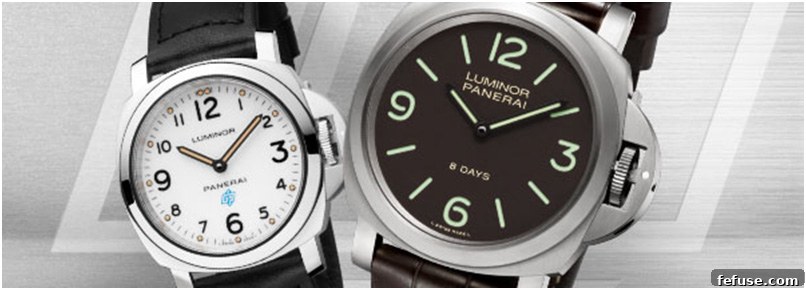
In the expansive and often intricate world of luxury horology, certain brands carve out a distinct identity that is instantly recognizable. Panerai stands as one such titan, a brand whose timepieces, at first glance, appear to share a striking familial resemblance across their entire collection. This perceived uniformity is, in fact, a deliberate homage to Panerai’s profound heritage, deeply rooted in the early 20th century when the brand crafted specialized diving instruments for the elite Royal Italian Navy. This foundational legacy has instilled a consistent aesthetic code across the Panerai lineage, characterized by robust leather straps, minimalist dials adorned with oversized luminous hands and hour markers, and undeniably bold, cushion-shaped case silhouettes.
Over the decades, Panerai has masterfully balanced tradition with innovation, subtly evolving its offerings through the integration of novel materials, cutting-edge technology, and refined design tweaks. Yet, the brand is celebrated for its unwavering commitment to a successful foundational concept. While this steadfast approach has been instrumental in creating some of the most iconic and recognizable luxury watches ever produced, it can sometimes present a unique challenge for enthusiasts and newcomers alike: distinguishing the subtle yet significant differences between individual Panerai models. If you find yourself pondering the nuances that separate one Panerai timepiece from another, this comprehensive guide will illuminate the distinct characteristics of each celebrated collection, offering an in-depth exploration of their history, design intricacies, and defining features.
Panerai Luminor: The Iconic Evolution of a Legend
The Luminor collection, making its public debut in 1993 as a cornerstone of Panerai’s initial civilian offerings, represents a pivotal moment in the brand’s history. Its name, derived from the innovative tritium-based luminous material developed by Panerai in the 1950s, encapsulates its pioneering spirit. Over the years, the Luminor has seen significant evolution, notably with the introduction of the Luminor 1950 version in 2012 and the refined Luminor Due in 2016. The original Luminor, often referred to as the “Bettarini case” after its designer, is distinguished by its more straightforward case middle, a flatter crystal, and comparatively shorter lugs, projecting a strong, utilitarian aesthetic. It typically features a solid caseback, a nod to its robust, tool-watch origins, ensuring maximum durability.
In contrast, the Panerai Luminor 1950 series, while sharing the iconic crown-protecting bridge, presents a more historically accurate interpretation of the 1950s military prototypes. It boasts a distinctive u-shaped or gently curved case middle, a more pronounced domed crystal that adds depth and vintage charm, and notably longer, more elegant lugs. Furthermore, the crown guard of the Luminor 1950 models often bears the subtle but significant “R.E.G. T.M.” (Registered Trademark) engraving, a detail cherished by purists. Unlike many standard Luminor models, the Luminor 1950 frequently showcases a sapphire caseback, offering an unimpeded view into the intricate mechanical movement powering the timepiece, a testament to Panerai’s horological prowess.
The Luminor Due, launched in 2016, marks a distinct departure from the rugged tool-watch identity of its predecessors. Conceived as a sleeker, more refined, and dressier interpretation of the classic Luminor, the Due collection aims to bridge the gap between Panerai’s signature bold aesthetic and the demands of modern urban elegance. While available in various sizes, the Luminor Due collection notably houses some of the smallest Panerai watches ever produced, with case diameters starting at a more understated 38 mm. This collection prioritizes wearability and versatility for a broader audience, resulting in a significantly thinner profile. However, this refinement comes with a trade-off in water resistance; with a typical rating of just 30 meters, the Luminor Due is designed for sophisticated urban environments rather than deep-sea exploration, differentiating it sharply from other Luminor models built for extreme conditions. The Luminor series, across its variants, often incorporates innovative materials such as Carbotech™, Fibratech™, and Goldtech™, alongside traditional steel and titanium, showcasing Panerai’s commitment to material science and contemporary design.
Panerai Radiomir: The Genesis of a Watchmaking Icon
The Panerai Radiomir collection stands as the true progenitor of the brand’s distinguished legacy, rooted in a conceptual timepiece meticulously crafted in 1936 for the Royal Italian Navy’s combat divers. The very name “Radiomir” is derived from a groundbreaking phosphorescent material based on radium, which Panerai ingeniously developed and applied to the dials of its inaugural watches, ensuring unparalleled legibility in the darkest underwater environments. Today’s Radiomir timepieces pay homage to this illustrious past, characterized by their slender wire lugs, a prominent winding crown devoid of the later iconic crown guard, and a captivatingly simplistic dial featuring large, legible hands and oversized hour markers.
Regarded as the most formal and historically reverent of all Panerai series, Radiomir timepieces exude an understated elegance. They are available in a sophisticated palette of dial colors and a diverse range of case materials, including polished stainless steel, luxurious gold, and lightweight titanium. The collection offers a variety of case sizes, with 42 mm, 45 mm, and 47 mm being the most popular, catering to different preferences while maintaining a significant presence on the wrist. While many Radiomir models champion a pure, time-only functionality, embodying minimalist design at its finest, some advanced iterations incorporate additional complications such as Power Reserve indicators or GMT functions, adding layers of utility without compromising their classic appeal.
The Radiomir collection is further enriched by two primary variants: the original Radiomir and the Radiomir 1940. The classic Radiomir watches are instantly identifiable by their distinctive wire lugs and often an onion-shaped or flared crown, directly echoing the earliest military prototypes. The Radiomir 1940, introduced to the public in 2012, offers a subtle yet significant evolution. It retains the signature cushion-shaped case but features more robust, integrated lugs that are milled from the case block itself, providing enhanced durability and a more contemporary feel. Furthermore, Radiomir 1940 watches are typically characterized by a more conical-shaped crown, still lacking a crown guard but presenting a slightly different profile than its wire-lugged counterpart. While the Radiomir first appeared in its modern civilian form in 1997, the Radiomir 1940 emerged later, serving as a vital link between the ultra-vintage Radiomir and the more structured Luminor cases, reflecting a transitional period in Panerai’s design evolution.
Panerai Submersible: The Uncompromising Professional Dive Watch
While both the Luminor and Radiomir collections draw profound inspiration from classic diving watches and military instruments, they are not, by contemporary standards, exclusively branded as professional dive watches. The Panerai Submersible, however, unequivocally claims this title. Reimagined and relaunched as a distinct, standalone collection in 2019, the Submersible is Panerai’s ultimate expression of a purpose-built dive watch, engineered for extreme underwater performance. Each model in this formidable series boasts a minimum water-resistance rating of at least 100 meters, a highly legible diver-style dial, and, crucially, a robust unidirectional rotating bezel – an essential tool for monitoring elapsed dive times safely and accurately.
The journey of the Submersible began in 1998 with the introduction of the PAM24, the inaugural Luminor Submersible. As its name suggested, this pioneering model was initially conceived as a specialized variant within the broader Luminor range. It featured the distinctive Luminor case shape, complete with the iconic crown guard, but was enhanced with the requisite rotating bezel, meticulously graduated to 60 minutes, enabling divers to precisely track their underwater intervals. Over the subsequent years, Panerai continued to innovate within the Luminor Submersible line, pushing the boundaries of deep-sea exploration. Some remarkable iterations achieved an astonishing 1000-meter waterproofness, earning them the revered nickname “La Bomba” among enthusiasts, a testament to their unparalleled robustness and engineering prowess.
In a strategic move to sharpen its brand identity, the Panerai Submersible was officially separated from the Luminor series in 2019, establishing itself as an independent collection dedicated solely to professional diving. While the new Submersible watches retain the inherently strong and recognizable cushion-shaped case, often echoing the robust proportions of the Luminor, and even feature the innovative crown guard system, the “Luminor” label is no longer present on the dial, signifying its distinct identity. The older Luminor Submersible watches typically came in substantial 47 mm or 44 mm cases, underscoring their tool-watch origins. The current Submersible collection, while still offering commanding 47 mm models, also introduces more versatile 42 mm cases, catering to a wider range of wrist sizes and preferences without compromising its professional dive watch capabilities. Furthermore, Panerai often equips Submersible models with advanced materials like Carbotech, BMG-Tech (Bulk Metallic Glass), and Fibratech, enhancing their strength, lightness, and resistance to corrosion, truly cementing their status as cutting-edge instruments for underwater adventurers.
Panerai Ferrari: A Symphony of Speed and Precision
In 2005, a remarkable alliance was forged between two titans of Italian luxury and bold design: Panerai and Ferrari. This celebrated partnership, though spanning a relatively brief period until 2010, yielded a collection of approximately 20 limited-edition Panerai Ferrari watches that masterfully fused the distinctive styling cues of the iconic carmaker with the unparalleled horological expertise of Officine Panerai. Models like the FER00020 and FER00001 stand as enduring examples of this unique collaboration. At their core, these timepieces were undeniably Panerai, retaining the brand’s conspicuous lugs, signature circular dials, and substantial cushion-shaped cases that have become synonymous with the marque.
However, the “Ferrari Engineered by Officine Panerai” versions were designed to be unmistakably distinct from the traditional Luminors and Radiomirs, showcasing a fresh approach to case and dial configurations. A closer inspection of these exclusive watches reveals a fascinating detail: the dials predominantly feature the iconic Ferrari logos, with Panerai’s branding often subtly integrated or even absent from the main dial, highlighting the automotive focus of the collaboration. This unique branding strategy underscored the special nature of the partnership, positioning these watches as a celebration of Ferrari’s spirit, expertly crafted with Panerai’s watchmaking prowess.
The Panerai Ferrari collection was meticulously structured into various sub-groups, catering to different facets of automotive enthusiasm. The sportier Scuderia versions, inspired by Ferrari’s racing division, boasted bolder dial executions, often incorporating vibrant bursts of color and dynamic design elements that evoked the thrill of the racetrack. The Granturismo models, on the other hand, offered a more classic and elegant aesthetic, frequently featuring intricate checkered dials that paid homage to vintage racing dashboards and luxurious touring cars. Beyond these two main categories, other unique versions were produced, each with its own distinctive character. The collection was also notable for its impressive array of complications, reflecting both brands’ commitment to engineering excellence. Common complications found on these sophisticated timepieces included perpetual calendars, highly precise chronographs (including flyback and rattrapante chronographs for advanced timing), alarms, and GMT functions, offering a rich tapestry of horological innovation within a distinctive automotive-inspired design. These limited-edition pieces remain highly sought after by collectors who appreciate the rare confluence of two legendary Italian brands.
Panerai Mare Nostrum: The Rarest Maritime Chronograph
The Panerai Mare Nostrum chronograph holds a unique and somewhat mythical place within the Panerai narrative. This distinctive timepiece, with a style deeply influenced by the very first Panerai chronograph prototype created in the 1940s, was also part of Panerai’s original civilian collection launched in 1993. The Mare Nostrum (Latin for “Our Sea,” a Roman name for the Mediterranean Sea) immediately distinguishes itself from most other Panerai watch designs due to its elegant circular case, a significant departure from the brand’s more common and iconic cushion-shaped cases. While the original 1940s prototype was a colossal 52 mm in diameter, making it an imposing presence on the wrist, newer versions, like the 2017 re-edition, have been thoughtfully scaled down to a more wearable 42 mm case, balancing historical accuracy with modern wearability.
Throughout Panerai’s extensive history, the Mare Nostrum has remained an exceptionally rare and exclusive model, with only a handful of versions ever produced. The genesis traces back to the 1943 prototype, of which a mere two or three pieces were ever made, primarily for Italian Navy deck officers – making it one of the rarest Panerai watches in existence. The 1993 version, part of Panerai’s initial foray into the civilian market, was in development until 1997, marking its public re-introduction. More recently, a highly anticipated 2017 version, limited to just 1,000 pieces, was released, allowing a new generation of collectors to own a piece of this fascinating history. Despite their undeniable historical significance and unique design, Mare Nostrum watches are not as widely recognized or as popular as the Luminor or Radiomir collections among the general public. However, they are highly revered and passionately favored among “Paneristis” – the dedicated, ardent community of Panerai aficionados – who deeply appreciate the model’s distinctive circular case, rich historical context, and exceptional rarity, often considering it a holy grail for serious collectors seeking a truly unique Panerai.
Panerai’s Enduring Legacy: A Blend of History and Innovation
Whether it’s the robust Luminor, the historically rich Radiomir, the professional-grade Submersible, the automotive-inspired Ferrari, or the exceptionally rare Mare Nostrum, each of these collections, despite their individual characteristics, is instantly recognizable as a Panerai timepiece. This immediate identification is a testament to the brand’s unwavering commitment to its distinctive structural design and its profound heritage. Panerai has successfully navigated a remarkable journey, evolving from a manufacturer of highly specialized, utilitarian tools for elite military men to becoming one of the world’s preeminent luxury watch brands, celebrated globally for its unique blend of Swiss precision and Italian flair.
Today, Panerai commands a devoted following that extends beyond reputable dealers and seasoned watch experts to include an impressive roster of celebrities, political figures, and discerning collectors worldwide. This widespread appeal is a reflection of the brand’s ability to consistently produce timepieces that are not only aesthetically striking and technically robust but also imbued with a captivating narrative of adventure, innovation, and historical significance. Panerai’s enduring legacy lies in its disciplined adherence to a powerful design language, while simultaneously embracing subtle evolution and groundbreaking materials. The brand continues to captivate watch enthusiasts, offering a diverse array of timepieces that honor its past while boldly venturing into the future of luxury horology, ensuring its place as an iconic presence on wrists for generations to come.