
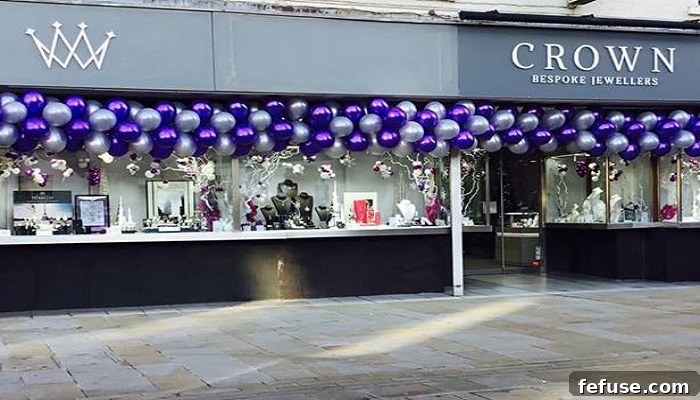
The Fading Gleam: Crown Jewellers Closure Signals Broader High Street Distress
The heart of Bourne, Lincolnshire, is set to lose a cherished local institution as Crown Jewellers prepares to close its doors for good. Owner Cathy Powell’s poignant decision to cease trading after more than a decade in business casts a stark spotlight on the escalating challenges faced by independent retailers across the UK. Her fears that mounting tariffs and an increasingly hostile trading environment threaten the very existence of local high street businesses resonate deeply within communities striving to preserve their unique character and economic vitality. The closure of Crown Jewellers isn’t just the end of one business; it’s a potent symbol of a national struggle, illustrating how even long-standing, beloved establishments can buckle under relentless economic pressure.
A Decade of Dazzle: The Journey of Crown Jewellers in Bourne
For over ten years, Crown Jewellers has been an integral part of Bourne’s commercial landscape, first operating from a bustling shopping precinct before relocating to its current, prominent high street premises eight years ago. Under Cathy Powell’s astute guidance, the shop blossomed into a cornerstone of the community, known for its exquisite selection of jewellery and personalized service. Cathy herself brought a wealth of experience and passion to her venture, having honed her skills early in her career at the prestigious Tiffany & Co. This background instilled in Crown Jewellers a commitment to quality and customer care that became its hallmark, setting it apart in an increasingly competitive market. The shop became a place where generations marked life’s most precious moments, from the excitement of engagement rings to the enduring promise of wedding bands and thoughtful gifts for countless occasions. Its presence contributed significantly to the charm and appeal of Bourne’s town centre, drawing shoppers who valued the personal touch only an independent retailer can offer.
The Unbearable Weight: Why the Sparkle Faded
Cathy Powell’s decision to close was not made lightly, driven by a confluence of challenging trading conditions and personal circumstances. While a desire to move closer to her parents played a part, it was undeniably the intense commercial pressures that ultimately tipped the balance. Her candid assessment underscores the perilous tightrope walk that independent business owners navigate daily, where profit margins are thin and external factors can quickly become insurmountable. The story of Crown Jewellers serves as a powerful case study for the broader issues plaguing high streets nationwide.
The Double-Edged Sword of Business Rates and High Rent
At the forefront of Cathy’s struggles were the crushing financial burdens of business rates and soaring rental costs – a refrain echoed by countless independent retailers across the UK. These fixed overheads disproportionately impact small businesses, consuming a significant chunk of their revenue before they even sell a single item. Just a year prior, Cathy had attempted to expand her enterprise by opening a second branch in Peterborough, a venture she was forced to abandon swiftly in May due to the same prohibitive expenses. The high rent and business rates in Peterborough made the operation financially unfeasible, illustrating the widespread nature of this problem. This experience served as a stark precursor to the difficulties she continued to face in Bourne. Such punitive charges act as an invisible tariff, siphoning vital capital away from small businesses that could otherwise be invested in stock, staff, or marketing, ultimately stifling growth and innovation. The current system often fails to reflect the true trading conditions on the ground, leaving businesses like Crown Jewellers with little room to breathe during lean periods.
The Parking Predicament: Deterring Footfall in Bourne
Beyond the fixed costs, Cathy also pointed to a noticeable decline in customer footfall in Bourne, particularly over the last six months. This reduction was directly linked to the introduction of new parking charges and increased ticketing. “It’s such a shame that people have been subjected to it and it’s had a big impact on the town,” she lamented to the Rutland & Stamford Mercury. Her words highlight a critical issue: while local councils seek to generate revenue through parking tariffs, these measures often have the unintended consequence of deterring potential shoppers. For many, the added cost and inconvenience of parking act as a barrier, prompting them to choose out-of-town retail parks with free parking or the convenience of online shopping. This erosion of footfall is a death knell for high street businesses that rely on a steady stream of visitors to thrive. When fewer people venture into the town centre, independent shops, which thrive on impulse buys and discovery, are the first to feel the pinch. This phenomenon isn’t unique to Bourne; it’s a pervasive challenge impacting town centres nationwide, where a delicate balance must be struck between revenue generation and fostering a vibrant, accessible shopping environment.
The Wider Retail Landscape: A Crisis for Independent High Street Shops
The narrative of Crown Jewellers is a microcosm of a much larger crisis engulfing independent retail across the United Kingdom. High streets, once the bustling epicentres of community life and commerce, are increasingly grappling with a complex web of challenges. The relentless rise of e-commerce giants, offering unparalleled convenience and often lower prices, continues to divert consumer spending away from physical stores. Out-of-town retail parks, boasting ample free parking and a concentration of chain stores, further exacerbate this trend. Moreover, shifting consumer habits, with a growing preference for experiences over possessions and a heightened awareness of sustainability, mean that traditional retail models are under immense pressure to adapt.
Inflation, soaring energy costs, and increasing supplier prices add further layers of complexity, squeezing already tight margins for independent businesses. Unlike larger corporations, small shops often lack the negotiating power to absorb these rising costs, leaving them with little option but to pass them on to customers or absorb losses. This creates a vicious cycle where higher prices deter shoppers, leading to lower sales and increased financial strain. Despite the undeniable value that independent retailers bring to local economies – fostering unique identities, providing personalized service, and creating local jobs – government support often falls short, or policies prove ineffective in stemming the tide of closures. The cumulative effect is a steady erosion of the diverse and vibrant character that once defined Britain’s high streets.
The Heart of the Community: More Than Just a Shop
For Cathy Powell, the closure of Crown Jewellers isn’t merely a business transaction; it’s the end of a deeply personal journey. “It has been brilliant working in Bourne. I love the town and I love the people,” she shared, her words underscoring the profound emotional connection independent business owners often forge with their communities. Crown Jewellers was more than a place to buy jewellery; it was a backdrop to people’s most cherished memories. “I’ve seen a lot of people come and go. They’ve come to us for their engagement rings, then wedding rings and gifts. We have seen them grow up and then their children grow up.” This intimate relationship with customers, witnessing life’s milestones and becoming a trusted part of family traditions, is the true essence of local independent retail.
This deep-rooted connection creates a sense of belonging and community that online shopping simply cannot replicate. Independent shops are often the social fabric of a town, providing informal meeting points, advice, and a friendly face. The “huge debt of gratitude” Cathy expressed to her customers for their “loyal support and friendship” speaks volumes about the reciprocal relationship between a local business and its patrons. When such an establishment closes, it’s not just a commercial loss; it’s a social and emotional one, leaving a void that often feels irreplaceable within the community. The personalized service, the unique selection, and the genuine care offered by independent jewellers like Crown Jewellers are vital ingredients in making a town centre feel alive and vibrant.
A Farewell and a Legacy: What the Closure Means
Crown Jewellers is scheduled to open its doors for the very last time on October 27th, marking the end of an era for Bourne. The immediate impact will be felt by the loyal customer base who have relied on Cathy’s expertise and the shop’s unique offerings for years. Beyond the immediate commercial gap, the closure represents a broader loss for the local economy and the character of Bourne’s high street. Each independent shop that shutters its windows diminishes the town’s individuality and its appeal as a destination for shoppers. The legacy of Crown Jewellers, however, will endure in the countless stories of love, celebration, and cherished memories woven into the very fabric of the jewellery pieces it provided. Cathy Powell’s dedication and the shop’s role in the community’s milestones will undoubtedly be remembered long after the final sale. The emotional toll of closing a business that has been such a significant part of one’s life, and the lives of so many others, is immense, embodying the personal sacrifices inherent in independent entrepreneurship.
A Call to Action: Safeguarding Our High Streets
The story of Crown Jewellers serves as a powerful testament to the urgent need for concerted efforts to safeguard our high streets. It’s a call to action for local councils, policymakers, and communities alike to re-evaluate current strategies and implement more effective solutions. This could involve radical reforms to the outdated business rates system, creating more flexible and affordable rental agreements, and innovating parking solutions that encourage rather than deter visitors. Furthermore, local initiatives that promote and celebrate independent businesses, fostering a “buy local” culture, are crucial. Communities themselves have a vital role to play by consciously choosing to support their local shops, recognizing that every purchase contributes directly to the vibrancy and sustainability of their town centres. The unique value proposition of independent shops – their personalized service, curated selections, and genuine connection to the community – is an invaluable asset that deserves protection and investment.
The Future Sparkle of Local Retail
The closure of Crown Jewellers in Bourne is a poignant reminder of the fragility of independent businesses in the face of relentless economic pressures. While the challenges are formidable, the enduring spirit of entrepreneurship and the unwavering desire for authentic, community-driven commerce remain strong. The future of our high streets hinges on a collective commitment to understanding these difficulties and actively seeking innovative solutions. Only through collaborative efforts, policy reforms, and renewed community support can we hope to reignite the sparkle in our local retail landscapes and ensure that independent gems like Crown Jewellers continue to thrive for generations to come, preserving the unique character and economic health of towns like Bourne. The story of Cathy Powell and Crown Jewellers is a powerful plea to value and protect the heart and soul of our communities: the independent local business.
News Source: professionaljeweller.com