
A Glimmer of History: Sotheby’s Unveils an Extraordinary 18th-Century Diamond Necklace
The world of luxury and historical intrigue converges as Sotheby’s announces the upcoming auction of an exquisite 18th-century diamond necklace, a jewel of immense historical significance and breathtaking beauty. Whispers of a fascinating connection to the ill-fated French Queen Marie Antoinette and the infamous “Affair of the Diamond Necklace” have amplified the anticipation surrounding this magnificent piece. Set to dazzle bidders in Geneva, this auction represents a rare opportunity to acquire a tangible link to one of history’s most dramatic periods.
In a recent press release, Sotheby’s revealed the emergence of this “extraordinary piece of jewellery history” from a prominent private Asian collection, marking its first public appearance in half a century. Described as a rare and highly important 18th-century diamond jewel, it weighs an impressive approximately 300 carats. Its creation dates back to the decade leading up to the tumultuous French Revolution of 1789, placing it firmly within the opulent Georgian era, an age renowned for its lavish court life and exquisite craftsmanship.
Unveiling the Masterpiece: Design and Versatility
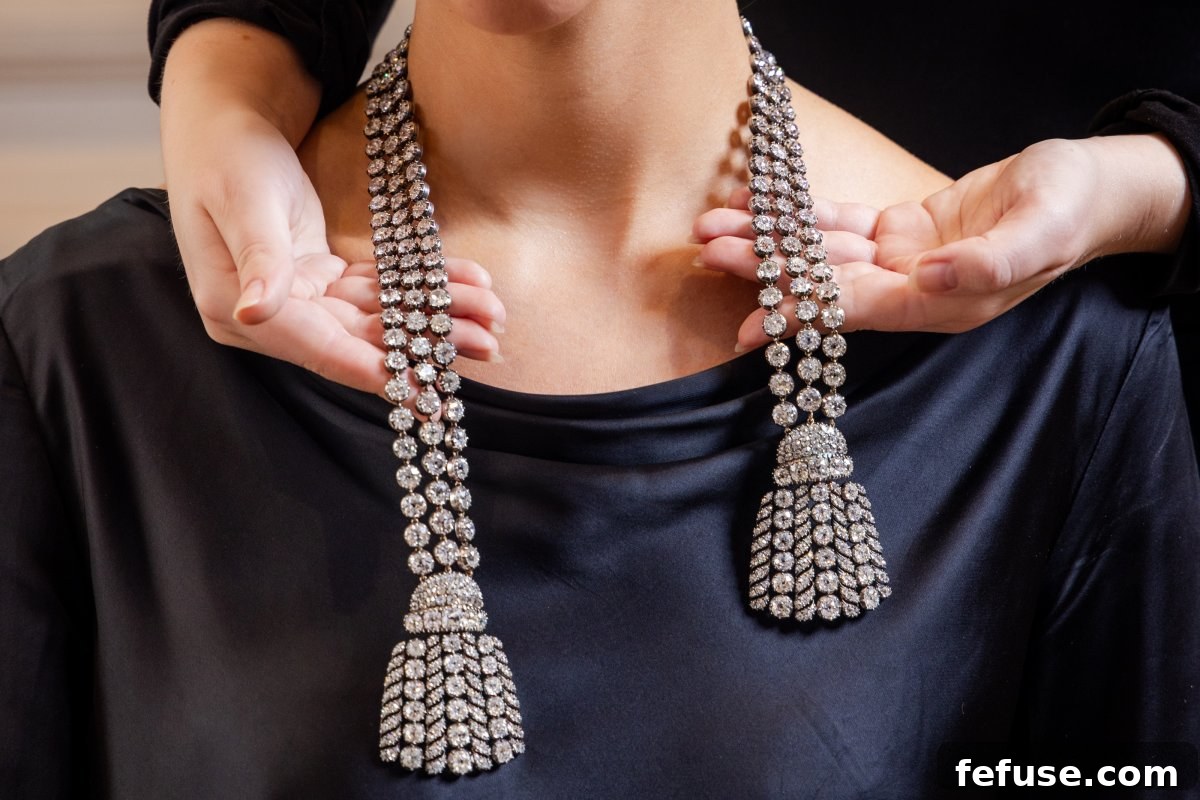
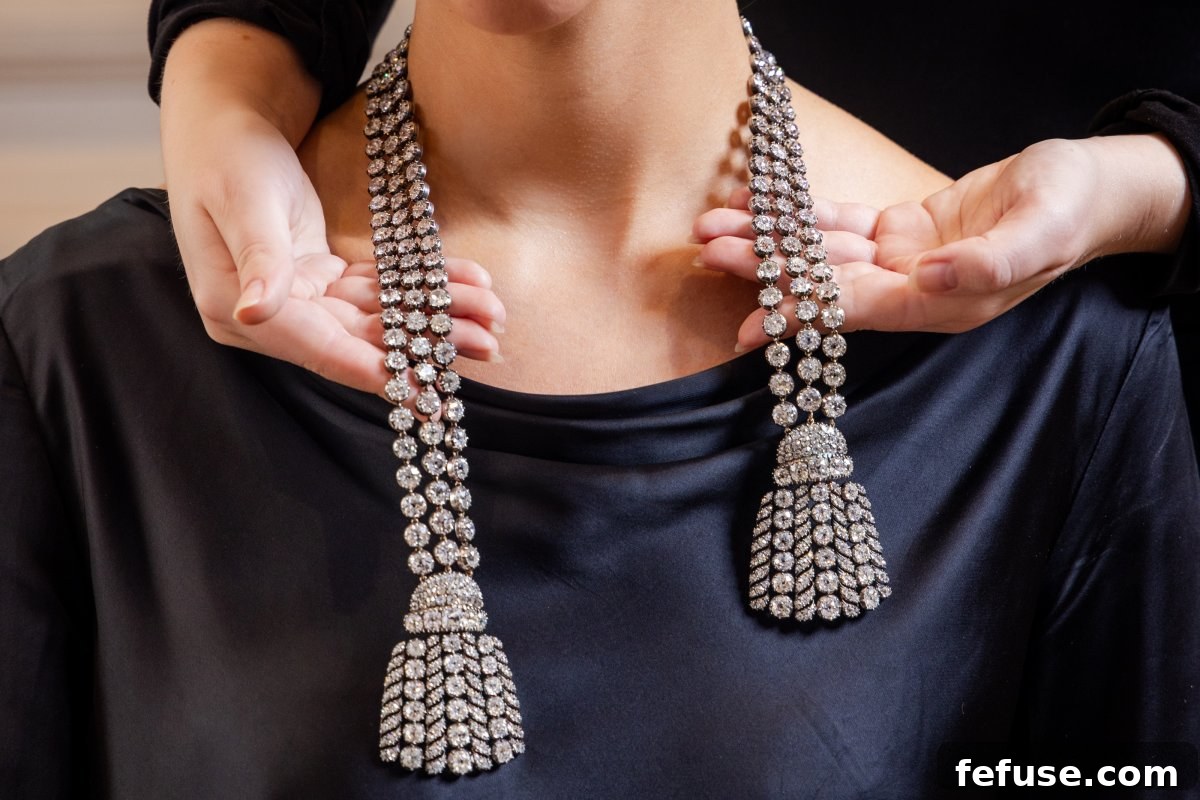
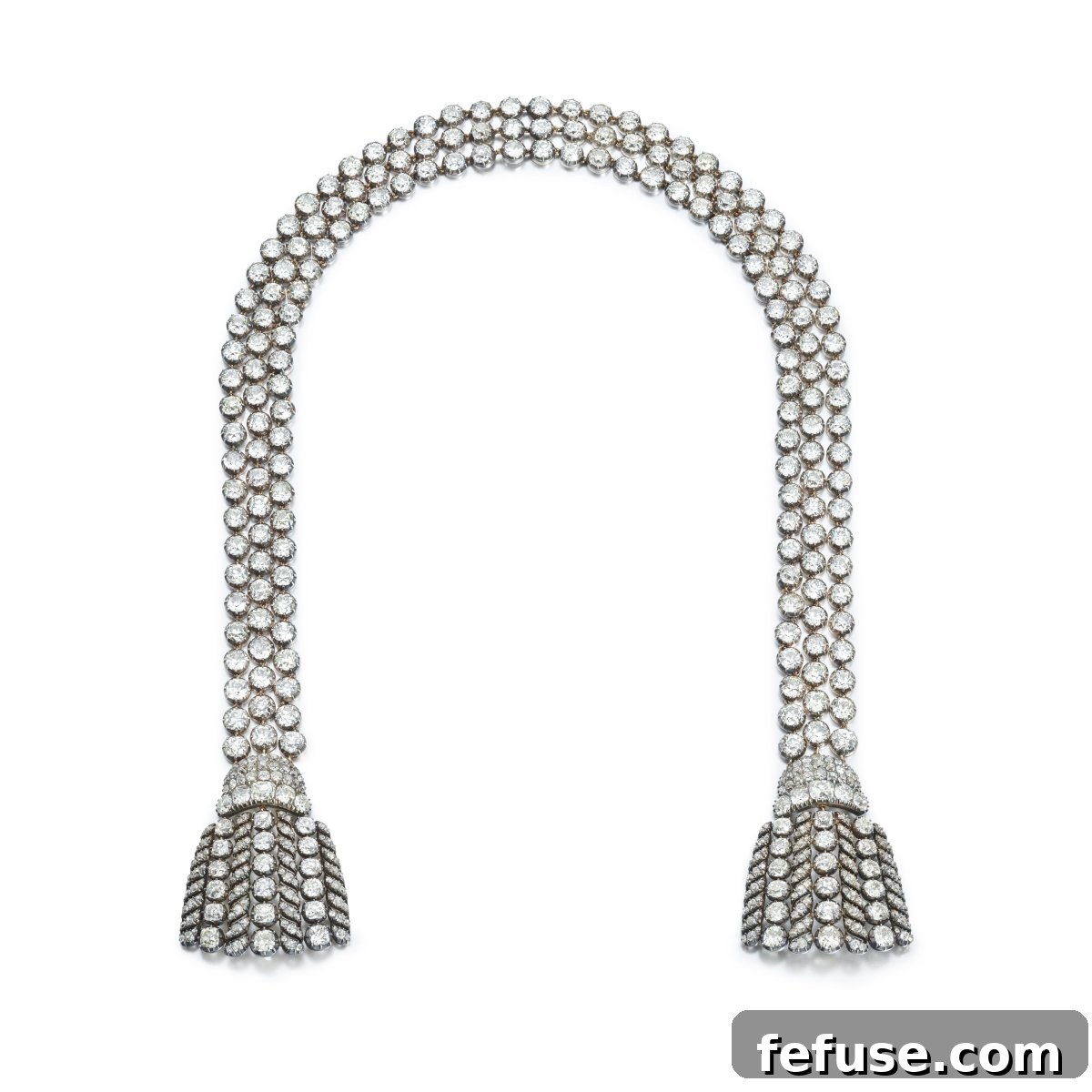
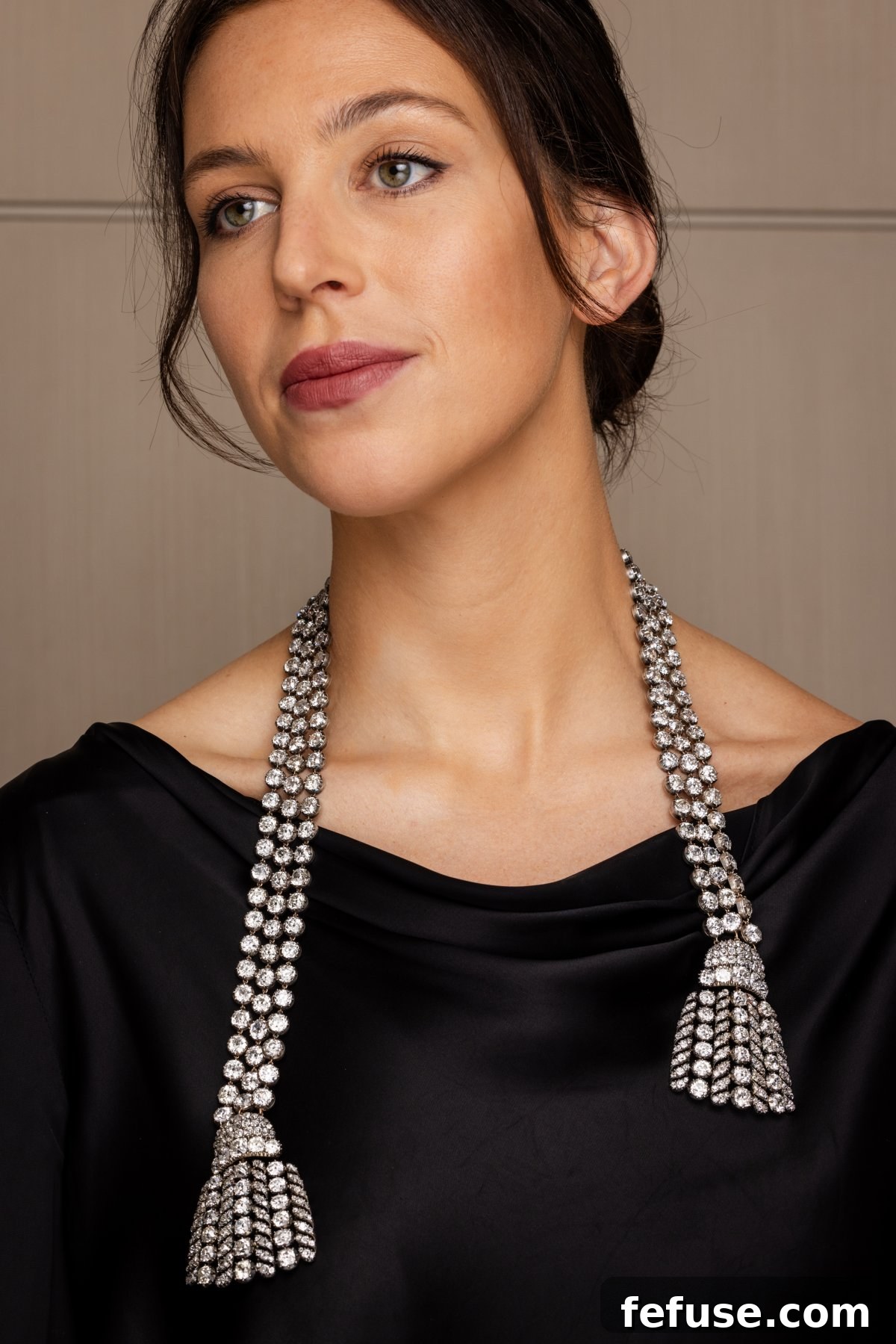
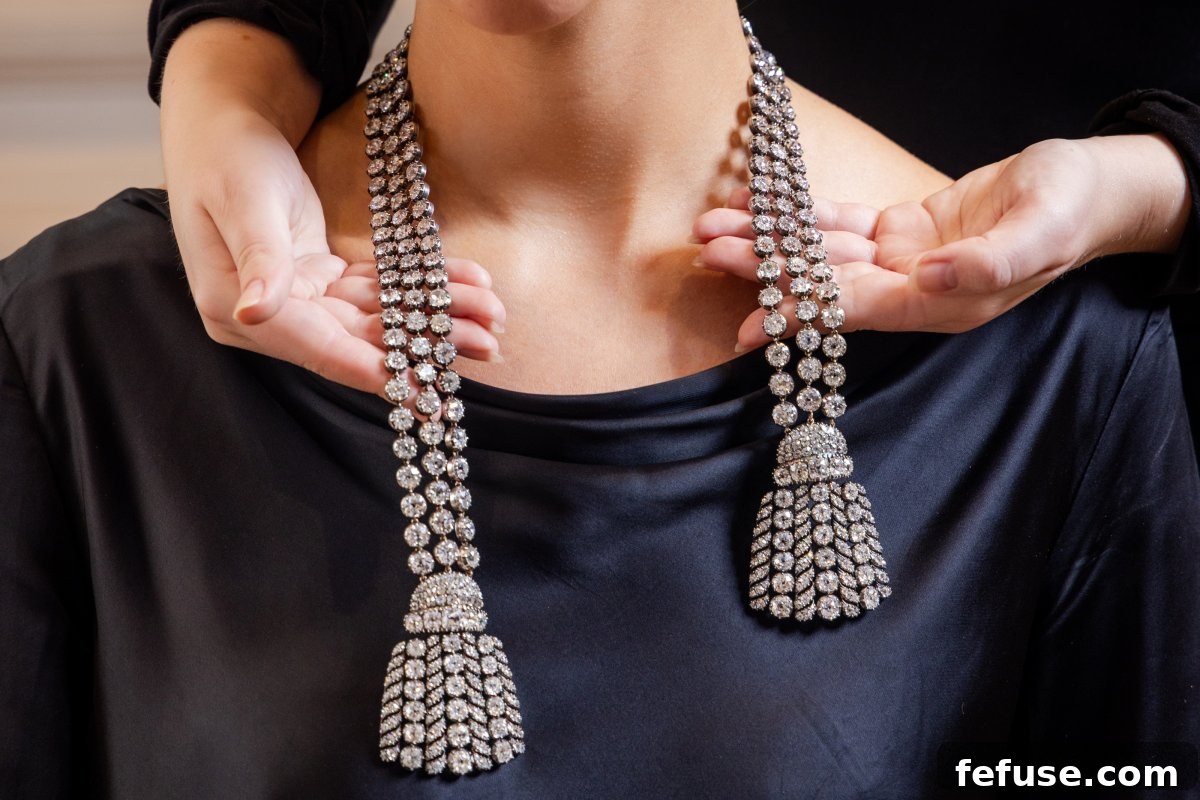
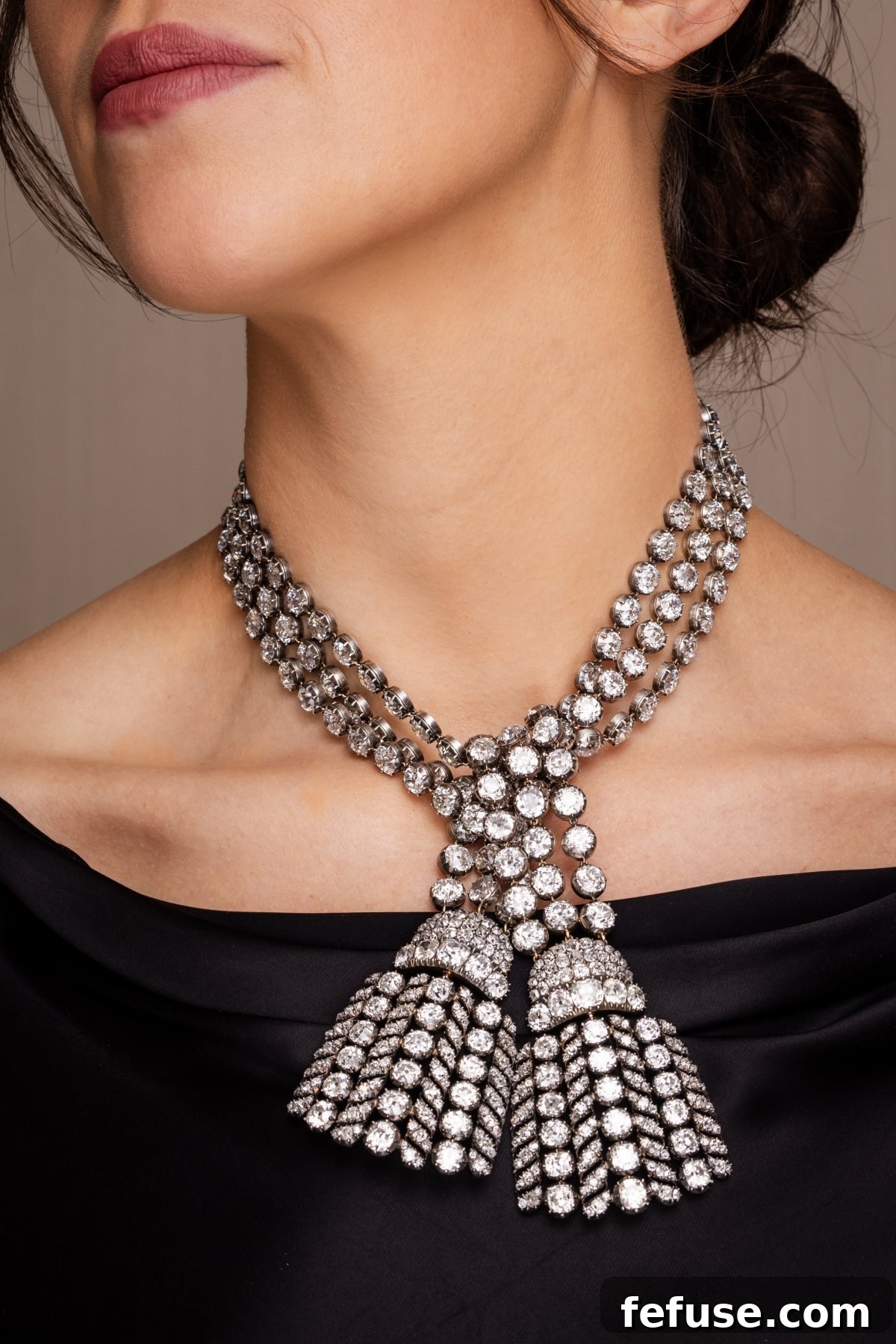
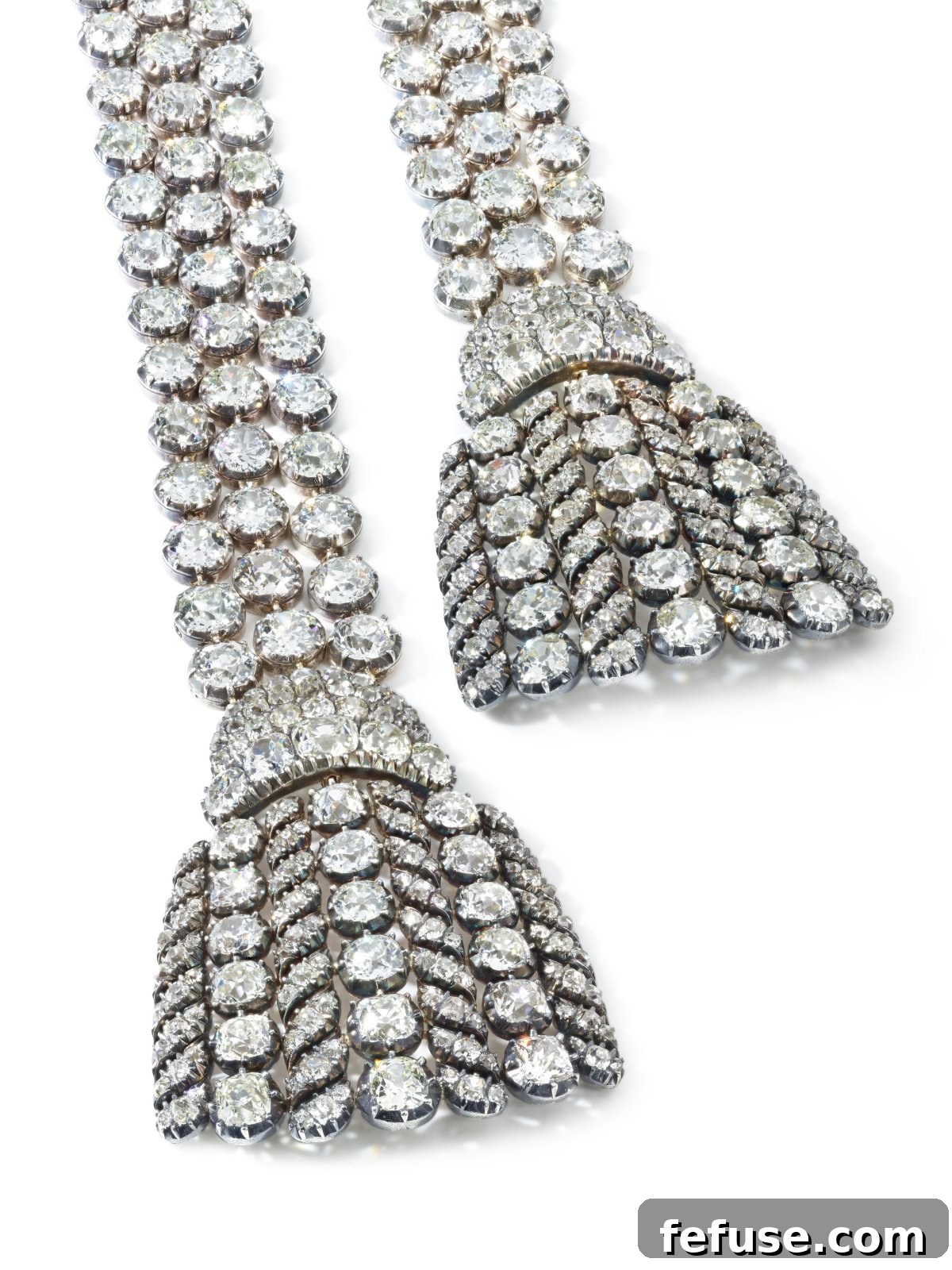
This spectacular antique jewel is a testament to the unparalleled artistry of its time. The necklace, designed to elegantly drape around the wearer’s neck, culminates in a pair of dazzling diamond tassels, adding a dynamic flourish to its regal appearance. Sotheby’s press materials offer a detailed description, highlighting its technical brilliance and versatile nature. Composed of three rows of meticulously arranged diamonds, the piece showcases the opulence and adaptability characteristic of 18th-century jewelry design.
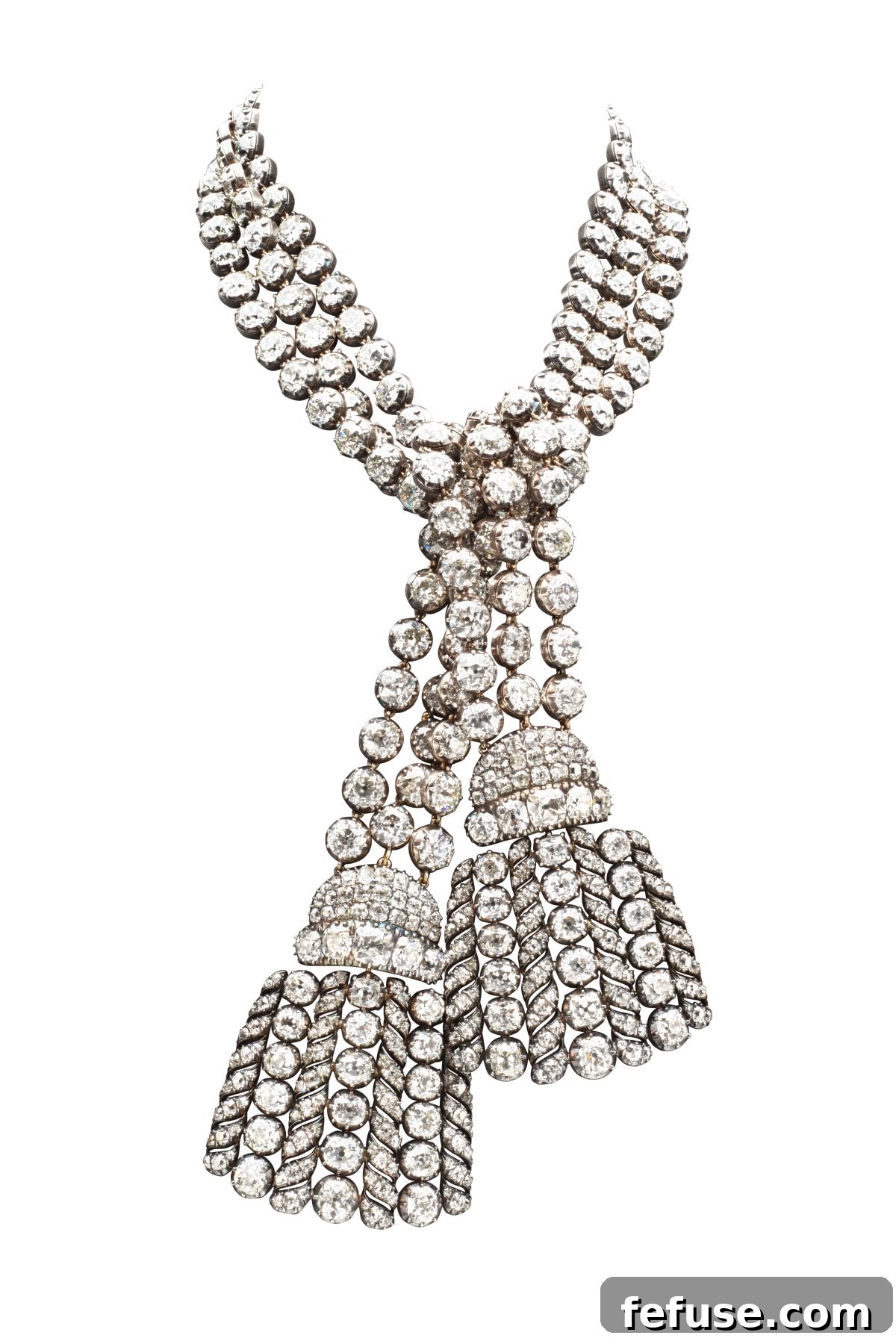
Known as a ‘négligé’ in its era, this type of jewel was celebrated for its dual functionality. It could be worn as a traditional necklace, gracing the décolletage, or ingeniously sewn onto a garment as an elaborate ornament. The present necklace, specifically, offers the wearer the flexibility to display the tassels hanging freely or tied in a simple, yet sophisticated, knot, as beautifully demonstrated in photographs provided by the esteemed auction house. This innovative design speaks volumes about the advanced jewelry-making techniques and aesthetic sensibilities prevalent during the Georgian period.
The Luster of Golconda: Diamonds of Unmatched Purity
The diamonds adorning this historical necklace are all old mine brilliant cuts, a testament to 18th-century gem cutting techniques. Each stone weighs between one and one and a half carats, contributing to the necklace’s impressive overall weight and sparkle. According to the press release, these exquisite diamonds are likely to have originated from the legendary Golconda mines in India. Golconda, a name synonymous with unparalleled diamond quality, was the source of some of the world’s most famous and treasured gems, including the Koh-i-Noor and the Hope Diamond.
Discovered as early as the 4th century BC, the Golconda mines were the first major source of diamonds known to the ancient world. Although these mines ceased production nearly two centuries ago, their legacy endures. Golconda diamonds are still universally revered for their exceptional purity, clarity, and unique luminosity, often described as having an ethereal inner fire. The presence of such diamonds in this necklace not only enhances its intrinsic value but also imbues it with a legendary quality, connecting it to a lineage of geological marvels and human ingenuity.
Echoes of a Royal Scandal: The Affair of the Diamond Necklace
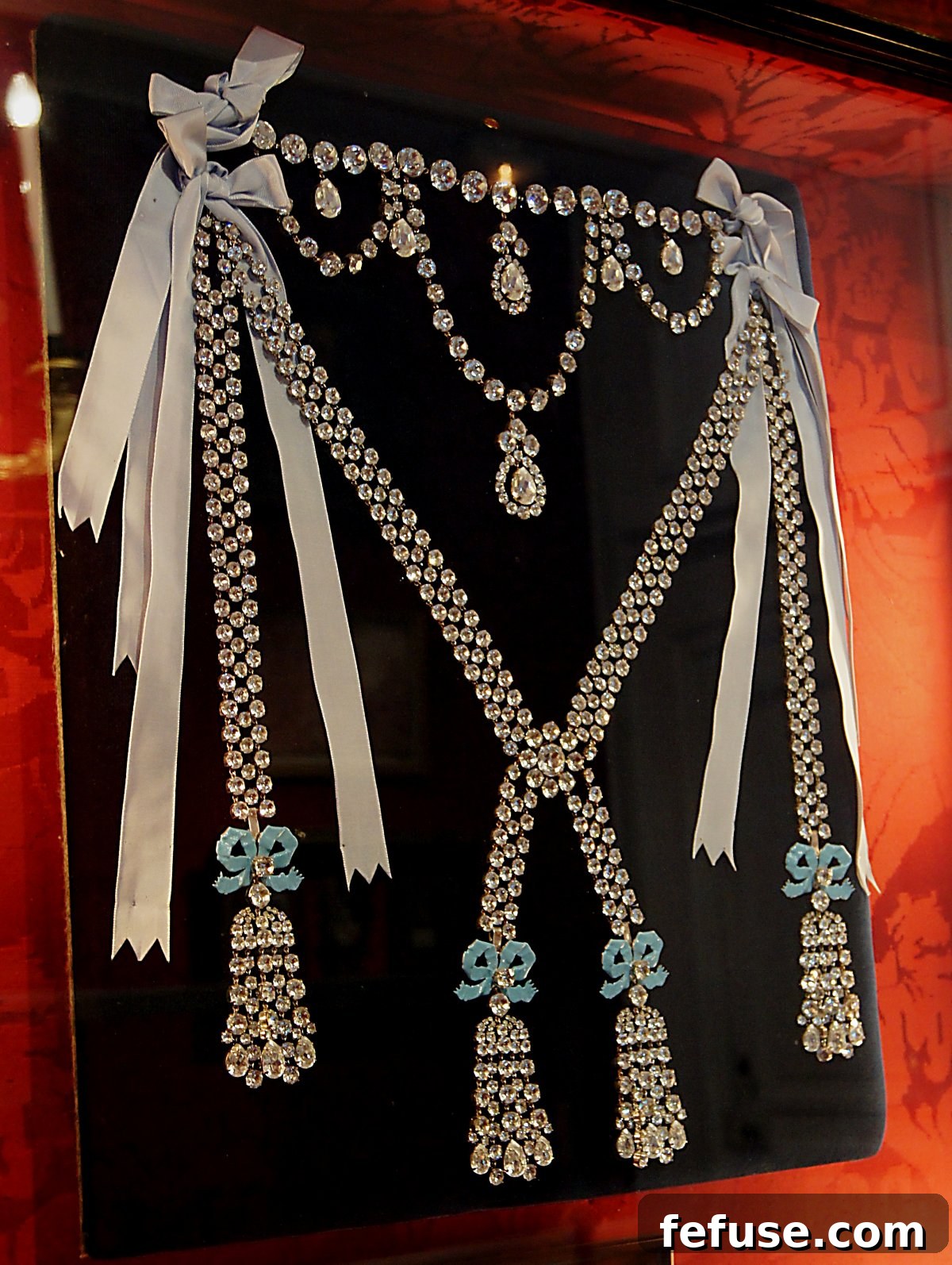
For connoisseurs of historical jewelry, the Sotheby’s necklace might evoke a striking resemblance to another intensely famous, albeit ill-fated, necklace from the same era. A reproduction of this notorious jewel, made in the 1770s, is displayed above. This original piece triggered a scandal that shook the very foundations of the French royal court, a dramatic episode known as the “Affair of the Diamond Necklace.” Sotheby’s cautiously hints at a potential, albeit unproven, connection: “It is thought that some of the diamonds featured in this jewel may have come from the famous necklace linked to what became the scandal of the ‘Affair of the Necklace’ which contributed to the advent of the French revolution and eventually Marie-Antoinette’s death.” This tantalizing possibility only adds to the allure and historical weight of the necklace currently offered for sale.
Marie Antoinette and the Scandal That Wasn’t Hers
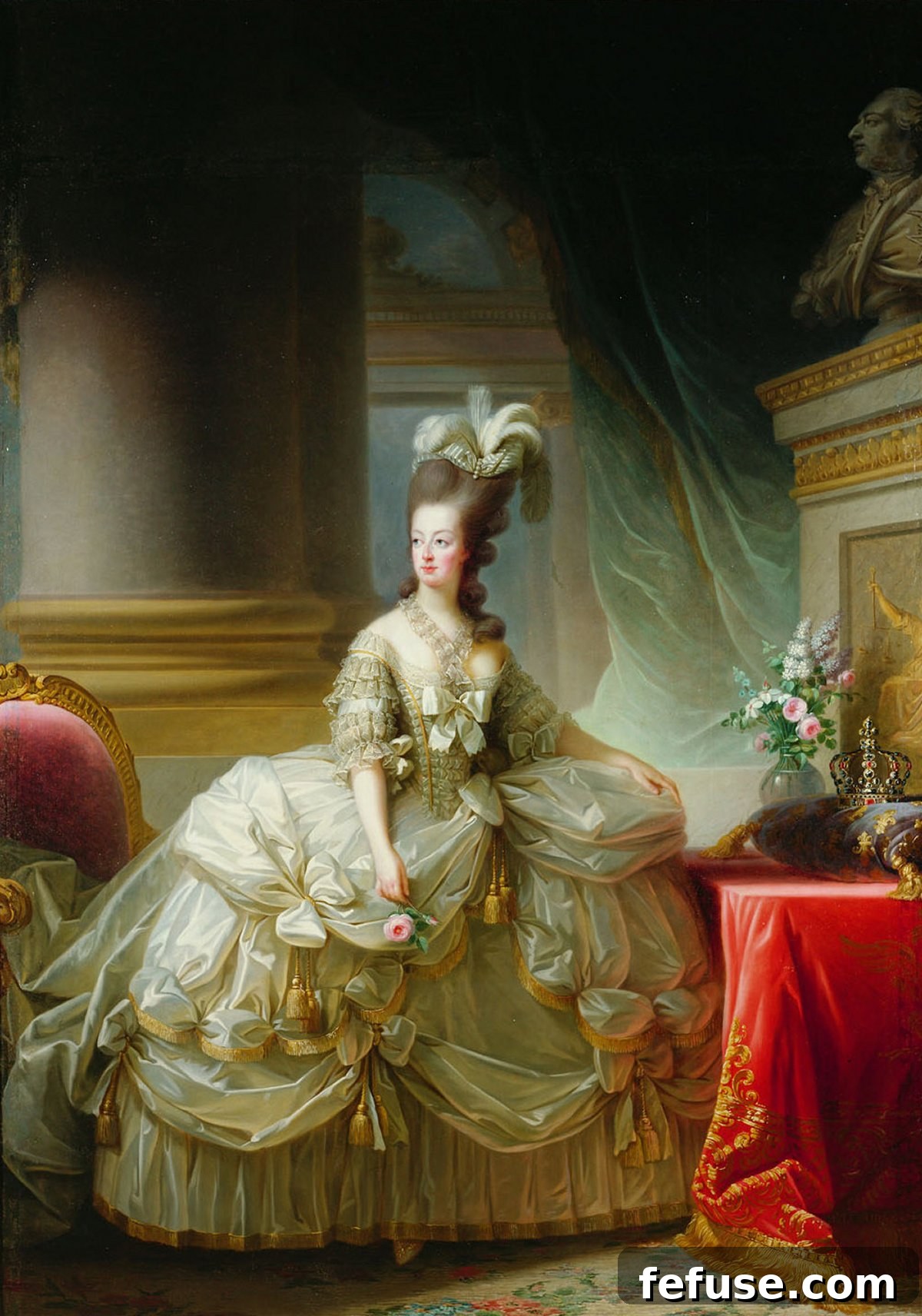
The “Affair of the Diamond Necklace” is a compelling tale of deception, ambition, and royal misfortune. Ironically, the French Queen Marie Antoinette never actually owned the infamous necklace. This magnificent jewel was originally commissioned in the 1770s by King Louis XV from Parisian jewelers Boehmer & Bassenge, intended as a lavish gift for his mistress, the Comtesse du Barry. Crafted with an astounding number of diamonds, its creation was immensely costly, pushing the jewelers to their financial limits.
Tragedy struck for the jewelers when King Louis XV died before the necklace was completed, and Madame du Barry was subsequently banished from court. Boehmer & Bassenge found themselves in possession of an exorbitantly expensive necklace, one so grand that only a monarch could possibly afford it. Desperate, they attempted to sell it to the new queen, Marie Antoinette, through King Louis XVI. However, the queen, already criticized for her perceived extravagance and facing mounting national debt, firmly refused to purchase such a costly item, stating France needed warships more than diamonds.
A Web of Deceit: The Cardinal and the Con Artist
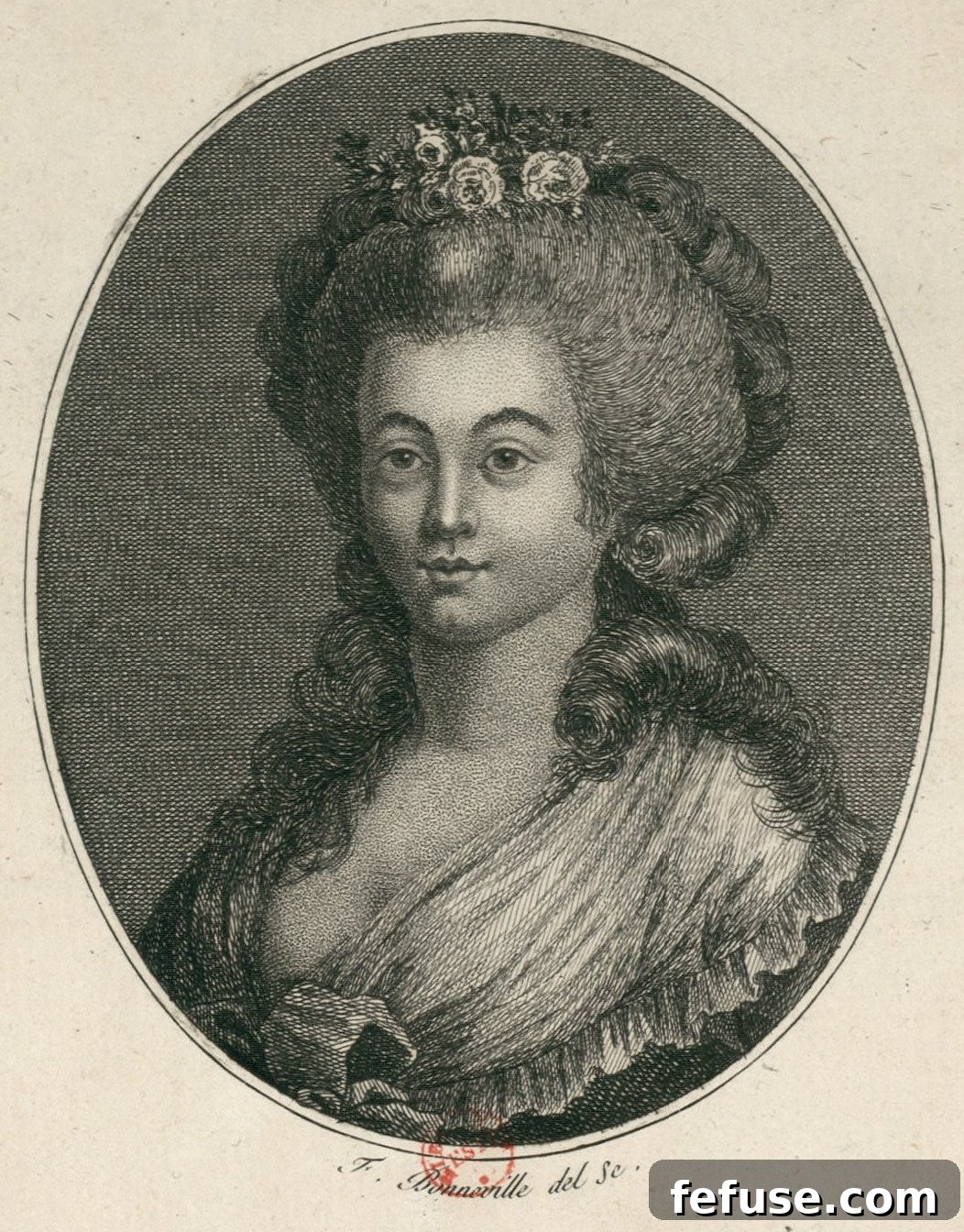
Undeterred and facing ruin, the jewelers were approached by Jeanne de Valois-Saint-Rémy, a cunning con artist with tenuous claims to royal lineage. Jeanne, aware of Cardinal de Rohan’s desperate desire to regain favor with Marie Antoinette and advance his position at court, saw an opportunity. She convinced the Cardinal that the Queen secretly desired the necklace but wished to acquire it discreetly, using him as an intermediary. To lend credence to her scheme, Jeanne enlisted a forger to create fake letters, purportedly from Marie Antoinette, instructing Rohan to facilitate the secret purchase.
Believing he was acting on the Queen’s behalf, Cardinal de Rohan negotiated the purchase of the necklace from Boehmer & Bassenge. Upon receiving it, he dutifully handed it over to Jeanne, convinced it would reach the Queen’s hands. Instead, Jeanne, with her accomplices, dismantled the magnificent necklace, selling the individual diamonds on the black market across Europe for her personal gain.
The Fallout: A Queen’s Reputation Tarnished
The elaborate fraud unraveled when Boehmer & Bassenge, expecting payment, approached Marie Antoinette directly. The Queen, completely unaware of the entire affair, was aghast. The public scandal that ensued was immense, exposing the corruption and intrigue within the highest echelons of French society. Both Jeanne de Valois-Saint-Rémy and Cardinal de Rohan were arrested, leading to a highly publicized trial. While Rohan was eventually acquitted, Jeanne was convicted for her central role in the deception, along with the forger who assisted her with the fake correspondence.
Despite her innocence, Marie Antoinette’s reputation was irreparably damaged. The public, already distrustful of the monarchy and eager for scandal, largely believed she was implicated, viewing the affair as further proof of her extravagance and moral decay. This misperception significantly eroded her popularity and contributed to the anti-monarchical sentiment that fueled the French Revolution, ultimately leading to her tragic demise. The Affair of the Diamond Necklace stands as a powerful example of how public opinion, fueled by misinformation, can shatter a royal image.
Tracing the Origins: Sotheby’s Speculation
Given the dramatic history of the original necklace, why do Sotheby’s experts and the current sellers believe that the necklace up for auction might incorporate some of those infamous diamonds? Their press materials elaborate on the theory: “This rare and highly important diamond jewel was likely created in the decade preceding the French Revolution. Though its precise origin story is not recorded, such an important and historic antique jewel could only have been created for royalty or a high-ranking aristocrat at one of the glittering courts of the ancient régime–most [likely] the French or English court.”
This statement underscores the rarity and prestige of a jewel of this magnitude. In an era where such significant pieces were exclusive to the wealthiest and most influential individuals, particularly within royal circles, the possibility of some stones being salvaged and reincorporated into new designs after the original necklace’s dismantling is a plausible scenario. The opulence and historical period align perfectly with the context of the “Affair,” lending credence to the exciting, albeit speculative, connection.
A Journey Through British Nobility: The Anglesey Marquesses
While the necklace’s early origins might be shrouded in tantalizing mystery, its provenance becomes clearer from the 19th century onwards, firmly establishing its connection to British aristocracy. More than a century after its creation, the necklace graced the British royal court, having been acquired by the distinguished Paget family, who held the esteemed title of Marquess of Anglesey. The marquessate was established for Henry Paget, a celebrated military figure who served as Wellington’s second-in-command during the pivotal Battle of Waterloo in 1815.
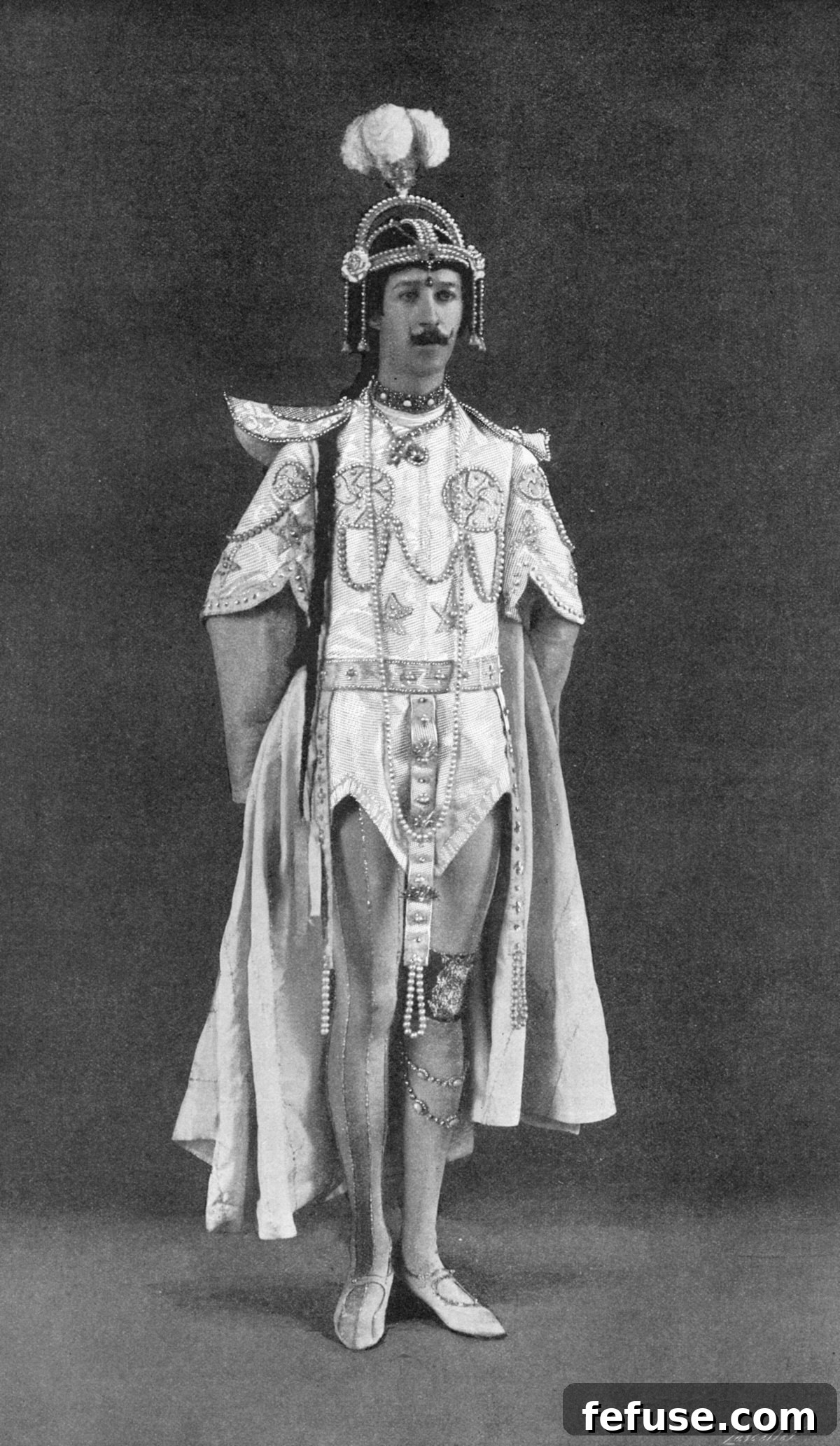
Among the Paget marquesses, Henry Cyril Paget, the 5th Marquess of Anglesey, stands out as a particularly flamboyant and memorable character. The great-grandson of the 1st Marquess, Henry Cyril was renowned for his theatrical lifestyle, his love for elaborate costumes, and his passion for extravagant jewelry. His unparalleled lavishness, however, led to his financial ruin. Despite inheriting immense wealth and the title in 1898, he declared bankruptcy just six years later, in 1904. To settle his considerable debts, many of his magnificent jewels, though not all, were regretfully sold off.
A Wedding Gift and Royal Appearances
Upon Henry Cyril’s death in Monte Carlo in 1905, the Anglesey marquessate passed to his first cousin, Charles Paget, who became the 6th Marquess. It is through Charles that the necklace’s documented history within the family solidifies. In 1912, Charles bestowed this magnificent diamond necklace upon his bride, Lady Marjorie Manners, daughter of the 8th Duke of Rutland, as a splendid wedding present. Contemporary newspaper reports of their wedding gifts made special mention of a “large case” from the groom, containing “family heirlooms, consisting of a necklace and tiara of diamonds and a superb collarette of diamonds, with long tasseled ends.” This very “superb collarette” is the exquisite diamond tassel necklace that Sotheby’s is now offering for sale.
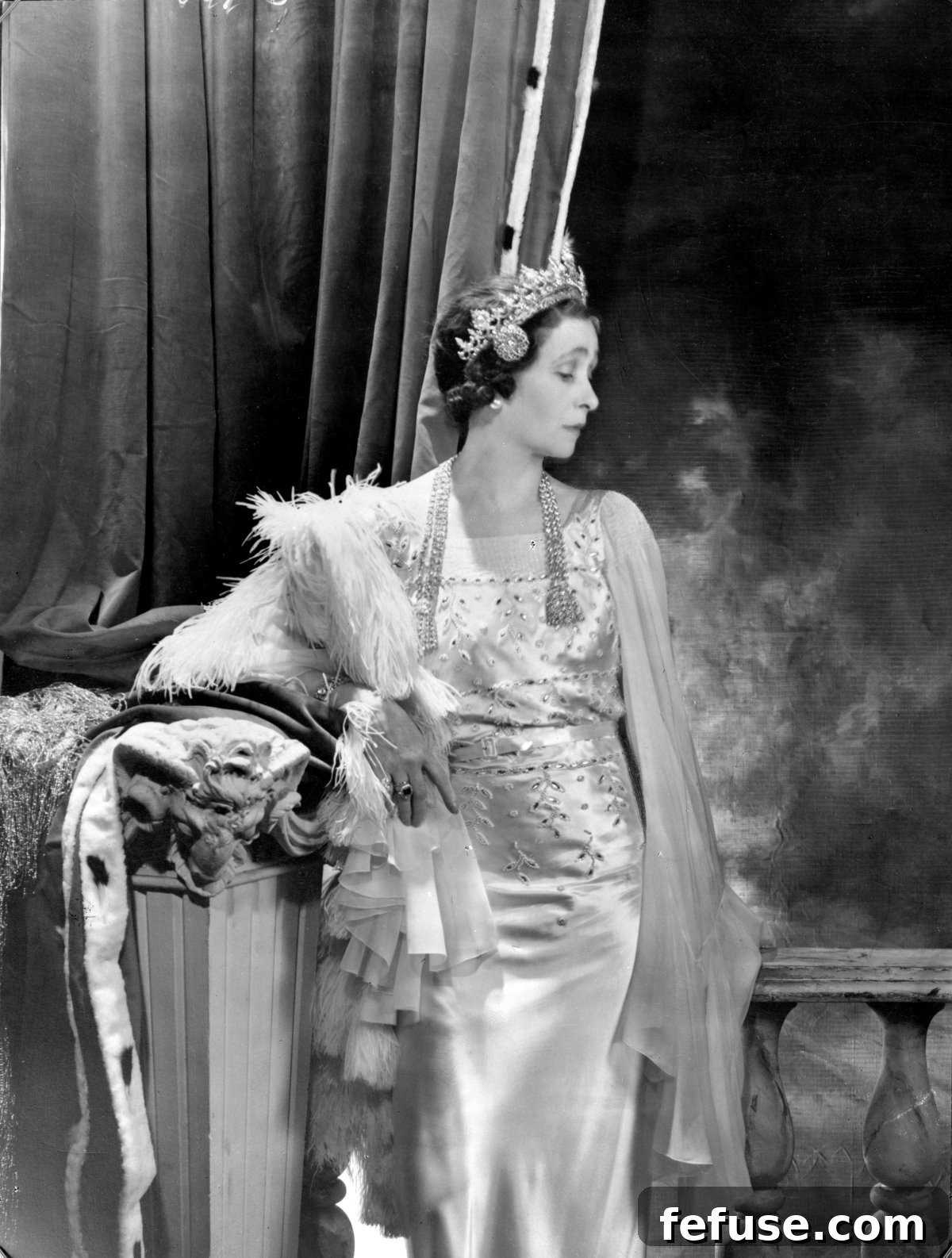
Lady Marjorie Manners proudly showcased these family treasures, making a memorable appearance at the coronation of King George VI and Queen Elizabeth in 1937. A glamorous portrait photograph taken by the renowned Cecil Beaton immortalizes Marjorie wearing the very diamond jewels. The image clearly depicts her adorned with the stunning tiara, complemented by a sparkling supplemental headband, and the striking diamond necklace, casually yet elegantly draped around her neck, a symbol of aristocratic grace and inherited splendor.
Carrying on the Legacy: The 7th Marchioness
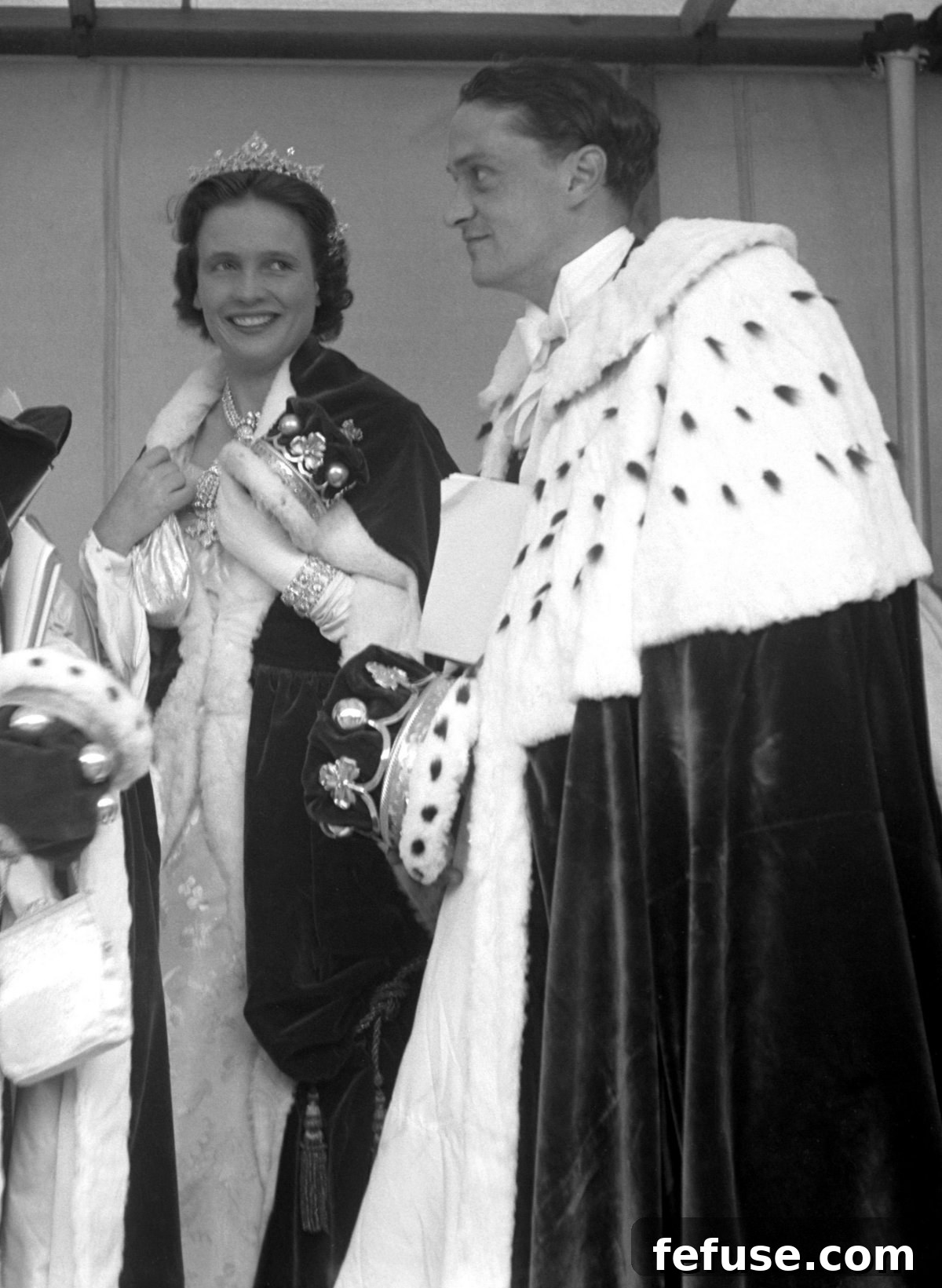
The legacy of the Anglesey diamond necklace continued into the mid-20th century. When Charles Paget passed away in 1947, his son, George, inherited the title, becoming the 7th Marquess. A year later, George married Shirley Vaughan, who gracefully assumed the role of the new Marchioness of Anglesey. Shirley continued the tradition of wearing the cherished family diamond jewels on significant royal occasions.
Most notably, Shirley proudly wore both the family diamond tiara and the distinctive tassel necklace at the coronation of Queen Elizabeth II in 1953. A captivating photograph taken on Coronation Day captures this moment, with the elegant tassel of the necklace subtly peeking out between Shirley’s hands. These public appearances underscore the necklace’s enduring significance as a symbol of nobility and its rich journey through generations of a prominent British aristocratic family.
A New Chapter: From Noble Collection to Global Stage
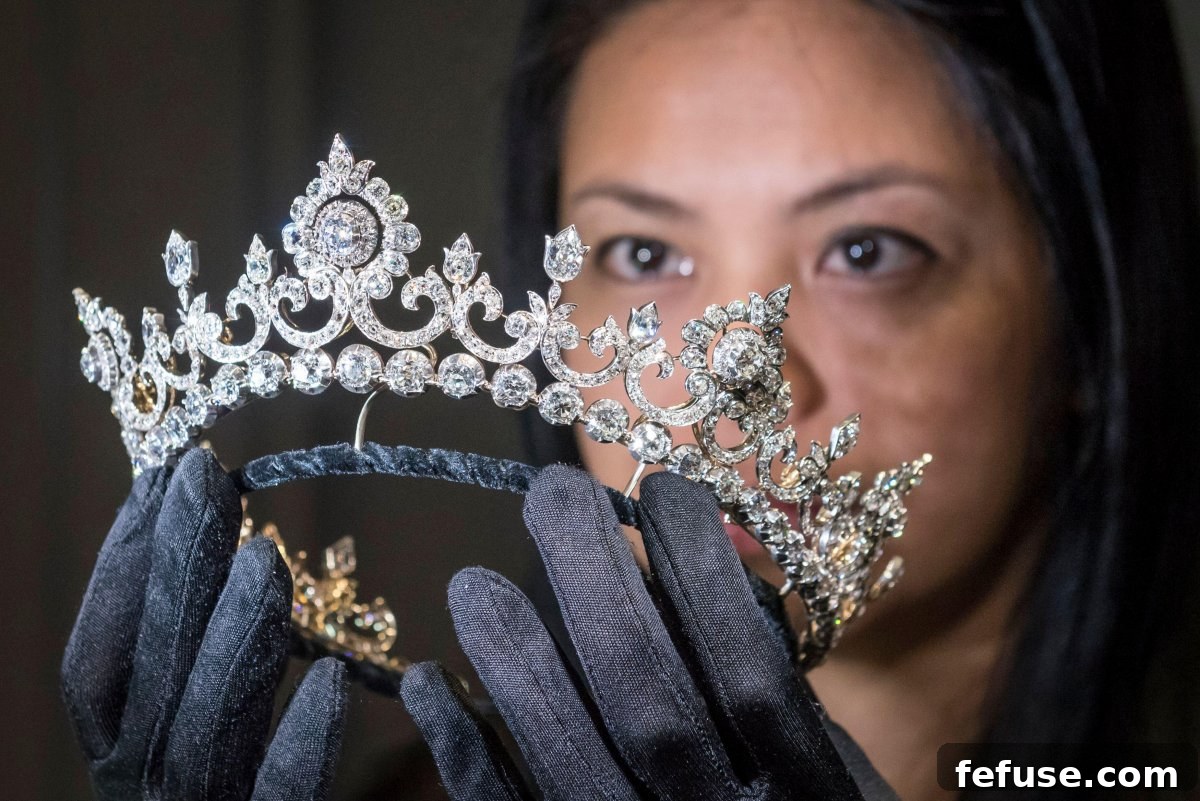
The present Marquess of Anglesey is Charles Alexander Vaughan Paget, the son of George and Shirley. He inherited the distinguished title following his father’s passing in 2013, with his mother Shirley joining him four years later in 2017. In recent years, the Paget family has made the considered decision to part with some of their historic diamond collection, bringing these magnificent heirlooms back into the public eye and onto the global market. For instance, the striking diamond tiara, a companion piece to the necklace and pictured above, was offered for sale at the European Fine Art Fair in Maastricht in 2020.
Now, it is the turn of the extraordinary tassel necklace. While it carries a legacy tied to the Paget family, the necklace actually left their esteemed collection more than five decades ago, in the 1960s. Since then, it has been held in a private Asian collection, carefully preserved and away from public view, until its momentous re-emergence with Sotheby’s. This re-entry into the public sphere for auction underscores the enduring appeal and significant value of such historic jewels.
Global Exhibition and the Grand Auction Event
Leading up to the highly anticipated auction, Sotheby’s is showcasing this remarkable diamond necklace in an exclusive global exhibition tour. This journey allows potential bidders and jewelry enthusiasts worldwide to witness its grandeur firsthand. Following its presentation in London, the necklace will embark on a series of stops, traveling to Hong Kong, New York, Singapore, Taipei, and Dubai. This international exposure highlights its universal appeal and its status as a masterpiece of historical jewelry.
The tour culminates in Geneva, where the auction is scheduled to take place on November 11. This strategic global showcase not only builds excitement but also underscores the necklace’s significance as a piece of world heritage, transcending geographical boundaries and connecting diverse cultures through its timeless beauty and captivating story.
An Unrivaled Masterpiece: Sotheby’s Expert Insights and Valuation
Andres White Correal, Chairman of Jewellery Europe and Middle East and Head of Noble Jewels for Sotheby’s, articulates the profound significance of this piece with immense enthusiasm. He describes the necklace as a “sublime survivor from the opulent court life of the Georgian era, defined by its unrivalled pomp and splendour.” Correal emphasizes its uniqueness, stating, “it is arguably one of the most magnificent and intact Georgian jewels in private hands.” He further elevates its status by comparing it to other extant imperial and royal jewels from the same period, asserting that “this necklace stands head and shoulders above these examples.”
Beyond its sheer material value, Correal praises the necklace as “a fortune in diamonds, and also a masterclass in exquisite design, workmanship and technical innovation for the period.” He concludes by highlighting its enduring relevance: “The jewel is as relevant, alluring, and appealing today as when it was made over two centuries ago. It is the ne plus ultra of 18th-century jewellery design.” This powerful endorsement from a leading expert underscores the necklace’s exceptional quality, historical depth, and artistic merit, positioning it as a truly unique offering in the world of haute joaillerie.
Reflecting this unparalleled prestige, Sotheby’s has set a formidable auction estimate for the necklace. The expected price range is between 1,600,000-2,400,000 Swiss francs, equivalent to approximately $1,800,000-2,800,000 USD, when the hammer finally falls in November. This substantial valuation is a testament to its rarity, historical provenance, and the timeless allure of its Golconda diamonds. The global jewelry community eagerly awaits the outcome of this auction, keenly tracking developments in the coming weeks as this extraordinary piece of history finds its next custodian.