
US Intensifies Pressure: New Sanctions Hit Russian Diamond Giant Alrosa and CEO Pavel Marinychev
In a concerted effort to curb Russia’s ongoing military aggression in Ukraine, the United States has once again broadened the scope of its sanctions regime. These latest measures target a significant cross-section of Russia’s economic and industrial base, specifically focusing on entities and individuals critical to its military capabilities, lucrative energy projects, and complex financial activities. A prominent name now added to this expanding list is Russian diamond mining behemoth Alrosa, alongside its Chief Executive Officer, Pavel Alekseevich Marinychev. This move, confirmed by the U.S. Department of State, underscores a determined strategy to increase economic pressure on Moscow.
The Strategic Intent Behind US Sanctions on Russia
The sanctions, meticulously authorized under Executive Order 14024, serve multifaceted strategic objectives designed to undermine Russia’s capacity to wage war. Primarily, these actions aim to significantly degrade Russia’s military capabilities by choking off access to vital materials and financial resources. Concurrently, a key goal is to reduce Russia’s future revenue streams, particularly those derived from its vast energy sector, which traditionally fuels a substantial portion of the national budget. Furthermore, the US is actively working to counteract sanctions evasion efforts by targeting those individuals and entities found to be aiding Russia in procuring sensitive materials or circumventing existing restrictions. Beyond direct economic hits, a crucial element of this strategy involves constraining Russia’s ability to leverage the international financial system, thereby limiting its access to global markets and financial services that support its military operations.
Alrosa: A Pillar of the Russian Economy Under Scrutiny
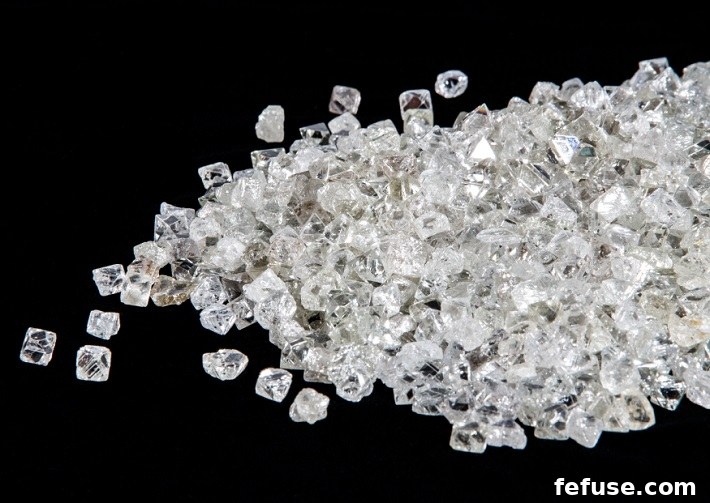
The designation of Alrosa, a publicly traded company (PJSC) where the Russian government holds a majority stake, highlights the US’s intent to target key revenue generators for the Kremlin. Alrosa is not merely another Russian company; it is the world’s largest diamond mining company by volume, responsible for approximately one-third of global rough diamond production. Its vast operations span across several regions in Russia, contributing significantly to the national economy through exports and employment. The company’s deep ties to the Russian state mean that a substantial portion of its profits and taxes directly or indirectly supports the government, making it a natural target in the broader economic warfare context.
The decision to sanction Alrosa is rooted in its critical role as a state-owned enterprise whose financial contributions directly bolster the Russian federation. Prior to this latest action, Alrosa had already faced considerable scrutiny and some initial restrictions from various international bodies and governments following the full-scale invasion of Ukraine. However, these new, more comprehensive sanctions, particularly the personal designation of its CEO, represent a significant escalation in the pressure applied to the company and, by extension, to the Russian state itself.
Pavel Alekseevich Marinychev: The Direct Impact of Personal Designation
The inclusion of Pavel Alekseevich Marinychev, Alrosa’s Chief Executive Officer, in the sanctions list is a calculated move designed to amplify the impact beyond the corporate entity. As CEO, Marinychev is the primary decision-maker and operational head of this globally significant company. His designation under Executive Order 14024 directly links a high-profile individual responsible for managing a major state-owned asset to the Russian government’s actions in Ukraine. This personal sanctioning serves several purposes: it aims to disrupt the company’s leadership, creates personal risk for Marinychev, and sends a clear message to other senior executives within Russian state-owned enterprises that they are not immune to direct repercussions for their roles.
The implications of Marinychev’s designation are immediate and far-reaching. Any property or interests in property belonging to him that fall within U.S. jurisdiction are now blocked. Furthermore, all transactions involving him, his assets, or the company he leads are strictly prohibited for U.S. persons and entities. This effectively severs his and Alrosa’s direct ties to the U.S. financial system and significantly complicates any international dealings that involve U.S. dollars or pass through U.S. financial institutions, a common occurrence in global commerce.
Broader Implications for the Global Diamond Market and Luxury Sector
The sanctioning of a company as central as Alrosa sends ripples throughout the intricate global diamond supply chain. As the largest producer of rough diamonds by volume, Alrosa’s reduced capacity to sell into international markets inevitably creates a supply shock. This can lead to increased prices for rough diamonds, which then cascades down to polished diamonds and ultimately affects the retail prices of diamond jewelry. The luxury goods sector, already navigating evolving consumer preferences and economic uncertainties, must now contend with a major disruption from a primary source.
Moreover, these sanctions reignite ethical sourcing concerns within the diamond industry. While Alrosa’s diamonds are not “conflict diamonds” in the traditional sense defined by the Kimberley Process, the revenue they generate for a state actively engaged in military conflict raises questions about the ethical implications of purchasing such stones. Consumers, particularly in Western markets, are increasingly conscious of the provenance and ethical footprint of their luxury purchases. This could drive retailers and jewelers to seek alternative sources, intensify efforts to verify diamond origins, and potentially accelerate the adoption of laboratory-grown diamonds as a more transparent or “conflict-free” alternative.
The move also places additional pressure on countries and companies that have maintained trade relations with Alrosa. Nations like India, a global hub for diamond cutting and polishing, and various European and Asian jewelry markets, will need to re-evaluate their supply chains to avoid potential secondary sanctions or reputational damage. This complex scenario forces a reordering of the global diamond trade, pushing industry players to adapt to a new reality where Russian diamonds become increasingly difficult to integrate into mainstream markets.
The Economic Warfare Context and Future Outlook
These targeted sanctions on Alrosa and its CEO are part of a broader strategy of economic warfare waged by the United States and its allies against Russia. The intention is clear: to systematically dismantle Russia’s economic foundations, limit its ability to fund its military apparatus, and ultimately compel a change in its behavior regarding Ukraine. By targeting key sectors like finance, energy, and now precious materials, the US aims to impose significant and lasting costs on the Russian federation.
However, the effectiveness of such sanctions is often a long-term proposition, and Russia has shown resilience in adapting to previous rounds of restrictions. The Russian government may seek to reroute its diamond sales to non-sanctioning countries or explore alternative payment mechanisms. Nonetheless, the practical challenges of operating outside the dominant Western financial and trade systems remain substantial. The global nature of the diamond market, with its established trade routes and financial intermediaries, makes it particularly vulnerable to the disruptive power of these sanctions.
Looking ahead, it is probable that the US and its allies will continue to assess and expand their sanctions list as the conflict in Ukraine evolves. The targeting of high-value commodities and their key executives serves as a strong signal of the West’s unwavering commitment to isolating Russia economically. For the global diamond industry, this new reality demands careful navigation, increased transparency, and a renewed focus on ethical sourcing practices to maintain consumer trust in a rapidly changing geopolitical landscape. The long-term effects on Alrosa’s market share, Russia’s state revenues, and the stability of the global diamond supply chain will undoubtedly be significant and continue to unfold in the coming months and years.