
The Curious Case of Mined Diamonds in Lab-Grown Parcels: Unpacking an Industry Paradox
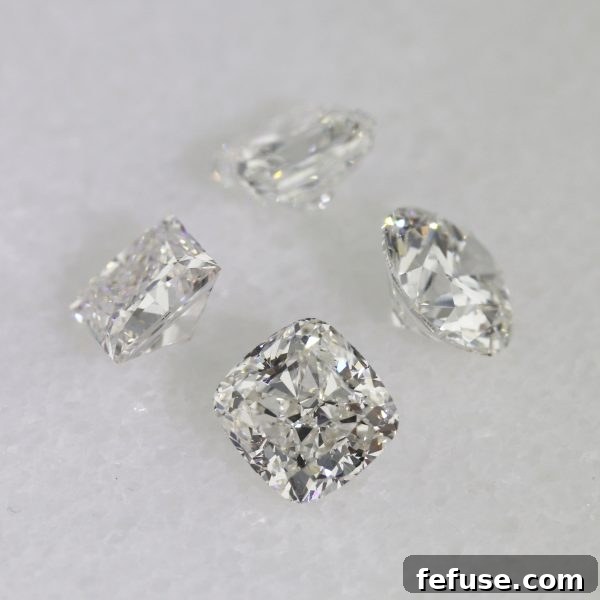
In the rapidly evolving landscape of the global diamond industry, an incident recently brought to light by Ada Diamonds, a prominent Silicon Valley-based distributor specializing in lab-grown diamonds, has sparked considerable discussion and raised questions about transparency and supply chain integrity. The company reported a highly unusual discovery: undisclosed mined diamonds found commingled within multiple parcels of their laboratory-grown melee diamonds, specifically ranging from 0.01 to 0.06 carats. This unexpected revelation, which occurred in two distinct batches and was subsequently verified by the Gemological Institute of America (GIA), presents a unique conundrum that challenges conventional understanding of the diamond market’s economic drivers.
Ada Diamonds acted swiftly following the confirmation, meticulously removing the illicitly mixed mined diamonds from their inventory. As a direct consequence of this unprecedented discovery, the company has significantly enhanced its screening protocols. These intensified procedures now include rigorous inspections of all incoming parcels of melee diamonds, as well as every piece of finished jewelry, to unequivocally guarantee that every diamond sold under the Ada Diamonds brand is, in fact, laboratory-grown, upholding their core promise to consumers.
An Unconventional Twist: Mined Diamonds Where They Don’t Belong
Initially, the announcement from Ada Diamonds was met with a degree of skepticism within industry circles. The reason for this reaction is rooted in the well-documented history of diamond misrepresentation, which almost exclusively flows in the opposite direction. There have been numerous publicized instances where undisclosed man-made diamonds were intentionally passed off as natural, mined stones. This particular type of deception is driven by clear economic incentives: since lab-grown diamonds typically command a lower price point than their natural counterparts, there’s a financial motive to misrepresent a less expensive product as a more valuable one. The reverse scenario – intentionally passing off a mined diamond as a lab-grown one – seems, on the surface, to defy economic logic, making it a rather inefficient and seemingly unprofitable criminal endeavor.
Furthermore, from a regulatory standpoint, while misrepresenting any gemstone is inherently wrong, the legal disclosure requirements differ. Under the Federal Trade Commission (FTC) Guides, a diamond is generally presumed to be of Earth origin unless otherwise specified. This means that a mined diamond does not legally require disclosure in the same way a synthetic diamond does, which must be clearly identified as such. This regulatory framework further emphasizes the peculiar nature of Ada Diamonds’ discovery, as there appears to be little, if any, direct legal or financial benefit for a supplier to mix mined diamonds into lab-grown parcels.
Ada Diamonds’ Stance: Prioritizing Reputation and Supply Chain Integrity
Despite the initial industry incredulity and the apparent lack of economic sense, Jason Payne and Lindsay Reinsmith, the husband-and-wife proprietors behind Ada Diamonds, unequivocally assert the seriousness and authenticity of their discovery. They vehemently deny any hint of jest or marketing gimmick in their public statement, insisting that the incident genuinely occurred, regardless of its perplexing economic implications. Payne emphasizes, “The release was not tongue in cheek at all. We offer our clients a guarantee that they are only purchasing lab-grown diamonds. Having undisclosed mined diamonds causes the same reputation risk for us [as the reverse].”
For a brand built entirely on the premise of offering ethically sourced, laboratory-grown diamonds, the presence of even a single mined stone within their guaranteed lab-grown inventory poses an existential threat to their credibility and consumer trust. This potential erosion of reputation is a risk they are unwilling to take, underscoring that their business model thrives on transparency and adherence to their stated values.
Payne articulated two primary objectives behind their public announcement. Firstly, it served as a plea to the industry for the development and widespread adoption of more sophisticated and accessible detection devices. Such technology would empower companies like Ada Diamonds to conduct more thorough and reliable screenings, safeguarding the integrity of their supply chain. Secondly, the release was a clear, unambiguous message to their suppliers: “to put our suppliers on notice that we won’t tolerate spicing of our inventory.” This signals a zero-tolerance policy for any form of mixing or misrepresentation, holding their partners accountable for the provenance of the goods they provide. This proactive approach highlights the growing demand for stringent quality control and ethical sourcing throughout the diamond supply chain, regardless of the diamond’s origin.
Unraveling the Mystery: Potential Explanations for the Mix-Up
The persistent question remains: why would anyone orchestrate, or even allow, a scenario that appears to result in a financial loss by devaluing natural stones? Lindsay Reinsmith suggests that simple sloppiness could be a contributing factor. Given that some manufacturing facilities process both types of diamonds – mined and lab-grown – it’s plausible, she notes, that small natural melee diamonds could inadvertently become commingled with lab-grown parcels during sorting or cutting processes. The minuscule size of these melee diamonds (0.01 to 0.06 carats) makes manual inspection incredibly challenging, increasing the likelihood of accidental mixing in high-volume operations.
Jason Payne also offered a more speculative, though equally concerning, explanation, hinting at broader issues within the global diamond trade. He pointed to reports of “Indian [diamond] companies having credit issues, wanting to move the goods however possible.” In such an environment of financial strain and desperation, he suggests, it might be possible to see more instances of undisclosed mined diamonds appearing in unexpected places, perhaps even in lab-grown parcels, as a misguided attempt to simply liquidate inventory. While this hypothesis remains unproven for Ada Diamonds’ specific case, it underscores the intricate web of economic pressures that can influence trade practices.
Interestingly, the duo noted that they have not encountered another, more common and logically understandable, type of mixing: lab-grown parcels containing simulants like cubic zirconia (CZs) and yttrium aluminum garnet (YAG). This type of fraud, where less expensive imitations are passed off as lab-grown diamonds, aligns more closely with the typical economic incentives seen in the industry, making the discovered mined-in-lab-grown mix all the more perplexing.
Industry Perceptions vs. Evolving Consumer Values
While the immediate cause of Ada Diamonds’ discovery remains somewhat ambiguous, the incident undeniably shines a spotlight on a fundamental disconnect within the diamond industry: the deeply ingrained assumption that natural diamonds inherently possess superior value and status compared to their lab-grown counterparts. Many established diamantaires and traditionalists often refer to synthetics as “second-class gems” or mere “pretenders to the stone,” implying a lesser inherent worth. Terms like “legitimate products” are sometimes used to describe lab-grown gems, as if their very existence and market acceptance were still subject to debate and requiring validation from the natural diamond sector. This traditional viewpoint often struggles to acknowledge the legitimacy and growing appeal of lab-grown alternatives.
However, it is crucial for industry stakeholders to recognize that not all consumers share these traditional sentiments. A significant and growing segment of the market actively seeks out and desires lab-grown diamonds, often perceiving them as superior in certain crucial aspects. These consumers are frequently motivated by a range of values, including the desire for conflict-free diamonds, ensuring their purchase does not inadvertently fund illicit activities. Many also value the eco-friendly and sustainable production methods associated with lab-grown diamonds, preferring them over the environmental impact of traditional mining. Furthermore, for some, choosing lab-grown diamonds represents a conscious decision to challenge the historical dominance and pricing structures of the established “cartel” that has long controlled the natural diamond market. These ethical, environmental, and socio-economic considerations are increasingly shaping purchasing decisions.
One can certainly debate the merits of these contentions and assumptions – and indeed, much discussion has been had on the topic – but the undeniable fact is that perceptions, both of value and ethics, play an absolutely critical role in marketing and consumer behavior. It is these very perceptions, meticulously cultivated and maintained over decades, that originally built the powerful and enduring diamond industry as we know it today. Ignoring evolving consumer perceptions is a perilous path for any industry.
The Shifting Sands: The Ascent of Lab-Grown Diamonds
The trajectory of lab-grown diamonds suggests a significant upswing, indicating a profound shift in market dynamics. A compelling illustration of this trend can be observed at major industry events. For instance, at JCK Las Vegas, one of the world’s premier jewelry trade shows, the number of exhibitors showcasing lab-grown products has seen exponential growth. This year, there were 35 exhibitors dedicated to lab-grown offerings, a stark contrast to just a handful a year prior. While this figure still represents a fraction of the companies selling natural diamonds at the same show, the rapid expansion is undeniably indicative of a burgeoning sector.
This rapid growth of the lab-grown industry stands in stark opposition to the perceived stagnation, or at least slower growth, of the traditional natural diamond sector. The natural diamond industry faces multifaceted challenges, including changing consumer demographics, increasing scrutiny over ethical sourcing and environmental impact, and persistent price competition from the increasingly sophisticated lab-grown market. If the natural diamond industry fails to adapt, innovate, and proactively address these evolving consumer values and market pressures, incidents like the one experienced by Ada Diamonds, or even more complex supply chain challenges, could become a more prevalent reality, or even a strategic consideration for various players within the market. The future of diamonds will undoubtedly be shaped by transparency, innovation, and a keen understanding of what today’s consumers truly value.
News Source: jckonline.com