
Towards a Golden Future: The Call for a Unified Gold Policy in India
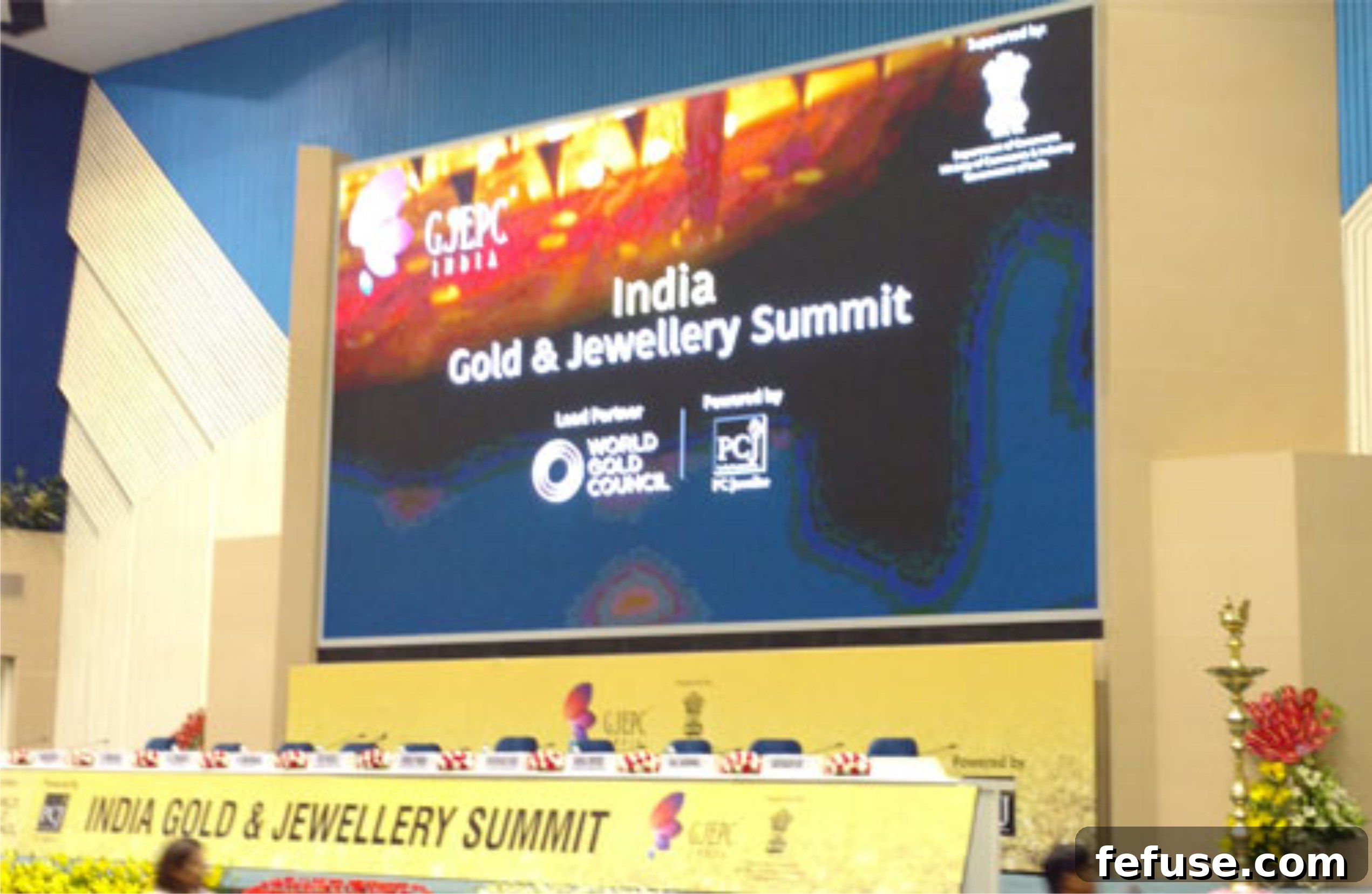
The inaugural Gold & Jewellery Summit, organized by the Gem & Jewellery Export Promotion Council (GJEPC) in Delhi on December 1-2, 2017, served as a crucial platform for stakeholders to address the pressing issues facing India’s gold sector. A resounding consensus emerged from the discussions: the imperative for a comprehensive national gold policy and the establishment of a centralized regulatory authority or board to govern the gold jewellery industry. This landmark summit brought together key players from across the nation, fostering critical deliberations that laid the groundwork for future reforms.
The Imperative for Change: Understanding the Current Gold Landscape
Setting the stage for the summit’s detailed discussions, insightful presentations by P.R. Somasundaram, Managing Director of the World Gold Council (WGC) India, and Sabyasachi Ray, Chief Executive Director of GJEPC, underscored the urgent need for a cohesive strategy. Their analyses, delivered immediately after the inaugural session, not only highlighted the existing challenges but also provided a vital context for the subsequent dialogues among industry leaders, policymakers, and experts.
Global and Indian Gold Demand Trends: A Shifting Paradigm
P.R. Somasundaram presented a candid and somewhat sobering assessment of the global gold jewellery industry. He revealed a significant shift in gold demand over the preceding decade: while overall gold demand had witnessed an increase, this growth was predominantly fueled by investment demand. Conversely, the demand for gold jewellery, traditionally a cornerstone of the market, had actually experienced a notable decline. This global trend mirrored, to a significant extent, the dynamics observed within India. Despite India registering a 14% Compound Annual Growth Rate (CAGR) by value in gold demand over the same period, the actual tonnage growth was a modest 1.2%. This disparity indicated that rising gold prices were a primary driver of value growth, simultaneously hindering the physical demand for jewellery among consumers. However, Somasundaram offered a reassuring long-term outlook for India, emphasizing that demand would remain robust, primarily sustained by the deeply ingrained cultural significance of wedding jewellery and consistent rural consumption patterns.
The Policy Vacuum: A Call for Coordinated Action
A central theme of Somasundaram’s address was the critical absence of a unified policy coordination mechanism within India’s gold sector. He explicitly stated that there was “no single owner for policy coordination,” leading to fragmented approaches and a lack of holistic vision. This fragmentation, he argued, necessitated the immediate formulation of a clear vision coupled with a comprehensive policy framework. He proposed four fundamental pillars upon which such a policy should be built. These included establishing stringent standards to benefit and protect consumers, a concerted infrastructure push to adequately cater to the burgeoning needs of the organized sector, mainstreaming schemes to enhance liquidity within the industry, and a robust ‘Make in India’ program designed to significantly boost employment opportunities across the value chain. Such an integrated approach, he contended, would not only address current inefficiencies but also pave the way for sustainable growth and global competitiveness for the Indian gold industry.
Deconstructing the “Yo-Yo Syndrome”: A Historical Perspective on Gold Policy
Sabyasachi Ray shifted the focus to what he evocatively termed the “Yo-Yo syndrome,” a phenomenon he identified as having dominated discussions and approaches to gold policy in India for many years. This syndrome, he explained, characterized a reactive rather than proactive stance, where both government and industry tended to respond to immediate changes in circumstances without adequately considering broader, long-term perspectives. This reactive cycle has historically prevented the development of a stable and predictable environment necessary for the industry’s sustained growth and innovation.
Reactive vs. Proactive Governance: Overcoming Past Pitfalls
Ray stressed the urgent need for a departure from this reactive pattern, advocating for a clear, forward-looking framework that addresses gold in its multifaceted roles: as a mineral requiring careful mining and supply chain management, as a form of currency with implications for monetary policy, and as a commodity subject to market forces. Such a comprehensive framework would aim to bring stability and foresight to a sector often swayed by short-term pressures and policy inconsistencies. By moving beyond knee-jerk reactions, India could cultivate an environment conducive to systematic growth and global leadership in the gold market.
Four Phases of Indian Gold Policy: A Journey Through Time
To illustrate the historical context of the “Yo-Yo syndrome,” Ray meticulously outlined four distinct phases of India’s gold policy development. The first phase spanned from 1947 to 1963, representing the nascent years of independent India. This was followed by a period dominated by stringent controls, lasting from 1963 until the early 1990s, characterized by significant restrictions on gold movement and trade. The post-liberalization phase then emerged, where many of these restrictions were lifted, allowing the industry to experience substantial growth and expansion. However, this period of relatively unrestricted growth was abruptly curtailed by the global recession in 2008, which ushered in a new era of multiple and complex challenges for the gold sector. Understanding these historical shifts, Ray argued, is crucial for crafting a future policy that avoids past mistakes and builds upon lessons learned, ensuring resilience and adaptability for the industry.
Architecting a New Framework: Key Pillars of a Robust Gold Policy
At the very heart of the solutions proposed by GJEPC was a powerful and unifying concept: “one regulation, one regulator.” This vision represents a paradigm shift from the current fragmented landscape to a streamlined, efficient, and transparent governance model for the Indian gold industry. Ray passionately articulated the necessity for a dedicated Board that would function as a definitive regulatory authority, wielding powers and responsibilities akin to those of established bodies such as the Reserve Bank of India (RBI) in monetary policy, the Airports Authority of India (AAI) in aviation infrastructure, or the Telecom Regulatory Authority of India (TRAI) in telecommunications. Such an autonomous and empowered body would be instrumental in bringing much-needed consistency, oversight, and strategic direction to the gold sector.
Ray’s Vision: “One Regulation, One Regulator” and Global Integration
The proposed Gold Board would serve as the central coordinating body, responsible for formulating, implementing, and enforcing policies across the entire gold value chain. Its functions would likely encompass everything from setting quality standards and promoting ethical sourcing to overseeing trading practices, resolving disputes, and ensuring compliance. By consolidating regulatory powers under a single authority, the industry could benefit from greater clarity, reduced bureaucratic hurdles, and a more responsive governance structure. This would significantly reduce the scope for arbitrage and illicit activities that thrive in environments marked by regulatory ambiguities and jurisdictional overlaps. Furthermore, a singular, strong regulator would enhance India’s credibility on the international stage, making it a more attractive partner for global trade and investment.
Beyond domestic regulation, Ray emphasized India’s pivotal role in the global gold industry. As a consumer of approximately one-third of the world’s total mine supply, India possesses unparalleled influence and market power. To fully leverage this position, he proposed two transformative initiatives: the establishment of an indigenous gold exchange and the adoption of an “India Good Delivery” standard. A domestic gold exchange would provide a transparent, efficient, and liquid platform for gold trading, enabling fair price discovery, reducing transaction costs, and integrating India more deeply into global financial markets. It would empower Indian market participants to trade gold derivatives and manage price risks effectively, bringing stability and sophistication to the market. The “India Good Delivery” standard, modeled after international benchmarks, would ensure that gold produced, refined, and traded within India meets globally recognized quality and purity specifications. This would not only instill greater confidence among domestic and international buyers but also facilitate seamless integration with global supply chains, elevating the status of Indian gold products worldwide.
The proposed policy framework would also meticulously define uniform taxation policies and other prescriptive measures. These would be strategically designed to actively discourage the illicit trade of gold, which not only deprives the government of significant revenue but also distorts market dynamics and undermines legitimate businesses. By creating a level playing field through standardized taxation and robust enforcement, the new policy would foster an environment of fair competition and encourage greater formalization of the sector. Crucially, the policy would also address the contentious issue of import restrictions during times of economic crisis. Ray argued that such restrictions, while sometimes deemed necessary, should not inadvertently hamper the vital functioning of the gold jewellery industry. This sector provides livelihoods to millions of people and contributes billions of dollars through exports, making it a significant pillar of the Indian economy. A balanced policy would ensure that the industry’s operational continuity is maintained, even amidst crises, safeguarding jobs and export revenues while still managing national economic stability.
The Transformative Impact: Benefits of a Unified Gold Policy
The implementation of a comprehensive gold policy and the establishment of a centralized regulatory board hold the potential for profound and far-reaching benefits across multiple facets of the Indian economy and society. Such a transformative initiative would mark a definitive shift from a fragmented, reactive approach to a cohesive, strategic, and forward-looking framework, positioning India as a global leader in the gold sector.
Strengthening the Industry and Boosting Economic Growth
A unified policy would bring unprecedented stability and predictability to the gold jewellery industry. Manufacturers, retailers, and artisans would operate within a clear regulatory environment, reducing uncertainty and encouraging long-term investment. The ‘Make in India’ component, enhanced by robust infrastructure and liquidity provisions, would stimulate local production, fostering innovation and creating millions of skilled and semi-skilled jobs. This employment generation, especially in rural areas where gold jewellery often serves as an economic safety net, would have a significant socio-economic impact. Furthermore, by streamlining processes and reducing the friction associated with fragmented regulations, the industry’s export potential, already substantial at billions of dollars annually, could be dramatically amplified. Enhanced competitiveness and global recognition of ‘India Good Delivery’ gold would unlock new international markets and cement India’s position as a major player in the global gold trade, contributing significantly to the nation’s GDP and balance of payments.
Elevating Consumer Confidence and Market Integrity
Perhaps one of the most immediate and tangible benefits of a centralized regulatory authority would be the significant boost in consumer confidence. With established standards for purity, hallmarking, and ethical sourcing, consumers would be assured of the quality and authenticity of their gold purchases. The reduction of illicit trade, through uniform taxation and stringent enforcement, would also protect consumers from counterfeit or smuggled goods, ensuring transparency and fair pricing. This heightened trust would encourage greater legitimate transactions, thereby expanding the formal market and potentially leading to higher tax revenues for the government. A transparent, well-regulated market would also foster healthier competition among industry players, ultimately benefiting the end consumer through better quality products and services.
Global Leadership and Strategic Influence
With “one regulation, one regulator,” India would be better equipped to assert its strategic influence in the global gold market. The establishment of an Indian Gold Exchange and the adoption of an “India Good Delivery” standard would not only integrate India more deeply into the global financial architecture but also allow it to play a more proactive role in shaping international gold standards and policies. This transition from a major consumer to a significant market shaper would enhance India’s prestige and economic leverage on the world stage. It would also enable India to manage its vast gold reserves and consumption patterns more strategically, balancing domestic needs with global market dynamics, and ensuring sustainable growth for generations to come.
The discussions held at the GJEPC Gold & Jewellery Summit in 2017 underscored a pivotal moment for India’s gold industry. The collective call for a comprehensive gold policy and a unified regulatory authority represents not just a plea for reform, but a strategic vision for harnessing India’s immense potential in the global gold market. By embracing “one regulation, one regulator,” establishing robust standards, fostering infrastructure development, and promoting global integration, India stands poised to transform its gold sector into a truly world-class, transparent, and economically powerful industry, securing its golden future.