
The Indian gem and jewelry industry stands as a magnificent pillar of the nation’s economy, renowned globally for its unparalleled craftsmanship and immense contribution to international trade. However, this vibrant sector, a significant employer and foreign exchange earner, is currently navigating a period of considerable challenge, primarily stemming from a downturn in global demand and evolving market dynamics. In response to these pressing concerns, the Gem and Jewellery Export Promotion Council (GJEPC), the apex body for India’s gem and jewelry trade, has presented a comprehensive set of proposals to the Union Finance Minister, Smt. Nirmala Sitharaman, urging the government to implement critical measures ahead of the forthcoming 2024 budget. These reforms are deemed essential to reinvigorate the industry, enhance its global competitiveness, and ensure its sustainable growth.
Strategic Reforms to Bolster Competitiveness
The GJEPC’s detailed submission underscores the urgency of specific policy interventions designed to streamline operations, reduce costs, and foster a more conducive environment for trade. Central to these proposals are three key areas: the introduction of a safe harbor rule for rough diamonds in Special Notified Zones (SNZs), the re-establishment of the diamond imprest license, and a significant reduction in import duties on gold, silver, and platinum.
Unlocking Potential with a Safe Harbor Rule in Special Notified Zones (SNZs)
India’s Special Notified Zones (SNZs) were established with the vision of facilitating direct sourcing of rough diamonds by Indian manufacturers, thereby reducing reliance on intermediaries and enhancing transparency. While these zones currently permit global mining companies to display and conduct viewing sessions for rough diamonds, a crucial limitation remains: direct sales within the SNZs are not permitted under the existing framework. The GJEPC is advocating for the introduction of a ‘safe harbor rule’ that would allow for the direct sale of rough diamonds within these zones. This single, yet profoundly impactful, change would revolutionize India’s position in the global diamond supply chain.
Implementing a safe harbor rule would bring a multitude of benefits. Firstly, it would empower Indian manufacturers to procure rough diamonds directly from mining majors, fostering greater price transparency and reducing acquisition costs. Currently, Indian diamantaires often source rough diamonds through international trading hubs, incurring additional logistical expenses and transactional fees. Direct sales would eliminate these layers, making Indian manufacturers more competitive on the global stage. Secondly, it would attract a larger number of international mining companies to set up their operations within India’s SNZs, transforming these zones into dynamic trading hubs. This influx of direct supply would further stabilize the availability of rough diamonds, a critical input for India’s world-leading diamond processing industry. Furthermore, by facilitating direct transactions, the safe harbor rule would align India with international best practices for diamond trading, reinforcing its status as a premier global diamond hub. This move is not merely about trade; it’s about solidifying India’s strategic advantage, fostering innovation, and driving economic growth within the sector.
Reintroducing the Diamond Imprest License for Smoother Trade
Another pivotal proposal from the GJEPC is the reintroduction of the diamond imprest license. This mechanism, if reinstated, would significantly ease the movement of cut and polished diamonds across international borders, a process that is currently fraught with logistical hurdles and administrative complexities. An imprest license typically allows exporters to import raw materials or semi-finished goods duty-free against an export obligation for finished products. For the diamond sector, this translates into a more efficient and less capital-intensive method for re-importing diamonds that might have been temporarily exported for certification, exhibition, or specific finishing processes.
Without an imprest license, exporters face cumbersome customs procedures, delays, and often, the blockage of capital in duties or bonds for temporary exports and subsequent re-imports. This not only increases the cost of doing business but also hampers the industry’s agility in responding to global market demands. The reintroduction of this license would significantly cut down on administrative red tape, accelerate turnaround times for critical trade operations, and reduce the working capital requirements for diamantaires. This streamlined process would enhance India’s efficiency as a processing and trading hub for cut and polished diamonds, allowing businesses to operate with greater flexibility and cost-effectiveness. In an increasingly competitive global market, such an enabling policy can provide a crucial edge to Indian exporters, reinforcing their ability to meet international commitments promptly and efficiently.
Rationalizing Import Duties on Precious Metals: Gold, Silver, and Platinum
Perhaps one of the most impactful financial proposals from the GJEPC is the call for a drastic reduction in import duties on gold, silver, and platinum. Currently, these duties stand at a substantial 15 per cent for gold, 10 per cent for silver, and 12.5 per cent for platinum. The GJEPC advocates for a unified, flat rate of 4 per cent across all these precious metals. This proposed reduction is not merely a plea for lower taxes; it’s a strategic move to address fundamental issues plaguing the industry and the wider economy.
High import duties on precious metals have several detrimental effects. Firstly, they directly inflate the input costs for Indian jewelry manufacturers, making their finished products less competitive in international markets. Countries like Turkey, China, and Italy, which have lower or no import duties on gold, can offer jewelry at more attractive prices, thereby eroding India’s market share. Secondly, excessively high duties inadvertently encourage the illicit trade of gold and other precious metals, leading to significant revenue loss for the government and distorting market dynamics. Reducing the duty to a more reasonable 4 per cent would discourage smuggling activities, channeling trade through legal channels and potentially increasing formal revenue collection through higher legitimate volumes. Thirdly, a lower duty structure would invigorate domestic manufacturing, attracting more investment into the sector and fostering job creation. India has a rich tradition and unparalleled skill base in gold jewelry manufacturing, and by making raw materials more accessible and affordable, the government can unleash this potential, transforming India into an even stronger global leader in jewelry exports. This policy shift would not only benefit manufacturers and exporters but also contribute positively to the “Make in India” initiative by making domestic production more viable and attractive.
Navigating Global Headwinds: The Current Scenario
The GJEPC’s proactive stance comes at a critical juncture for the Indian gem and jewelry industry. Recent export figures paint a challenging picture, highlighting the urgent need for governmental intervention. India’s latest export data for April showed a significant decline, with revenue for the gems and jewelry sector slipping 6 per cent year-on-year to $2.48 billion. More specifically, exports of polished diamonds experienced a sharper downturn, falling 15 per cent to $1.47 billion in May. These figures are a direct reflection of broader global economic challenges.
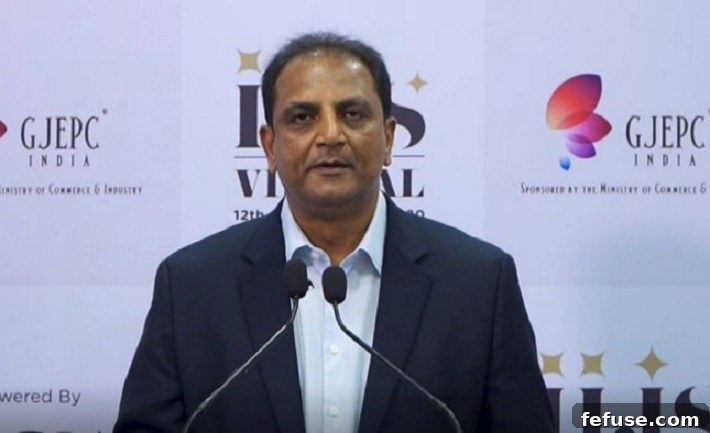
Shri Vipul Shah, chairman of the GJEPC, succinctly summarized the prevailing difficulties, stating, “The Indian gems and jewellery industry contributes around 10% to India’s total merchandise exports. However, the industry is currently facing some challenges due to the geopolitical scenario, the emergence of the beneficiation scheme, and issues related to rough diamond sourcing.”
Impact of Global Downturn and Geopolitical Factors
The global economic downturn, characterized by persistent inflation, rising interest rates, and reduced consumer spending power in key markets like the United States, Europe, and China, has significantly dampened demand for luxury goods, including gems and jewelry. Geopolitical tensions, such as ongoing conflicts and trade disputes, further exacerbate this situation by disrupting supply chains, increasing logistical costs, and creating an environment of uncertainty that discourages long-term investment and consumer confidence. For an export-oriented industry like India’s gem and jewelry sector, these external factors have a direct and immediate impact on profitability and growth.
Challenges from Beneficiation Schemes and Rough Diamond Sourcing
The “emergence of the beneficiation scheme” refers to the growing trend among diamond-producing nations to process a larger share of their rough diamonds domestically, rather than exporting them in their raw form. While this is a logical economic strategy for producer countries, it poses a significant challenge for India, which traditionally imports a vast majority of its rough diamonds for cutting and polishing. This trend, coupled with broader “issues related to rough diamond sourcing,” can lead to tighter supplies, higher prices, and reduced access to the variety and quality of rough diamonds that Indian manufacturers require to maintain their competitive edge. Ensuring a steady and reliable supply of rough diamonds at competitive prices is paramount for India to retain its global leadership in diamond processing.
The Crucial Role of Government Support
The proposals put forth by the GJEPC are not merely requests; they are strategic recommendations aimed at safeguarding and propelling a sector that is indispensable to India’s economic fabric. As Shri Vipul Shah emphasized, these measures are “crucial to give a competitive edge to our players and boost exports and at the same time generate employment in the sector.”
The gem and jewelry industry is a massive employment generator in India, providing livelihoods to millions of skilled artisans, designers, polishers, and traders across the country. These jobs often require specialized traditional skills, passed down through generations, contributing to the preservation of India’s rich cultural heritage. A thriving industry means secure employment, skill development, and improved living standards for a significant portion of the workforce. Furthermore, its substantial contribution to India’s total merchandise exports translates directly into valuable foreign exchange earnings, which are vital for national economic stability and growth.
A Path Towards Sustainable Growth
The proactive measures advocated by the GJEPC—the safe harbor rule, the diamond imprest license, and duty rationalization—represent a clear roadmap for the Indian government to support this critical industry. By addressing the structural and operational challenges currently faced by the sector, these reforms promise to restore its dynamism, stimulate exports, and solidify India’s position as an undisputed leader in the global gem and jewelry market. The industry’s appeal to the Union Finance Minister highlights a collaborative spirit, where government policy, informed by industry insights, can pave the way for sustained economic prosperity and robust employment generation, ensuring that India’s sparkling legacy in gems and jewelry continues to shine brightly on the world stage for years to come.