
The Indian gem and jewellery sector, a cornerstone of the nation’s economy and cultural heritage, is poised for unprecedented growth with the inauguration of the India Jewellery Park (IJP) in Mumbai. This ambitious mega-initiative, spearheaded by the Government of India, is designed to propel India’s jewellery manufacturing capabilities and global trade influence to new, remarkable heights. With an estimated total investment exceeding $10 billion, the project is not just a commercial venture but a strategic move to cement India’s position as a global leader in the gem and jewellery industry. Once fully operational, the IJP is projected to generate an astonishing annual turnover of $30 billion, signalling its transformative potential for the entire sector.
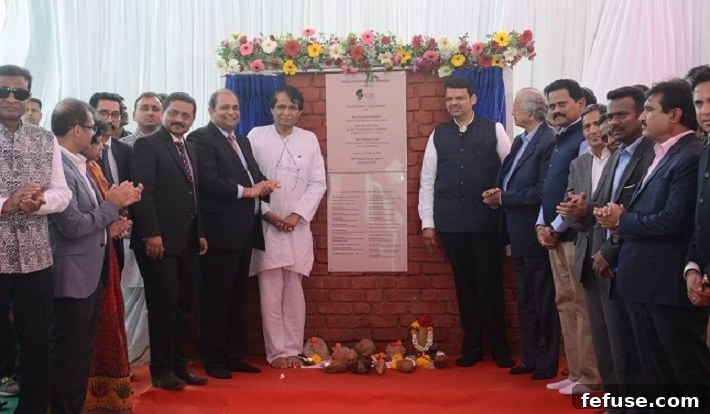
The foundation stone laying ceremony, a landmark event, drew the participation of several eminent dignitaries, underscoring the project’s national importance. The esteemed attendees included Suresh Prabhu, who served as India’s Minister of Commerce & Industry and Civil Aviation at the time; Devendra Fadnavis, the then Chief Minister of Maharashtra; Subhash Desai, the Minister of Industries and Mining of Maharashtra; Ms. Rupa Dutta, Economic Advisor to the Ministry of Commerce & Industry; Raj Purohit, a prominent Bharatiya Janata Party leader; along with key representatives from the industry, including Pramod Kumar Agrawal, Chairman of the Gem & Jewellery Promotion Council of India (GJEPC); Colin Shah, GJEPC Vice Chairman; and other vital members of the Committee of Administration of GJEPC. This gathering of political and industry leaders highlighted the collaborative vision driving the project forward.
The Gem & Jewellery Promotion Council of India (GJEPC), a body synonymous with promoting India’s gem and jewellery exports, has been entrusted with the crucial responsibility of constructing and overseeing the India Jewellery Park. Operating as a Special Purpose Vehicle (SPV) within the strategic MIDC Industrial Area, GJEPC’s involvement ensures that the park is developed with deep industry insight and a focus on operational excellence. Beyond its impressive financial projections, the IJP is set to be a massive employment generator, estimated to create direct employment for 100,000 skilled and semi-skilled workers. This influx of jobs is expected to significantly boost manufacturing output, attract substantial new investment, accelerate export growth, and contribute immensely to the overall economic development of Maharashtra and, by extension, the entire nation.
A Vision for Global Leadership and Economic Prosperity
The India Jewellery Park is more than just an industrial complex; it represents a bold statement about India’s aspirations on the global economic stage. The project aligns perfectly with national initiatives like ‘Make in India’ and ‘Skill India,’ aiming to enhance domestic manufacturing capabilities, foster innovation, and create a highly skilled workforce. India has long been recognized as a world leader in diamond cutting and polishing, but the IJP aims to extend this dominance across the entire value chain, from design and manufacturing to branding and retail, for both studded and plain gold jewellery.
Speaking at the inauguration, Suresh Prabhu, India’s Minister of Commerce & Industry and Civil Aviation, eloquently articulated the profound cultural and economic significance of the sector. He invoked the timeless Indian saying, “Dhaal dhal par sone ki chidiya,” which translates to “India used to be a golden bird,” emphasizing that gold, gems, and jewellery are intrinsically woven into the fabric of Indian life, society, and culture. Minister Prabhu underscored the government’s proactive measures to elevate the stature of the gems and jewellery industry and to dramatically increase job creation within it. He proclaimed, “The inauguration of the India Jewellery Park today is symbolic of the direction of the future economic march of our country. We have to inject new energy into enterprise and business in order to generate more jobs and prosperity for the common man.”
Strategic Objectives and Export Ambitions
The vision for the IJP is deeply rooted in ambitious economic targets. Minister Prabhu elaborated on the government’s overarching goal to double India’s merchandise exports from $500 billion to an astounding $1 trillion. In this monumental endeavour, the gem and jewellery business is slated to play a pivotal and significant role. The sector has already demonstrated its immense potential by independently creating five million jobs across the country, a testament to its robust growth and labour-intensive nature. To further fuel this growth, particularly in the diamond segment, the minister revealed a strategic focus on raw material sourcing. “If we get more diamonds as raw materials, we can process more,” he stated, outlining a clear strategy to target major diamond-producing nations like Russia, aiming to acquire rough diamonds, process them with India’s unparalleled expertise, and subsequently export the finished products back to their countries or to global markets.
Beyond diamonds, the jewellery manufacturing segment also holds immense promise. Minister Prabhu highlighted India’s unique strength in this area, noting, “On the jewellery side, every village in India has a jeweller and we have a flourishing domestic jewellery trade.” This vast network of traditional artisans and modern manufacturers forms the backbone of India’s robust domestic market. To bolster international trade, India has actively connected with 184 countries to promote a wide array of exports, including the exquisitely crafted indigenous gem and jewellery sector. The India Jewellery Park is expected to supercharge these efforts, directly creating 100,000 jobs, with an anticipated multiplier effect leading to several times that number in indirect employment across ancillary industries and services.
Fostering Domestic Growth and Industry Collaboration
Recognizing the colossal potential within its own borders, the government is also focused on structuring the domestic gem and jewellery market. “We are in the process of creating a Domestic Gem and Jewellery Council through a democratic process,” the minister added, signifying a move towards greater organization, standardization, and promotion of internal trade. This council is expected to provide a unified platform for stakeholders, address challenges, and unlock further opportunities within the Indian market. The comprehensive strategy aims not only to double exports from the current benchmark of approximately $40 billion but also to generate a comparable amount of business from robust domestic sales, creating a powerful dual engine of growth.
The India Jewellery Park is envisioned as a comprehensive ecosystem designed to meet the diverse needs of the modern gem and jewellery industry. It will likely house state-of-the-art manufacturing units equipped with advanced technology, common facility centres for specialized processes, design studios to foster innovation, research and development facilities, and dedicated spaces for logistics and warehousing. Furthermore, the park is expected to feature world-class exhibition and convention spaces to showcase Indian craftsmanship to a global audience, along with training institutes to continuously upskill the workforce and ensure a steady supply of talent. The presence of robust security infrastructure and streamlined customs procedures will make it an attractive hub for both domestic and international players.
Impact on the Gem and Jewellery Value Chain
The establishment of the India Jewellery Park is set to profoundly impact every segment of the gem and jewellery value chain. For manufacturers, it will offer a consolidated and technologically advanced environment, reducing operational costs and enhancing efficiency. Designers will benefit from collaborative spaces and access to cutting-edge tools, fostering creativity and trendsetting. Exporters will find a streamlined process, improved infrastructure, and enhanced connectivity to global markets, boosting their competitive edge. The park will also serve as a magnet for foreign direct investment, attracting international brands and expertise to India, further integrating the country into the global supply chain.
Moreover, the IJP’s emphasis on skill development will empower thousands of artisans and technicians with modern techniques, bridging the gap between traditional craftsmanship and contemporary industrial demands. This will not only elevate the quality of Indian jewellery but also ensure sustainable employment opportunities for generations. The collective synergy generated within the park—where manufacturers, designers, traders, and ancillary service providers operate in close proximity—is expected to spur innovation, foster knowledge sharing, and create a dynamic, self-sustaining ecosystem that continuously adapts to global market trends and consumer preferences.
Charting a Golden Future for India
In conclusion, the India Jewellery Park in Mumbai is a landmark project representing a pivotal moment for India’s gem and jewellery industry. It embodies a strategic vision to transform India from a significant player into an undisputed global leader in all facets of the jewellery trade. Through massive investment, job creation, technological advancement, and a concerted push for both domestic and international market expansion, the IJP is set to unlock the full potential of this culturally rich and economically vital sector. It symbolizes not just infrastructure development but a profound commitment to economic growth, skill development, and the unwavering pursuit of prosperity for millions. As the project takes shape, it promises to usher in a golden era, not just for the gem and jewellery industry, but for the economic landscape of India as a whole.