
Navigating the Shifting Tides: Jewellery Market Trends in Hong Kong and Mainland China
The intricate landscape of the Asian luxury market is currently witnessing a divergence in performance, particularly within the vital jewellery sector. Recent government data paints a compelling picture: while Hong Kong’s jewellery sales have experienced a notable downturn, mainland China demonstrates a resilient and even growth-oriented trajectory. This contrast highlights the profound influence of consumer sentiment, economic uncertainties, and shifting tourism patterns on the demand for valuable gifts and precious metals across the region.
Hong Kong’s Jewellery Market Faces Headwinds
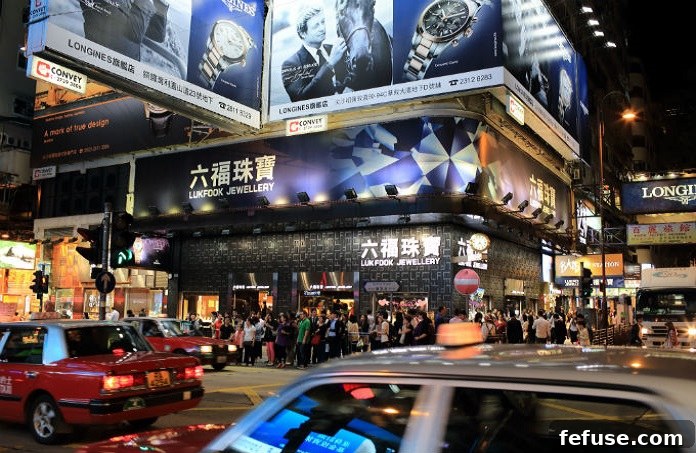
Hong Kong, long celebrated as a premier destination for luxury shopping and a gateway to high-end goods, is currently grappling with a challenging retail environment. Latest figures from the Hong Kong Census and Statistics Department reveal a significant contraction in the jewellery sector.
Sharp Decline in April Sales
In April, jewellery sales in Hong Kong plummeted by an alarming 11.4 percent compared to the same month last year. This substantial year-on-year drop underscores a pronounced weakening in consumer spending within the luxury segment. Such a sharp decline often serves as a key indicator of broader economic anxieties impacting discretionary purchases.
Cumulative Downturn for Early 2024
The challenges extend beyond a single month. Data covering the period from January to April indicates that retail sales of jewellery, watches and clocks, and valuable gifts collectively registered a 4.7 percent decrease when stacked against figures from the previous year. This cumulative downturn suggests that the headwinds affecting the market are not transient but represent a more sustained trend impacting the first third of the year.
Factors Contributing to Hong Kong’s Decline
A government spokesperson attributed the overall retail weakness in April to a more cautious consumption sentiment, largely influenced by external uncertainties. This phrasing points to a confluence of global economic pressures, geopolitical shifts, and regional trade dynamics that can make consumers hesitant to splurge on luxury items.
Beyond broader economic sentiment, a specific calendrical shift played a role. The Labour Day holidays in mainland China, typically a peak period for inbound tourism to Hong Kong, fell primarily in early May this year. In contrast, last year these holidays spanned across both April and May. This timing difference led to a noticeable decline in visitor arrivals to Hong Kong during April, directly impacting the city’s tourism-dependent retail sector, especially high-value goods like jewellery and watches.
Hong Kong’s retail landscape heavily relies on mainland Chinese tourists, who historically account for a significant portion of luxury goods purchases. Any factor that curtails their visits or alters their spending habits can have immediate and tangible effects on local businesses. The reduced footfall from these crucial consumers during a traditionally busy period undoubtedly contributed to the negative sales figures.
Glimmers of Hope: The Path to Recovery
Despite the current challenges, the outlook for Hong Kong’s retail sector, including jewellery, holds some potential for recovery. The government spokesperson highlighted two key factors that could provide support to retailers in the near term: an expected expansion in inbound tourism and a more stable local labour market. Efforts to attract more visitors, coupled with a robust employment landscape that bolsters local purchasing power, are seen as crucial elements in reversing the current downward trend.
Diversification of tourist origins, enhanced local experiences, and strategic marketing initiatives might also be pivotal for Hong Kong’s luxury retailers to adapt and thrive in an evolving market environment.
Mainland China’s Jewellery Market Shows Robust Growth
In stark contrast to Hong Kong’s struggles, the jewellery market in mainland China has demonstrated considerable strength and resilience. Data from the National Bureau of Statistics of China reveals a positive growth trajectory, reflecting shifting economic dynamics and consumer preferences within the vast mainland market.
Consistent Growth in Early 2024
For the period spanning January to April, jewellery sales in mainland China registered a healthy 2.2 percent year-on-year increase. This steady expansion underscores a burgeoning demand for precious items among Chinese consumers. This growth is particularly noteworthy given the global economic uncertainties that have dampened luxury spending in other regions.
Positive Performance in April
Even in April, when Hong Kong experienced a significant dip, mainland China’s gold, silver, and jewellery sales recorded a modest but positive 0.4 percent rise compared to the same period last year. While not as robust as the cumulative growth, it still signifies sustained demand and consumer confidence, particularly in a month that saw holiday shifts and other potential disruptions.
Drivers of Growth in Mainland China
Several factors are contributing to this positive trend. A growing middle class with increasing disposable incomes continues to fuel demand for luxury goods. Jewellery, especially gold, holds significant cultural importance in China, often purchased for special occasions, as gifts, or as a traditional form of investment and wealth preservation. The perception of gold as a safe-haven asset, particularly during times of economic volatility, may also be boosting demand.
Furthermore, strong domestic consumption policies and robust e-commerce platforms have made luxury items, including jewellery, more accessible to a wider demographic across China. Local brands are also gaining prominence, offering designs that resonate with Chinese aesthetics and cultural values, further stimulating the market. Innovation in design, material, and retail experience, including sophisticated online-to-offline (O2O) models, is also playing a crucial role in captivating the modern Chinese consumer.
Comparative Analysis and Future Outlook
The contrasting performances of Hong Kong and mainland China’s jewellery markets underscore a significant shift in regional luxury retail. Hong Kong, once the undisputed luxury shopping hub for mainland Chinese tourists, is now facing stiff competition from a maturing and increasingly robust domestic market within China itself. Consumers in China are finding more diverse and compelling shopping experiences closer to home, often at competitive prices and with tailored services.
Strategic Implications for Retailers
For retailers operating in both markets, these trends necessitate a re-evaluation of strategies. In Hong Kong, the focus must shift towards attracting a broader international customer base, enhancing unique shopping experiences, and catering more effectively to local residents’ evolving preferences. Building stronger online presences and offering personalized services can also help mitigate the impact of reduced tourist numbers.
In mainland China, the challenge for retailers is to sustain growth amidst fierce competition. This involves continuous innovation in product design, leveraging digital marketing and social media effectively, and deepening understanding of regional consumer tastes. Expanding into lower-tier cities, where disposable incomes are rising rapidly, also presents significant opportunities for growth.
The Broader Economic Context
The performance of the jewellery sector is often a barometer for broader economic health and consumer confidence. Hong Kong’s struggles mirror global economic uncertainties that have particularly impacted export-oriented economies and luxury spending. Mainland China’s growth, on the other hand, suggests a degree of internal economic resilience and a powerful domestic consumption engine, even as it navigates its own set of economic challenges.
As the global economic landscape continues to evolve, the dynamics between these two key Asian markets will remain crucial for the overall health of the luxury jewellery industry. Retailers and brands will need to be agile, innovative, and deeply attuned to the nuances of each market to navigate these shifting tides successfully.