
Transforming Heirloom Jewelry: Modernizing Cherished Pieces for Contemporary Style
For many, jewelry collections are not merely an assortment of adornments; they are a rich tapestry woven with threads of time, love, and personal history. Over years, and often across generations, exquisite pieces are acquired – perhaps a symbol of enduring love, a treasured inheritance passed down through a family, or a spontaneous purchase marking a significant life event. Some women are fortunate enough to amass treasure chests that could rival the opulence of ancient royalty or a European noble court. Yet, paradoxically, these very assemblages, brimming with sentimental value and intrinsic worth, frequently find themselves relegated to the confines of dusty drawers or forgotten safes. The reason is simple yet profound: our lifestyles have evolved dramatically. The grand, formal jewelry suites that once defined elegance in yesteryear now often appear out-of-date, or even strikingly gaudy, in our contemporary world.
Today’s fashion landscape champions a different aesthetic – one that prioritizes contemporary designs, versatility, and everyday wearability. The modern woman, sophisticated and style-conscious, still desires glamorous jewelry that unmistakably expresses her unique individuality. The challenge, then, becomes a delicate balancing act: how to honor the legacy and inherent beauty of these treasured adornments while daring to transform them to satisfy a woman’s current taste and active lifestyle. The mere thought of altering a piece steeped in history can evoke apprehension, but it’s a journey many of today’s leading jewelers are expertly navigating on behalf of their discerning clients, breathing new life into forgotten treasures.
The Dilemma of Dormant Treasures: Why Modern Redesign is Essential
The transition from formal extravagance to understated chic has left many precious pieces in limbo. What was once considered the epitome of sophistication can now feel heavy, impractical, or simply out of sync with current fashion trends. An heirloom necklace, magnificent in its original form, might be too elaborate for a casual brunch or a business meeting. A ring, though set with an incredible stone, might possess a design that no longer resonates with the wearer’s personal aesthetic. This isn’t a rejection of the past; rather, it’s a desire to integrate the past seamlessly into the present. The true value of these pieces often lies in their exceptional gemstones and the stories they tell, not necessarily in their original mounting or setting, which can inevitably become dated over time.
Consider the parallel with a beloved home. After two decades, even the most beautiful interior can begin to feel ‘tired.’ You wouldn’t demolish the entire structure; instead, you would redesign and renovate, updating its aesthetic and functionality to better suit your current needs and preferences. The same principle applies eloquently to fine jewelry. Why allow a magnificent emerald, diamond, or sapphire to remain unseen when its beauty can be reimagined within a design that feels fresh, relevant, and utterly ‘you’?
Leading Jewelers Paving the Way in Jewelry Transformation
The movement to modernize and personalize heirloom jewelry is championed by a select group of visionary jewelers. These artisans understand that true luxury lies in bespoke experiences and the ability to adapt beauty for every era. They recognize that the intrinsic value of a gemstone transcends its setting, offering an opportunity for boundless creativity and reinvention.
Stephen Webster: Breaking Down Formality for Everyday Glamour
British jeweler Stephen Webster, renowned for his edgy yet elegant designs, has become a pioneer in this transformative field. He increasingly answers the call of women seeking to have their precious jewels re-imagined. Webster recounts a vivid example: “I had a client come into my showroom last year and basically dump the crown jewels on my table.” These were not literal crown jewels, but an impressive collection featuring significant pieces by Bulgari and David Morris, adorned with truly amazing stones. The issue? “She just didn’t wear them anymore.” Webster’s solution was ingenious and reflective of modern tastes. He meticulously took apart the elaborate jewelry, recasting important sapphires into several pairs of modern, asymmetrical earrings. Colored stones found new life in a series of contemporary bangles, with the use of diamonds strategically minimized to impart a less formal, more understated appeal. The outcome was a triumph: “She has her jewelry back,” Webster states, “but it serves a more useful purpose because it fits into her life.” This approach brilliantly marries grand heritage with a relaxed, contemporary sensibility, making precious pieces accessible for daily wear.
Glenn Spiro: Redesign as Renovation – Honoring Stones Above All
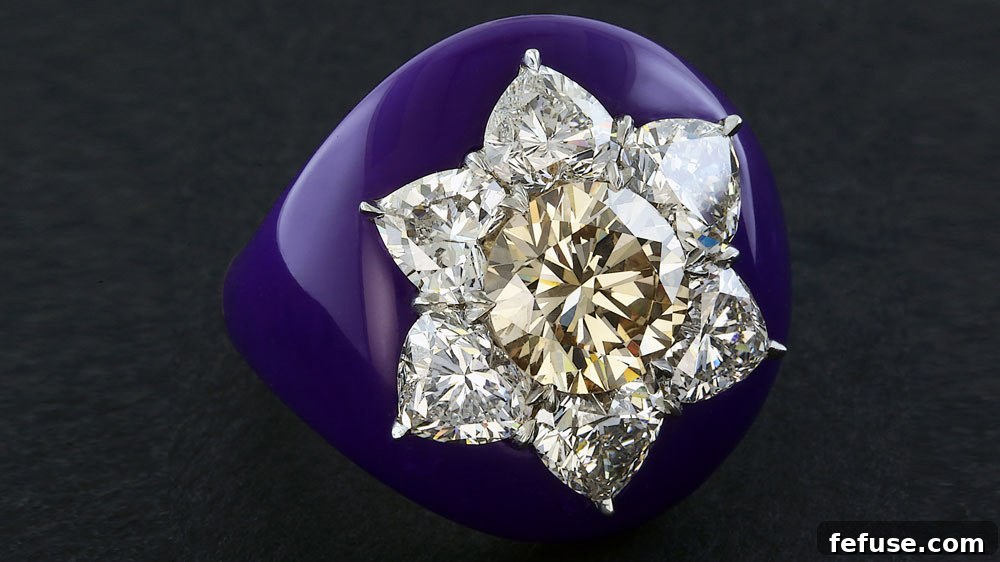
London-based jeweler Glenn Spiro echoes Webster’s philosophy, emphasizing that the real, enduring value of a top-quality piece often lies squarely in its exceptional stones. His perspective is profoundly practical yet deeply respectful of heritage: “It’s like redecorating your home. Your home gets a bit tired after 20 years, but you don’t dump the house, you redesign it. Why shouldn’t you do the same with jewelry?” Spiro’s work exemplifies this principle. A client recently presented him with an old necklace adorned with “enormous yellow diamonds,” seeking a way to utilize these extraordinary gems. From that single necklace, Spiro masterfully created four entirely new pieces. Among them were glamorous chandelier earrings featuring the dazzling yellow diamonds strikingly set in contrasting blue titanium – a bold and modern material choice. What was once a classic, perhaps even predictable, design was utterly transformed into an entirely new look, vibrant and utterly contemporary.
Martin Katz: Chic, Stylish, and Wearable – Day or Night
Beverly Hills jeweler Martin Katz emphasizes that contemporary jewelry is “more about how the jewelry is styled today rather than how big is a stone.” He observes that as women mature, their personal style naturally evolves, meaning pieces purchased a decade or two ago may no longer align with their current aesthetic preferences. Irrespective of age, Katz notes, women consistently desire jewelry that is chic, stylish, and versatile enough to be worn seamlessly from day into night. Illustrating this point, he recently undertook the redesign of a client’s classic 11-carat emerald ring, originally flanked by two important diamonds. Katz’s modern interpretation involved framing the majestic emerald with a subtle circle of smaller emeralds. The result was a sophisticated, tone-on-tone ring that exuded contemporary flair, transforming a potentially ostentatious piece into one of understated elegance and modern wearability.
Suzanne Syz: Art-Inspired Creations for the Elevated Collector
Zurich-born jewelry designer Suzanne Syz, celebrated for her bold and often avant-garde creations, connects directly with the surge in interest in contemporary art and its influence on elevated jewelry design. Last year, a client visited her Geneva showroom with a unique request: a modern alternative to her grandmother’s classic ring setting. The centerpiece was a truly magnificent 35-carat aquamarine, exceptionally rare as it was sourced from the now-depleted Santa Maria de Itabira mine in Brazil. Syz, with her artistic vision, commissioned a stonecutter in Idar-Oberstein, Germany, to craft a completely new rock-crystal setting for this extraordinary gem. She then surrounded the mesmerizing blue stone with a delicate sprinkling of diamonds. Despite its impressive size, the redesigned ring, according to Syz, “doesn’t scream carats,” offering a sophisticated presence. Crucially, she highlights its versatility: “you can wear it day and night,” making a grand heirloom stone perfectly suitable for modern living.
Michelle Ong: Versatility and Playfulness in Modern Adornment
The fashion world, as evidenced by recent haute couture shows, is leaning towards a more streamlined and contemporary aesthetic. Jewelry, therefore, needs to integrate seamlessly with clothing, complementing rather than overwhelming an outfit. Hong Kong-based jewelry designer Michelle Ong understands this imperative, which drives her to fashion more elaborate brooches and pendant necklaces that offer greater versatility for modern women’s wardrobes. When a client brought her strands of precious Burmese rubies and sapphires, Ong ingeniously transformed them into five distinct pieces: brooches, earrings, and rings. She meticulously added other red and blue gems, creating subtle tonal pieces that highlight the natural beauty of the original stones while enhancing their wearability. Ong notes the specific preferences of her clientele, stating, “Asian women love to wear jewelry day and night, and brooches are more versatile and playful,” emphasizing how redesign can cater to cultural nuances and specific lifestyle demands.
The Art of Transformation: Why Redesign is the Modern Imperative
The trend of jewelry redesign is far more than a passing fad; it represents a thoughtful and intelligent response to evolving consumer preferences and a broader shift towards sustainable luxury. Here’s why embracing this transformation is becoming increasingly crucial:
- Sustainable Luxury: In an era conscious of environmental impact, reusing and repurposing existing precious materials is a highly sustainable choice. Instead of contributing to the demand for new mining, redesign breathes new life into already existing resources, making it an eco-conscious form of luxury.
- Personalized Expression: Modern luxury is deeply personal. A redesigned piece is not just an adornment; it’s a unique expression of the wearer’s current style, taste, and journey. It allows individuals to infuse their personality into pieces that might otherwise feel generic or disconnected from their identity.
- Honoring Heritage with Relevance: Redesign allows for the preservation of sentimental value without sacrificing contemporary appeal. It ensures that family heirlooms remain cherished and visible, continuing their story in a new chapter, rather than being tucked away as mere relics of the past. It’s a powerful way to connect generations.
- Maximizing Investment: Fine jewelry represents a significant investment. Letting valuable pieces languish unworn means their potential for enjoyment and display is squandered. Redesign maximizes the utility and aesthetic return on this investment, ensuring that precious assets are actively enjoyed.
- Adaptation to Modern Aesthetics: Contemporary fashion prioritizes sleek lines, versatility, and often a more understated elegance than previous eras. Redesign ensures that jewelry complements, rather than competes with, modern clothing and lifestyles, making pieces feel current and appropriate for any occasion.
- Breaking Formalities: As Stephen Webster astutely observes, the aim is often to “break down the formality of jewelry while retaining its intrinsic value.” This means creating pieces that are effortlessly elegant, comfortable, and versatile enough for everyday wear, dispelling the notion that fine jewelry must be reserved for grand occasions.
The Redesign Journey: A Collaborative Creative Process
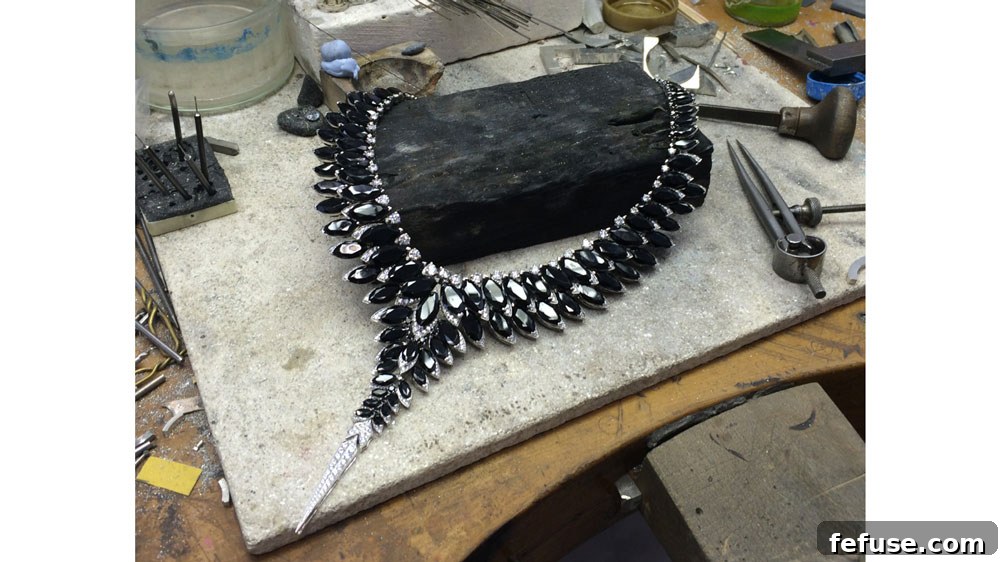
Embarking on a jewelry redesign journey is a collaborative process between the client and the jeweler. It typically begins with an in-depth consultation where the client shares the history of the piece, their personal style, and their vision for its transformation. The jeweler, with their expert eye and creative prowess, then proposes design concepts, often utilizing sketches, renderings, or even prototypes to bring the vision to life. This journey is not just about altering a physical object; it’s about translating emotional connections and personal aspirations into a wearable work of art. The craftsmanship involved is meticulous, requiring a deep understanding of gemology, metalwork, and contemporary design principles to ensure that the newly created piece is not only stunning but also structurally sound and comfortable to wear.
Beyond Trends: Investing in Timeless Wearability
Ultimately, the essence of this transformative movement is rooted in a desire for jewelry that is both meaningful and functional. As Glenn Spiro points out, taste shifts from periods of maximalist “bling” to an appreciation for chic, stylish, and daring combinations of color and materials. Modern jewelers are pushing boundaries, combining precious heirloom stones with innovative materials like wood, titanium, and resin, creating pieces that are not just beautiful but genuinely “cool and wearable.” This approach ensures that clients walk away with “something wonderful, not just a collection of stones.”
Perhaps this is the most crucial takeaway: jewelry – even our most prized and historically significant pieces – should be a source of joy, fun, and effortless wearability. In the skilled hands of today’s top jewelers, yesterday’s classics are not merely preserved; they are reborn as today’s standouts. This transformation is not about proving anything by wearing important jewels; quite the contrary, as Webster notes, it’s about a profound appreciation for a great gemstone, celebrated in a way that resonates with one’s current life. It’s about honoring heritage while embracing the present, ensuring that every precious jewel finds its rightful place, sparkling not just in a safe, but in the vibrant tapestry of a modern life.