
The Indian gold and jewellery sector, a cornerstone of the nation’s cultural heritage and economic fabric, stands on the cusp of a transformative era. With an estimated 15-20% share of the global gold market, India’s demand for gold, driven by tradition, investment, and bridalwear, is unparalleled. However, for decades, the industry has grappled with the challenges of being largely unorganised, fragmented, and operating without a comprehensive, unified policy framework. This intricate scenario has prompted a concerted effort from both government and industry stakeholders to chart a new course, fostering sustainable growth and global competitiveness.
Transforming India’s Gold Industry: A Unified Vision for Sustainable Growth
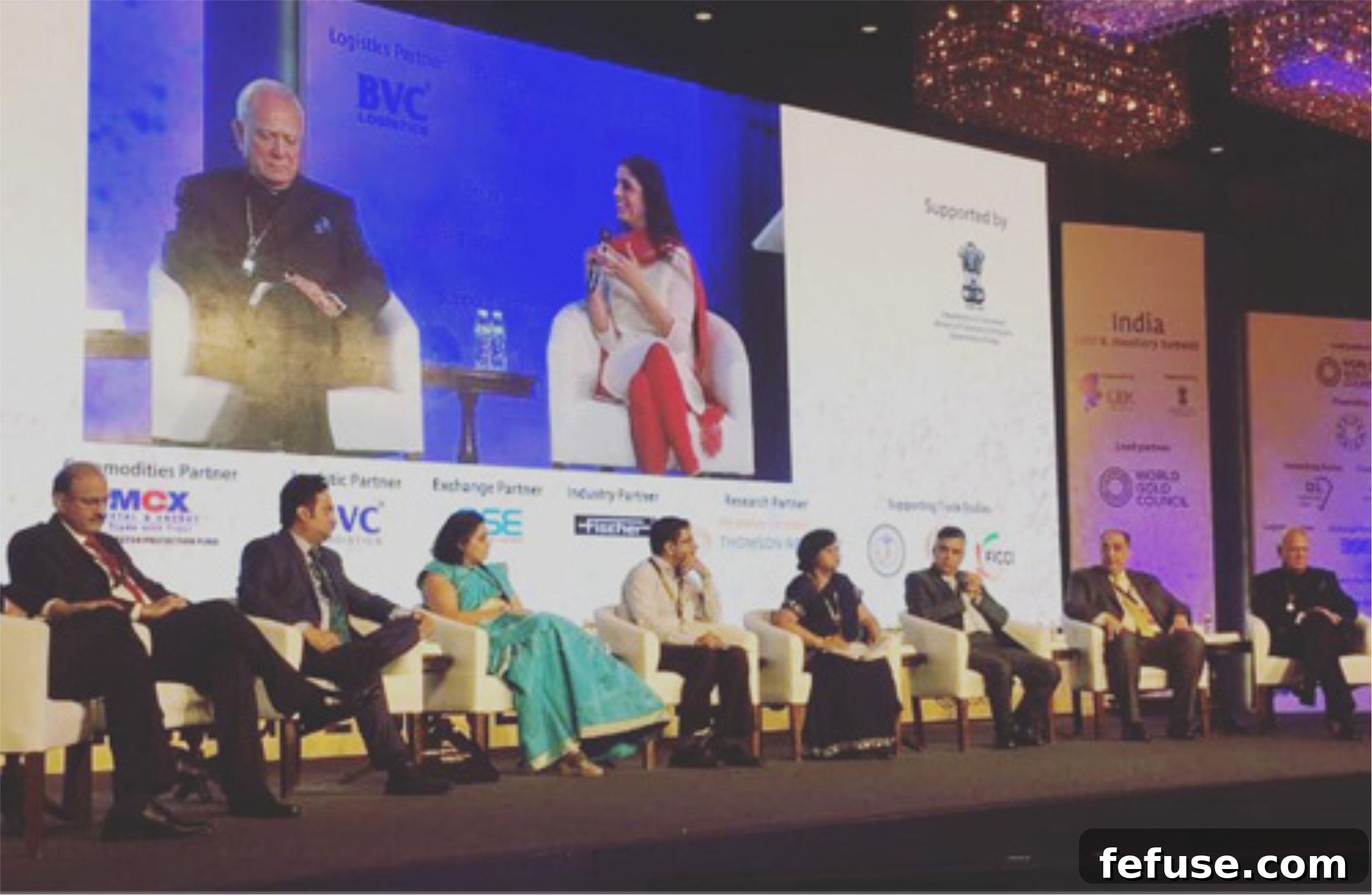
The much-anticipated unified Gold Policy, a pivotal reform poised to redefine the landscape of India’s precious metals sector, is nearing its final stages. Ms. Rupa Dutta, Economic Advisor to the Ministry of Commerce & Industry (MoC&I), Government of India (GoI), recently announced that the MoC&I expects to finalise its recommendations and share them with the Ministry of Finance (MoF) in the coming month. This significant update emerged during the “Niti Aayog Report: Transforming India’s Gold Industry” session at the 2nd India Gold and Jewellery Summit, organised by The Gem & Jewellery Export Promotion Council (GJEPC) in New Delhi in November 2018. The summit served as a crucial platform for dialogue, bringing together key government officials, industry leaders, and experts to deliberate on the future trajectory of this vital sector.
The Imperative for a Unified Gold Policy
The consensus among leaders and experts at the summit was unequivocal: India urgently needs a unified policy and a single governmental department to streamline the complexities and address the myriad issues faced by the gold trade. The current multi-ministry approach has often led to disjointed regulations and implementation challenges, hindering the industry’s potential for organised growth. A unified policy is envisioned to provide a clear, coherent direction, fostering an environment conducive to investment, innovation, and ethical practices across the entire value chain – from mining and refining to manufacturing, retail, and export.
Beyond the governmental efforts, a compelling sentiment voiced by many speakers was the industry’s responsibility to proactively take concrete steps wherever possible, even ahead of formal policy announcements. This forward-thinking approach, it was argued, would not only demonstrate the industry’s commitment to self-regulation and progress but also expedite implementation once the new policy is officially unveiled.
Industry Takes the Lead: Pioneering Proactive Initiatives
Illustrating this proactive spirit, Mr. Rajesh Khosla, Chairman of MMTC-Pamp, and Mr. P.R. Somasundaram, MD-India, World Gold Council (WGC), highlighted the establishment of the Precious Metals Assaying Institute. This collaborative endeavour, backed by substantial industry support, exemplifies how the sector can drive crucial reforms from within. Such initiatives are vital for building trust, ensuring quality, and laying the groundwork for a more formalised and transparent market. An independent assaying institute plays a critical role in standardising the purity of gold, a foundational step for consumer confidence and international trade.
Somasundaram further revealed the development of a blueprint for a robust Bullion Exchange, meticulously prepared after extensive consultations with diverse industry players. A dedicated bullion exchange is seen as a game-changer for India, promising to bring greater transparency, fair price discovery, and enhanced liquidity to the gold market. It would facilitate organised trading of gold and other precious metals, reducing arbitrage opportunities and integrating India’s bullion market more effectively with global financial systems. Such an exchange could also pave the way for gold-backed financial products, offering new investment avenues and unlocking dormant gold assets.
Policy vs. Action: Distinguishing Direction from Execution
A pertinent observation was made by Ms. Nirupama Soundararajan, Senior Fellow & Head of Research at Pahle India Foundation, who elucidated the crucial distinction between policy formulation and specific action-related announcements. “Policy only defines a broad thrust or direction,” she noted, emphasising that the process of creating a overarching policy is fundamentally different from proposing tactical, immediate actions. These, she stressed, are “two distinct processes and need to be clearly separated,” suggesting that while policy provides the guiding framework, the industry and government must also continuously engage in specific, targeted actions to achieve the broader objectives.
A Holistic Vision for Sustainable Growth: Learning from Global Leaders
Intervening in the discussion, Mr. Praveenshankar Pandya, former Chairman of GJEPC, underscored the erratic nature of the industry’s growth over recent decades. He advocated for a comprehensive, “360-degree perspective and plan” to steer the sector towards consistent and sustainable development. Drawing a parallel, Pandya remarked, “This is what China did. And see where they have reached.” This comparison serves as a powerful reminder of how a well-orchestrated, long-term national strategy can catapult an industry to global prominence. China’s focused approach on infrastructure, technology, and skill development in its manufacturing sectors provides a compelling model for India’s gold and jewellery industry to emulate.
Pandya stressed that the Indian industry and government must forge a strong partnership, collaborating on ambitious projects such as the establishment of dedicated jewellery parks. These parks would serve as integrated ecosystems, providing state-of-the-art infrastructure, common facility centres, and a conducive environment for manufacturing, design, and innovation. Furthermore, he highlighted the critical need for technical upgradation to adopt advanced manufacturing techniques and the imperative of skill development initiatives to nurture a highly skilled workforce, capable of competing on the global stage. These pillars – infrastructure, technology, and human capital – are essential for transforming India into a global manufacturing and export hub for gold jewellery.
Addressing the Unorganised Sector: The Role of Data and Collaboration
Mr. Ajay Mehra of the FICCI Gems and Jewellery Committee brought attention to the largely unorganised nature of the jewellery industry. He asserted that both industry and government must prioritize collecting comprehensive data and grasping the actual realities on the ground before devising effective policies and plans. Accurate data on market size, employment, production, and consumption patterns is crucial for evidence-based policy making. Mehra emphasised that progress can only be achieved if plans are “based on detailed studies” and if both parties work “as partners rather than adversaries.” This collaborative spirit, rooted in shared understanding and mutual trust, is fundamental to overcoming the historical challenges of the sector and unlocking its immense potential.
Government’s Proactive Stance: Nurturing Growth and Removing Bottlenecks
Earlier in her presentation, Ms. Dutta reiterated the Ministry of Commerce & Industry’s proactive engagement with the sector. The ministry has already initiated several key processes, including the evolution of robust gold standards and lab standards, which are critical for enhancing the credibility and quality of Indian gold products globally. Additionally, efforts are underway to establish a Domestic Council, a dedicated body designed to steer the industry’s growth and provide a unified voice for stakeholders. Recognising the importance of a strong manufacturing base, Dutta stated, “We believe that manufacturing infrastructure needs to be strengthened, and so we have worked with industry to establish CFCs [Common Facility Centers] and to take other steps to benefit MSMEs [Micro, Small, and Medium Enterprises].” These CFCs provide shared access to expensive machinery and technology, significantly lowering operating costs for smaller enterprises and fostering a more inclusive growth environment.
Echoing this commitment, Mr. K. Rajaraman, Additional Secretary at the Ministry of Finance, affirmed the department’s keen interest in identifying and eliminating all obstacles and “speed breakers” that the industry may be encountering. He assured stakeholders of the ministry’s active steps to address these issues, stating, “We are looking at the friction points and are open to suggestions on how to overcome these.” This open-door policy from the finance ministry signals a strong willingness to listen, adapt, and create a more facilitative regulatory and fiscal environment for the gold sector.
Stakeholder Expectations and Industry Preparedness
The summit also provided a platform for representatives from financial markets to share their perspectives. Mr. Neeraj Kulshrestha, Chief Business Officer at BSE (Bombay Stock Exchange), and Mr. Shivanshu Mehta, Head – Bullion at MCX (Multi Commodity Exchange), both articulated their expectations from the proposed new policy. They also discussed the concerted steps the industry has already undertaken to create conditions for swift and seamless implementation once the policy is officially announced. Their insights highlighted the readiness of India’s financial infrastructure to integrate and support a more formalised and transparent gold market.
In his concluding remarks, Mr. Somasundaram succinctly encapsulated the essence of the summit: the true transformation in the Indian gold industry hinges on the symbiotic roles played by both industry and government. “An enabling policy will be crucial for sustainable change and growth,” he emphasised, acknowledging the government’s foundational role. However, he swiftly added a vital caveat: “but there are many things we should do to prepare the ground for it.” This underscores the shared responsibility and the need for continuous, collaborative effort to actualise the vision of a globally competitive, ethical, and thriving Indian gold and jewellery sector.
The journey towards a transformed Indian gold industry is complex but filled with immense promise. With a unified policy on the horizon, coupled with the industry’s proactive initiatives and the government’s commitment to fostering a supportive ecosystem, India is poised to solidify its position not just as the world’s largest consumer but also as a leading, responsible, and innovative player in the global gold market.
Pic Cap: Panel discussion in progress on Day 1 of the 2nd India Gold and Jewellery Summit
News Source: gjepc.org