
India Gold & Jewellery Summit 2017: Charting a Golden Future for India’s Jewellery Sector
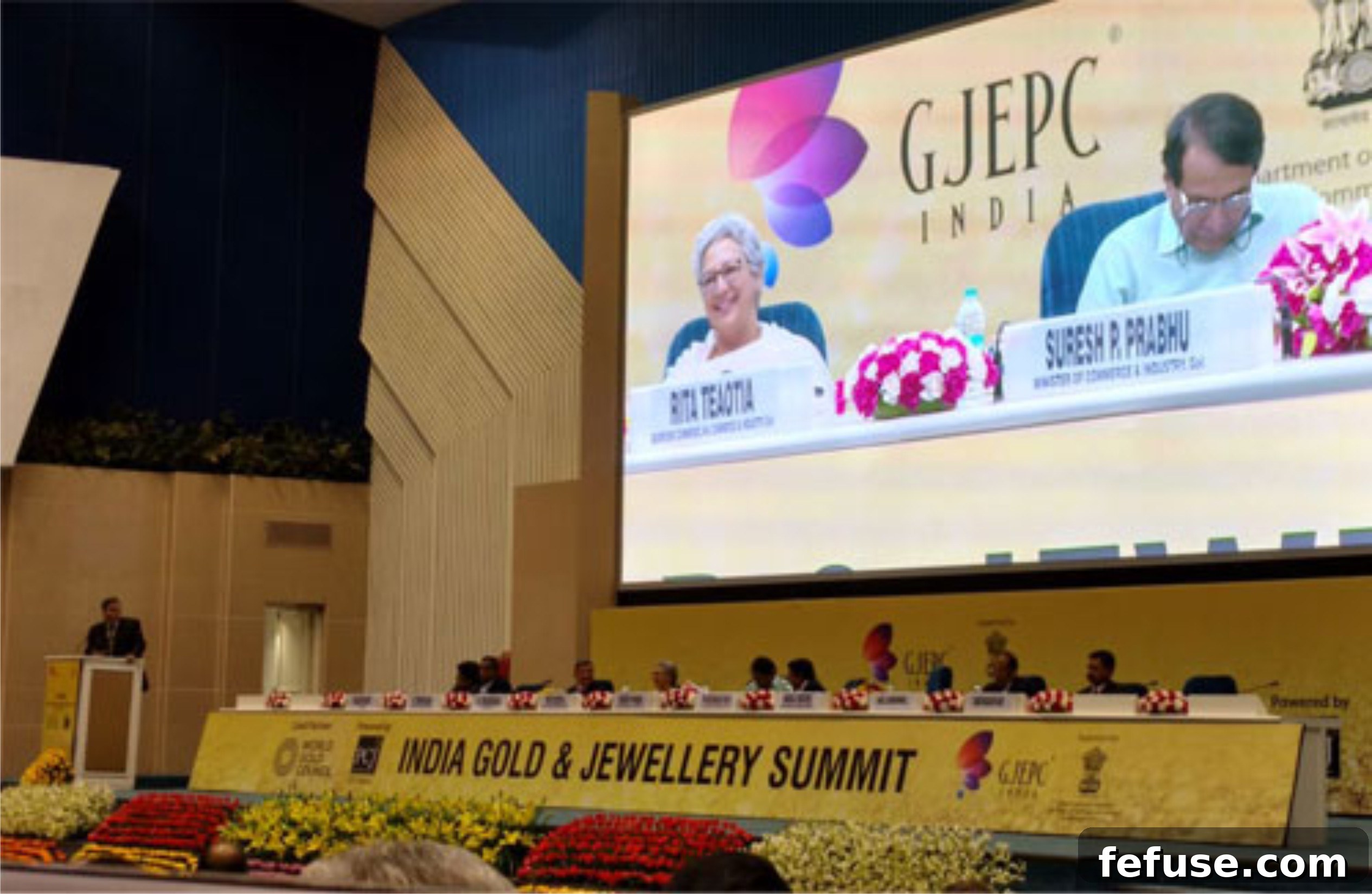
On December 1, 2017, a landmark event unfolded in New Delhi that was poised to redefine the trajectory of India’s illustrious gold and jewellery sector. The inaugural India Gold & Jewellery Summit 2017, meticulously organized by The Gem & Jewellery Export Promotion Council (GJEPC), convened at the prestigious Vigyan Bhavan. This significant gathering brought together a powerful confluence of industry stalwarts, government dignitaries, and thought leaders, all united by a common goal: to forge a robust and sustainable future for an industry deeply woven into the fabric of Indian culture and economy. The summit served as a crucial platform for dialogue, policy formulation, and strategizing, aiming to unlock the immense potential of India’s gold and jewellery market on the global stage.
The esteemed event was formally inaugurated by the Hon’ble Minister for Commerce & Industry, Government of India, Shri Suresh Prabhu. His presence underscored the government’s keen interest and commitment to fostering growth in this vital sector. Joining him were other high-profile personalities, including Rita Teaotia, the then Commerce Secretary, Ministry of Commerce & Industry. The delegate list was a comprehensive representation of the industry’s ecosystem, encompassing senior representatives from gold miners, influential policymakers, leading retailers, financial experts from the banking sector, insightful analysts, and numerous other key stakeholders. This diverse participation ensured a holistic discussion, addressing the multifaceted challenges and opportunities confronting the Indian gold industry.
A Pivotal Moment: Recalling Past Success and Envisioning Future Dominance in Gold
Praveenshankar Pandya, the visionary Chairman of GJEPC, commenced the proceedings with a poignant welcome address. He drew parallels with a similar pioneering conclave organized by the GJEPC in the 1990s, a period when gold control regulations were first relaxed, and India’s nascent jewellery exports began to emerge. Pandya remarked, “That conference had a positive impact, and I hope this conference will too, as we are now at another key point in the development of the industry.” This sentiment set the tone for the summit, highlighting its crucial timing and the industry’s readiness for transformative change. The ambition was clear: to leverage India’s intrinsic strengths and address existing bottlenecks to achieve unprecedented growth and global leadership in the gold and jewellery sector.
Defining the Industry’s Core Challenges and Aspirations
Pandya articulated the critical tasks that the industry identified as paramount at this juncture. Central to his discourse was the urgent need for clarity in policy. He emphasized, “There is a need for a clear-cut policy to differentiate between gold as a raw material for manufacture, and as commodity for investment.” This distinction is vital for creating a regulatory framework that supports both the manufacturing segment, which drives exports and employment, and the investment segment, which reflects India’s cultural affinity for gold as a store of value. Furthermore, he advocated for the establishment of “a central authority to oversee this sector,” a move that would streamline regulations, ensure better governance, and provide a unified voice for the industry.
Another critical point raised by Pandya, particularly relevant for the export-oriented segment of the Indian gold industry, was the necessity of a stable and predictable supply of gold. He stressed, “A steady supply of gold is crucial for exporters.” For India to become a global leader in jewellery manufacturing, uninterrupted access to its primary raw material is non-negotiable. Ensuring this supply chain stability would empower Indian manufacturers to compete more effectively on the international stage, fulfilling larger orders and maintaining consistent production cycles. With these foundational aspects in place, Pandya concluded on an optimistic note, outlining an ambitious target: “With these few aspects in place, we can achieve the target we have set ourselves of becoming the world’s largest manufacturer and supplier of jewellery by 2025.” This bold vision underscored the industry’s confidence and its commitment to achieving global pre-eminence.
Government’s Pledge: Partnership for Progress in India’s Gold Sector
The Hon’ble Minister of Commerce & Industry, Shri Suresh Prabhu, delivered a compelling address, acknowledging India’s unique position in the global gold market. He highlighted, “India is the largest consumer of gold; and the love for the yellow metal is deep-rooted in our culture.” This profound cultural connection makes the Indian gold industry distinct and requires a nuanced policy approach that respects tradition while fostering modern economic growth. Minister Prabhu expressed his sincere appreciation to the GJEPC for organizing such a timely and important conference, recognizing the value of collective deliberation. He affirmed, “It is good that we are exchanging ideas and discussing the various issues before the industry.”
Minister Prabhu extended a significant assurance to the industry, emphasizing the government’s willingness to collaborate closely. He stated, “Once you propose an Action Plan with quantifiable targets and make a commitment towards them, the Government will work closely with the industry to make it possible for the industry to achieve the targets.” This statement signaled a proactive stance from the government, inviting the industry to take ownership of its future by formulating concrete plans, and promising robust support in their implementation. Such a partnership approach is vital for overcoming regulatory hurdles and accelerating growth within the Indian jewellery sector.
Highlighting the pervasive impact of the sector, Minister Prabhu pointed out the immense employment opportunities it creates across the nation. “Every village has a goldsmith; and some more than one. It is a human resource we must develop as a resource to drive growth,” he remarked. This acknowledgment underscored the sector’s decentralized nature and its potential to uplift countless artisanal communities, making skill development and formalization crucial areas for intervention. Concluding his address, Minister Prabhu unequivocally assured the industry of the government’s steadfast partnership, declaring that the government would “be with you on every step of the journey.” This powerful message of support reinforced the collaborative spirit essential for the industry’s ambitious goals.
World Gold Council’s Perspective: Navigating Economic Realities with Strategic Vision
The summit also benefited from the insightful contributions of PR Somasundaram, Managing Director, India, of the World Gold Council (WGC). Somasundaram emphasized the imperative for collective dialogue to craft an effective Action Plan, asserting that “all stakeholders coming together in the event will help that.” He acknowledged the prevailing challenges, noting that “Currently, industry has faced a slowdown and is in an introspective mode.” However, he reframed this period not as a setback, but as an invaluable “opportunity to go beyond looking at short term solutions to immediate problems, and to develop a long term, broad-based approach to evolve a framework to look at issues.” This call for strategic foresight urged the industry to consider fundamental changes rather than merely reacting to transient market fluctuations.
The Nuance of Gold Imports and Economic Impact on India
Somasundaram delved into the complex relationship between gold imports and India’s Current Account Deficit (CAD). He stated, “We can’t ignore the fact that gold imports do have a negative impact on CAD, but we should also realise that gold in India is not only about consumption, it is also an investment.” This nuanced perspective is critical. While reducing imports might appear beneficial for CAD in the short term, government measures to curb imports could have “other unintended consequences,” he cautioned. He posed pertinent questions: “How much, for example, has it affected employment, investment and savings?” This highlighted the delicate balance required in policy-making, ensuring that broader economic and social impacts are fully considered alongside immediate financial indicators for the Indian gold market.
Further elaborating on gold’s role, Somasundaram pointed out its robust position as an asset class in India, ranking as the second most preferred after Fixed Deposits (FDs). Despite this, he observed that India’s per capita consumption of gold remains “very low compared to developed countries,” indicating “great scope for growth.” This suggests that with appropriate policies and market development, India could significantly increase its formal gold consumption and investment, moving away from informal channels. He concluded his address by reiterating the necessity for actionable policy, advocating for “practical, implementable ideas that can lead to a comprehensive Gold Policy.” Such a policy would need to harmonize cultural significance, economic realities, and global aspirations to truly unlock the sector’s potential.
Commerce Secretary’s Vision: “Make in India” for Global Jewellery Leadership
Rita Teaotia, the Commerce Secretary, articulated her satisfaction regarding the summit’s focus, noting, “I am happy that we are now adding a focus on gold jewellery — diamonds have held centre stage over last few years.” This shift in emphasis was significant, acknowledging the vast potential of gold jewellery beyond the diamond-centric export narrative. She also shed light on the unique administrative position of the gold sector, remarking that “it is the only one that ‘belongs’ to the Ministry of Commerce unlike others which have their own independent ministries also.” This unique direct oversight by the Commerce Ministry presents both challenges and opportunities for streamlined policy implementation and strategic guidance within the gold and jewellery sector.
Cultivating Design, Skills, and Brand Identity for Indian Jewellery Exports
Teaotia enthusiastically positioned the gold jewellery sector as a prime example of the “Make in India” initiative, highlighting its immense growth potential. She noted, “This is a real Make in India industry and has huge potential for growth as we are a relatively small player in world markets.” To realize this potential and elevate India’s standing globally, she outlined several key strategic imperatives. A crucial focus, she emphasized, must be on “design and to integrate this with the skills of artisans.” This dual approach acknowledges India’s rich heritage of craftsmanship while pushing for contemporary design innovation to appeal to diverse international markets. To support this, she stressed, “There is a great need to develop institutes for this.” Furthermore, the importance of “Branding and Marketing, and the packaging of the product” was underscored as essential for creating distinct identities and enhancing market appeal for Indian jewellery.
Addressing the broader policy landscape, Teaotia informed participants that Niti Aayog, the premier policy think tank of the Government of India, had already established an inter-ministerial group specifically tasked with discussing various aspects of the gold policy. This initiative demonstrated a concerted government effort to formulate a cohesive and forward-looking strategy for the sector. While this comprehensive policy was under development, she urged immediate action on practical fronts: “Let us set up more design training institutes and Common Facility Centres in the main manufacturing hubs so that small-scale companies also have access to the best technology.” Such infrastructure development is crucial for democratizing access to modern manufacturing techniques and design expertise, thereby empowering smaller players and fostering inclusive growth. The ultimate aim, she concluded, was clear: “With these, we can start creating products for each particular market and grow gold jewellery exports,” solidifying India’s position as a dominant force in the global gold jewellery market.
Industry Voices and the Path Forward for Gold Jewellery Manufacturers
The summit also provided a vital platform for industry practitioners to voice their immediate concerns. Balram Garg, Managing Director of P.C. Jewellers, shared insights into the practical issues confronting gold jewellery manufacturers. His observations centered on challenges such as the availability of gold, which directly impacts production capabilities and cost efficiencies, and various duty-related issues that can affect competitiveness both domestically and internationally. These practical concerns highlighted the need for the policy recommendations discussed throughout the summit to translate into tangible, supportive measures for businesses on the ground, ensuring the viability and growth of India’s gold manufacturing base.
The collective wisdom and strategic insights shared throughout the day culminated in a unified vision for the Indian gold and jewellery sector. The vote of thanks, fittingly proposed by K. Srinivasan, Convener of the GJEPC’s Gold Jewellery & Other Precious Metal Jewellery Committee, acknowledged the efforts of all participants and the significance of the discussions held. The inaugural India Gold & Jewellery Summit 2017 was not merely a conference; it was a foundational stepping stone towards a more structured, globally competitive, and technologically advanced Indian gold industry. It laid the groundwork for future collaborations between the government and the industry, paving the way for India to achieve its ambitious goal of becoming the world’s leading manufacturer and supplier of jewellery.
A Blueprint for Global Leadership: The Enduring Impact of the Summit
The Inaugural India Gold & Jewellery Summit 2017 marked a defining moment for the nation’s gold sector. It wasn’t just a gathering of eminent personalities but a profound commitment to introspection, collaboration, and strategic planning. The candid discussions, ranging from the need for distinct policies for gold as a raw material versus an investment commodity to the imperative for robust skill development and branding, collectively forged a comprehensive blueprint. This blueprint aimed to address long-standing systemic issues while capitalizing on India’s inherent strengths: its deep-rooted cultural affinity for gold, its vast pool of skilled artisans, and its rapidly growing domestic market.
The summit’s emphasis on “Make in India” for jewellery, coupled with the call for increased design innovation and the establishment of Common Facility Centres, underscored a proactive strategy to enhance global competitiveness. By integrating traditional craftsmanship with modern technology and contemporary design, India aspired to produce high-value, market-specific products that would resonate with international consumers. The government’s assurances of partnership and the formation of the Niti Aayog inter-ministerial group signaled a serious commitment to implement the proposed reforms. Ultimately, the 2017 Summit laid a critical foundation, igniting a renewed sense of purpose and a clear pathway for the Indian gold and jewellery industry to transcend its domestic significance and emerge as a formidable global leader by 2025 and beyond.