
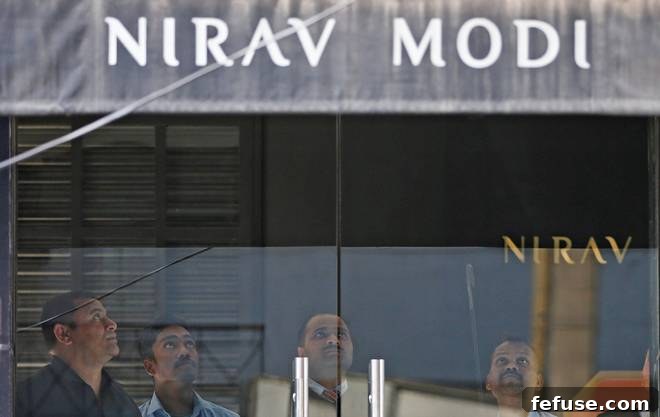
Income Tax Department Intensifies Scrutiny: High Net-Worth Individuals Under Radar for Alleged Tax Evasion in Nirav Modi Jewellery Purchases
The Income Tax Department has launched an extensive re-assessment of Income Tax Returns (ITRs) belonging to over 50 high net-worth individuals (HNIs). These individuals are under intense scrutiny for their substantial purchases of luxury jewellery from firms associated with the absconding diamantaire, Nirav Modi. This rigorous action comes amidst growing evidence suggesting widespread discrepancies in payment methods, particularly the suspected use of concealed cash transactions designed to evade tax obligations. The department’s proactive stance underscores a renewed commitment to uncover and penalize financial misconduct, sending a clear message to those who attempt to circumvent the nation’s tax laws.
This investigation stems from a critical finding: many of these affluent buyers, when initially questioned, vehemently denied making any cash payments for their high-value acquisitions. However, this narrative starkly contradicts the robust data and documentary evidence meticulously gathered by the Income Tax Department from Nirav Modi’s company books and sales records. These records reportedly paint a different picture, revealing a pattern where payments for exquisite diamond jewellery were deliberately split, with a portion paid through legitimate banking channels (cheque or credit/debit card) and a significant remainder allegedly settled in undeclared cash. Such a modus operandi is a classic hallmark of tax evasion, aimed at concealing the true value of transactions and the source of income.
Unmasking the Split Payment Scheme: A Deep Dive into Concealed Transactions
The tax authorities have meticulously compiled a dossier of documents that highlight this sophisticated payment splitting scheme. Officials indicate that select buyers of high-end jewellery from Nirav Modi’s firms systematically bifurcated their payments. For instance, a considerable sum might be paid via an accountable method like a bank transfer or card payment, while an equally significant, or even larger, portion was allegedly handed over in cash. This dual payment structure effectively allowed individuals to report only the accounted portion in their financial declarations, thereby understating their taxable income and the actual cost of the assets acquired.
The discrepancy between the buyers’ denials and the department’s findings forms the core of this investigation. When confronted with tax notices demanding an explanation for their income sources used to purchase such valuable assets, most of the HNIs reportedly maintained that all transactions were legitimate and fully accounted for, explicitly denying any cash involvement. However, the comprehensive data obtained by the Income Tax Department, directly from the sales records of Nirav Modi’s companies, tells a different story. These internal company books reveal numerous instances where payments were recorded as received in a combination of cash and non-cash methods, directly refuting the claims made by the buyers.
This extensive re-assessment is not merely a formality but a critical step in ensuring financial transparency. The department has decided to scrutinize the ITRs of these individuals starting from the assessment year 2014-15, signaling a retrospective approach to uncover long-standing patterns of evasion. This specific timeline is crucial as it encompasses the period during which many of these high-value transactions are believed to have occurred. By delving into past returns, the taxman aims to identify chronic patterns of non-compliance and unearth significant sums of concealed income.
Severe Consequences Await: Implications for Tax Evaders
The consequences for those found guilty of tax evasion are severe and multi-faceted. Should the ongoing re-assessment reveal concrete evidence of concealed cash payments, the HNIs involved will face stringent legal and financial repercussions. Officials have warned that if discrepancies, some potentially running into several lakhs of rupees, are substantiated, charges for tax evasion will be formally initiated. This will entail not only the recovery of evaded taxes with significant interest but also the imposition of substantial penalties. Beyond financial penalties, tax evasion can lead to criminal prosecution, damaging an individual’s reputation and potentially resulting in imprisonment, depending on the scale and nature of the offense.
The initiation of “subsequent action” implies a thorough legal process, including detailed investigations, potential summoning for questioning, and ultimately, court proceedings. This focused crackdown serves as a powerful deterrent, signaling that the authorities are now actively pursuing the beneficiaries of illicit financial schemes, not just the perpetrators. The department’s move against these wealthy individuals underscores a broader governmental push towards greater financial accountability and a zero-tolerance policy against the shadow economy.
Moreover, this particular case is not an isolated incident. Officials have indicated that “some more cases of this nature are under preliminary probe.” This suggests that the scope of this investigation could widen, potentially bringing additional individuals and entities under the tax department’s scanner. The successful prosecution and penalization in this current batch of cases could pave the way for a more extensive drive against undeclared wealth and tax evasion across various sectors of the economy.
The Broader Web of Fraud: Connecting Jewellery Purchases to the Nirav Modi Saga
This targeted action against the jewellery buyers is inextricably linked to the larger financial misconduct case involving Nirav Modi himself. The absconding diamantaire, along with his uncle Mehul Choksi, stands accused of orchestrating one of India’s largest banking frauds. They are currently being investigated by premier agencies such as the Enforcement Directorate (ED) and the Central Bureau of Investigation (CBI) for allegedly defrauding Punjab National Bank (PNB) of over ₹13,400 crore. This massive scam, reportedly beginning in 2011, came to light in January of the current year when PNB officials reported the fraudulent activities to investigative agencies.
The ED, acting on CBI’s First Information Reports (FIRs), has already filed two criminal complaints in these instances, highlighting the gravity and multi-agency nature of the investigations against Modi. While the PNB scam primarily deals with bank fraud through fraudulent Letters of Undertaking (LoUs), the current Income Tax Department’s investigation focuses on the downstream effect of Modi’s business practices – specifically, how his firms allegedly facilitated tax evasion for their high-profile clients. This dual focus demonstrates a comprehensive approach by Indian law enforcement agencies to dismantle the entire network of financial impropriety associated with Nirav Modi and his enterprises.
Furthermore, the tax department has already filed a charge sheet against Mr. Nirav Modi and other associated individuals before a Mumbai court for alleged tax evasion on their part. This signifies that the investigation into the diamantaire’s financial dealings encompasses not only the bank fraud but also potential direct tax violations by his firms. The ongoing scrutiny of the buyers’ tax returns adds another crucial layer to this complex financial saga, aiming to bring to justice all parties involved in the illicit financial ecosystem created by Modi’s operations.
Illustrative Cases: The Rewari Hospital Group and Wider Implications
The proactive enforcement actions by the Income Tax Department are not without precedent. A recent example underscores the department’s resolve: searches were conducted on the premises of a Rewari-based hospital group, which has ties to the family of Swaraj India leader Yogendra Yadav. This action was initiated after initial findings suggested that the owners of this firm allegedly made part-cash and part-cheque payments for jewellery purchased from one of Nirav Modi’s entities. This specific case serves as a tangible illustration of the department’s investigative capabilities and its willingness to act upon credible intelligence, regardless of the individuals’ public profiles or affiliations.
The Rewari case is significant because it mirrors the very pattern the department is now investigating on a larger scale with the 50+ HNIs. It demonstrates the tangible evidence that investigators are uncovering – direct links between buyers, Nirav Modi’s firms, and the use of split payments to obscure the true transaction value. Such targeted raids and investigations send a clear message across various business communities that financial irregularities related to high-value purchases will not go unnoticed. This heightened vigilance is aimed at fostering a culture of compliance and deterring potential evaders who might assume their transactions can remain hidden.
Government’s Unwavering Commitment to Financial Integrity
These concerted efforts by the Income Tax Department are part of a broader, sustained campaign by the Indian government to combat black money, prevent tax evasion, and promote financial transparency. The actions taken against individuals linked to the Nirav Modi scandal are a testament to the government’s unwavering commitment to creating a more equitable and compliant tax ecosystem. By holding high-net-worth individuals accountable for their financial dealings, the authorities aim to reinforce the principle that no one is above the law, regardless of their status or wealth.
The implications of this investigation extend beyond individual penalties. It is expected to send ripples through the luxury goods market, particularly the high-end jewellery sector. Buyers will likely become more cautious and transparent in their transactions, knowing that their financial activities are under increased scrutiny. This move could lead to a significant shift towards more legitimate and digitally traceable payment methods, ultimately contributing to a more formalized economy and a reduction in illicit financial flows. The emphasis on robust data analysis and cross-verification of financial records also highlights the advancements in the department’s capabilities to detect complex evasion schemes.
The Path Ahead: Ensuring Accountability and Bolstering Compliance
The re-assessment of ITRs for these over 50 HNIs marks a critical juncture in India’s fight against financial fraud and tax evasion. The outcome of these investigations will not only determine the fate of those implicated but also set precedents for future enforcement actions. As more sophisticated methods of tax evasion emerge, the tax authorities are continually evolving their strategies, leveraging technology and data analytics to identify and dismantle such schemes. The current focus on beneficiaries of illicit transactions, rather than just the facilitators, represents a significant escalation in this ongoing battle.
Ultimately, this comprehensive probe into luxury jewellery purchases from Nirav Modi’s firms is a stark reminder of the long arm of the law. It underscores the importance of legitimate financial practices and the severe repercussions of attempting to circumvent tax obligations. The department’s steadfast resolve to unearth concealed cash payments and pursue all necessary actions will undoubtedly contribute to a stronger, more transparent financial environment in India, fostering greater trust in the tax system and ensuring that wealth creation is matched by ethical compliance.
News Source : thehindu.com