
GJEPC and DGTS Collaborate to Resolve Key Tax Challenges in India’s Gem & Jewellery Sector
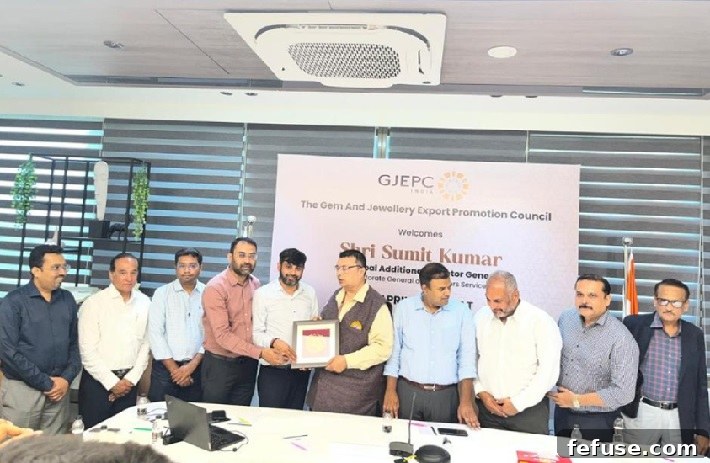
A landmark meeting was recently convened in Surat, a global hub for the diamond and jewellery trade, to address critical tax-related challenges impacting the industry. Organized by the Surat Regional Office of the Gem & Jewellery Export Promotion Council (GJEPC), the session brought together industry leaders and Shri Sumit Kumar, the Principal Additional Director General of the Directorate General of Taxpayer Services (DGTS). This proactive dialogue aimed to identify and find practical solutions for several persistent issues that affect the sector’s operational efficiency and growth.
The gem and jewellery industry is a cornerstone of India’s export economy, contributing significantly to foreign exchange earnings and employment. However, its complex supply chains and high-value transactions often lead to intricate taxation challenges. This high-level interaction signifies a crucial step towards fostering a more supportive and streamlined regulatory environment, ultimately enhancing the ‘ease of doing business’ for thousands of enterprises in this vital sector.
Understanding the Key Stakeholders: GJEPC and DGTS
To fully appreciate the significance of this meeting, it is essential to understand the roles of the two primary organizations involved. Their collaboration is pivotal for bridging the gap between industry needs and governmental policy implementation.
The Role of the Gem & Jewellery Export Promotion Council (GJEPC)
The GJEPC is the apex body of the gem and jewellery industry in India, sponsored by the Ministry of Commerce and Industry. Its core mission is to promote Indian gems and jewellery in the global market. The council acts as a crucial intermediary, representing the collective voice of its members to government authorities. Its functions include policy advocacy, trade facilitation, and ensuring that the industry’s concerns are heard at the highest levels of government. By organizing meetings like this, the GJEPC’s Surat office actively works to resolve ground-level operational hurdles faced by its members.
The Mandate of the Directorate General of Taxpayer Services (DGTS)
The DGTS operates under the Central Board of Indirect Taxes and Customs (CBIC) and plays a central role in enhancing the taxpayer experience. Its primary mandate is not enforcement but facilitation. The DGTS is responsible for supervising taxpayer service centers and helplines, gathering feedback from stakeholders to identify pain points, and ensuring that tax policies are implemented in a taxpayer-friendly manner. Their direct engagement with industries is a testament to the government’s focus on creating a more responsive and supportive tax administration system.
A Unified Voice: Industry-Wide Participation
The meeting was not limited to a single faction but saw comprehensive representation from across the industry spectrum. This broad participation underscored the universal nature of the challenges being discussed. Key associations present included:
- The Surat Diamond Association
- The Surat Jewellery Manufacturers Association
- The Surat Jewellers Association
- The Lab Grown Diamond Association
- The Association of Chartered Accountants (Western Zone)
The presence of prominent chartered accountants and tax consultants from the trade further enriched the discussion, providing technical insights and detailed perspectives on the complex issues at hand. This unified front ensured that the concerns presented to the DGTS were well-articulated, comprehensive, and representative of the entire ecosystem.
The Core Issues on the Table: A Deep Dive into Industry Concerns
During the intensive session, stakeholders raised several critical concerns that directly impact their day-to-day operations, financial health, and ability to compete globally. These issues, if left unaddressed, can create significant bottlenecks and hinder growth.
1. The Buildup of GST Input Tax Credit (ITC)
One of the most pressing problems highlighted was the accumulation of Input Tax Credit (ITC) under the Goods and Services Tax (GST) regime. In simple terms, ITC is the credit that businesses receive for the GST they have already paid on inputs (raw materials, services, etc.). For exporters, who do not charge GST on their final products (as exports are zero-rated), this ITC often accumulates without an outlet. The inability to quickly claim refunds for this accumulated credit results in blocked working capital. For a capital-intensive industry like gems and jewellery, this liquidity crunch can severely restrict a company’s ability to purchase raw materials, invest in technology, and manage daily expenses.
2. Delays in IGST Refund Processing
Directly linked to the export process, delays in receiving Integrated GST (IGST) refunds were another major point of contention. When exporters ship their goods, they are entitled to a refund of the IGST paid on inputs used to create those exported products. However, procedural delays, documentation mismatches, and system glitches often lead to significant waiting periods for these refunds. This delay effectively creates an interest-free loan from the businesses to the government, straining their financial resources and making it harder to manage cash flow effectively.
3. Enforcement-Related Challenges and Seizure of Goods
The industry representatives also voiced concerns about enforcement-related activities. A specific issue raised was the seizure of goods during consignment-based transfers. The gem and jewellery business model frequently involves moving high-value goods between cities for processing, grading, or for showing to potential buyers on an approval basis. Sometimes, these legitimate movements are misinterpreted by tax authorities, leading to the detention or seizure of valuable stock. Such actions not only cause immense financial disruption but also create an environment of uncertainty and fear, discouraging the free movement of goods essential for the trade.
4. Hurdles with Customs Duty Refunds
The sector is heavily reliant on the import of raw materials like rough diamonds, gold, and other precious metals. While customs duties are paid on these imports, the government offers duty drawback schemes and refunds when these materials are processed and exported as finished jewellery. Stakeholders pointed out the complexities and delays associated with claiming these customs duty refunds. Streamlining this process is vital to ensure that the cost of raw materials for Indian exporters remains competitive on the global stage.
A Collaborative Path Forward: Assurances and Future Outlook
Responding to the detailed presentation of issues, Shri Sumit Kumar of the DGTS provided a reassuring and constructive response. He assured all participants that the concerns raised by the industry would be given serious consideration. He affirmed that every point would be carefully reviewed and that the DGTS would explore suitable measures and policy adjustments to address them effectively.
This assurance is a significant positive development. It signals a willingness from the tax authorities to engage in open dialogue and work collaboratively towards solutions. The meeting was not merely a forum for airing grievances but a constructive platform for co-creating a more efficient and transparent tax ecosystem.
Conclusion: Strengthening the Foundation for Future Growth
The meeting organized by the GJEPC in Surat represents a pivotal moment in the ongoing efforts to strengthen India’s gem and jewellery industry. By bringing key government officials face-to-face with business owners and tax experts, the council has facilitated a direct channel of communication that is essential for effective policymaking.
The resolution of issues like GST credit accumulation, IGST refund delays, and customs complexities is fundamental to unlocking the sector’s full potential. Addressing these challenges will not only improve the financial health of individual businesses but will also enhance the overall competitiveness of “Brand India” in the international market. As the dialogue continues, the hope is that these discussions will translate into tangible actions, fostering an environment where the gem and jewellery sector can thrive, innovate, and continue its legacy as a global leader.