
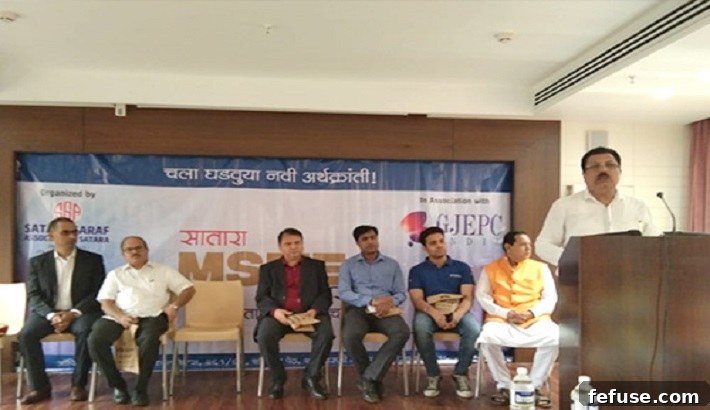
GJEPC’s Landmark Initiative: Empowering Satara’s Gem & Jewellery Sector Through Skill, Finance, and Global Reach
The Indian gem and jewellery industry, a cornerstone of the nation’s economy and cultural heritage, thrives on the skill and dedication of its artisans and entrepreneurs. Recognizing this, the Gem & Jewellery Export Promotion Council (GJEPC), in a significant collaborative effort with the Satara RC Sarafa Association, spearheaded a series of comprehensive seminars in Satara on December 28, 2019. These pivotal events were meticulously designed to uplift both the region’s skilled ‘karigars’ (artisans) and its dynamic jeweller community, providing them with invaluable insights into government schemes, financial literacy, skill enhancement, and pathways to global markets. The overwhelming positive response from over 100 artisans and a substantial gathering of jewellers underscored the critical need for such educational and empowering initiatives in regional hubs.
Empowering Artisans: A Foundation for Growth and Well-being
The seminar specifically tailored for artisans commenced with an enthusiastic reception, highlighting the community’s eagerness for knowledge and growth. GJEPC, a leading authority in the sector, aimed to equip these vital contributors with tools not only for professional advancement but also for personal welfare and financial stability.
GJEPC’s Vision for Karigars: Identity, Health, and Financial Security
Mithilesh Pandey, Director of Membership at GJEPC, opened the session by introducing the Council’s extensive mandate and diverse activities. He elaborated on GJEPC’s commitment to its members, emphasizing the crucial support systems available. A key focus was the Parichay Card, an initiative designed to provide formal identification and recognition to artisans, integrating them more formally into the organized sector. This card serves as a gateway to various benefits and helps standardize their professional identity within the industry. Furthermore, Mr. Pandey provided detailed information on GJEPC’s welfare schemes: Swasthya Ratna and Swasthya Kosh. These comprehensive health insurance and welfare programs are vital for the often-informal artisan workforce, offering much-needed medical and financial security. Understanding the critical importance of health for sustained productivity, GJEPC highlighted how these schemes contribute significantly to the overall well-being and stability of karigars and their families.
Government Initiatives for Artisan Empowerment
Following this, Mrunali Elle, a distinguished Council representative, delved into pivotal government-backed schemes aimed at fostering entrepreneurship and employment. She meticulously explained the nuances of the Mudra Yojana, a flagship program designed to provide collateral-free loans to micro and small enterprises, including individual artisans. This scheme empowers karigars to access much-needed capital for starting or expanding their businesses, purchasing equipment, or managing working capital. Simultaneously, Ms. Elle shed light on the Prime Minister’s Employment Yojana (PMEGP), which focuses on generating self-employment opportunities through the establishment of micro-enterprises in non-farm sectors. Both programs are instrumental in transforming artisans from daily wage earners into self-reliant entrepreneurs, bolstering local economies and promoting financial independence.
Boosting Skills and Financial Literacy
The seminar further enriched artisans with practical knowledge on finance and skill development. GJEPC Consultant Ajit Shah provided an insightful session on banking and finance, demystifying the process of availing various loans. He offered practical advice on financial planning and prudent management, crucial skills for artisans venturing into entrepreneurship. Understanding the formal financial ecosystem is often a significant barrier for many, and Mr. Shah’s session aimed to bridge this gap, encouraging artisans to engage with banking institutions for their financial needs.
Praveen More, representing the Gem & Jewellery Skill Council of India (GJSCI), presented a compelling overview of the Government’s Skill Development Programmes. He detailed two primary initiatives: Recognition of Prior Learning (RPL) and Short-Term Training. RPL is particularly significant as it formally certifies the existing skills of experienced artisans, recognizing their invaluable traditional knowledge and craftsmanship. Mr. More highlighted the attractive benefits associated with RPL training, including free Accident Insurance cover up to Rs. two lakh for three years, providing a crucial safety net for these skilled individuals. Additionally, a sum of Rs. 500 is directly transferred into their accounts upon completion, serving as a tangible incentive and a step towards financial inclusion. Short-Term Training programs, on the other hand, aim to upgrade existing skills or introduce new techniques, ensuring that artisans remain competitive and relevant in a rapidly evolving industry.
To further reinforce the health and welfare agenda, a representative from Edelweiss provided an in-depth explanation of the enrollment process for the Swasthya Ratna and Swasthya Kosh insurance schemes. This session ensured that artisans understood the practical steps required to secure these vital health benefits, reinforcing the commitment to their overall well-being.
Elevating the Jeweller Community: Strategic Insights for Business Growth
Parallel to the artisan seminar, GJEPC and the Satara Sarafa Association hosted a similar awareness programme tailored specifically for the jeweller community in the district. This session addressed critical business aspects, regulatory compliance, market access, and advanced security, crucial for sustainable growth in the competitive jewellery market.
Mastering Hallmarking Standards: Ensuring Trust and Quality
A highlight of the jeweller’s seminar was a special session on Hallmarking, conducted by Hemant Aade of the Bureau of Indian Standards (BIS). Hallmarking is paramount for ensuring consumer trust and maintaining the integrity of precious metals. Mr. Aade meticulously explained the entire hallmarking system, including the strategic locations of hallmarking centres across the country, the precise procedures involved in assaying and hallmarking, and the associated costs. This detailed presentation underscored the importance of compliance with BIS standards, not only for domestic sales but also for building a reputation that facilitates international trade and exports. Adherence to hallmarking regulations is a non-negotiable aspect of responsible jewellery business, fostering transparency and consumer confidence.
Unlocking MSME Benefits and Export Potential
Mithilesh Pandey from GJEPC returned to discuss an array of schemes offered by the Ministry of Micro, Small & Medium Enterprises (MSME). He outlined initiatives such as the Interest Subvention Scheme, which provides financial relief by reducing interest burdens on loans; Technology Upgradation schemes, encouraging adoption of modern manufacturing techniques; Common Facility Centres (CFC), offering shared infrastructure for cost-effective operations; Skill Development programs; and the Lean Manufacturing Competitiveness Scheme, aimed at improving efficiency and reducing waste. These schemes are designed to bolster the competitiveness and sustainability of small and medium-sized jewellery businesses. Mr. Pandey also highlighted the NSIC (National Small Industries Corporation) scheme, which provides financial assistance for participation in exhibitions both domestically and abroad. This is a critical enabler for jewellers seeking to expand their market reach and establish their brands on a larger platform.
Council representative Mrunali Elle further expanded on financial support systems, offering detailed information on the Pradhan Mantri Rojgar Yojana (PMRY), the Credit Guarantee Fund Trust Scheme (CGTMSE), which offers credit guarantees to banks for collateral-free loans to MSMEs, and the Credit Linked Capital Subsidy Scheme (CLCSS) for technology upgradation. These schemes collectively aim to alleviate financial bottlenecks, making it easier for jewellers to access capital for expansion, innovation, and day-to-day operations, thereby nurturing an environment conducive to business growth.
A significant emphasis was placed on encouraging jewellers to commence exports directly from the district level. The large number of attendees were informed about the substantial opportunities in international markets and were encouraged to diversify their business operations beyond domestic sales. This strategic shift towards exports promises enhanced revenue streams and global recognition for Satara’s jewellery craftsmanship. Participants were also made aware of a forthcoming Rs. 1,000 membership category, expected to be introduced in the subsequent months. This initiative aims to broaden GJEPC’s membership base, making it more accessible for smaller businesses and individual entrepreneurs to join the council and leverage its extensive network and resources.
Fostering Entrepreneurship and Global Connections
Amar Pratap Singh and his team from D&B (Dun & Bradstreet) delivered a comprehensive presentation on how MSMEs can effectively connect with global markets and scale their businesses internationally. Their insights focused on leveraging data and global networks to identify opportunities, forge partnerships, and navigate the complexities of international trade. Complementing this, GJEPC Consultant Ajit Shah provided complete, actionable information on how to practically commence export operations, guiding jewellers through the procedural and logistical aspects of entering the global marketplace.
Praveen More from GJSCI once again contributed to the discussion, potentially reinforcing the importance of skilled workforce for export-oriented units. Ratan Thapa, an official from Godrej, made a pertinent presentation on the company’s advanced security systems and safes. Given the high-value nature of jewellery, robust security solutions are indispensable for jewellers to protect their assets and ensure business continuity. Finally, an official from Edelweiss reiterated the benefits and enrollment process of the Swasthya Ratna and Swasthya Kosh schemes, emphasizing that health and financial security are universal needs that extend to jewellers and their families as well.
Collaboration and Community Impact: The Heart of Satara’s Jewellery Sector
The success of these seminars was not merely in the information disseminated but also in the palpable enthusiasm and engagement of the participants. These events served as crucial platforms for networking, knowledge exchange, and fostering a sense of community among artisans and jewellers alike. The active participation of various government bodies, industry experts, and financial institutions underscored a unified commitment to the development of the gem and jewellery sector in regional areas like Satara.
A heartwarming gesture of community support was evident through the sponsorship by Kailash Jewellers. Participants in both seminars received a complimentary bag containing a writing pad and pens, a thoughtful provision that facilitated note-taking and reinforced the spirit of learning. Such local support systems are vital in creating a collaborative ecosystem where businesses thrive and individuals feel supported in their professional journeys.
The Road Ahead: Nurturing a Vibrant Indian Gem & Jewellery Ecosystem
The GJEPC seminars in Satara represent a crucial step towards fostering a more organized, skilled, and globally competitive gem and jewellery industry in India. By bringing essential information, resources, and opportunities directly to the grassroots level, GJEPC empowers artisans and jewellers to overcome traditional barriers and embrace modern business practices. The focus on formal identification, health security, skill enhancement, financial literacy, and export promotion collectively paves the way for sustainable growth and improved livelihoods.
Such initiatives are instrumental in realizing the full potential of India’s rich artisanal heritage and entrepreneurial spirit. As the global demand for exquisite Indian jewellery continues to grow, equipping local communities with the right tools and knowledge ensures that they are well-positioned to contribute significantly to the nation’s export goals and economic prosperity. The positive reception in Satara is a testament to the effectiveness of GJEPC’s outreach programs and sets a precedent for future endeavors aimed at nurturing a vibrant and resilient Indian gem and jewellery ecosystem for years to come.