
Streamlining India’s Diamond Trade: GJEPC’s Proactive Advocacy for GST Reforms
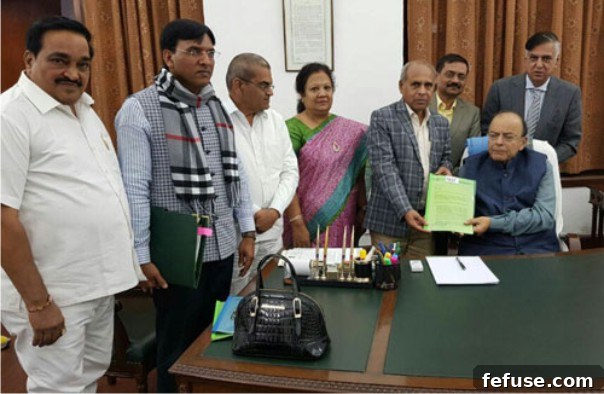
India’s gem and jewellery sector stands as a formidable pillar of its economy, contributing significantly to exports, employment, and the nation’s global trade profile. At the heart of this thriving industry is the diamond sector, where India plays an unparalleled role as the world’s largest cutting and polishing hub. To ensure the sustained growth and global competitiveness of this vital industry, proactive dialogue between industry stakeholders and policymakers is paramount. It was in this spirit that the Gem & Jewellery Export Promotion Council (GJEPC), the apex body representing India’s gem and jewellery trade, engaged in a high-level meeting with the Hon’ble Minister of Finance, Government of India (GoI), Shri Arun Jaitley, on January 4, 2018.
The esteemed GJEPC delegation was spearheaded by its Chairman, Shri Praveenshankar Pandya, and Chief Executive Director (CED), Shri Sabyasachi Ray. They were joined by a key regional voice, Babubhai N. Gujarati, President of the Surat Diamond Association, underscoring the collaborative effort to address pressing industry concerns. The meeting also saw the presence of other influential figures, including Cabinet Minister Shri Mansukh Mandaviya; Members of Parliament Smt. Darshana Jardosh and Shri C.R. Patil; and Shri Nanubhai Vanani, a former minister from Gujarat. This broad representation highlighted the critical importance of the issues at hand, demonstrating a unified approach to safeguarding and promoting the future of India’s gem and jewellery exports.
The Indian Gem & Jewellery Sector: A Global Powerhouse
The Indian gem and jewellery sector is not merely an industry; it is a complex ecosystem that supports millions of livelihoods and brings immense foreign exchange to the country. Dominating the global diamond processing landscape, India handles an estimated 9 out of 10 diamonds worldwide, from rough sourcing to polished perfection. This intricate supply chain, predominantly centered in Surat, Gujarat, is a testament to India’s skilled craftsmanship, technological prowess, and entrepreneurial spirit. The sector’s contribution to India’s total merchandise exports is substantial, making it a critical focus for policy support and reform. Maintaining a frictionless environment for trade, especially for an export-oriented industry, is crucial for sustaining this global leadership position and ensuring continued economic growth.
Navigating the New Tax Regime: GST’s Impact on the Diamond Sector
The introduction of the Goods and Services Tax (GST) in India marked a monumental shift in the country’s indirect taxation landscape, aiming to create a unified national market and simplify the tax structure. While GST was envisioned as a significant reform to boost economic efficiency, its initial implementation presented unique challenges for various sectors, including the highly specialized gem and jewellery industry. The meeting with the Hon’ble Finance Minister primarily focused on the detailed discussion surrounding the impact of GST on the diamond sector. Industry leaders conveyed the intricacies of their operations, where raw materials are often imported, processed, and then largely re-exported, creating a value chain with distinct tax implications.
The core concern articulated by the GJEPC and the Surat Diamond Association revolved around the need for a tax regime that would not impede the smooth flow of goods or tie up crucial working capital. Unlike domestic consumption-driven sectors, the diamond industry thrives on rapid turnover and efficient supply chain management. Any friction in the tax system, such as delays in refunds or multiple layers of taxation on inter-state or import-export transactions, can significantly impact liquidity and operational costs, thereby eroding competitiveness in the global market.
Key Proposals for Enhanced Competitiveness and Ease of Doing Business
The delegation presented several well-thought-out proposals to the government, aimed at creating a more conducive environment for the diamond sector under the GST framework. These recommendations were not just about tax exemptions but about designing a system that mirrors the operational efficiency found in leading global diamond hubs.
1. Introducing a No-Tax Situation for Import-Export Transactions
A primary request was the introduction of a scheme under GST that would ensure all transactions occurring between the import of rough diamonds and the export of finished polished diamonds operate in a “no-tax situation.” This is a critical demand for an industry heavily reliant on imports for raw materials and exports for finished products. Such a mechanism would essentially treat the entire import-processing-export cycle as a deemed export, preventing the blockage of funds due to tax payments on inputs that are ultimately exported. This approach minimizes the working capital requirements for exporters, allowing them to reinvest funds into business growth rather than having them locked in as tax credits awaiting refunds.
2. Emulating Global Best Practices: Lessons from Belgium and Israel
To underscore the viability and necessity of their proposal, the GJEPC delegation specifically requested a scheme that emulates key global competitors like Belgium and Israel. These nations, prominent players in the international diamond trade, have long-established mechanisms that facilitate duty and tax-free movement of diamonds within their processing and trading ecosystems. Such systems often involve designated free trade zones, special customs procedures, or group registration facilities that enable seamless transactions for registered entities without immediate tax liabilities.
The proposed solution for India involved creating a specific group under the provisions of Section 148 of the CGST Act / SGST Acts 2017. This section provides the government with the power to notify special procedures for certain classes of registered persons. By leveraging this provision, the industry proposed exempting (with input tax credit facility) nil rating or taxing at nil or nominal value all transactions between registered members of this designated GST group. This would effectively create a ring-fenced environment for diamond traders and manufacturers, allowing for efficient internal transactions while ensuring proper tax collection at the final domestic sale point, much like the successful models observed internationally.
3. Addressing Critical Operational Concerns: Refunds and Presumptive Tax
Beyond the overarching request for a “no-tax situation,” the meeting also delved into other significant operational hurdles faced by the industry. The issues of GST refunds and presumptive tax were discussed at length. Delayed or cumbersome refund processes for input tax credits have been a consistent pain point for exporters across various sectors, leading to severe liquidity crunches. For the diamond industry, where transaction values are high and turnaround times are critical, efficient and timely refunds are not just an advantage but a necessity for survival and growth. The delegation highlighted the need for streamlined, automated, and time-bound refund mechanisms to ensure that exporters are not unduly penalized for taxes paid on inputs. Additionally, concerns related to presumptive tax, which often simplify compliance but may not accurately reflect the actual tax liability or unique business models of certain segments within the diamond trade, were also brought to the Finance Minister’s attention, seeking clarification and potential adjustments.
The Government’s Receptive Stance and Future Outlook
The Hon’ble Finance Minister, Shri Arun Jaitley, gave the delegation a patient and attentive hearing, acknowledging the intricate nature of the issues presented. His assurance that “the various points raised would be looked into” provided a positive signal, indicating the government’s willingness to understand and potentially address the specific challenges faced by the gem and jewellery sector. This commitment underscores the government’s recognition of the industry’s significant contribution to the national economy and its desire to foster an environment conducive to export growth.
The ongoing dialogue between the GJEPC and the government is crucial for shaping policies that support India’s vision of becoming a global manufacturing and export hub. By refining the GST framework to better suit the unique operational dynamics of the diamond industry, India can reinforce its position as a leading player in the global gem and jewellery trade. Successful implementation of the proposed reforms would lead to numerous benefits, including enhanced liquidity for businesses, reduced compliance burdens, increased international competitiveness, and ultimately, greater export volumes and job creation within the sector. The proactive advocacy by the GJEPC, coupled with the government’s responsive approach, sets a strong precedent for collaborative policy-making that prioritizes the sustained prosperity of India’s vital industries.
This strategic engagement is a testament to the continuous efforts required to adapt national tax frameworks to the dynamic realities of global trade, ensuring that India’s diamond industry not only survives but thrives amidst international competition.