
Elevating Expertise: GJEPC’s Comprehensive Training for Customs Officials Bolsters India’s Gem & Jewellery Trade
The Gem & Jewellery Export Promotion Council (GJEPC), through its proactive Northern Regional Office, spearheaded a pivotal two-week training programme aimed at significantly enhancing the expertise of Customs department officials. Held from December 17 to December 28, 2019, this intensive course on the “Fundamentals of Gems & Jewellery” represented a critical step in strengthening the collaborative framework between the industry and regulatory bodies. This strategic initiative underscores GJEPC’s unwavering commitment to fostering a robust, transparent, and efficient ecosystem for India’s vibrant gem and jewellery sector, which remains a cornerstone of the nation’s export economy. By equipping customs professionals with specialized knowledge, the program sought to streamline trade processes, ensure accurate valuation, and fortify defenses against illicit activities, ultimately contributing to India’s stature as a global leader in the gem and jewellery trade.
A Pivotal Initiative: The Gem & Jewellery Export Promotion Council’s Commitment to Skill Enhancement
The GJEPC, an apex body established by the Ministry of Commerce and Industry, Government of India, plays an indispensable role in promoting the export of India’s precious gems and exquisite jewellery. Its multifaceted mission extends beyond mere trade promotion, encompassing policy advocacy, market research, and crucially, skill development and training. This particular program exemplifies GJEPC’s forward-thinking approach to industry growth, recognizing that an informed regulatory environment is as vital as innovative manufacturing and marketing strategies. The Council understands that the complexities inherent in the gem and jewellery trade—from intricate valuation methodologies to evolving global standards—necessitate continuous learning and specialized knowledge for all stakeholders, particularly those at the forefront of trade facilitation and oversight.
Through such targeted initiatives, GJEPC consistently strives to bridge knowledge gaps, encourage best practices, and build capacity across the entire value chain. The commitment to skill enhancement is not just about upskilling industry professionals; it extends to empowering government officials whose decisions directly impact the sector’s operational efficiency and integrity. By investing in the training of Customs officials, GJEPC reinforces its dedication to fostering a business environment that is both compliant and conducive to growth, safeguarding the interests of legitimate traders while upholding the highest standards of international trade. This symbiotic relationship between industry and regulation is key to sustaining India’s competitive edge in the global marketplace.
Tailored Curriculum: “Fundamentals of Gems & Jewellery” for Customs Professionals
The meticulously designed curriculum for the “Fundamentals of Gems & Jewellery” program was not a generic overview but a highly customized course specifically tailored to the unique requirements and responsibilities of Customs Appraisers and Superintendents. Over the two-week period, participants delved into a comprehensive array of topics essential for their daily duties. This included in-depth modules on gem identification, covering various types of precious and semi-precious stones, their characteristics, origins, and common treatments. Furthermore, the training provided critical insights into jewellery manufacturing processes, material compositions, and the nuances of valuation, which is often a complex task given the subjective and artistic elements involved.
Crucially, the program also addressed crucial aspects of ethical sourcing, understanding international certifications, and recognizing prevalent fraudulent practices such as misdeclaration, undervaluation, and smuggling techniques. For Customs officials, grasping these intricacies is paramount for accurate assessment of duties, prevention of illegal trade, and the protection of consumer interests and national revenues. The bespoke nature of the training ensured that the knowledge imparted was directly applicable to real-world scenarios encountered at ports and airports, enabling officials to make informed decisions that facilitate legitimate trade while effectively deterring illicit activities. This bespoke educational approach fortified their capability to serve as informed gatekeepers of India’s borders.
Strategic Collaboration: GJEPC, IIGJ Delhi, and Customs Department Unite for Industry Excellence
The successful execution of this specialized training programme was a testament to the powerful synergy forged between the GJEPC, the Indian Institute of Gem & Jewellery (IIGJ) Delhi, and the Customs Department. This collaboration highlights a progressive model where industry bodies, educational institutions, and government agencies coalesce their expertise for the greater good of the economy. The initiative was particularly driven by the vision of Dr. Rajendra Bhola, Chairman of IIGJ Delhi, whose leadership was instrumental in conceptualizing and delivering the program. IIGJ Delhi, a premier educational institution under the aegis of GJEPC, is renowned for its state-of-the-art facilities and experienced faculty specializing in gemology and jewellery manufacturing and design.
By leveraging IIGJ Delhi’s academic prowess and practical resources, GJEPC ensured that the Customs officials received world-class training in a dedicated learning environment. This tripartite alliance is invaluable; GJEPC identifies the industry’s needs, IIGJ provides the specialized knowledge and infrastructure, and the Customs Department brings its regulatory authority and on-ground experience. Such collaborative endeavors are vital for fostering mutual understanding, building trust, and creating a cohesive strategy to address the dynamic challenges and opportunities within the gem and jewellery sector. It represents a proactive step towards building a more resilient and ethically sound trade framework for India.
Empowering Gatekeepers: The Critical Role of Customs Officials in the Gem & Jewellery Sector
Customs officials serve as the frontline guardians of a nation’s economic borders, and their role in a high-value, globalized sector like gems and jewellery is exceptionally critical. Their responsibilities extend far beyond routine checks; they are instrumental in ensuring the smooth flow of legitimate trade, accurate collection of duties, and perhaps most importantly, in safeguarding the country against illicit trade, smuggling, and financial irregularities. In a market characterized by intricate valuation, diverse product forms, and often opaque supply chains, highly skilled and knowledgeable customs professionals are indispensable. This training program was designed precisely to empower these gatekeepers, providing them with the analytical tools and specialized understanding required to navigate the complexities of precious cargo.
An enhanced understanding of gem identification, jewellery craftsmanship, and market dynamics directly translates into more efficient inspections, expedited clearances for legitimate consignments, and more effective interception of illegal goods. By reducing bottlenecks for compliant businesses and increasing the deterrent for illicit operators, these officials become key facilitators of economic growth and protectors of fair competition. Their heightened expertise not only boosts government revenue through correct duty collection but also upholds India’s reputation as a reliable and ethical trading partner on the international stage. The investment in their training is, therefore, an investment in the nation’s economic security and global standing.
Mitigating Risks: Ensuring Fair Trade and Combating Illicit Practices
One of the paramount objectives of training Customs officials in the nuances of gems and jewellery is to significantly mitigate risks associated with illicit trade. The high value and relatively small physical size of many gem and jewellery products make them attractive targets for smuggling, undervaluation, and money laundering. Without specialized knowledge, officials might struggle to distinguish genuine articles from fakes, accurately assess the true market value of items, or identify discrepancies in documentation that point towards illicit activities. The training provided them with practical techniques to scrutinize declarations, verify authenticity, and identify patterns indicative of fraudulent schemes.
By sharpening their ability to detect misdeclared goods, detect synthetic or treated stones passed off as natural, and accurately value precious metals and gems, the program directly contributes to curbing revenue leakage and maintaining market integrity. This enhanced vigilance helps ensure fair trade practices, protecting legitimate businesses from unfair competition posed by smuggled or undervalued goods. Ultimately, a well-trained customs force acts as a robust defense mechanism, not only safeguarding national revenue but also preserving the ethical integrity and international credibility of India’s gem and jewellery industry, which is built on trust and transparency.
Facilitating Growth: Streamlining Exports and Bolstering India’s Global Position
Beyond combating illicit trade, a well-informed Customs department plays a crucial role in facilitating legitimate exports, which is vital for the growth of India’s gem and jewellery sector. Efficient and knowledgeable clearance processes mean faster turnaround times for consignments, reduced operational costs for exporters, and improved competitiveness in global markets. Delays caused by a lack of specialized understanding can lead to significant financial losses for businesses, damage to perishable goods (in some contexts, though less so for gems), and ultimately, a decline in India’s reliability as an export hub.
By streamlining procedures through enhanced expertise, Customs officials contribute directly to bolstering India’s position as a preferred global sourcing destination for gems and jewellery. This translates into increased export volumes, greater foreign exchange earnings, and robust job creation within the industry. The confidence that exporters gain from dealing with an efficient and knowledgeable regulatory body encourages further investment and innovation within the sector. Thus, the training serves as an accelerant for economic growth, reinforcing the “Make in India” initiative and solidifying the nation’s reputation for quality, efficiency, and professionalism in the international trade arena.
A Fortnight of Intensive Learning: Course Structure and Practical Insights
The two-week duration of the training program was carefully chosen to allow for an immersive and comprehensive learning experience, going far beyond a mere theoretical introduction. The course structure was designed to blend foundational knowledge with advanced practical applications, ensuring that the 15 participating Customs Appraisers and Superintendents gained both a broad understanding and specific actionable skills. Daily sessions likely covered topics ranging from the geological formation of gemstones to the intricacies of diamond grading, gold purity assessment, and the diverse craftsmanship involved in various jewellery styles. This intensive format ensured that a significant volume of specialized information could be effectively absorbed and integrated by the participants.
The structured approach, encompassing both classroom lectures and interactive discussions, facilitated a deep dive into the subject matter. Expert instructors from IIGJ Delhi, with their extensive industry experience, guided the officials through complex concepts, utilizing case studies and real-world examples relevant to customs operations. This intensive fortnight was a commitment to professional development, ensuring that the officials returned to their posts not just with new information, but with a refined perspective and enhanced capabilities to tackle the unique challenges presented by the gem and jewellery trade.
IIGJ Delhi: A Hub of Expertise and Advanced Training
The choice of the Indian Institute of Gem & Jewellery (IIGJ) Delhi as the venue for this crucial training program was strategic. IIGJ Delhi stands as a beacon of excellence in gemological and jewellery education in India, renowned for its cutting-edge facilities, advanced laboratories, and a faculty comprising seasoned gemologists, designers, and manufacturing experts. The institute provides an ideal learning environment, equipped with the latest tools and technologies for gem identification, grading, and jewellery assessment. Participants benefited from access to high-quality microscopes, refractometers, spectroscopes, and an extensive collection of reference stones and jewellery samples.
Learning within such a specialized academic setting ensures that the knowledge imparted is not just theoretical but grounded in the practical realities and scientific principles of the industry. The institute’s commitment to industry-relevant education makes it the perfect partner for GJEPC in delivering high-impact training initiatives. The reputation of IIGJ Delhi further lent credibility and authority to the program, assuring that the Customs officials received instruction from the very best in the field, further solidifying their professional expertise.
Beyond Theory: The Significance of Hands-On Experience
A distinctive and vital component of the training programme was the inclusion of dedicated practical sessions, particularly the emphasized one-hour practical segment. In the realm of gems and jewellery, theoretical knowledge, while foundational, must be complemented by hands-on experience. The ability to physically examine gemstones, identify inclusions, assess cuts, and differentiate between various metal alloys is paramount for accurate appraisal and fraud detection. During these practical sessions, officials likely engaged directly with a diverse range of samples, applying the theoretical concepts learned in the classroom.
This hands-on approach allowed them to develop critical practical skills, such as using gemological instruments, performing basic authenticity tests, and gaining a tactile understanding of material properties. Such direct engagement with the products not only reinforced their learning but also built confidence in their ability to make precise judgments under operational pressure. The practical component transformed abstract concepts into tangible skills, ensuring that the customs officials were not just theoretically informed but practically proficient in identifying, assessing, and valuing gems and jewellery – a crucial skill for effective border management.
Celebrating Achievement: The Valedictory Ceremony and Its Visionary Leaders
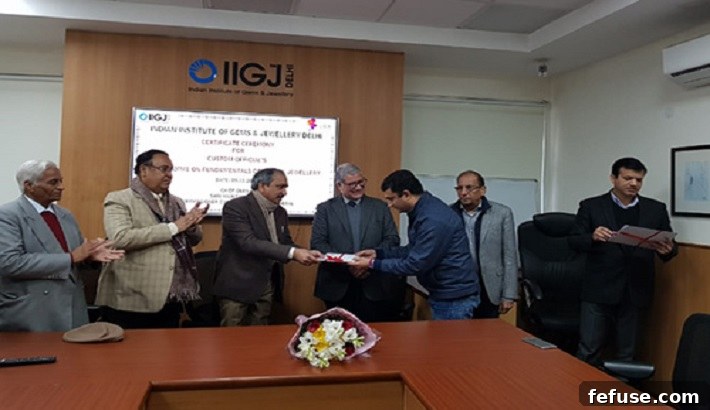
The conclusion of the rigorous two-week program was marked by a formal valedictory ceremony, a moment of recognition and reflection on the collaborative effort. This significant event brought together key figures from the Customs Department and the gem and jewellery industry, symbolizing the shared commitment to excellence and progress. During the ceremony, the 15 Customs Appraisers and Superintendents, who diligently completed the training, were presented with their Certificates of Participation, a tangible acknowledgment of their enhanced capabilities and dedication to professional development. This certification not only validated their newly acquired expertise but also served as a motivator for continuous learning and application of their skills in the field.
The presence of esteemed guests and industry leaders underscored the strategic importance of this initiative. The ceremony was not merely a formality but a platform for reinforcing the partnership between the regulatory authority and the industry it oversees, fostering an environment of mutual respect and understanding that is essential for a thriving and ethical trade ecosystem. Such events highlight the collective vision for a more skilled, efficient, and transparent future for India’s gem and jewellery sector.
Recognition and Collaboration: Insights from Chief Guest Shri Manish Kumar
The ceremony was graced by Shri Manish Kumar, Commissioner Customs, Delhi Airport, who served as the Chief Guest. His presence was highly significant, as the Delhi Airport Customs plays a crucial role in facilitating and regulating the flow of high-value goods, including gems and jewellery, entering and exiting the capital. In his address, Shri Kumar lauded the initiative by GJEPC and IIGJ Delhi, emphasizing the paramount importance of such specialized training for Customs officials. He likely highlighted how enhanced knowledge directly contributes to more efficient trade facilitation, increased revenue collection, and a stronger stance against illicit trade practices.
Commissioner Kumar’s remarks undoubtedly underscored the value of continuous learning and inter-agency collaboration. He would have stressed how a well-informed customs force is critical for maintaining the integrity of India’s borders and ensuring compliance with international trade standards. His insights, coming from a leading figure in customs administration, served to validate the program’s relevance and impact, inspiring the newly trained officials to apply their acquired knowledge diligently and ethically in their professional capacities, thereby reinforcing the symbiotic relationship between industry development and robust regulation.
Industry Stalwarts: GJEPC and IIGJ Leadership Championing Progress
Also present at the valedictory ceremony were other distinguished personalities, including Shri Ashok Seth, Chairman of GJEPC’s Northern Region, and Dr. Rajendra Bhola, Chairman of IIGJ Delhi. Their presence signified the deep commitment of both the industry body and the academic institution to this vital skill development program. Shri Ashok Seth, as a representative of GJEPC, would have articulated the Council’s vision for a highly skilled and efficient industry, emphasizing how such training programs are integral to achieving sustained growth and global competitiveness. His address would have focused on the practical benefits of this collaboration for exporters and the broader industry.
Dr. Rajendra Bhola, whose initiative was pivotal in conceptualizing and conducting the program, likely shared his insights on the academic rigor and practical relevance of the curriculum. His leadership in fostering educational excellence at IIGJ Delhi played a crucial role in the successful implementation of this specialized course. Together, their addresses underscored the unified effort to uplift the standards of trade and regulation in the gem and jewellery sector, demonstrating a clear path forward for continuous professional development and strategic partnerships that drive national economic progress.
The Enduring Impact: Fostering a Robust and Transparent Gem & Jewellery Ecosystem
The implications of this comprehensive training program extend far beyond the fortnight of intensive learning. Its enduring impact is poised to resonate throughout India’s gem and jewellery ecosystem, contributing significantly to its robustness and transparency. By equipping Customs officials with specialized knowledge and practical skills, the program has laid a stronger foundation for accurate valuation, efficient clearance, and heightened vigilance against illicit activities. This translates into tangible benefits: reduced delays for legitimate trade, increased revenue for the government through precise duty collection, and an enhanced reputation for India as a reliable and ethical trading partner globally.
Moreover, the initiative fosters a greater understanding and collaboration between the industry and regulatory bodies, reducing potential friction and promoting a more harmonious working relationship. When both sides are informed and operate from a shared base of knowledge, the entire system becomes more efficient and trustworthy. This commitment to continuous professional development and strategic partnerships is vital for navigating the evolving complexities of the international gem and jewellery trade, ensuring that India remains at the forefront of this dynamic global industry for years to come.
A Model for Industry-Government Synergy
This collaborative training program stands as an exemplary model for effective industry-government synergy, showcasing how targeted interventions can yield significant benefits for all stakeholders. The GJEPC, representing the industry’s interests, proactively identified a critical need within the regulatory framework and partnered with an academic institution to address it. The Customs Department, in turn, demonstrated its openness to adopting specialized training to enhance its operational effectiveness. This kind of partnership is essential for sectors with highly technical and specialized goods, where generic training may prove insufficient.
Such synergy facilitates a better flow of information, helps in understanding each other’s challenges, and leads to the formulation of more practical and effective policies. It moves beyond mere compliance to genuine collaboration, where industry insights inform regulatory practices, and regulatory clarity supports industry growth. This model can be replicated across various other specialized sectors in India, fostering an environment where government bodies and private enterprises work hand-in-hand to strengthen the nation’s economic framework and global competitiveness.
Paving the Way for Future Skill Development Initiatives
The success and positive reception of the “Fundamentals of Gems & Jewellery” training program pave a clear path for future skill development initiatives. It establishes a precedent for ongoing education and cross-sectoral collaboration, demonstrating the immense value derived from investing in specialized knowledge for regulatory officials. GJEPC, in conjunction with IIGJ Delhi, is well-positioned to continue developing and offering advanced modules, refresher courses, and training programs tailored to address emerging trends, technological advancements, and evolving challenges within the global gem and jewellery trade.
Potential future programs could delve into specific areas like advanced diamond grading, identification of new synthetic materials, international trade laws, or digital authentication technologies. By committing to continuous learning, the industry and government can ensure that India’s customs officials remain at the cutting edge of expertise, capable of effectively navigating the complexities of a dynamic global market. This sustained investment in human capital is crucial for maintaining India’s leadership position and ensuring the long-term integrity and prosperity of its gem and jewellery sector.
Conclusion: Strengthening India’s Position as a Global Leader
In conclusion, the two-week intensive training program on the “Fundamentals of Gems & Jewellery,” orchestrated by the GJEPC and conducted at IIGJ Delhi for Customs Appraisers and Superintendents, represents a landmark initiative. It is a testament to the power of strategic collaboration between industry, education, and government. By empowering customs officials with specialized knowledge and practical skills, the program has not only enhanced their capacity to facilitate legitimate trade and combat illicit activities but has also significantly bolstered the overall efficiency and integrity of India’s gem and jewellery sector.
This proactive investment in human capital is crucial for maintaining India’s competitive edge in the global market, fostering a transparent trading environment, and safeguarding national economic interests. As India continues to solidify its position as a dominant force in the international gem and jewellery trade, initiatives like this will be instrumental in ensuring sustained growth, ethical practices, and an unwavering commitment to excellence across all facets of the industry. The successful completion of this program marks a significant stride towards a more robust, informed, and globally respected gem and jewellery ecosystem in India.