
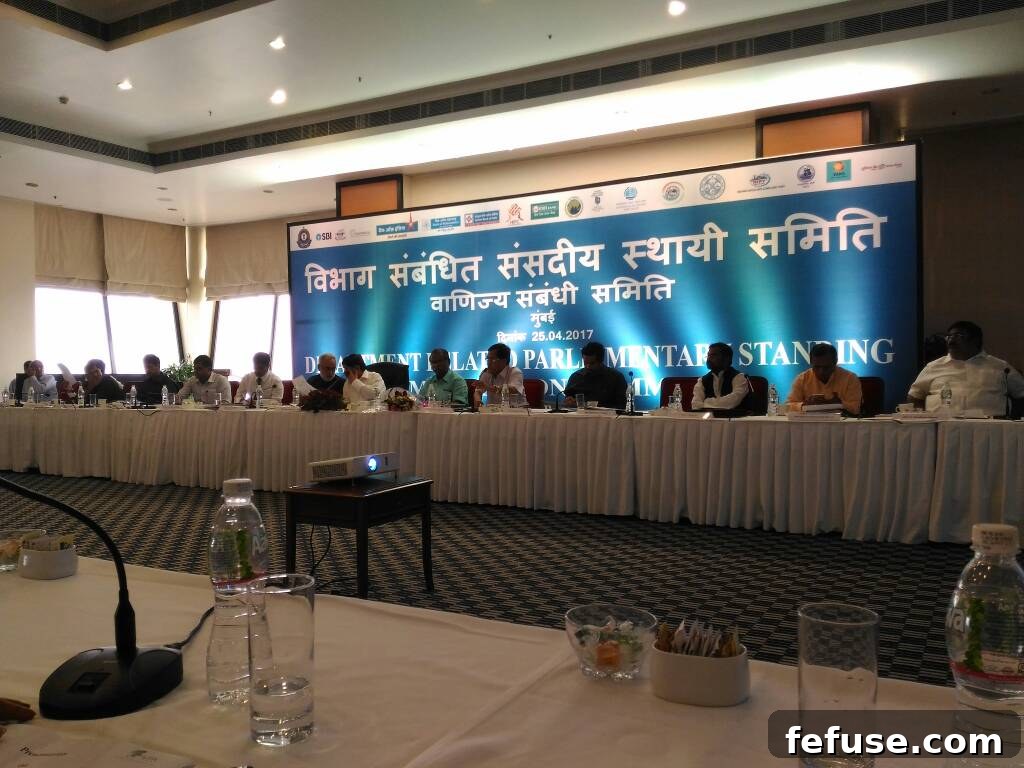
In a significant development for the Indian gem and jewellery sector, representatives from the Gem & Jewellery Export Promotion Council (GJEPC) recently presented their comprehensive insights and recommendations to a Department-Related Parliamentary Standing Committee on Commerce. The focal point of this crucial interaction was the intricate landscape of the gem and jewellery trade between India and the member nations of the Association of Southeast Asian Nations (ASEAN). This presentation underscored GJEPC’s proactive role as the apex body in advocating for the industry’s interests, particularly concerning tariff policies, value addition norms, and other critical trade-related matters that directly impact India’s competitive standing in the global market.
The GJEPC delegation commenced their address by providing the esteemed committee with an illuminating overview of the remarkable growth trajectory of the Indian gem and jewellery industry. This included highlighting its substantial contribution to the nation’s overall export basket, a testament to its economic prowess and employment generation capabilities. A detailed snapshot of India’s current trade dynamics within the sector with key ASEAN economies such as Singapore, Malaysia, Indonesia, and Vietnam was also meticulously presented. This foundational context set the stage for the industry’s viewpoint, which was subsequently articulated with clarity and strategic foresight.
The Indian gem and jewellery industry is a powerhouse, globally renowned for its exquisite craftsmanship, technological advancement, and an unmatched supply chain that spans from mining to retail. It is a cornerstone of India’s economy, contributing significantly to GDP, generating millions of jobs across various skill levels, and consistently being a top foreign exchange earner. India holds a pre-eminent position as the world’s largest cutting and polishing centre for diamonds, a legacy built on generations of expertise and continuous innovation. This unique strength forms the bedrock of GJEPC’s advocacy efforts, particularly when discussing trade policies with international partners.
The ASEAN bloc represents a vital and growing market for India’s gem and jewellery exports, as well as a strategic partner in regional economic integration. Countries like Singapore, known for its status as a trading hub; Malaysia and Indonesia, with their burgeoning consumer markets; and Vietnam, an emerging manufacturing base, all present distinct opportunities and challenges. The existing trade agreements, such as the Indo-ASEAN Comprehensive Economic Cooperation Agreement (CECA), are designed to foster closer economic ties through reduced tariffs and eased trade barriers. However, GJEPC emphasized the imperative of fine-tuning these agreements to ensure they genuinely benefit the Indian industry and promote sustainable growth rather than inadvertently creating disadvantages.
One of the most critical recommendations put forth by GJEPC pertained to the tariff concessions under the Indo-ASEAN CECA. The Council meticulously stressed that India primarily functions as a significant supplier of high-quality cut and polished diamonds to jewellery manufacturers across the ASEAN region. These diamonds are not finished products for direct retail consumption in ASEAN but rather serve as essential raw materials for the creation of studded jewellery by manufacturers in these countries. Recognizing this crucial distinction, GJEPC argued emphatically that any granting of tariff concessions during the Indo-ASEAN CECA negotiations should be exclusively focused on Cut and Polished Diamonds, specifically those falling under the Harmonized System (HS) Codes 710229 and 710239. This targeted approach, they asserted, would strategically benefit India in the long run by cementing its position as the preferred and most competitive source for these vital inputs. Broadening the concessions beyond these specific categories, without careful consideration, could dilute India’s competitive edge and potentially expose the domestic finished jewellery market to unfair competition, jeopardizing the livelihoods of countless Indian artisans and manufacturers.
Further elaborating on the intricacies of trade agreements, the GJEPC representatives also highlighted a significant concern regarding the proposed Value Addition (VA) requirement under the CECA. The existing framework proposed a Value Addition of 35% of the Free On Board (FOB) value for diamonds exported from India to qualify for preferential tariffs. GJEPC strongly recommended that this proposed Value Addition threshold be significantly reduced from 35% to a more pragmatic 10% of the FOB value of exported diamonds. The rationale behind this recommendation is straightforward and compelling: Indian diamonds are predominantly used as foundational raw materials in the manufacturing of studded jewellery within ASEAN countries. Achieving a 35% value addition on top of the intrinsic value of the diamond itself, particularly for manufacturers who are merely setting these stones into their own designs, presents a considerable commercial and logistical challenge. A lower, more realistic 10% VA threshold would facilitate smoother trade flows, make Indian diamonds more attractive as raw materials for ASEAN manufacturers, and thereby bolster India’s diamond exports without imposing an unrealistic burden on its trading partners. This adjustment would ensure that the CECA genuinely promotes trade and benefits both sides of the value chain. Moreover, GJEPC underscored the critical importance of ensuring strict compliance with the prescribed Value Addition requirements. They recommended that robust and effective mechanisms for verification should be implemented at ports during any import transactions to prevent circumvention of rules and maintain the integrity of the trade agreement, safeguarding against potential misuse of preferential tariffs.
A particularly sensitive and critical area of discussion revolved around the potential implications of tariff rebates on the imports of plain and studded precious metal jewellery into India. The Council expressed grave concerns, articulating that any such tariff reduction could prove “hazardous” for the entire Indian jewellery segment. This strong caution stemmed from the very real risk of the Indian market being flooded with plain and studded precious metal jewellery imports, particularly from countries like Indonesia and Malaysia, which often have different manufacturing costs and subsidy structures. Such an influx could severely disrupt the domestic market, leading to unfair competition for Indian manufacturers, who primarily operate on finer margins and adhere to stricter regulatory frameworks. The consequences could be dire, including significant revenue losses for Indian jewellers, potential job displacements within the highly skilled artisanal workforce, and a weakening of India’s indigenous manufacturing capabilities.
To mitigate this substantial risk, GJEPC strongly recommended that the Countervailing Duty (CVD) on jewellery imports should not be reduced under any circumstances. CVD is a crucial protective measure designed to offset the impact of subsidies or unfair trade practices by exporting countries, ensuring a level playing field for domestic industries. Maintaining the existing CVD on jewellery imports is paramount for protecting India’s vast and diverse jewellery manufacturing base, which includes millions of artisans, small and medium enterprises (SMEs), and large-scale manufacturers. It safeguards their livelihoods and preserves the unique craftsmanship that defines Indian jewellery. The Council’s firm stance on this matter highlights its commitment to fostering an environment of fair competition and protecting the national interest, ensuring that trade agreements facilitate mutual growth without undermining the domestic industry’s resilience and capacity.
The GJEPC’s compelling arguments and recommendations before the Parliamentary Standing Committee on Commerce were presented by a distinguished delegation comprising Dr. Jitarani Udgata and Sudhir Patil. Their expertise and detailed understanding of the industry’s dynamics and international trade intricacies lent significant weight to the Council’s advocacy efforts. Such engagements with parliamentary committees are indispensable, serving as vital platforms for industry bodies to directly communicate their challenges, propose solutions, and actively shape national trade policies and agreements. This collaborative approach between industry and government is crucial for formulating policies that are not only economically sound but also responsive to the ground realities faced by key sectors.
In conclusion, the presentation by the Gem & Jewellery Export Promotion Council to the Parliamentary Standing Committee on Commerce was a critical exercise in strategic advocacy. GJEPC’s recommendations—focusing on targeted tariff concessions for cut and polished diamonds, rationalizing value addition norms, and maintaining protective duties on imported finished jewellery—are meticulously designed to promote India’s exports, safeguard its robust domestic manufacturing base, ensure fair trade practices, and ultimately secure India’s leadership position in the global gem and jewellery market. These judicious policy adjustments are not merely tactical suggestions but strategic imperatives for the sustained growth, competitiveness, and long-term sustainability of the Indian gem and jewellery sector in an increasingly interconnected and competitive global economy. The Council remains steadfast in its commitment to ongoing dialogue and collaboration with policymakers to champion the industry’s cause and foster an environment conducive to its continued prosperity.
News Source : gjepc.org